The Frozen Dark: New York’s Infrastructure Crisis Meets the 2026 Arctic Blast
The Whiteout and the Warning Signs
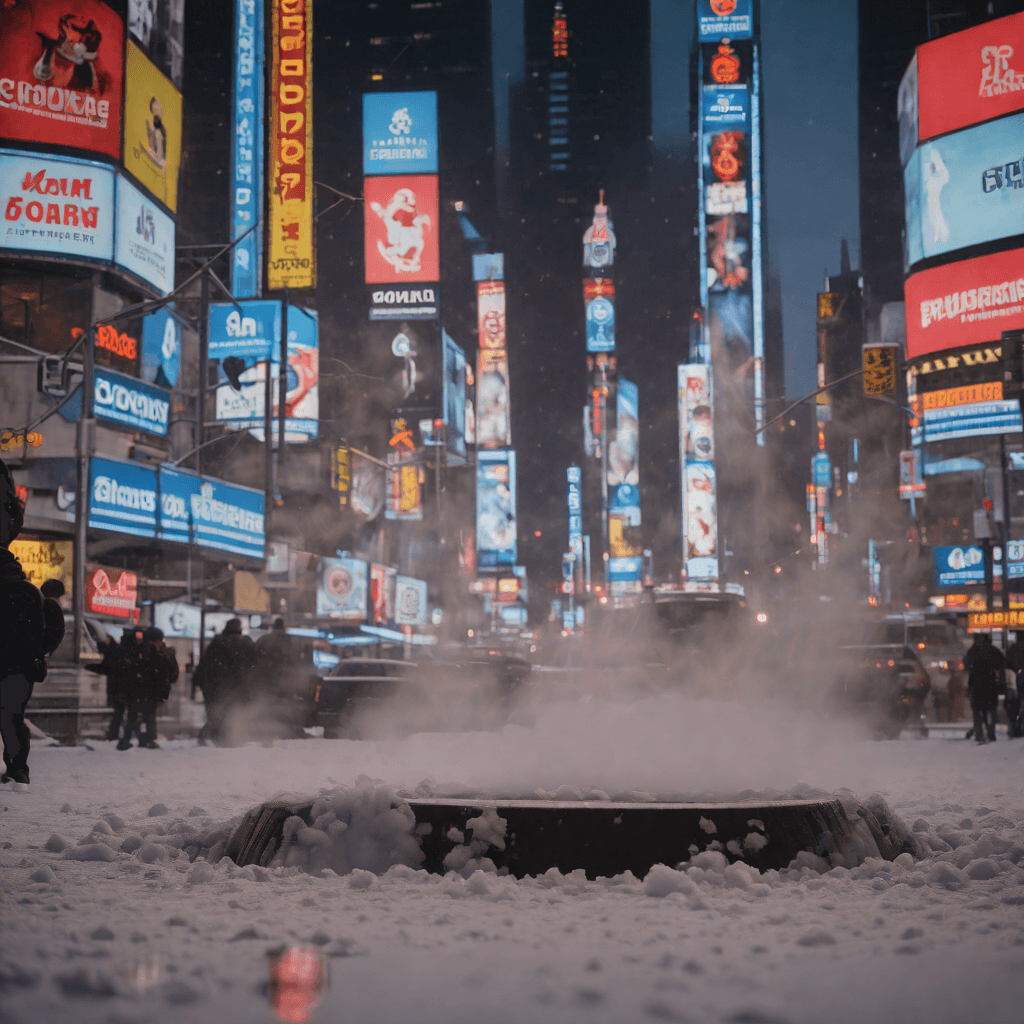
New York City is currently bracing for an Arctic onslaught that serves as a literal and figurative freeze-frame of the nation's infrastructure vulnerabilities. According to data from the NOAA National Centers for Environmental Information, the region was already reeling from a January that saw temperatures deviate -3.3°F from the historical normal. Now, as the National Weather Service (NWS) monitors a significant winter storm system set to impact the tri-state area on February 6, 2026, the city’s ability to absorb climatic shocks faces its most severe test since the start of the second Trump administration.
While official NWS projections currently suggest snowfall accumulations between 4 and 6 inches, independent meteorological assessments and internal city advisories indicate an expected accumulation of 8 to 12 inches. This discrepancy—a figure that Kalshi prediction markets suggested had a 74% probability of occurring this month—highlights a growing gap between conservative official reporting and the physical reality of a city under duress. The immediate response from NYC Emergency Management has been a mobilization of over 500 salt spreaders and the activation of 'Code Blue' protocols, yet these measures often mask the underlying fragility of a city operating under a regime of deferred maintenance and aggressive federal deregulation.
Dr. Radley Horton, a climate scientist and professor at Columbia University, notes that the increasing frequency of these "shock" weather events requires adaptation strategies that New York's vital sectors are currently ill-equipped to handle. Under President Trump’s aggressive pivot toward deregulation, the burden of resilience has shifted from federal oversight to local emergency maneuvers. This shift suggests that while the city can clear the streets, it remains fundamentally unprepared for the deeper structural stresses these 8-12 inch events impose on an aging grid.
Gridlock in the Cold: The MTA's Fragile Lifelines
As the first heavy flakes of the February 6 storm begin to blanket the tri-state area, the Metropolitan Transportation Authority (MTA) is already signaling a retreat that critics argue has been years in the making. While surface-level preparations are underway, the underlying transit infrastructure—weather-beaten and fiscally starved—is buckling under the weight of an Arctic blast that serves as a literal and metaphorical freeze on New York’s mobility.
For commuters like James Carter (pseudonym), a logistics worker based in Queens, the morning commute's systemic failure is a direct consequence of a federal policy shift that has prioritized private-sector deregulation over public-sector maintenance. Carter found himself stranded on an outdoor platform for forty minutes this morning due to a signal malfunction on the N line—a failure that MTA sources link to a maintenance schedule deferred last year to offset budget shortfalls.
As the Trump administration’s 2026 fiscal agenda continues to pivot federal infrastructure grants away from traditional urban transit toward autonomous freight corridors, the MTA is left to manage a 19th-century grid with a shrinking 21st-century safety net. The tension between the "Free Market" ideal of lean operations and the public necessity of a functioning subway system has reached a breaking point in this sub-zero air.
Deregulation on Thin Ice: ConEd's Stability Crisis
The arrival of the winter storm represents a collision between extreme meteorological shifts and a federal policy landscape that has prioritized cost-efficiency over grid-hardened resilience. Under the current administration’s "America First" energy pivot, the shift toward deregulation has significantly reduced mandatory reserve margins for utilities like ConEd, leaving the city’s infrastructure to face a sub-zero "stress test" with a safety net that has been systematically thinned.
This regulatory rollback, designed to lower immediate overhead for energy providers, now faces its first major test as wind chills are projected to drop below 0°F by February 7. For residents like building manager Michael Johnson (pseudonym), this translates into a tangible anxiety regarding the heating systems of aging buildings. While NYC Emergency Management has activated surface-level preparations, these do little to address the deeper fragility of the electrical distribution network.
The current administration's dismantling of rigorous federal oversight has allowed for a period of "deferred maintenance" that industry critics argue is unsustainable during "shock" weather events. As Johnson monitors boiler pressures, he observes that the margin for error has narrowed, reflecting a broader systemic vulnerability where public safety is increasingly leveraged against market deregulation goals.
The High Cost of Cutting Corners
The systematic erosion of municipal capacity has turned a standard winter storm into a high-stakes gamble for New York City’s eight million residents. While historical benchmarks for snow removal once relied on a robust, unionized workforce, the 2026 response reflects a fragmented system of outsourced contracts. By prioritizing privatization over established public service pipelines, the city has traded institutional resilience for thin fiscal margins.
The crisis of 2026 is defined not just by the height of the snowdrifts, but by the failure of the systems beneath them to absorb thermal and mechanical shocks. Dr. Radley Horton notes that these 'shock' weather events demand "adaptation strategies for New York City's vital sectors and infrastructure to absorb shocks and recover." Under the current federal pivot toward removing environmental "red tape," however, the hardening of the electrical grid and the winterization of transit lines have been dismissed as unnecessary expenditures.
The result is a metropolis that can clear the streets with 500 spreaders but cannot guarantee the lights will stay on when wind chills drop. The contrast between the administration's deregulation rhetoric and the localized reality of a frozen, immobile metropolis suggests that the free market lacks a mechanism to price in the value of public resilience.
Beyond the Thaw: A Blueprint for Urban Survival
Ultimately, the 2026 Arctic blast exposes a paradox of modern governance: the more we accelerate the digital and deregulated economy, the more we ignore the deteriorating physical anchors that sustain it. The snow will eventually melt, and the wind chills will subside, but the systemic cracks revealed by the freeze remain.
As the administration continues to prioritize the removal of regulatory barriers to secure technological hegemony, the ground beneath New York's feet continues to shift. Proponents of the "America First" infrastructure plan argue that by removing federal mandates, states and private developers can innovate faster to meet climatic challenges. However, critics point to the 74% probability of significant February snowfall as evidence that the "efficiency over safety" mantra is a gamble with the city's vital functions.
Without a coordinated reinvestment strategy that prioritizes resilience over short-term savings, New York's blueprint for survival remains a collection of emergency alerts rather than a structural reality. If we continue to strip the buffers of our public safety for the sake of immediate economic speed, what remains to protect us when the cold finally reaches the core?
Sources & References
National Weather Service New York, NY (OKX) - Local Forecast Office
National Weather Service (NOAA) • Accessed 2026-02-06
The NWS is monitoring a significant winter storm system expected to impact the tri-state area on February 6, 2026. Following the storm, an Arctic air mass is forecasted to bring temperatures 10-15 degrees below seasonal averages.
View OriginalNYC Emergency Management - Winter Weather Preparedness
City of New York • Accessed 2026-02-06
Emergency alerts issued for hazardous travel conditions. The city has activated the 'Code Blue' protocol to protect vulnerable populations during the impending bitter cold.
View OriginalTemperature Deviation from Normal (January 2026): -3.3°F
NOAA National Centers for Environmental Information • Accessed 2026-02-06
Temperature Deviation from Normal (January 2026) recorded at -3.3°F (2026)
View OriginalNYC Snowfall Probability (>3.0 inches in February): 74%
Kalshi Prediction Markets (based on NWS data) • Accessed 2026-02-06
NYC Snowfall Probability (>3.0 inches in February) recorded at 74% (2026)
View OriginalDr. Radley Horton, Climate Scientist and Professor
Columbia University • Accessed 2026-02-06
The increasing frequency of these 'shock' weather events requires adaptation strategies for New York City's vital sectors and infrastructure to absorb shocks and recover from climatic events.
View OriginalWhat do you think of this article?