The Price of Peace: South Korea’s High-Stakes Gambit Against Food Inflation
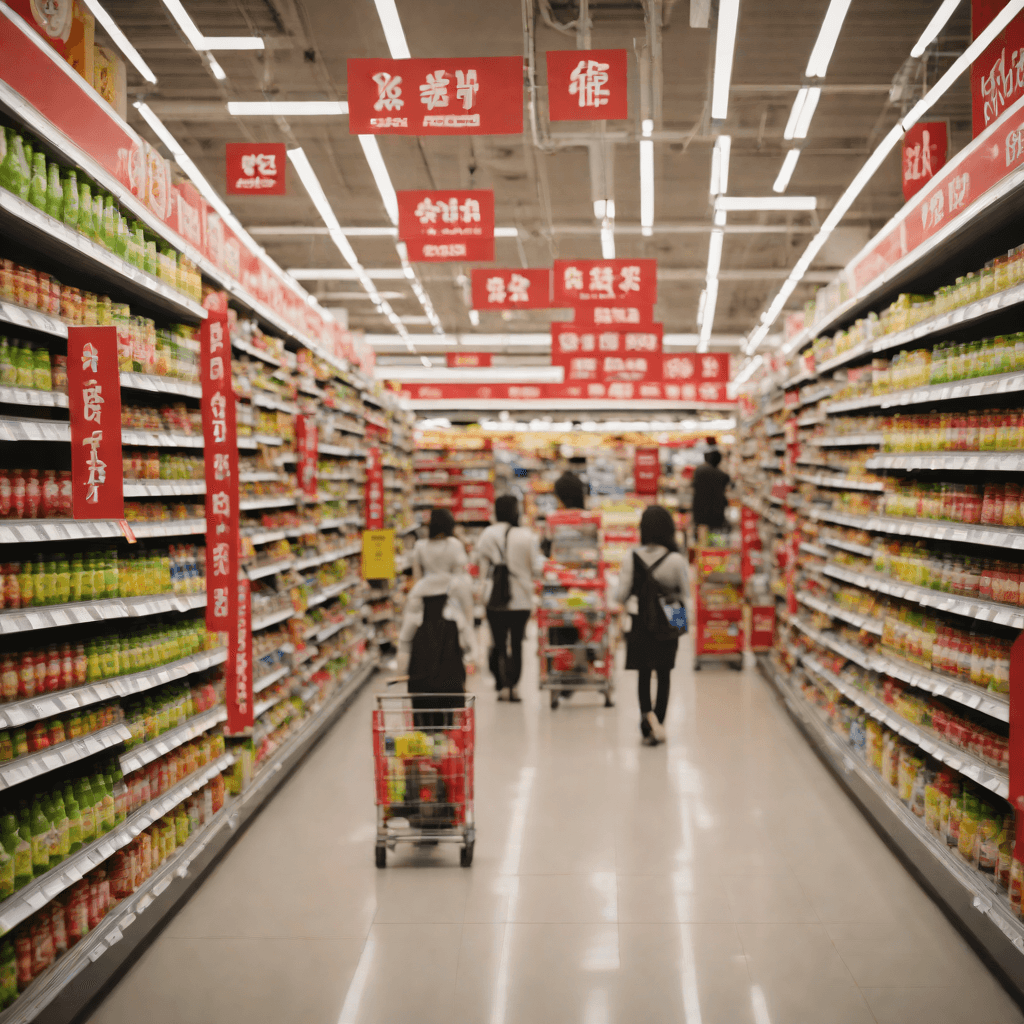
The Price of Tradition in an Age of Inflation
The Lunar New Year, known as Seollal, has long served as more than just a family gathering in South Korea; it is a high-stakes barometer for the nation’s socio-political stability. In a year defined by the Trump administration’s aggressive deregulation and the global ripple effects of "America First" trade policies, the South Korean government has opted for a radically different path: massive, state-orchestrated price suppression.
While the U.S. Bureau of Labor Statistics reports a steady baseline for global food price indices in early 2026, the contrast between the American free-market approach and Seoul’s direct intervention has never been more stark. For the South Korean household, the price of a traditional feast is no longer a matter of market supply and demand, but a reflection of the state's willingness to intervene in the private sector to maintain social peace.
The Ministry of Agriculture, Food and Rural Affairs (MAFRA) recently unveiled an intervention of unprecedented scale, partnering with 15 major food companies to slash prices on 4,957 essential items by up to 75% throughout February 2026. This aggressive maneuver aims to insulate consumers from the inflationary pressures that the USDA Economic Research Service predicts will drive overall food prices up by 3.0% this year, with food-at-home costs expected to rise by 1.7%.
By forcing a temporary retreat from market-clearing prices, Seoul is attempting to win the hearts of a public weary of the "cost-of-living" crises that have plagued the early 2020s. However, this level of coordination—essentially a month-long, state-sponsored sale—raises questions about the long-term viability of a market where the government can simply dial down the cost of staples at will.
Five Thousand Items and the Seventy-Five Percent Frontier
The sheer scale of the South Korean government’s latest market intervention suggests a state apparatus operating in high-stakes crisis mode, far removed from the hands-off deregulation currently defining the second Trump administration in Washington. According to MAFRA, a staggering 4,957 essential items have been swept into a nationwide discount program for February 2026, timed specifically for the Seollal holidays.
By partnering with 15 of the nation's largest food conglomerates to slash prices by as much as 75%, Seoul is not merely nudging the market; it is effectively overriding it. This massive mobilization reflects an attempt to shield households from the global inflationary currents that continue to batter even the most robust economies.
While US consumers grapple with a predicted 3.0% increase in overall food prices for 2026, the South Korean approach offers a jarring contrast in governance. In the United States, where beef and veal prices are expected to surge by 9.4%, the policy focus under President Trump remains squarely on supply-side deregulation and isolationist trade barriers.
Conversely, South Korean Finance Minister Koo Yun-cheol has publicly asserted that stabilizing food prices is a top priority for the government’s economic policy, signaling a willingness to employ state-coordinated "arm-twisting" that would be politically unthinkable in the current American climate. This aggressive price suppression provides immediate relief to the Korean middle class, but it creates a temporary, artificial oasis that may not survive the resumption of normal trade cycles.
A Strategic Alliance or Coerced Cooperation
The unprecedented scope of MAFRA’s latest initiative signals a level of state intervention that stands in stark contrast to the deregulation-heavy "America First" agenda. While Seoul frames this as a collaborative partnership with 15 major food conglomerates, the sheer magnitude of the price suppression suggests a relationship that leans more toward state-managed compliance than genuine free-market cooperation.
This aggressive stance raises fundamental questions for global investors about where the true burden of these discounts falls: on the public ledger or on the forced margins of the private sector. Data from the USDA Economic Research Service predicts a 3.0 percent increase in overall food prices for 2026, with beef and veal costs expected to surge by 9.4 percent, creating a global backdrop of persistent inflationary pressure that makes Korea’s artificial price suppression appear increasingly anomalous.
To achieve these massive discounts, the Korean government has mobilized active fiscal policies that OECD analysts characterize as a deliberate strategy to revive household spending amidst global volatility. However, for a global market observer like (Pseudonym) David Chen, a consultant specializing in trans-Pacific supply chains, these measures appear to be a temporary bandage that ignores the rising cost of raw inputs.
Chen observes that when the state steps in to bridge the gap between production costs and retail prices, it effectively masks the signals that would otherwise drive supply chain innovation. Finance Minister Koo Yun-cheol has defended the move, yet this priority necessitates a level of industry participation that risks long-term market distortion. When 15 of the nation’s largest food producers agree to slash prices by up to three-quarters during a high-demand holiday season, the line between corporate social responsibility and state-coordinated arm-twisting becomes dangerously thin.
The Hidden Costs of Artificial Price Suppression
The divergence between the Trump administration's aggressive deregulation of the domestic food supply and Seoul’s heavy-handed interventionism highlights a fundamental conflict in 2026's global economic landscape. This "Seollal Special Discount" serves as a fiscal shock absorber, yet it simultaneously signals a return to state-managed capitalism that masks underlying inflationary pressures felt by every other major economy.
The forced participation of the nation’s largest food conglomerates creates a "profit margin pincer" that threatens to stifle long-term capital investment and supply chain resilience. For (Pseudonym) Sarah Miller, an American logistics analyst, the Korean strategy appears less like a partnership and more like administrative coercion. When a government mandates discounts of up to 75 percent during a period of global scarcity, the missing revenue is effectively extracted from the private sector’s balance sheets, potentially leading to wage freezes or the cancellation of critical logistics upgrades.
There is a significant and looming risk of "price whiplash" once the temporary subsidies and mandated discount periods expire at the end of February. OECD analysts have already warned that Korea's 2026 growth is partially propped up by these aggressive fiscal consumption programs. If the underlying inflationary drivers—which the USDA projects will keep grocery prices elevated by 1.7 percent throughout the year—are not addressed through structural reform, the sudden removal of these state-led price caps could result in a sharper correction next month.
Comparing the K-Price Control to Global Inflation Tactics
The divergence in inflationary response between the deregulated American market and South Korea's interventionist model has reached a fever pitch. While the US strategy relies on the cooling effects of market-driven competition and the dismantling of regulatory barriers, the Korean model risks creating a cycle of dependency where the private sector waits for state signals before adjusting to market realities.
For the average American consumer, the absence of state-mandated discounts makes the USDA’s 1.7 percent grocery price increase feel significantly heavier when coupled with broader infrastructure costs. However, this reliance on top-down directives can stifle the very competition needed to address the projected grocery price increases. The global economy is now watching two diametrically opposed experiments in survival: one where the state mandates stability, and another where the market mandates reality.
Ultimately, the "K-Price Control" serves as a short-term political sedative that contrasts sharply with the raw, market-driven volatility of the 2026 American economy. While the immediate relief for Korean households is undeniable, the long-term risk of a "price rebound" once state pressure eases could leave consumers more vulnerable than those navigating the US market's gradual, deregulated adjustments.
Sources & References
Seollal Special Discount Event Announcement for 2026
Ministry of Agriculture, Food and Rural Affairs (South Korea) • Accessed 2026-02-06
Collaboration with 15 major food companies to discount 4,957 essential items by up to 75% for the month of February to combat inflation ahead of the Lunar New Year.
View OriginalFood Price Outlook 2026
USDA Economic Research Service • Accessed 2026-02-06
Predicts a 3.0 percent increase in overall food prices for 2026, with grocery (food-at-home) prices expected to rise by 1.7 percent.
View OriginalConsumer Price Index Summary - January 2026
U.S. Bureau of Labor Statistics • Accessed 2026-02-06
Detailed breakdown of US consumer price changes, providing a baseline for comparing global food price interventions.
View OriginalUS Predicted Food Price Increase (2026): 3.0%
USDA Economic Research Service • Accessed 2026-02-06
US Predicted Food Price Increase (2026) recorded at 3.0% (2026)
View OriginalKoo Yun-cheol, Finance Minister
Republic of Korea • Accessed 2026-02-06
Stabilizing food prices is a top priority for the government's economic policy.
View OriginalOECD Analysts, Economic Outlook Division
OECD • Accessed 2026-02-06
Korea's economic growth in 2026 is partly attributed to active fiscal policy and consumption programs aimed at reviving household spending.
View OriginalSouth Korea Unveils Massive 5,000-Item Discount Extravaganza for Seollal 2026
The Chosun Ilbo • Accessed 2026-02-06
Details the nationwide discount event and the involvement of the Ministry of Agriculture, Food and Rural Affairs.
View OriginalWhat do you think of this article?