The £300,000 Threshold: Why Britain’s Housing Peak Signals a Terminal Market Decoupling
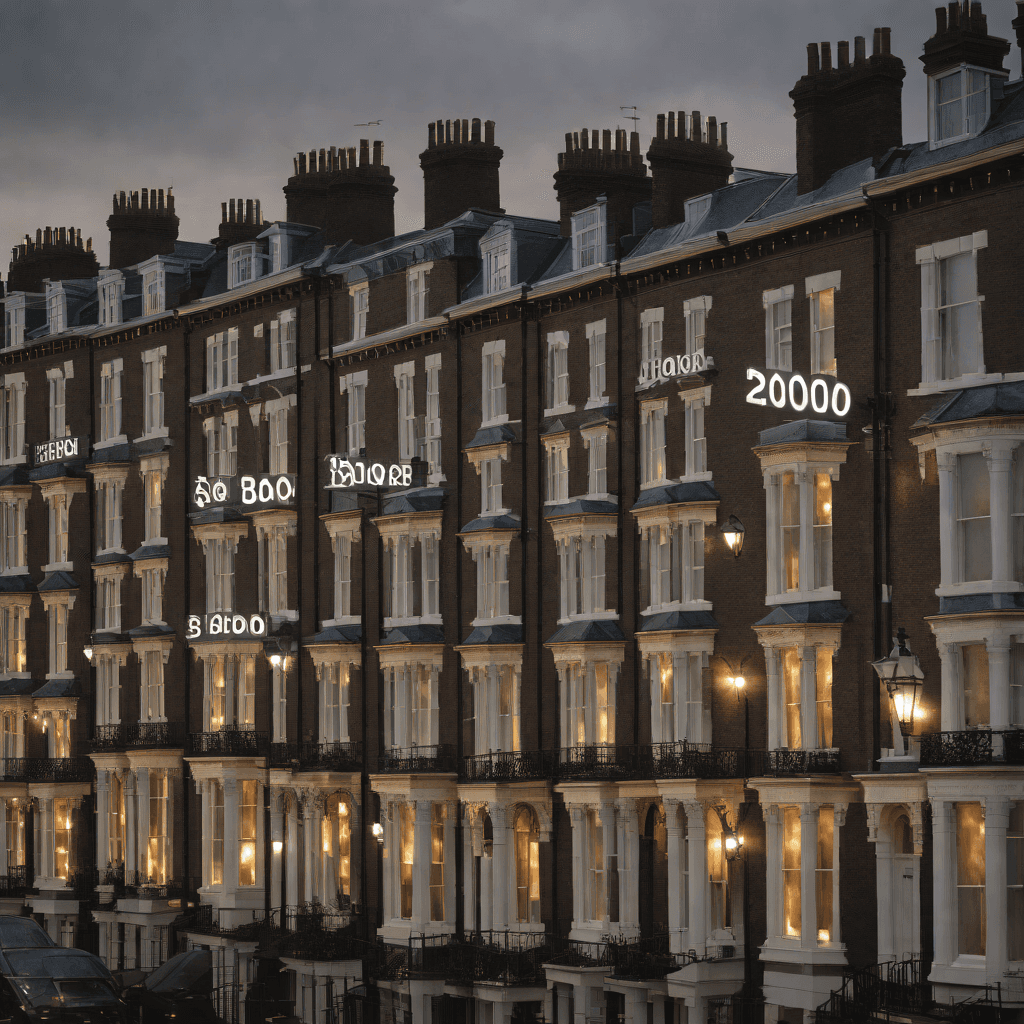
A Symbolic Ceiling in a Fractured Economy
The British housing market has breached a significant psychological and economic floodgate as the average home price surged past the £300,000 mark for the first time. According to the latest Halifax House Price Index, the average property value reached £300,077, propelled by a 0.7% monthly jump. While financial institutions interpret this milestone as a sign of the market regaining a steady footing, a closer analysis reveals a more complex and troubling reality. This valuation peak does not represent a uniform national recovery; rather, it marks a fundamental shift where asset values have permanently outpaced the earning power of a human workforce increasingly under pressure from the 2026 automation crisis.
Critically, the 'record' national average masks deep regional disparities. While the North and Midlands continue to see price growth, London and the South East—historically the engines of the UK market—are experiencing annual declines. This divergence suggests that the national figure is being buoyed by regional surges while the traditional hubs of wealth are cooling under the weight of excessive valuation and shifting labor demographics.
The Atlantic Echo: Deregulation and Institutional Capital
This trend is mirrored in the United States, where the second Trump administration’s aggressive pivot toward deregulation has reshaped real estate. Under the 'Digital Freedom' agenda, housing has increasingly transitioned into a primary vehicle for institutional capital. US house price indices have maintained record levels throughout late 2025 and into early 2026, driven not by organic wage growth, but by speculative tech investment and the parking of capital into hard assets as a hedge against a volatile, automated economy.
The momentum in both markets is fueled by the concentration of wealth into 'asset fortresses.' As the value of human output becomes increasingly unpredictable due to the mass displacement of white-collar roles by autonomous agents, property has become a speculative vault. For the modern worker, the 'affordability' discussed by economists has become a statistical abstraction. Even with mortgage rates stabilizing in early 2026, the barrier to entry remains insurmountable for the 'Automation Generation,' whose incomes are being hollowed out by AI integration.
The Illiquidity Trap and the Demographic Cliff
The structural rigidity of this market creates what analysts call the 'Illiquidity Trap.' Investors are piling into residential real estate to escape the volatility of the new economy, yet this very concentration of capital creates a liquidity bottleneck. The exit strategy for aging homeowners currently depends on a buyer pool that is being systematically defunded by the technology driving the market's optimism.
If the entry-level buyer cannot materialize because their income has been automated away, the high median prices will eventually face a sharp correction. This demographic cliff looms as the older generation’s need for liquidity meets the empty pockets of a younger workforce. The Trump administration’s deregulation has successfully unshackled the real estate market from the restrictive doldrums of the mid-2020s, but it has largely ignored the fundamental decoupling of shelter from labor.
Redefining the Social Contract
The crossing of the £300,000 threshold marks a terminal departure from the post-war ideal of the property-owning democracy. Housing is transitioning into a luxury good reserved for the 'automated class'—those whose wealth is derived from capital and algorithmic ownership rather than traditional labor. This shift suggests that the traditional 30-year mortgage is becoming an industrial-era artifact, replaced by a subscription model managed by institutional landlords.
We are witnessing the birth of a nomadic capitalism, where the most valuable resource is no longer the roof overhead, but the data and capital captured within it. As AGI continues to reshape the professional class, the architecture of our civilization is being re-coded for algorithms rather than inhabitants. The market is finding equilibrium for capital, but it has yet to find a place for the people.
Sources & References
Median and Average Sales Prices of New Houses Sold by Region
U.S. Census Bureau • Accessed 2026-02-06
The median sales price of new houses sold in October 2025 was $392,300, while the average sales price was $498,000.
View OriginalFHFA House Price Index (HPI) Monthly Report
Federal Housing Finance Agency (FHFA) • Accessed 2026-02-06
U.S. house prices rose 0.6% in November 2025, with an annual increase of 1.9%. The HPI reached an all-time high of 439.30.
View OriginalQuarterly Median Single-Family Home Price Report
National Association of Realtors (NAR) • Accessed 2026-02-06
The national median single-family home price rose to $414,900 in the fourth quarter of 2025, a 1.2% increase year-over-year.
View OriginalHalifax House Price Index - January 2026
Halifax (Lloyds Banking Group) • Accessed 2026-02-06
The average UK house price reached £300,077 in January 2026, the first time the £300,000 threshold has been crossed.
View OriginalUK Average House Price: £300,077
Halifax • Accessed 2026-02-06
UK Average House Price recorded at £300,077 (2026 (Jan))
View OriginalLawrence Yun, Chief Economist
National Association of Realtors (NAR) • Accessed 2026-02-06
The 14% increase in home sales in 2026 will be driven by more inventory and stabilized mortgage rates in the low 6% range.
View OriginalDr. Skylar Olsen, Chief Economist
Zillow • Accessed 2026-02-06
Affordability is the central theme of 2026. We expect 20 of the 50 largest US metros to become affordable for median-income households this year.
View OriginalWhat do you think of this article?