Cognitive Overclocking: Why ADHD Medication Is the Canary in the 2026 Productivity Mine
The Midnight Oil of the Algorithmic Age
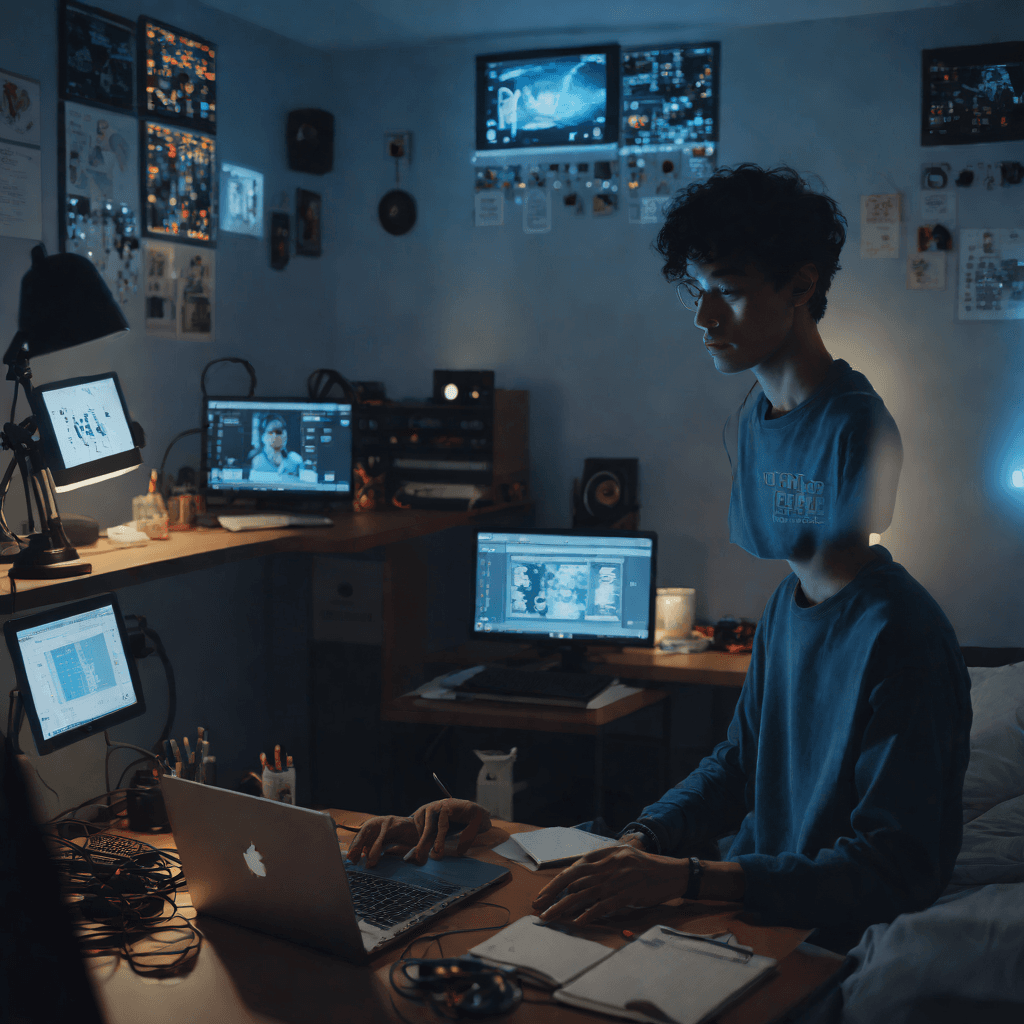
The academic landscape of 2026 is no longer defined by the library's closing hours, but by the relentless, millisecond-driven pace of the AI-integrated curriculum. As the "Adjustment Crisis" forces students to prove their value against generative models that never sleep, the American classroom has transitioned into a high-stakes arena of cognitive endurance. For Sarah Miller (a pseudonym), a computer science major at a top-tier engineering school, the 3:00 AM glow of her laptop isn't fueled by caffeine, but by a "study aid" purchased from a classmate. This transition from clinical treatment to competitive necessity is reflected in a Health Alert Network advisory from the Centers for Disease Control and Prevention (CDC), which reveals that 14.5% of college students now report non-medical use of prescription stimulants.
In Miller’s world, the "midnight oil" is increasingly a chemical compound designed to bridge the widening gap between human biological limits and the bandwidth demands of a machine-led economy. This surge in misuse highlights a systemic failure to adapt educational frameworks to the realities of a post-AGI labor market, treating student focus as a bottleneck to be solved with pharmacology. While the National Institutes of Health (NIH) reported in 2025 that the national prevalence of prescription stimulant misuse sits at 2.4%, the concentration of use in high-pressure academic hubs suggests a localized "arms race" that defies national averages.
Dr. Sean Esteban McCabe, Director of the Center for the Study of Drugs, Alcohol, Smoking and Health at the University of Michigan, notes that the solution isn't necessarily less prescribing for those with legitimate diagnoses, but better ways to monitor and screen for stimulant access to prevent the widespread diversion seen in schools. The current environment incentivizes the conversion of a medical necessity into a black-market commodity, where a single pill is traded as a "productivity token" in the race for elite internships and entry-level roles that are rapidly being automated.
The Policy Pivot: Deregulation and Supply Volatility
The rapid deregulation defining the second year of the Trump administration has fundamentally altered the landscape of American healthcare. Under the current administration’s push to streamline federal oversight and reduce "bureaucratic friction," the authority to prescribe Schedule II stimulants has shifted decisively from psychiatric specialists to general practitioners. While intended to alleviate chronic wait times, this pivot has effectively transformed d-amphetamine and methylphenidate into tools of general productivity rather than targeted clinical interventions.
This accessibility surge coincided with the Drug Enforcement Administration’s (DEA) late 2025 decision to increase aggregate production quotas for these substances. The government was forced to increase these production limits to address legitimate shortages while simultaneously attempting to mitigate the risks of illicit diversion. This increase in the federal ceiling is a silent admission that the American economy is now inextricably linked to the pharmaceutical enhancement of its workforce. As policymakers focus on securing "America First" technological hegemony, the underlying human infrastructure is being pushed to its chemical breaking point.
For David Chen (a pseudonym), a software developer in Austin, the reality of a 14-hour workday is not merely about a heavy task list; it is about maintaining a "bandwidth" that matches his company’s AI-driven deployment cycles. When his local pharmacy went on backorder for three weeks following supply chain disruptions, Chen turned to an unverified online distributor to maintain the sync speed required to compete with his firm's new autonomous coding agents. His story mirrors a broader trend where stimulants are no longer viewed as treatment for a disorder, but as essential fuel for the modern labor market's biological bottleneck.
The Productivity Trap: Human Limits vs. AI Benchmarks
The "Adjustment Crisis" of 2026 is ultimately manifesting as a refusal to accept human fallibility, treating the need for rest not as a biological imperative but as a technical bug to be patched. In the current political climate of industrial protectionism, the pressure to "out-innovate" rivals has trickled down from corporate boardrooms into the American classroom. Seeking an ADHD diagnosis for a child has, for some parents, felt less like a medical intervention and more like a tactical survival strategy to ensure they aren't "automated out" of the future job market.
By pathologizing the very traits—distraction, slow reflection, and fatigue—that distinguish humans from algorithms, society is engineering a workforce that is technically productive but biologically bankrupt. The CDC warns that disrupted access to these medications significantly increases the risk of injury and overdose, as desperate individuals turn to unregulated markets. We are witnessing a stratification of cognitive access where the ability to "focus" is becoming a luxury good, regulated by federal quotas and gatekept by an overburdened medical system.
Redefining Excellence in a High-Speed World
True structural reform requires a shift in focus from the medicine cabinet to the redesign of the educational and professional environments that incentivize misuse. Relying on production quotas is a reactive strategy that ignores the deeper reality that 2026's productivity culture has outpaced human evolution. Until we adjust our standards to value human-centric qualities—creativity, empathy, and ethical reasoning—over machine-like output, we will continue to use our youth as the test subjects for a world that prioritizes bandwidth over well-being.
If we successfully engineer a world where humans can only compete by chemically erasing their natural limitations, we must ask if we have actually enhanced humanity or merely built a more efficient cage. The widespread misuse of stimulants is the primary canary in the coal mine for a society that has decoupled biological limits from technological expectations. If the goal of the 2026 economy is total efficiency, the human brain—in its natural, distracted, and restful state—becomes the ultimate inefficiency to be solved.
Sources & References
Disrupted Access to Prescription Stimulant Medications Could Increase Risk of Injury and Overdose
Centers for Disease Control and Prevention (CDC) • Accessed 2026-02-08
Health Alert Network advisory highlighting the risks associated with stimulant shortages and the growing trend of misuse among young adults.
View OriginalAdjustment to the Aggregate Production Quota for d-Amphetamine (For Sale) and Methylphenidate (For Sale) for 2025
Drug Enforcement Administration (DEA) • Accessed 2026-02-08
Federal notice adjusting the 2025 production quotas to address ongoing shortages while attempting to mitigate diversion risks.
View OriginalPrevalence of Prescription Stimulant Misuse (PSM): 2.4%
National Institutes of Health (NIH) • Accessed 2026-02-08
Prevalence of Prescription Stimulant Misuse (PSM) recorded at 2.4% (2025)
View OriginalDr. Sean Esteban McCabe, Professor and Director of the Center for the Study of Drugs, Alcohol, Smoking and Health
University of Michigan • Accessed 2026-02-08
The key takeaway here is not that we need to lessen prescribing of stimulants for students who need them, but that we need better ways to store, monitor, and screen for stimulant access and use among youth to prevent misuse.
View OriginalWhat do you think of this article?