The Algorithmic Valedictorian: Technical Elitism as the New Social Anesthetic
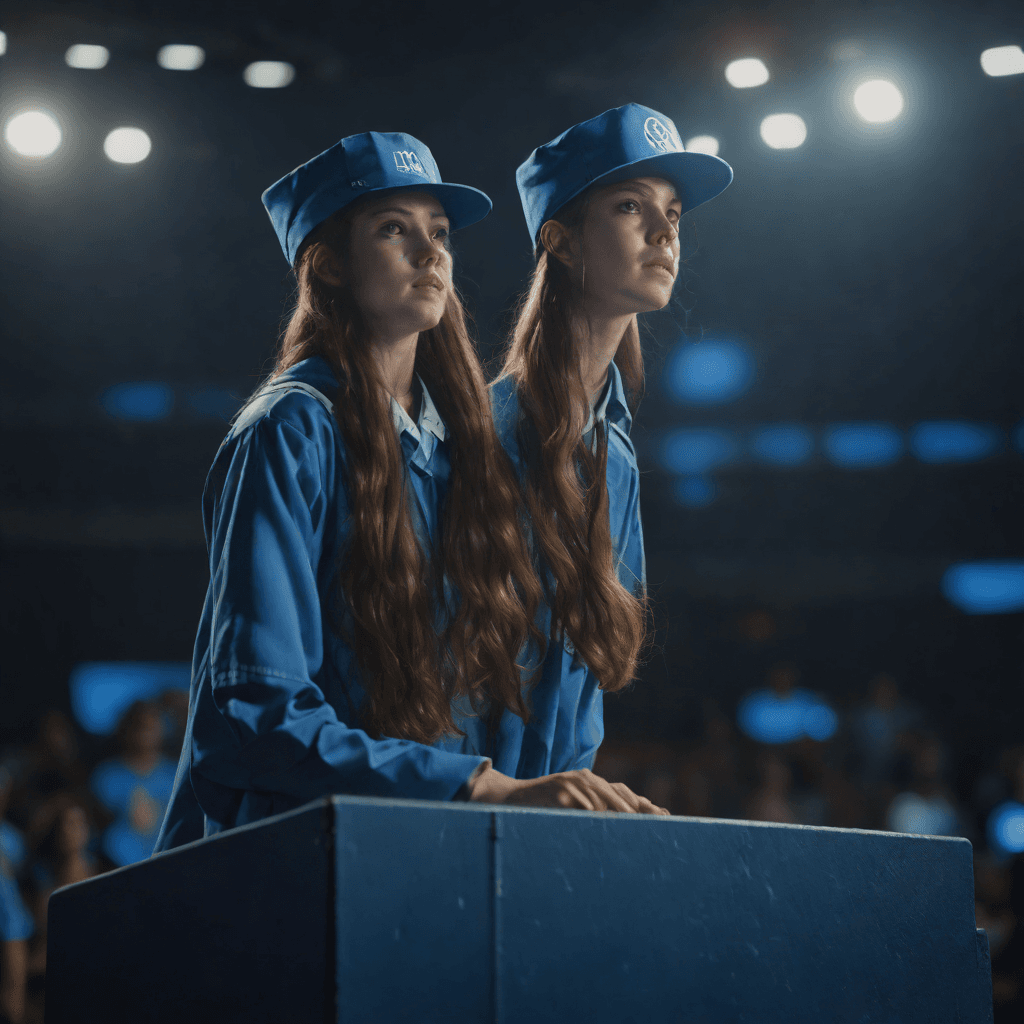
The Blue Light in the Dark: Education as a Survivalist Tactic
Today, February 8, 2026, millions of American households are illuminated only by the sterile blue light of smartphone screens as a synchronized collapse of energy and digital systems marks a definitive shift toward global fragmentation. Amidst this darkness, a new social hierarchy is being solidified. The archetype of the American hero is undergoing a quiet, algorithmic transformation that mirrors the nation’s retreat into sovereign digital zones. The varsity jacket has been replaced by the technical certification, and the 'star athlete' has been superseded by the 'Algorithmic Valedictorian.'
This cultural elevation of the high-achiever is not an organic evolution of student interests. It is a strategic rebranding of academic compliance as status, designed to maintain order and distract the public from the total failure of physical infrastructure during the 'Trump 2.0' pivot to sovereign economic zones. As the administration pushes for unchecked technological acceleration to secure hegemony against China, it has effectively weaponized the classroom to produce a tier of compliant, technically proficient youth optimized for the digital frontiers of an isolationist era.
The Inversion of the Status Gap
Sociological hierarchies are being forcefully inverted to serve the demands of the current administration's deregulation agenda. In his foundational 1961 study, The Adolescent Society, sociologist James Coleman identified a "status gap" where social standing was driven by physical prowess and social activities. Coleman observed that 70% of male students aspired to be star athletes, while less than 30% prioritized academic brilliance. Coleman warned that this peer-group subculture could "hinder the educational process" unless academic success was integrated into the status system.
In the reality of 2026, the Trump administration has forced this integration. The "star athlete" offers little utility in a world governed by AGI models and 6G resource management. The "geek" is no longer an outcast but a strategic asset whose status is bolstered to convince the youth that their only path to survival in a resource-scarce environment is through absolute academic conformity. This shift creates a tier of high-achievers who are functionally indispensable to the new industrial order, even as their physical environments stagnate.
Gatekeeping the New Meritocracy
The gatekeeping of this new elite status is increasingly tied to what the National Center for Education Statistics (NCES) calls the "Home Resource Composite." According to The Condition of Education 2024 report, socioeconomic status (SES) remains the single strongest predictor of academic achievement. By introducing a new composite SES measure for 2025 that prioritizes parental education and high-bandwidth home resources over simple lunch eligibility, the government has essentially mapped the borders of the new educational "safe zones."
For students like David Chen (a pseudonym), a high school junior in a Pennsylvania town struggling with frequent power grid instabilities, the pursuit of the valedictorian title is a literal lifeline. His parents prioritize the monthly cost of a private satellite uplink over repairing a leaking roof, understanding that academic ranking is the only currency that still carries weight in the "Adjustment Crisis." This shift illustrates a broader trend where technical compliance is the only sanctioned form of social mobility, ensuring that the new "meritocracy" is effectively an inherited privilege.
The Psychological Cost of Algorithmic Status
This elevation of status-based achievement comes at a severe cost to the social fabric of the American school. Mitch Prinstein, Chief Science Officer at the American Psychological Association (APA), has long distinguished between status-based popularity—which is often aggressive and detrimental—and likability-based popularity, which predicts long-term professional success and positive life outcomes. By forcing students into a hyper-competitive "status gap" to secure their place in the 2026 economy, the system is sacrificing the "likability" and social connectedness that the CDC previously pinned at a fragile 61.5%.
We are producing a class of high-achievers who are technically proficient but socially isolated, perfectly molded for an algorithmic economy but ill-equipped for human governance. This divide serves as a strategic distraction: while the public fixates on the "technical brilliance" of the next generation, the total failure of the nation's physical infrastructure—roads, bridges, and power grids—is ignored in favor of the digital triumph. The valedictorian of 2026 is the student who has the private resources to ignore the fact that the classroom is falling apart.
The 'Dead Cat' in the Classroom
The sudden cultural fixation on the "rebranded valedictorian" functions as a sophisticated "Dead Cat" strategy. While the administration pushes for aggressive deregulation and technological isolationism, the media’s pivot toward celebrating academic elitism acts as a political diversion. This narrative shift effectively distracts the public from the reality that foundational learning is in decline. Data from the 2024 NCES report indicates that higher percentages of 4th and 8th graders performed below the NAEP Basic level compared to 2019, underscoring a deepening crisis that contradicts the "valedictorian" hype.
By framing the ability to succeed amidst infrastructure failure as a personal merit, the state abdicates its responsibility for collective decay. If success is defined solely by one's ability to adjust to the automation wave, then the millions displaced by AI are framed not as victims of policy, but as individuals who failed to compete. The valedictorian is the new hero of the American mythos because they justify a system that has traded broad social stability for specialized, algorithmic survival.
Ultimately, if we successfully refine the human mind to mirror the efficiency of an algorithm, what remains of the "status" we are so desperately trying to protect? As we retreat into our digital and economic bunkers, the cultural narrative of the elite student ensures that we look at our report cards rather than our crumbling roads. We are training a generation to be the master mechanics of a virtual world while the real world outside their windows continues to rot.
Sources & References
The Condition of Education 2024
National Center for Education Statistics (NCES) • Accessed 2026-02-08
The 2024 report emphasizes the strong correlation between family socioeconomic status (SES) and academic achievement. It introduces a new composite SES measure for 2025 that considers parental education and home resources, moving beyond just lunch eligibility.
View OriginalThe Adolescent Society: The Social Life of the Teenager and its Impact on Education
The Free Press / JSTOR (James Coleman) • Accessed 2026-02-08
Foundational study by James Coleman in 1961 that identified a distinct adolescent subculture where social status was primarily driven by athletic ability and social activities rather than academic brilliance, creating a 'status gap' for high achievers.
View OriginalPrevalence of School Connectedness: 61.5%
CDC Adolescent Behaviors and Experiences Survey (ABES) • Accessed 2026-02-08
Prevalence of School Connectedness recorded at 61.5% (2021)
View OriginalMitch Prinstein, Chief Science Officer
American Psychological Association (APA) • Accessed 2026-02-08
Likability is a strong predictor of positive life outcomes... Individuals who are popular due to their likability tend to experience greater academic success and earn more money in their professional lives.
View OriginalJames Coleman, Sociologist (Late)
University of Chicago / Johns Hopkins University • Accessed 2026-02-08
This peer-group subculture, with its emphasis on non-academic achievements for status, can hinder the educational process.
View OriginalWhat do you think of this article?