The Plastic Primary: How South Korea’s Holiday Banners Reveal Systemic Fragility
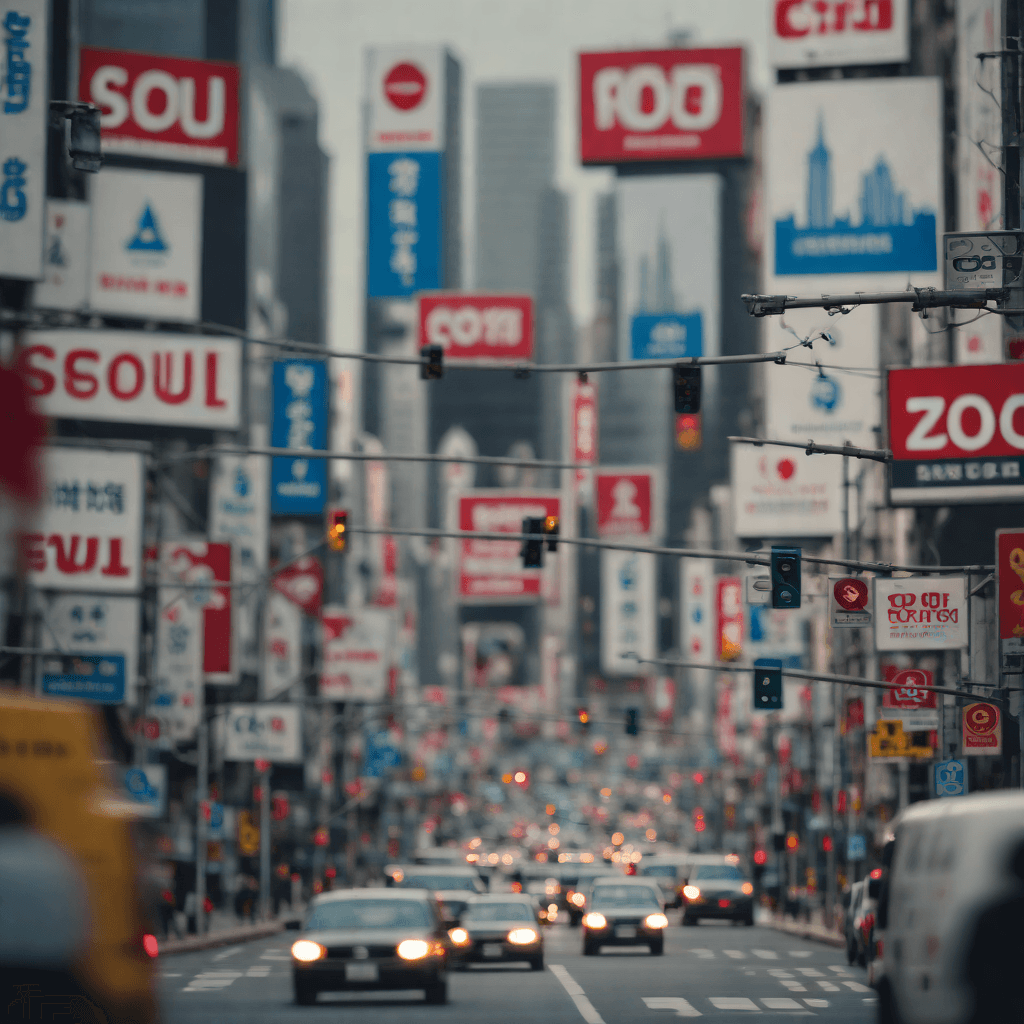
A Skyline Choked by Seasonal Sentiments
In the high-traffic intersections of Seoul’s Gangnam district, the digital brilliance of the 2026 skyline is increasingly obscured by a low-tech relic of political warfare: the vinyl banner. As the February 17th Lunar New Year approaches, South Korea’s urban landscape has transformed into a "Plastic Primary." Political parties are aggressively exploiting festive greetings to bypass strict campaign finance laws and saturate the public consciousness ahead of the June local elections.
This visual congestion is not merely an aesthetic grievance; it is a calculated exploitation of the Outdoor Advertisement Act, which permits political banners for 15 days under the guise of "normal political activities." According to directives from the Ministry of Interior and Safety (MOIS), the government has been forced to mobilize a nationwide crackdown on these advertisements, citing immediate threats to driver visibility and pedestrian safety during the Seollal mass migration.
For David Chen, an American urban policy analyst observing the 2026 electoral landscape in Seoul, the proliferation of these banners represents a form of "visual spam." Chen notes that while the banners are ostensibly for holiday well-wishing, they function as unregulated billboards in a country where official campaign periods are otherwise strictly curtailed. The tension between the right to political expression and the state’s duty to maintain safe public infrastructure has reached a breaking point, as municipal workers struggle to remove thousands of non-recyclable banners that obstruct traffic signs and safety signals.
The Global Mirror: Deregulation and Systemic Risk
This friction between public safety and deregulation in Seoul mirrors the current debate within the United States. Under the second Trump administration, the "America First" pivot has prioritized the elimination of bureaucratic hurdles over long-term structural integrity. In mid-2025, the U.S. Department of Energy (DOE) launched its Zero-Based Regulation initiative, rolling back dozens of federal energy regulations to realize billions in compliance savings. However, the cost of this efficiency is under intense scrutiny.
As the American Society of Civil Engineers (ASCE) noted in its 2025 Infrastructure Report Card, the U.S. energy grid remains at a precarious D+ grade. This rating reflects a systemic vulnerability to the extreme weather events that have characterized early 2026. The parallels between Seoul’s "Plastic Primary" and the U.S. energy crisis suggest that deregulation often functions as a high-interest loan against the future.
Dr. Sanjay Patnaik, Director of the Center on Regulation and Markets at the Brookings Institution, argues that the aggressive pivot toward deregulation in 2025 has created a dual-edged sword. While it offers lower immediate costs, it simultaneously increases systemic risk in critical infrastructure. Whether it is the visual infrastructure of a Korean intersection or the electrical infrastructure of the American heartland, the removal of guardrails in the name of political or economic "freedom" leaves the public vulnerable to the next inevitable shock.
The Administrative Burden of Political Immunity
The 15-day exemption for political banners has evolved from a protection of democratic expression into a recurring administrative crisis. Local municipalities are currently being mobilized for a massive nationwide cleanup ahead of the Lunar New Year mass migration. While the legal framework was intended to restrict political displays to a small window, parties have mastered a "cat-and-mouse" game, re-installing modified banners as soon as they are removed.
The financial and logistical cost of maintaining this "plastic primary" falls heavily on local district offices. Kim Jun-ho, a municipal worker in Seoul’s Gangnam District, describes the pre-holiday period as a state of extreme "administrative fatigue." His team is forced to prioritize the removal of sagging political banners over the structural safety inspections of large outdoor billboards. This diversion of labor mirrors the broader systemic risks seen in the U.S., where the ASCE has highlighted a $5.1 trillion total infrastructure funding gap over the next decade.
Seeking a New Civic Protocol
Establishing a new civic protocol for festive politics requires a fundamental re-evaluation of how public space is partitioned. The MOIS crackdown and the subsequent fines for repeated violations of the Outdoor Advertisement Act serve as a necessary, if belated, reassertion of civic order. However, as local candidates continue to weaponize holidays for visibility, the fundamental question remains whether a society can truly be safe when its public squares are treated as disposable battlegrounds.
For international observers, the path forward necessitates a shift from reactive enforcement to the establishment of permanent "banner-free zones." A sustainable civic protocol would require a transition from physical saturation to verified digital outreach. By reclassifying political signage as a form of "speech with a footprint," subject to the same safety oversight as commercial billboards, the state can protect the public's right to safe transit without silencing the democratic process.
If we continue to trade the clarity of our horizons for the noise of constant messaging, the fundamental contract of civic protection is weakened. The cleanup of these illegal advertisements is not merely a maintenance task, but a necessary reclamation of public space from a political class that values the plastic primary over the safety of the citizenry.
Sources & References
행정안전부, 설 연휴 대비 불법 광고물 일제 정비 추진 (MOIS to Conduct Simultaneous Cleanup of Illegal Advertisements for Lunar New Year)
South Korean Ministry of Interior and Safety (행정안전부) • Accessed 2026-02-08
The Korean government is mobilizing local municipalities to conduct a nationwide crackdown on illegal banners and advertisements ahead of the Seollal (Lunar New Year) holiday. The focus is on ensuring driver visibility and pedestrian safety during the mass migration period.
View Original2025 Report Card for America's Infrastructure
American Society of Civil Engineers (ASCE) • Accessed 2026-02-08
The US energy grid received a D+ grade in the latest assessment, reflecting high vulnerability to extreme weather and systemic underinvestment. While the overall grade is a C, the energy sector's decline highlights the risks of deregulation.
View OriginalZero-Based Regulation to Unleash American Energy (Executive Order Initiative)
U.S. Department of Energy (DOE) • Accessed 2026-02-08
In mid-2025, the DOE launched a massive deregulatory effort to streamline the Code of Federal Regulations, targeting the elimination of 47 major energy regulations to reduce compliance costs.
View OriginalUS Energy Grid Rating: D+
ASCE 2025 Infrastructure Report Card • Accessed 2026-02-08
US Energy Grid Rating recorded at D+ (2025)
View OriginalDr. Sanjay Patnaik, Director of the Center on Regulation and Markets
Brookings Institution • Accessed 2026-02-08
The aggressive pivot toward deregulation in 2025 has created a dual-edged sword: lower immediate costs but increased systemic risk in critical infrastructure.
View OriginalSeoul to intensify crackdown on illegal political banners
The Korea Times • Accessed 2024-01-08
Provides legal background on the Outdoor Advertisement Act amendments which limit political banners to 15 days, forming the basis for the 2026 inspections.
View OriginalKorean officials prep for Seollal travel surge amidst safety warnings
The Associated Press • Accessed 2026-02-07
Contextualizes the banner crackdown within the broader Seollal safety measures including emergency service readiness.
View OriginalWhat do you think of this article?