Powerless Ballots: Why the Ozaki Legacy Fails the 2026 Energy Crisis
The Longevity of Principle in an Age of Decay
Yukio Ozaki's record remains an anomaly in the history of global democracy, representing a level of political stamina that borders on the mythic. According to official records from the National Diet Library (NDL) of Japan, Ozaki served an unprecedented 25 consecutive terms in the House of Representatives, spanning 63 years from the first general election in 1890 until 1953. Known as the 'God of Constitutional Politics' (Kensei no Kami), his career was defined by a relentless defense of parliamentary transparency and liberal convictions. In the context of February 2026, where political lifespans are often shortened by the volatile cycle of social media and rapid economic shifts, Ozaki’s longevity serves as a reminder that the foundation of a republic is built on the consistency of its representatives.
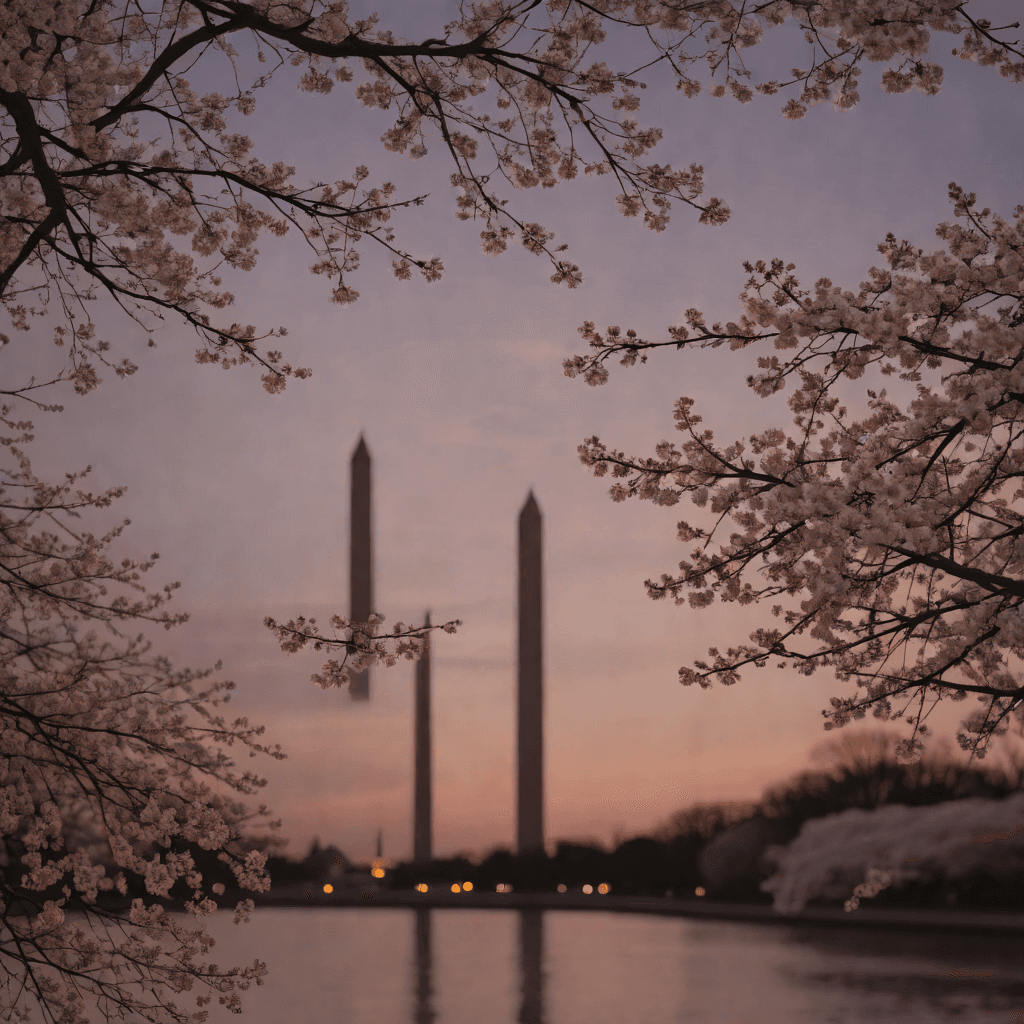
This durability was not merely a feat of electoral math but a commitment to a constitutional government that prioritized the public will over the whims of an entrenched oligarchy. The physical manifestation of this democratic idealism crossed the Pacific in 1912, long before the current era of isolationist rhetoric and aggressive deregulation. The U.S. National Park Service (NPS) documents that as the Mayor of Tokyo, Ozaki gifted 3,020 cherry trees to Washington D.C. as a symbol of burgeoning friendship and shared civilizational goals. These trees, the first of which were planted by First Lady Helen Taft, were intended to be living infrastructure—a permanent, blooming testament to the strength of international cooperation.
However, as the 2026 energy crisis shutters power grids across the United States, the contrast between Ozaki’s vision of enduring "friendship infrastructure" and the current reality of a decaying, deregulated domestic grid becomes painfully stark. The gift represented a belief that leadership involves planting seeds for a century of stability, a philosophy that feels increasingly alienated from the short-term deregulation priorities of the second Trump administration. For citizens caught in the crosshairs of the current energy instability, the traditional notion of "voting as a solution" is being tested by the sheer scale of systemic failure.
The Infrastructure Trap: When Voting Cannot Fix the Grid
In the winter of 2026, the contrast between democratic theory and systemic failure has never been more stark for the American electorate. Michael Johnson (pseudonym), an energy grid consultant based in Houston, represents the modern American voter who finds themselves disenfranchised by infrastructure that no longer responds to civic participation. Despite his consistent engagement with local and federal elections, Johnson watched as his neighborhood’s power failed during the recent February outages—a direct result of infrastructure neglect masked by aggressive deregulation.
While Ozaki advocated for the independent voter as the final arbiter of political health, the 2026 reality suggests that when the physical systems—the wires, the pipes, and the grids—are fractured, the individual ballot loses its kinetic energy. Participation in the democratic process remains a moral requirement, yet it is insufficient when the systems themselves are designed to prioritize immediate cost-cutting over long-term resilience. This illustrates a growing paradox: a voter can be perfectly informed and independent, as Ozaki championed in his autobiography, but they remain powerless against the "Adjustment Crisis" where physical infrastructure has been sacrificed for the sake of unchecked technological acceleration.
The decay is not limited to American shores, as the infrastructure crisis in Niigata, Japan, mirrors the failures of the U.S. grid, suggesting a global breakdown in long-term governance. In both regions, the "Trump 2.0" era’s focus on deregulation has created a friction point with the essential, often "inefficient" maintenance required for public safety in an increasingly automated world. Professor Emeritus Marius B. Jansen once noted that Ozaki’s career represented a struggle for a government responsive to the people, but in 2026, the "people" find their will blocked by the physical borders of failing transformers and collapsing digital governance.
The Strategic Mirage: Coalition Shifts and Voter Alienation
The modern political landscape in 2026 is increasingly defined by a "Strategic Mirage," where ruling coalitions in both Washington and Tokyo weaponize the rhetoric of "voter duty" to insulate themselves from the consequences of systemic neglect. While the Trump administration accelerates its pivot toward an "America First" deregulation framework, the February 8th power grid failures have exposed a dangerous vacuum where accountability should reside. The administration frames these shifts as a return to free-market liberty, yet the resulting infrastructure fragility mirrors the very "whims of an oligarchy" that Ozaki spent his 63-year career resisting.
For Sarah Miller (pseudonym), a small business owner in the Midwest, the "liberty" of a deregulated energy market has manifested as a three-day blackout that crippled her operations. Her experience highlights a systemic failure: individual civic duty cannot retroactively engineer a deregulated power sector that prioritizes short-term dividends over long-term resilience. This mirrors the recent LDP-DPFP coalition shifts in Japan, which are touted as "pragmatic governance" while regions struggle with infrastructure freeze-overs that threaten the basic safety of the electorate. When political leaders call for "voter duty" today, they are often asking the public to validate a system that has already decided to stop investing in the physical foundations of the future.
Beyond the Ballot: A Blueprint for Functional Democracy
To bridge this widening chasm, Maria Rodriguez (pseudonym), a senior policy analyst in Chicago, argues that the "constitutional government" Ozaki championed must be radically restructured to address the era of automation. Rodriguez proposes that in 2026, systemic resilience can no longer rely solely on the moral fortitude of independent voters, but must instead be encoded into the digital and physical architecture of the nation. This model of "Resilient Governance" suggests that public safety protocols and infrastructure durability must be embedded directly into the AI-driven load balancers that now manage our deregulated energy markets, making them legally non-negotiable.
By synthesizing Ozaki’s legacy of civic duty with a demand for systemic accountability, the United States can move toward a new democratic model that protects the "will of the people" not just during elections, but in the very code that keeps the lights on. The struggle for a responsive government, as Jansen described it, must shift from the moral duty of the voter to the physical resilience of the state itself. If the "God of Constitutional Politics" were to cast a ballot in a 2026 blackout, his greatest insight might be that the ballot is merely the ghost of a lost ideal unless it is backed by the bone and sinew of a functioning nation.
Sources & References
Diet Member Records: Yukio Ozaki (1890-1953)
National Diet Library (NDL), Japan • Accessed 2026-02-08
Official records confirm Ozaki served 25 consecutive terms in the House of Representatives, from the first general election in 1890 until 1953. He is officially recognized as the 'God of Constitutional Politics' (Kensei no Kami).
View OriginalHistory of the Cherry Trees
U.S. National Park Service (NPS) • Accessed 2026-02-08
The NPS documents the 1912 gift of 3,000 cherry trees from Tokyo Mayor Yukio Ozaki to Washington D.C. as a symbol of friendship, highlighting his role in early 20th-century US-Japan diplomacy.
View OriginalConsecutive Election Victories: 25
National Diet Library of Japan • Accessed 2026-02-08
Consecutive Election Victories recorded at 25 (1953)
View OriginalMarius B. Jansen, Professor Emeritus of History and East Asian Studies
Princeton University • Accessed 2026-02-08
Ozaki's career represents a unique continuity in the Japanese struggle for a constitutional government that would be responsive to the will of the people rather than the whims of an oligarchy.
View OriginalOzaki Yukio: Japanese Politician
Britannica • Accessed 2024-05-10
Provides a comprehensive biographical overview of his liberal convictions and his role as the 'father of parliamentary politics'.
View OriginalWhat do you think of this article?