The One-Inch Margin: Tokyo’s Infrastructure Stasis and the Global Erosion of Physical Resilience
The Silent Halt at the Campus Gates
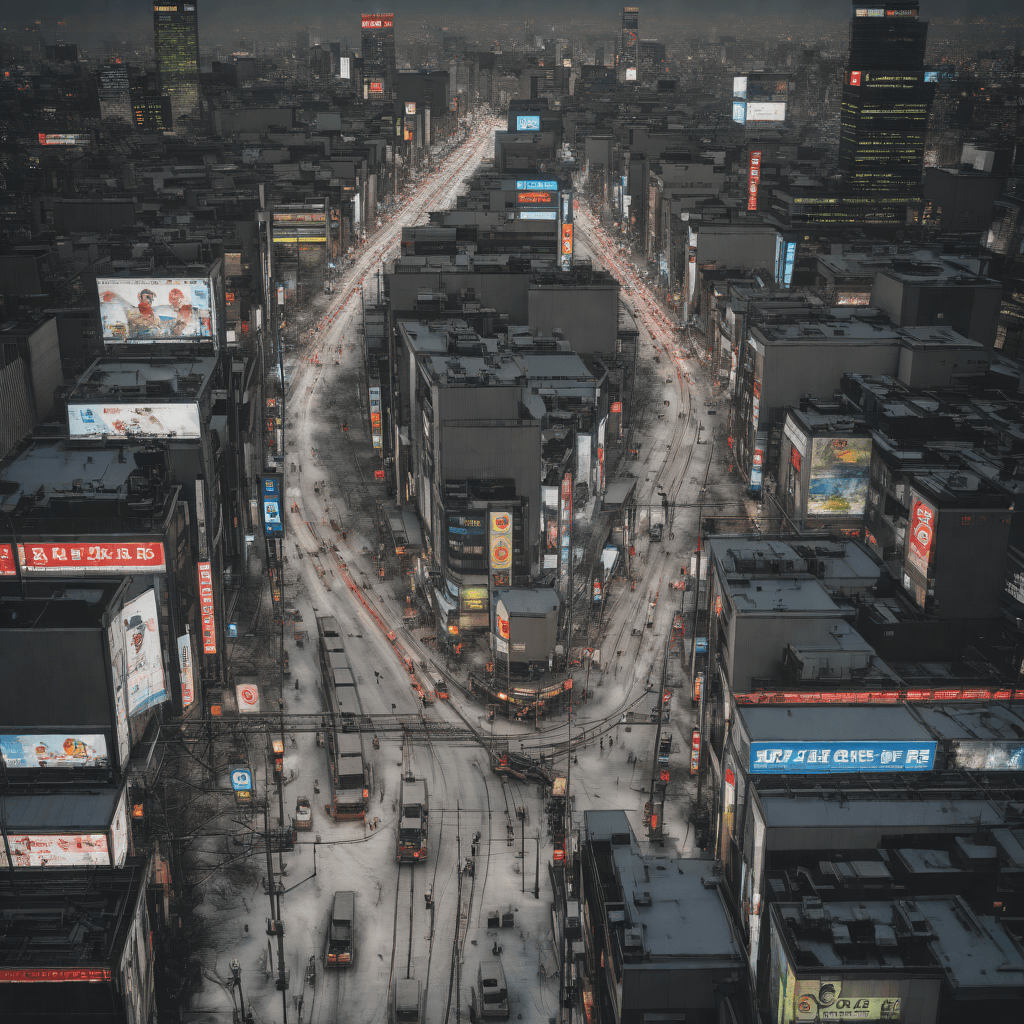
A mere five centimeters of snow—hardly a dusting by the standards of Chicago or Buffalo—effectively paralyzed one of the world’s most advanced metropolitan centers on Sunday, February 8, 2026. This localized friction, while seemingly minor, exposes a deepening global crisis of infrastructure fragility. According to data from the Japan Meteorological Agency (JMA), snow accumulation in Tokyo’s Chiyoda Ward reached 3cm by early morning and peaked at 5cm by late afternoon. While the southern Kanto plains were forecast to see up to 8cm, the modest reality was enough to trigger widespread transit warnings and icy road alerts. This meteorological event did more than delay commuters; it exposed the narrowing margins of safety in modern urban environments that have prioritized digital optimization over physical resilience.
For thousands of students, a decade of academic preparation met an immovable object in the form of a thinning transportation grid. Komazawa University was forced to issue an official emergency notice, instructing examinees to prioritize safety and providing flexible start times for those whose arrival was delayed by transit failures. This disruption forced a direct confrontation between the rigid schedule of high-stakes testing and the reality of a city unprepared for a predictable winter event. While the university offered administrative flexibility, the systemic failure to maintain seamless physical access during minor weather events creates an invisible barrier to institutional reliability and meritocratic fairness.
The Measurable Cost of the Weather Tax
This erosion of physical reliability carries quantifiable costs that far exceed the price of a train delay. Mizuhiro Suzuki, a researcher in the Economics of Education at University Research Affiliate, has observed that external factors on exam dates significantly limit the accuracy of measuring cognitive ability. Suzuki’s research indicates that snow accumulation exceeding 10cm can decrease matriculation shares by 0.11 percentage points, proving that infrastructure failures directly skew educational outcomes. Even at the 5cm level seen this weekend, the friction introduced into the system forces a redistribution of resources and focus that a more resilient society would have absorbed without a second thought.
Infrastructure unreliability functions as a silent, regressive tax on human capital development. When a society’s digital twin is perfect but its physical reality is interrupted by a flurry, the data used to drive national policy becomes inherently flawed. The "One-Inch Margin" becomes a lottery of geography and transit luck rather than a reflection of skill. As we deregulate the physical world to fund the digital frontier, we are inadvertently creating a society where a dusting of snow can rewrite a student's future.
Efficiency as a National Vulnerability
The paralyzing effect of this Sunday's snowfall serves as a stark warning for global urban planners who have traded physical buffers for digital lean-management. The systemic risk of this fragility is a global phenomenon, mirrored in the United States by the catastrophic energy infrastructure failures reported this month. Under the second term of the Trump administration, an aggressive pivot toward deregulation has often traded robust public maintenance for short-term technological acceleration. While the White House prioritizes the removal of "regulatory drag" to boost quarterly GDP, the physical maintenance of the commons—such as salt reserves, redundant power systems, and grid hardening—is often the first line item to be slashed as an inefficiency.
Michael Johnson, an urban planning analyst tracking trans-Pacific infrastructure trends, argues that the focus on "lean" operations has removed the necessary redundancies from our physical world. As the U.S. grapples with its own grid vulnerabilities, the Tokyo paralysis serves as a warning: without a reinvestment in the "boring" basics of public transit and energy resilience, the most sophisticated economies remain at the mercy of minor environmental anomalies. The pursuit of technological hegemony, including the 6G rollout and AGI server farms, is leaving the underlying physical transport and power grids—the literal veins of the free market—dangerously brittle.
The Geopolitical Risk of Infrastructure Stasis
In the 2026 landscape, the "Adjustment Crisis" is not merely about labor displacement by automation, but about the physical impossibility of sustaining a high-tech society on a crumbling foundation. Analysts now suggest that national stability will be measured not by the speed of a country’s AI models, but by the reliability of its power grid and the clearing of its roads. This erosion of physical resilience constitutes a "soft" security threat that undermines investor confidence more effectively than any tariff or trade war. When physical systems fail, the promise of national stability dissolves, revealing a nation that is digitally advanced but physically stagnant.
If we have mastered the art of predicting the storm with total digital precision, we must ask why we have simultaneously lost the will to build a physical world that can withstand it. We are building digital cathedrals on foundations of sand—or in this case, slush. The five centimeters of snow in Tokyo and the grid failures in the U.S. are not separate incidents; they are symptoms of a global philosophy that views physical maintenance as a legacy cost rather than a prerequisite for survival. If a one-inch margin of snow can delay the future of a generation, the global market must decide how much stasis it is willing to tolerate in the name of digital-only progress.
Sources & References
Weather Monitoring and Snow Accumulation Data: February 8, 2026
Japan Meteorological Agency (JMA) • Accessed 2026-02-08
Official recording of snow accumulation in central Tokyo (Chiyoda Ward) reaching 3cm by 05:00 and 5cm by 16:00 on Sunday, Feb 8, 2026.
View OriginalNotice Regarding Entrance Examination Implementation (Feb 8, 2026)
Komazawa University • Accessed 2026-02-08
Official notice instructing examinees to prioritize safety and contact the university if transportation delays prevent on-time arrival.
View OriginalSnow Accumulation Depth (Tokyo): 5 cm
Japan Meteorological Agency • Accessed 2026-02-08
Snow Accumulation Depth (Tokyo) recorded at 5 cm (2026)
View OriginalMizuhiro Suzuki, Researcher in Economics of Education
University Research Affiliate • Accessed 2026-02-08
Snow accumulation exceeding 10cm can decrease matriculation shares by 0.11 percentage points, suggesting that weather on exam dates limits the accuracy of measuring cognitive ability.
View OriginalWhat do you think of this article?