Grid Collapse: The Arctic Paradox and the High Cost of Deregulation
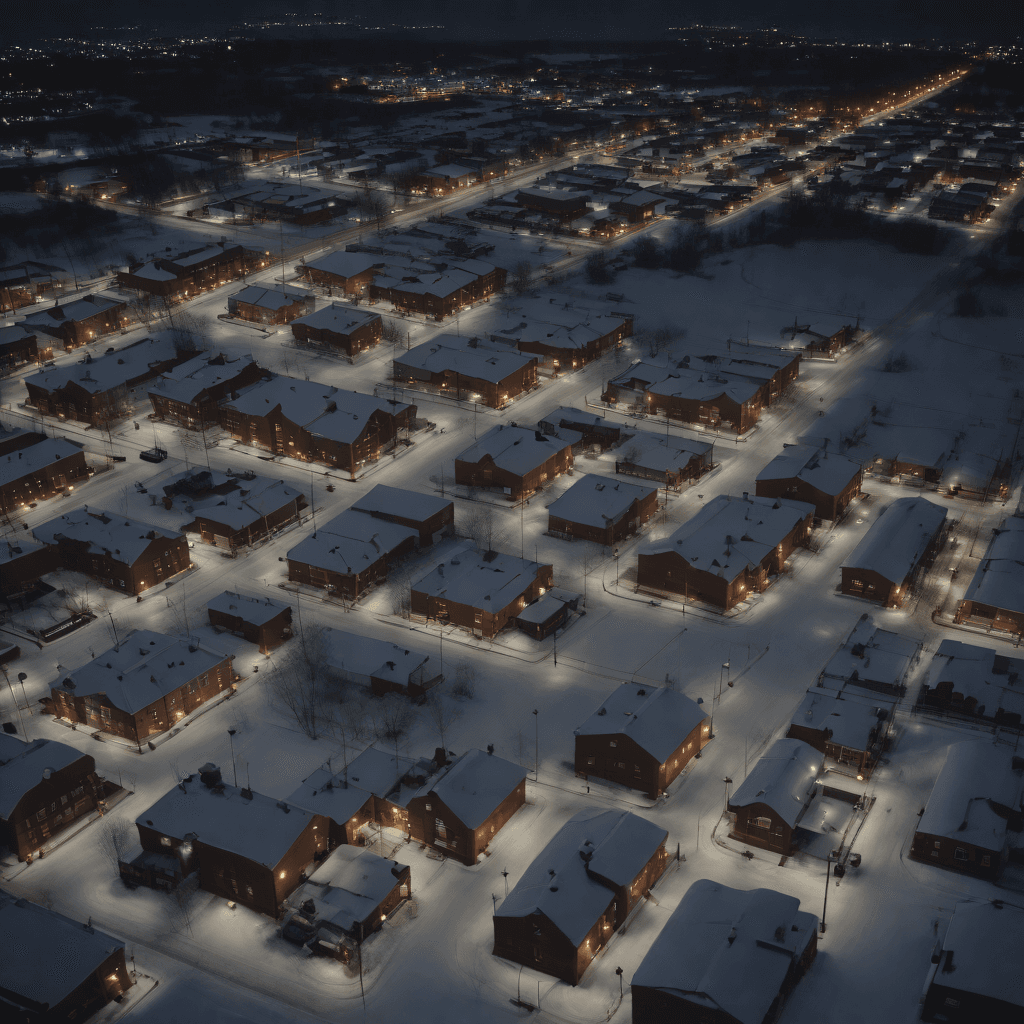
A Republic Shivering in the Dark
Winter Storm Fern has transformed the American landscape into a survivalist tableau, where the promise of energy abundance has been silenced by the hum of failing transformers. As confirmed fatalities reach 153 according to reports from regional health departments, the human cost of the February 2026 freeze is no longer a statistic but a national trauma. For James Carter, a father of three in suburban Ohio, the reality of the crisis meant watching the indoor thermometer drop to 40 degrees as the local utility struggled to maintain service. This immediate suffering is the first crack in the facade of a republic that assumed its infrastructure was impervious to the very climate volatility it continues to fuel through a pivot toward unchecked fossil fuel acceleration.
The operational failure of the grid during this emergency highlights a dangerous convergence of climate volatility and policy choices. Under the Trump administration's second-term deregulation push, many federal winterization mandates were replaced with voluntary industry standards. This shift aimed to prioritize short-term cost-cutting and "energy sovereignty," yet it left households like Carter’s unburdened by heat but heavily burdened by risk. The 2026 energy emergency serves as a stark rebuttal to isolationist policies that treat infrastructure as a commodity rather than a public trust.
The Mechanics of the Arctic Paradox
The warming Arctic is paradoxically the engine behind the most paralyzing freezes in the American heartland. Research led by Dr. Judah Cohen at Atmospheric and Environmental Research (AER) in collaboration with MIT indicates that the Arctic is currently warming nearly four times faster than the global average. This phenomenon, known as Arctic Amplification, reduces the sharp temperature gradient that traditionally keeps cold air bottled up at the pole. As the North heats up, the atmospheric "wall" that contains the polar vortex begins to crumble, allowing frigid air to leak southward with increasing frequency and duration.
A weakened temperature differential directly disrupts the jet stream, turning a once-stable atmospheric current into a chaotic and "wavy" barrier. Dr. Jennifer Francis, a Senior Scientist at the Woodwell Climate Research Center, observes that this weakening causes the jet stream to become more prone to stalling, leading to persistent extreme weather events like the 2026 cold snap. During February, the jet stream’s waviness meant that Siberian-level temperatures occupied the grid for weeks rather than days. This atmospheric stagnation puts unprecedented pressure on a national infrastructure designed for the predictable weather patterns of the 20th century.
The Terrestrial Reflection of Stratospheric Instability
The mechanical failure of the 2026 grid is the terrestrial reflection of this stratospheric instability. While the "stretching" of the polar vortex provides the trigger, the scale of the disaster is a direct consequence of a decade-long pivot toward deregulatory policies. According to the U.S. Energy Information Administration (EIA), during the peak of Winter Storm Fern, natural gas generation faced a 10% supply drop due to "freeze-offs" at the wellhead—a vulnerability long warned about by grid resilience experts but largely ignored in favor of market efficiency.
This supply-side collapse forced a desperate return to carbon-intensive legacy fuels to prevent a total blackout. Data from the EIA indicates that coal generation was forced to surge by 31% to maintain grid stability. This reliance on coal as the "fuel of last resort" underscores the irony of contemporary energy policy: in an attempt to secure energy hegemony through deregulation and isolationism, the grid has become so brittle that it must revert to 19th-century fuels to survive 21st-century climate disruptions.
The Act of Policy vs. The Act of God
The "Act of God" defense, long the shield of American utility providers during climate disasters, is beginning to crumble under the weight of 2026’s meteorological and political reality. The legislative pivot of 2025, defined by a sweeping rollback of federal winterization mandates under the banner of "Energy Sovereignty," transformed predictable weather patterns into a national security crisis. By dismantling emergency reserve requirements, the administration prioritized immediate cost-cutting for utility shareholders over the long-term resilience of the grid.
This systemic fragility has shifted the entire risk profile of the American economy onto the individual homeowner and small business. For James Carter, the abstract debate over "regulatory burdens" became a life-threatening reality in his frozen living room. The 153 confirmed fatalities linked to Winter Storm Fern are the ledger of a system that traded redundant safety margins for market efficiency. The deregulation of 2025 removed the "teeth" from federal oversight, allowing regional operators to defer expensive wellhead and pipeline winterization projects that would have prevented the catastrophic freeze-offs seen this February.
Toward a New Standard of Resilience
A new standard of resilience requires moving past the false choice between market efficiency and public safety. If the 2026 emergency is to serve as a turning point, it must lead to a reconstruction of the social contract between utilities and the public, where "grid hardening" is viewed as a mandatory investment rather than a regulatory burden. This involves not only the physical winterization of gas infrastructure but also a strategic reinvestment in decentralized storage and hardened transmission lines that can withstand the wavier, more aggressive jet stream of the late 2020s.
The convergence of a destabilized Arctic and a destabilized regulatory environment has created a "perfect storm" that is no longer an act of nature, but an act of policy. Without a mandate for accountability, the American grid will remain a house of cards, perfectly optimized for a climate that no longer exists. If we continue to build our society on the assumption of a stable environment that we have already disrupted, we are not investing in a future; we are merely subsidizing our own obsolescence.
Sources & References
Stretched Polar Vortex Events and Extreme Winter Weather
MIT / Atmospheric and Environmental Research (AER) • Accessed 2026-02-08
Research led by Dr. Judah Cohen identifies a clear trend in 'stretched' polar vortex events, where Arctic warming (Arctic Amplification) destabilizes the stratospheric polar vortex, sending frigid air into the central and eastern US.
View OriginalU.S. Electricity Generation Mix During Winter Storm Fern
U.S. Energy Information Administration (EIA) • Accessed 2026-02-08
Data analysis of the January 2026 storm showed a significant shift in fuel dependency. While natural gas faced 10% supply drops due to freeze-offs, coal generation surged to maintain grid stability.
View OriginalConfirmed Fatalities: 153
Wikipedia / Regional Health Departments • Accessed 2026-02-08
Confirmed Fatalities recorded at 153 (2026)
View OriginalDr. Jennifer Francis, Senior Scientist
Woodwell Climate Research Center • Accessed 2026-02-08
The Arctic is warming at a faster rate than other global regions, which diminishes the temperature differential that powers the jet stream. This weakening causes the jet stream to become wavier and more prone to stalling, leading to persistent extreme weather events.
View OriginalDr. Judah Cohen, Director of Seasonal Forecasting
Atmospheric and Environmental Research (AER) • Accessed 2026-02-08
An overheating planet is weakening and destabilizing the polar vortex... This process is driven by Arctic amplification, where the polar region warms nearly four times faster than the global average.
View OriginalWhat do you think of this article?