The Long Walk: Why ‘Radical Slowness’ is America’s Last Defense Against the Adjustment Crisis
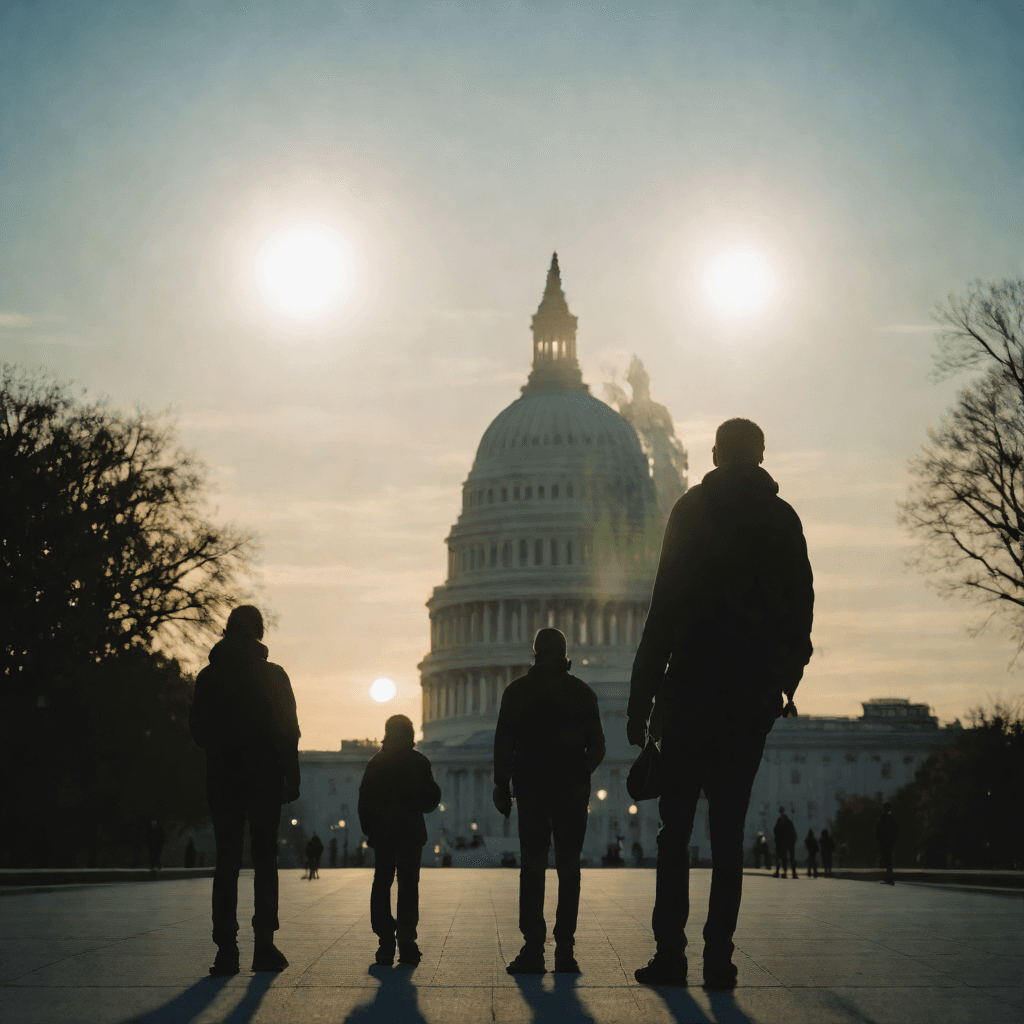
Dust and Silence at the Gates of Power
The arrival of a small group of monks in Washington D.C. on Monday, February 9, 2026, marked a silent but profound collision between the physical reality of human endurance and the digital frenzy of the nation’s capital. Having walked 2,300 miles from the Texas border, their travel-worn appearance stood in stark contrast to the sleek, automated logistics and high-speed policy corridors that define the second Trump administration.
This journey was not merely a protest against the current geopolitical climate; it served as a diagnostic event for a nation increasingly paralyzed by what clinical researchers now call the "Adjustment Crisis." The silence of their arrival at the gates of power on a cold Monday afternoon spoke louder than the algorithmic noise currently dictating American life, revealing a systemic exhaustion that transcends traditional political divides.
The Clinical Reality of Hyper-Acceleration
The psychological toll of this era—defined by aggressive deregulation and AI-driven displacement—is no longer a matter of theoretical debate but of recorded clinical observation. A significant adjustment crisis has emerged across multiple demographics, manifesting as a pervasive sense of displacement as traditional career paths and social structures are rewritten by autonomous systems.
Recent societal indicators highlight a troubling correlation: individuals who find themselves caught between the radical systemic shifts of the "America First" agenda and the need for stable, human-centric environments report the highest levels of mental health strain. The data suggests that the current acceleration is creating a psychological rift, where the sheer velocity of policy shifts and technological automation outpaces the human capacity to adapt.
For American professionals, this crisis is found in the realization that stability is being traded for hyper-efficiency. Consider the experience of logistics managers in Northern Virginia who have seen two-decade career paths upended by the sudden implementation of autonomous supply-chain protocols. For these workers, the monks' 2,300-mile walk represents the "social capital" that many sociologists argue is essential to counter the isolating effects of digital fragmentation.
The Friction of the Free Market
The 2026 economic landscape is defined by a hyper-acceleration driven by the Trump administration's aggressive deregulation of artificial intelligence. The pivot toward technological hegemony has allowed AGI models to integrate into the corporate sector at a pace that far exceeds human adaptive capacity, fueled by the nationwide rollout of 6G networks.
This creates a lethal friction between the digital efficiency demanded by the free market and the biological limits of the American workforce. This friction is the primary driver of the Adjustment Crisis. Without legislative braking systems to allow for retraining, the market simply moves on, leaving the human behind in a state of involuntary slowness. This individual displacement mirrors a larger national exhaustion that demands a radical redesign of our fundamental structures.
To survive the remainder of 2026, the American system must shift from a focus on pure efficiency to one centered on empathy and fairness. Analysts argue that the challenge is redesigning our institutions to move beyond the friction generated by technological displacement. The monks standing in the shadow of the Capitol are not just relics of a slower age; they are a living petition for a "human-speed" safety valve in a world that is spinning too fast for the psyche to track.
Reclaiming the Human Narrative
Ultimately, the friction between AI-driven deregulation and human rhythm suggests that the nation’s true exhaustion is not from a lack of productivity, but from a lack of purpose. Reclaiming the human narrative in 2026 means acknowledging that the "Adjustment Crisis" is a rational response to an irrational pace of change.
If the goal of the current administration is to maximize American liberty, it must first address the mental and social incarceration caused by digital fragmentation. Genuine stability cannot be found in the acceleration of the machine, but in the deliberate preservation of the human cadence. The most radical act of resistance in a hyper-accelerated world is the simple, slow act of walking together.
Sources & References
Probable adjustment disorder among individuals with different attitudes in the context of civil unrest
NIH / European Journal of Psychotraumatology • Accessed 2026-02-09
Research identified a significant 'adjustment crisis' in large segments of the population following social unrest. Neutral and opposing groups reported higher levels of probable adjustment disorder (AjD) than those in favor of radical changes.
View OriginalRichard Ditizio, CEO
Milken Institute • Accessed 2026-02-09
The challenge of 2026 is redesigning our systems with empathy and fairness at the core, moving beyond the 'rage' generated by technological displacement.
View OriginalMelissa Stevens, Executive Vice President
Milken Institute Strategic Philanthropy • Accessed 2026-02-09
Building thriving communities requires a massive investment in social capital to counter the isolating effects of digital fragmentation.
View OriginalWhat do you think of this article?