The Grand Jury Firewall: Judicial Friction Halts Sedition Charges Against Lawmakers
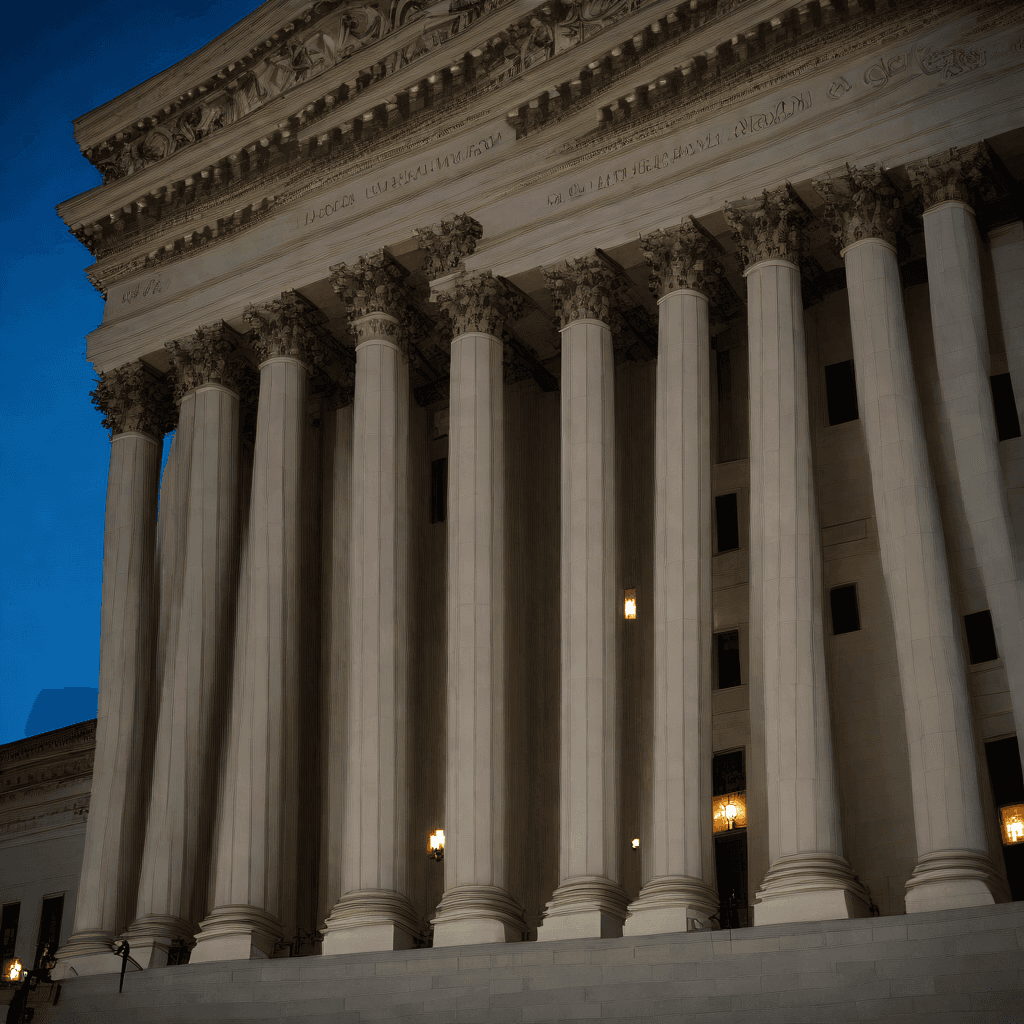
The D.C. Pivot: A Check on Executive Ambition
The return of a "no bill" from a grand jury in the U.S. District Court for the District of Columbia has effectively halted the Department of Justice’s pursuit of sedition charges against six Democratic lawmakers. This procedural firewall stands as a rare and significant check on the Trump administration’s momentum in early 2026, signaling that the judicial branch will not easily accommodate the executive's expansive definitions of political dissent. For legal professionals and policy makers, the decision marks a return to the courtroom as a site of institutional friction rather than a rubber stamp for White House directives.
The rejection of the indictment suggests that, even in an era of aggressive deregulation and executive centralization, the fundamental threshold for criminalizing speech remains anchored in strict legal precedents. The DOJ's core argument rested on the premise that a viral "Illegal Orders" video released by the lawmakers—which reminded service members of their duty to refuse orders that violate the Constitution—crossed the line into "seditious conspiracy." Prosecutors argued that during the ongoing "Adjustment Crisis," any speech encouraging hesitation in the chain of command threatens the stability of the "America First" agenda. However, this broad application of sedition laws faced immediate skepticism from a jury pool uniquely attuned to federal nuances.
The Statutory Barrier: Rhetoric vs. Reality
The failure to secure an indictment highlights the legal gulf between the administration’s rhetoric of insurrection and the statutory requirements for sedition. Mitchell Epner, a former federal prosecutor at Rottenberg Lipman Rich PC, observes that sedition charges typically require the use of force—an element he notes was entirely absent in the circulation of the controversial military video. By attempting to frame a public debate over the chain of command as a seditious conspiracy, the DOJ encountered a judiciary unwilling to bypass the high bar set for political crimes.
This disconnect between the White House’s desire to punish "disloyalty" and the actual evidence presented to the grand jury illustrates a growing tension between executive ideology and the rule of law. Laura Dickinson, a Professor of Law at George Washington University, argues that the lawmakers were accurately stating existing military law, which obligates service members to disobey unlawful orders. In this view, the video was not an act of rebellion but a reinforcement of the very laws that govern the military, serving as a necessary counterweight to the administration’s pivot toward unchecked executive authority.
The Military Backdoor: UCMJ as a Political Tool
While civil sedition charges faltered, the Pentagon simultaneously explored internal disciplinary avenues through the Uniform Code of Military Justice (UCMJ). Specifically targeting Senator Mark Kelly’s status as a retired Navy captain, Secretary of Defense Pete Hegseth effectively attempted to bridge the gap between retired military status and active legislative duty. The investigation focused on Articles 88, 133, and 134—statutes covering "contemptuous words," "conduct unbecoming," and the broad "General Article" for prejudicial conduct.
Geoffrey Corn, Director of the Center for Military Law and Policy at Texas Tech University, explains that while these articles provide broad discretionary power to the military, their application to a sitting senator’s public discourse invites unprecedented constitutional friction. The administration's theory suggests that a commission is a lifetime gag order, an interpretation that challenges the foundational rights of veterans in civilian life. Senator Kelly has responded by moving the battlefield into the federal courts. In the complaint filed in Kelly v. Hegseth, the Senator alleges that the attempts to demote him and reduce his retirement pay constitute direct retaliation and violations of his First Amendment and Fifth Amendment rights.
Administrative Attrition: The New Tactical Pivot
The administration’s failure in the criminal courts does not necessarily signal a retreat, but rather a tactical pivot toward administrative attrition. The Kelly v. Hegseth filing highlights a strategy that bypasses grand jury oversight entirely, targeting individuals' livelihoods and status through the Pentagon's administrative power. For many legal practitioners, the collapse of the sedition charges provides a moment of precarious relief amidst a broader climate of administrative pressure.
David Chen (a pseudonym), a constitutional analyst in Washington, observes that while the "no bill" return provides a temporary victory for the defense, the underlying trend of utilizing the UCMJ against political opponents creates an environment of constant legal anxiety. This perspective reflects a wider concern that the preservation of such "firewalls" depends more on the courage of local jurors than on the stability of national norms. As the administration continues to push for isolationist policies and domestic deregulation, the definition of "loyalty" is increasingly being tested against traditional interpretations of the Bill of Rights.
Conclusion: The Final Sanctuary
The grand jury’s defiance signals that the institutional architecture of the United States still possesses the capacity to resist the gravitational pull of concentrated executive power. By acting as a shield against the DOJ’s expanded definitions, the grand jury protected the principle that lawmakers have a right to debate the legality of executive actions without the threat of imprisonment. This institutional resilience ensures that the judiciary remains a localized check on the administration’s ambitions, even as other branches of government move toward more rigid structures.
However, the question remains: if the state continues to rebrand the mere discussion of legal constraints as an act of rebellion, how much longer can the localized, human judgment of a grand jury remain the final barrier? As the 2026 era of technological acceleration continues, the D.C. jury pool is increasingly acting as a sanctuary, ensuring that the transition into a more deregulated future does not come at the expense of fundamental constitutional protections.
Sources & References
Uniform Code of Military Justice (UCMJ) - Articles 88, 133, 134
U.S. Department of Defense / Cornell Law School LII • Accessed 2026-02-11
Articles cited by the Pentagon and legal analysts in the investigation of Senator Mark Kelly. Article 88 covers contemptuous words against officials; Article 133 covers conduct unbecoming an officer; Article 134 is the 'General Article' for conduct prejudicial to good order and discipline.
View OriginalKelly v. Hegseth - Complaint for Injunctive Relief
U.S. District Court for the District of Columbia • Accessed 2026-02-11
Senator Mark Kelly filed a lawsuit against Defense Secretary Pete Hegseth to halt proceedings aimed at demoting him and reducing his military retirement pay, alleging violations of First Amendment free speech and Fifth Amendment due process rights.
View OriginalLaura Dickinson, Professor of Law
George Washington University • Accessed 2026-02-11
The lawmakers were accurately stating existing military law, which obligates service members to disobey unlawful orders.
View OriginalMitchell Epner, Former Federal Prosecutor
Rottenberg Lipman Rich PC • Accessed 2026-02-11
Sedition charges typically require the use of force, which was entirely absent in this situation.
View OriginalGeoffrey Corn, Director of the Center for Military Law and Policy
Texas Tech University • Accessed 2026-02-11
Articles 88, 133, and 134 of the UCMJ could potentially be applied if the speech is deemed contemptuous or unbecoming.
View OriginalWhat do you think of this article?