The Prediction Market Paradigm: Why Decentralized Truth Now Rules the US Economy
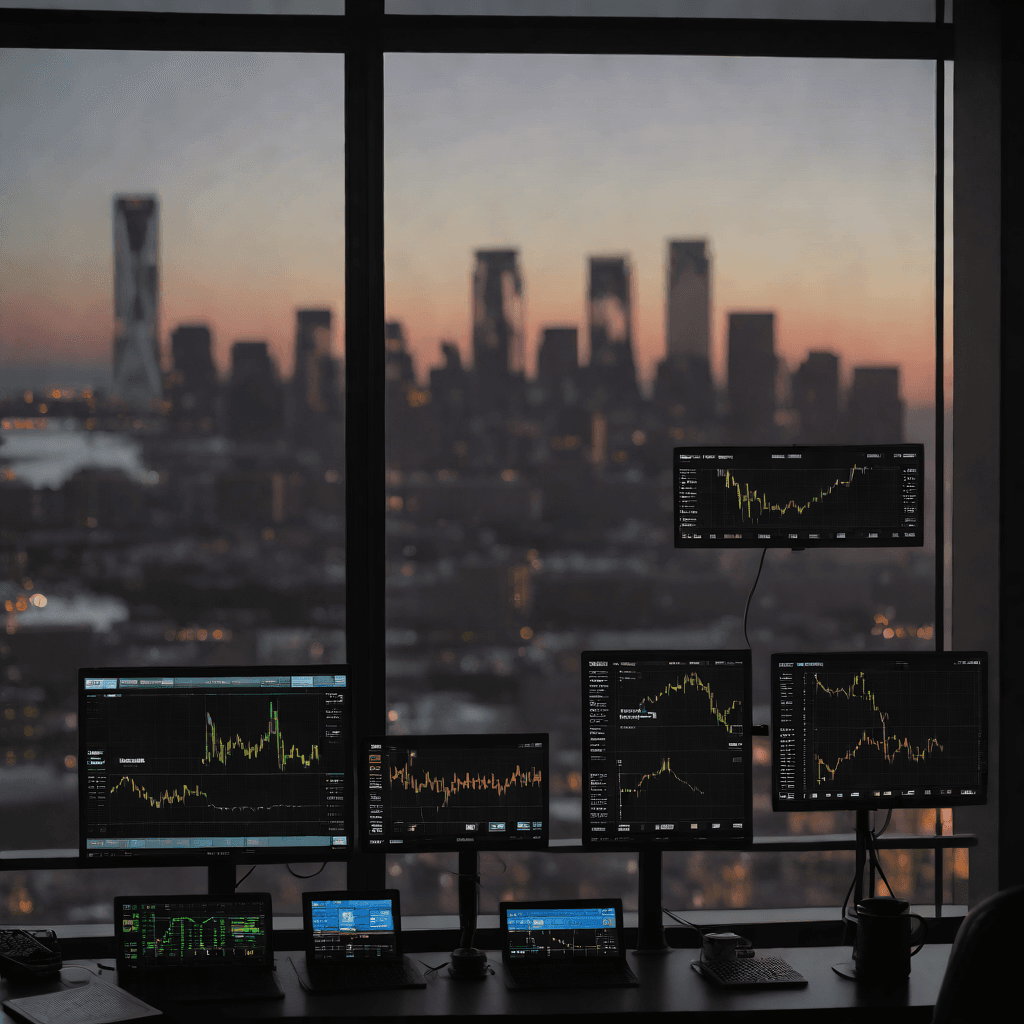
The Fifty Billion Dollar Shift to Crowd-Sourced Reality
The traditional monopoly held by the Federal Reserve and quarterly institutional reports over economic truth has effectively collapsed in early 2026, replaced by a $50 billion decentralized apparatus. Following the Commodity Futures Trading Commission's (CFTC) 2025 decision to withdraw its proposed ban on event contracts, platforms like Kalshi have transitioned from speculative niches to regulated "Designated Contract Markets" that now serve as the primary pulse of the American economy. This shift represents more than just a regulatory victory; it is the institutionalization of a "crowd-sourced reality" that dictates market sentiment under the Trump administration’s aggressive deregulation agenda.
Scientific analysis now confirms that these betting lines are the most precise economic sensors available to the public. A study published by the National Bureau of Economic Research (NBER) found that Kalshi’s forecasts for the federal funds rate, CPI inflation, and unemployment either match or surpass the accuracy of professional forecasters and conventional financial instruments. Since 2022, the market’s modal forecast has accurately predicted every single Federal Open Market Committee (FOMC) interest rate decision before the meeting even began, proving that real-money incentives aggregate information more effectively than static surveys.
For the modern professional, these real-time probability distributions have become an essential survival tool as automation begins to reshape the white-collar workforce. David Chen (pseudonym), a financial analyst in New York, now monitors Kalshi’s unemployment probability distributions to gauge the stability of his sector long before the Department of Labor releases its lagging monthly data. By observing the real-time shifts in GDP growth expectations, Chen can adjust his capital allocation in response to the "Adjustment Crisis," hedging against the volatility of the 2026 labor market.
Real-Time Signals Over Quarterly Post-Mortems
The traditional hierarchy of economic forecasting is facing a crisis of relevance as the 2026 labor market undergoes its most volatile shift since the pandemic. For decades, institutional investors and white-collar professionals relied on a slow-moving conveyor belt of government data and quarterly bank reports to navigate the US economy. However, as the Trump administration’s aggressive deregulation policies accelerate market cycles, these retrospective "post-mortems" are being bypassed in favor of real-time decentralized consensus. The rise of prediction markets represents a fundamental shift in how the free market prices its own future, prioritizing the immediate signals of "skin in the game" over the static observations of the economic establishment.
The efficiency of this decentralized consensus stems from its ability to process diverse, global information flows faster than any centralized committee. Constantin Bürgi, an assistant professor of economics at University College Dublin, notes that prediction market prices are generally accurate predictors, often surpassing the consensus of professional forecasters by aggregating a wider array of real-time data. In a 2026 landscape defined by 6G-driven commerce and AGI-displaced labor, the quarterly economic report feels like a relic of a slower, more predictable century.
This shift toward market-led forecasting has been accelerated by a landmark regulatory pivot. In 2025, the CFTC officially withdrew its proposal to ban political and sports event contracts, a move that validated the operational model of platforms like Kalshi. By designating Kalshi as a Designated Contract Market (DCM), the federal government effectively surrendered its monopoly on defining economic expectations. While the previous administration viewed these markets with skepticism, the current policy of isolationism and deregulation has embraced them as a tool for American technological hegemony, moving the needle of economic authority from Washington D.C. to the collective intelligence of the digital floor.
The Professional Pivot to Algorithmic Hedging
The transition to algorithmic hedging is not merely a technological upgrade; it is a central driver of the 2026 labor crisis for white-collar professionals. As financial institutions automate high-level cognitive tasks such as macroeconomic risk assessment, the demand for qualitative human analysis is plummeting in favor of data-driven consensus. For Maria Rodriguez (pseudonym), an economic researcher whose career once involved synthesizing complex federal reports, the rise of the "event contract" means her expertise is being devalued by the hyper-efficiency of the market.
This shift reflects a broader national trend where the security of the expert class is being sacrificed for the efficiency of the crowd. James Carter (pseudonym), a senior strategist at a Manhattan-based hedge fund, explains that his role has shifted from human-led intuition toward managing a decentralized consensus that prices in the impact of deregulation policies seconds after they are discussed in closed-door sessions. The "economic lag"—the weeks spent waiting for government data—has become an obsolete relic of the Biden era.
Prediction markets are proving to be superior aggregators of information because they incentivize the disclosure of private data through real-world stakes. This real-time aggregation suggests that the collective intelligence of thousands of traders, who provide probability distributions for GDP growth and unemployment in exchange for profit, is more resilient to the "Adjustment Crisis" of 2026 than the siloed models of 20th-century banking institutions. Consequently, the role of the traditional economist is being hollowed out, replaced by algorithmic feeds that ingest market probabilities directly into high-frequency trading systems.
Market Depth and the Mirage of Absolute Truth
However, the transition from institutional intuition to algorithmic certainty is not without its shadow. While the NBER highlights that Kalshi’s forecasts match or exceed professional surveys, the underlying liquidity remains a double-edged sword. For white-collar professionals navigating the current automation crisis, this real-time data flow offers a veneer of hyper-efficiency, yet it frequently masks the inherent fragility of a system where "truth" is a commodity shaped by the highest bidder. While the US economy has gained unprecedented predictive speed under the current administration's deregulatory push, it may have sacrificed the deliberative oversight that once cushioned systemic shocks.
The mirage of absolute truth becomes pronounced when market depth is mistaken for infallible foresight. Constantin Bürgi observes that prediction market prices are potent because they aggregate real-time data, but the 2026 landscape allows for massive capital influxes from large-scale liquidity providers that can inadvertently skew public perception. When a single institutional player can move the needle on the probability of a GDP growth target, the "decentralized consensus" begins to look uncomfortably like a coordinated narrative, challenging the very definition of a free market.
Michael Johnson (pseudonym), a financial analyst based in Chicago, notes that his desk is now tuned to the shifting distributions of Kalshi’s real-time contracts rather than legacy reports. This total immersion in "modal forecasts" creates a feedback loop where the market does not just predict the outcome of a Federal Open Market Committee meeting—it effectively front-runs the political and economic reality it claims to observe. The result is a hyper-efficient but volatile environment where the distinction between a financial hedge and a political gamble has all but vanished.
Reconciling Human Judgment with the Predictive Engine
The erosion of the human economic analyst's primacy is no longer a speculative theory but a documented market reality. As we navigate the complexities of 2026, the labor crisis among white-collar financial professionals is characterized by a forced pivot from prediction to oversight. The primary function of the analyst has evolved from drafting independent outlooks to calibrating the risk parameters of algorithms that feed directly from real-time market probability distributions. The human element is increasingly relegated to managing "tail risks"—the catastrophic events the market cannot yet price—rather than predicting the mean.
The Trump administration's aggressive deregulation agenda has provided the legal infrastructure necessary for this algorithmic takeover. By securing status as a Designated Contract Market, Kalshi has effectively integrated "event-based" contracts into the legitimate financial plumbing of the United States. This marks a definitive move away from state-managed economic signaling toward a decentralized model of "truth-seeking" via capital. Under the banner of "America First" deregulation, the U.S. has effectively outsourced its economic foresight to the highest bidder, prioritizing the cold efficiency of the predictive engine over the slower, more deliberative processes of human-led governance.
As the US isolates itself further from global regulatory norms, the reliance on these "hyper-efficient" mirrors raises a fundamental concern. We have replaced the fallible human expert with a high-depth market, but we have yet to determine if a price-point can truly serve as a foundation for a stable society. If the consensus of the crowd is always right, the room for contrarian vision—the kind that historically builds the future—may be shrinking in favor of a 24/7 digital ledger.
Sources & References
Macroeconomic Forecasting with Prediction Markets
National Bureau of Economic Research (NBER) • Accessed 2026-02-11
Kalshi's macroeconomic forecasts for the federal funds rate, CPI inflation, and unemployment either match or surpass the accuracy of professional forecasters and conventional financial instruments. Kalshi's modal forecast accurately predicted the federal funds rate before every FOMC meeting since 2022.
View OriginalCFTC Withdrawal of Proposed Rule on Event Contracts
Commodity Futures Trading Commission (CFTC) • Accessed 2026-02-11
The CFTC officially withdrew its 2024 proposal to ban political and sports prediction markets, marking a policy shift that validates the operation of regulated event contracts like those on Kalshi.
View OriginalConstantin Bürgi, Assistant Professor of Economics
University College Dublin • Accessed 2026-02-11
Prediction market prices are generally accurate predictors, often surpassing the consensus of professional forecasters by aggregating a wider array of real-time data.
View OriginalWhat do you think of this article?