The Price of Sovereignty: How the Gupta Plea Tests the US-India Strategic Nexus
The Manhattan Confession and the Sanctity of Law
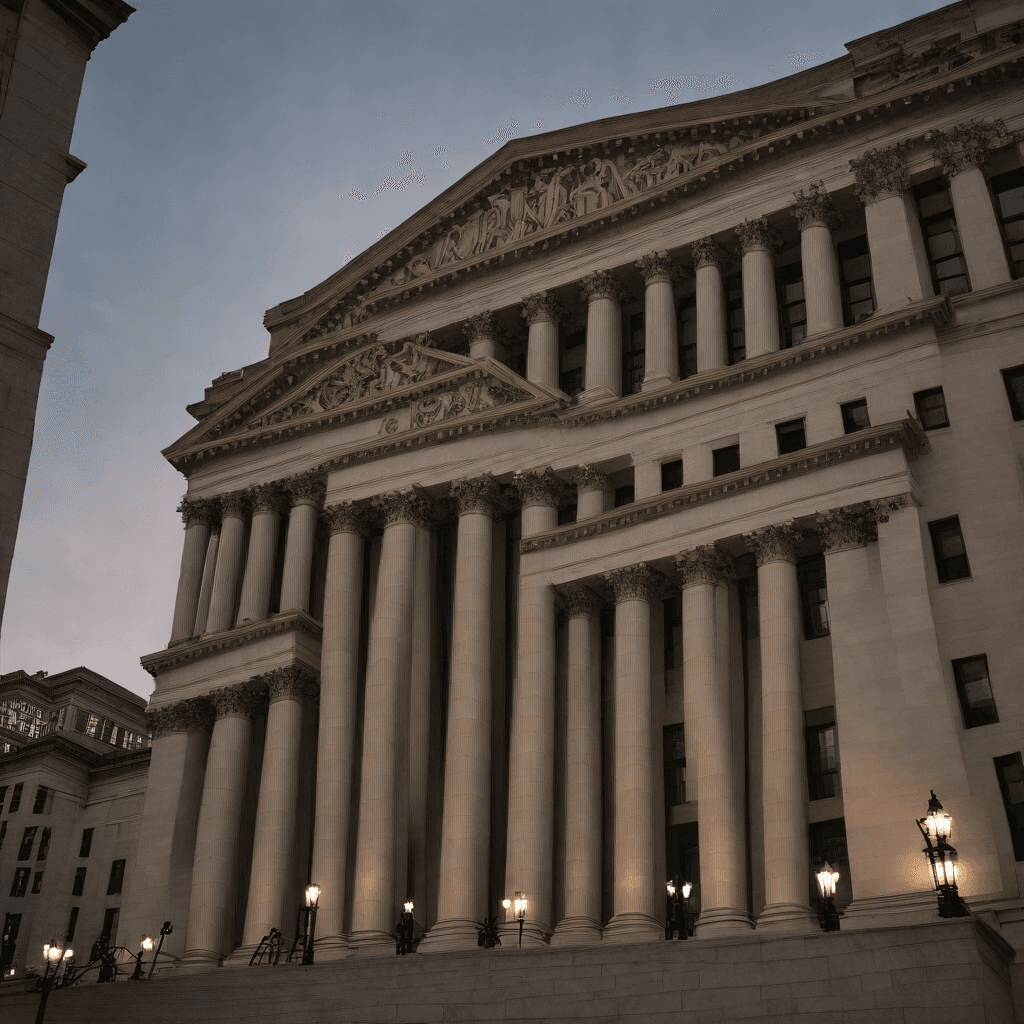
The heavy doors of the Thurgood Marshall United States Courthouse in Lower Manhattan swung shut on February 13, 2026, marking a quiet but seismic shift in the second Trump administration's management of transnational justice. Inside, Nikhil Gupta, an Indian national whose name has become synonymous with a shadowy breach of American sovereignty, entered a guilty plea before U.S. Magistrate Judge Sarah Netburn. This admission of guilt in criminal case number 23-cr-00560—specifically for murder-for-hire and conspiracy charges—serves as a stark reminder that even as the White House pursues a policy of selective isolationism, the sanctity of the domestic legal perimeter remains a non-negotiable pillar of the state.
The mechanics of the conspiracy, as detailed in records from the U.S. Department of Justice, reveal a chillingly transactional approach to political assassination on American soil. Gupta admitted to orchestrating a plot to kill Gurpatwant Singh Pannun, a U.S. citizen and vocal critic of the Indian government, at the explicit direction of an Indian government official. The paper trail, solidified by Gupta’s confession, shows a $15,000 advance payment delivered to an undercover law enforcement agent posing as a hitman. This figure, while a mere pittance in the context of the billions traded in the nascent 6G and defense markets, represents a profound violation of the trust that underpins the 21st-century's most critical geopolitical alliance.
Sovereignty in the Age of "America First"
This legal victory reinforces the core principle of sovereignty, demonstrating that even as President Trump recalibrates the nation’s role on the global stage through aggressive deregulation and a pivot away from traditional entanglements, the physical safety of citizens remains a central mandate. The assertion of power here sets a clear boundary for foreign intelligence services, signaling that the U.S. legal system operates with a mandate that supersedes the convenience of diplomatic silence. Prosecutors for the Southern District of New York noted following the plea that the resolution of this case serves as a warning that the United States will use every tool at its disposal to identify and prosecute those who attempt to project violence within its borders.
From a judicial standpoint, the stakes for Gupta are absolute. Facing a maximum combined sentence of 40 years, the 53-year-old Gupta now awaits his May 29, 2026, sentencing. The three admitted criminal charges—murder-for-hire, conspiracy to commit murder-for-hire, and conspiracy to commit money laundering—construct a legal wall that the current administration seems unwilling to dismantle for the sake of strategic optics. However, the prosecution's focus on Gupta has raised questions among national security analysts regarding the status of the Indian official identified in the original indictment, Vikash Yadav (referred to as 'CC-1').
The Trade-Off Hypothesis
While the Gupta plea asserts American legal authority, it simultaneously exposes the raw nerves of a relationship with India that the Trump administration needs to counter Chinese influence in the Indo-Pacific. The direct link to a New Delhi official creates a paradox: to uphold the law fully is to risk alienating a partner essential for the "America First" economic and military agenda. This has led to mounting skepticism among policy experts, some of whom suggest that the aggressive pursuit of Gupta, contrasted with the relative diplomatic silence surrounding Yadav, indicates a calculated trade-off.
There is a growing perception that the administration may be protecting the higher-level architects of the plot in exchange for trade concessions or cooperative defense agreements in the 6G and orbital computing sectors. As the U.S. seeks to bolster India as a primary counterweight to China within the Quadrilateral Security Dialogue (Quad), the public exposure of a plot directed by a government official creates a friction point that the State Department is eager to manage. This creates a complex calculation where the pursuit of justice must be balanced against intelligence-sharing frameworks essential for containing regional threats during the ongoing domestic "Adjustment Crisis."
A Tale of Two Realities
The resolution of the Gupta case also highlights a disconnect between federal judicial wins and the immediate anxieties of the American public. While the Southern District of New York celebrates this enforcement of the rule of law, the triumph feels decoupled from the lived realities of a population navigating the "Adjustment Crisis." Millions of Americans currently face localized power outages and labor strikes sparked by the same deregulation agenda that the administration champions as a path to resurgence.
The contrast is palpable: while the federal government possesses the reach to foil a $15,000 assassination plot, it appears increasingly challenged to guarantee the basic continuity of the electrical grid or mitigate the social unrest sparked by AGI-driven job displacement. This tension suggests that while the courtroom provides a clear verdict, the internal foundation of the state is being tested by the same forces of technological acceleration it seeks to harness for national defense. Even as Team USA celebrates victories at the Milan Winter Olympics, the domestic landscape remains a patchwork of high-tech progress and infrastructural fragility.
Rebuilding the Border of Law
Ultimately, the Gupta plea rebuilds a "border of law" that is as critical to the administration’s vision as any physical barrier. By refusing to sacrifice legal integrity entirely for diplomatic convenience, the U.S. asserts that its internal security is not merely a bargaining chip in geopolitical negotiations. This stance ensures that the protection of a citizen's constitutional rights remains a foundational element of national stability, even if the higher-level diplomatic fallout is carefully contained.
As sentencing approaches in May, the outcome will likely define the parameters of U.S. foreign policy toward allies who overstep the bounds of domestic law. Whether the administration can successfully compartmentalize this legal resolution from its broader geopolitical ambitions will be a major test of the "America First" doctrine's consistency. If the price of a strategic alliance is the silent acceptance of foreign interference on domestic soil, the alliance protects only the interests that govern it, not the integrity of the nation itself.
Sources & References
Nikhil Gupta Pleads Guilty in Manhattan Federal Court to Murder-for-Hire and Conspiracy Charges
U.S. Department of Justice, Southern District of New York • Accessed 2026-02-13
Nikhil Gupta, an Indian national, admitted to orchestrating a plot to assassinate a U.S. citizen in New York City at the direction of an Indian government official. The plot was foiled by U.S. law enforcement agents posing as a hitman and a middleman.
View OriginalUnited States v. Nikhil Gupta (Court Proceedings)
U.S. District Court for the Southern District of New York • Accessed 2026-02-13
Gupta entered his plea before U.S. Magistrate Judge Sarah Netburn. The sentencing is scheduled for May 29, 2026.
View OriginalMaximum Combined Sentence: 40 years
U.S. Department of Justice • Accessed 2026-02-13
Maximum Combined Sentence recorded at 40 years (2026)
View OriginalAssassination Advance Payment: $15,000
U.S. Drug Enforcement Administration (DEA) • Accessed 2026-02-13
Assassination Advance Payment recorded at $15,000 (2023)
View OriginalNumber of Admitted Criminal Charges: 3
Southern District of New York • Accessed 2026-02-13
Number of Admitted Criminal Charges recorded at 3 (2026)
View OriginalDamian Williams, U.S. Attorney
Southern District of New York • Accessed 2026-02-13
This guilty plea serves as a warning to anyone who would attempt to carry out such a heinous act on American soil: the United States will use every tool at its disposal to identify, find, and prosecute you.
View OriginalGurpatwant Singh Pannun, General Counsel
Sikhs for Justice • Accessed 2026-02-13
The guilty plea by Nikhil Gupta is a testament to the U.S. justice system's ability to hold accountable those who participate in transnational repression.
View OriginalWhat do you think of this article?