The Scottish Pause: Why the SNP Financial Scandal Redefines Judicial Accountability
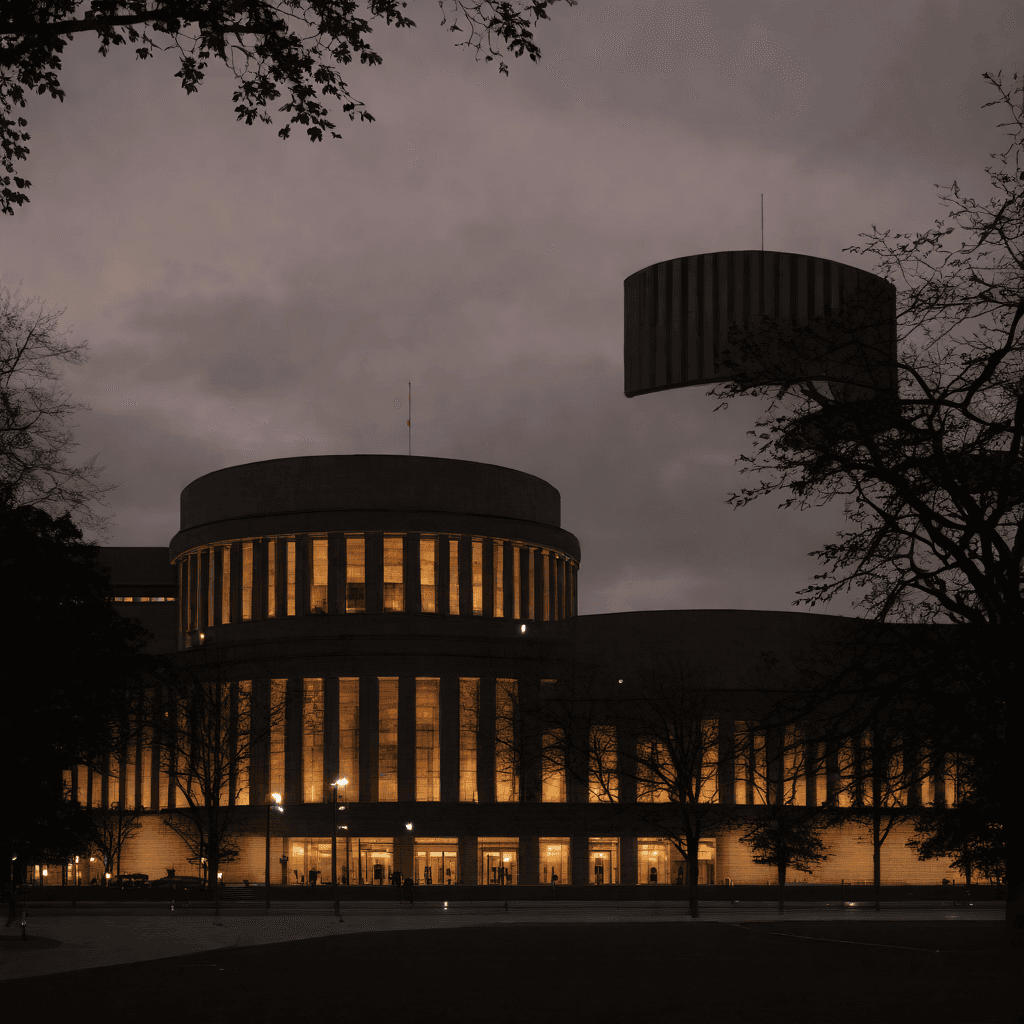
A Silence in Edinburgh: The Hearing That Was Not
The stone corridors of the High Court in Edinburgh currently hold a heavy, expectant silence, a stark contrast to the political firestorm that continues to rage across the Atlantic and within the United Kingdom. While the formal charging of Peter Murrell by Police Scotland on April 18, 2024, signaled a potential climax in the long-running Operation Branchform investigation, the subsequent judicial timeline has shifted the drama from the courtroom to the sphere of public perception. With the preliminary hearing now anchored for May 25, 2026, the postponement effectively places the Scottish National Party’s (SNP) legacy into a state of cryogenic suspension. For US-based observers navigating the aggressive deregulation and "America First" pragmatism of the second Trump administration, this delay mirrors the complex interplay between legal accountability and political momentum, where a pause in proceedings is rarely just a matter of docket management.
At the center of this legal stalemate is a specific, quantifiable breach of trust: the alleged embezzlement of £459,046.49 over a period spanning August 2010 to January 2023. This figure, provided by the Crown Office and Procurator Fiscal Service (COPFS), represents more than just a line item in a ledger; it serves as a litmus test for the SNP's internal governance during its most influential decade. The most visible symbol of this alleged fiscal impropriety remains the £124,550 Niesmann + Bischoff motorhome seized by police, an asset whose value now weighs heavily against the party’s claims of transparent, grassroots-funded advocacy. By tethering the survival of a political movement to the outcome of a trial that is still months away, the Scottish judiciary has inadvertently created a vacuum where speculation outpaces evidence, challenging the definition of due process in a hyper-connected 2026 information economy.
The Anatomy of an Allegation: £459,000 and the SNP Books
The Scottish National Party is currently grappling with a financial reckoning that spans more than a decade, challenging the foundation of its organizational integrity and public mandate. According to records from the COPFS, the investigation—codenamed Operation Branchform—centers on the alleged embezzlement of approximately $580,000. This twelve-year window of alleged financial misconduct suggests that the issues were not merely isolated incidents but rather a protracted period of internal oversight failure. By linking the party’s most successful electoral era to such significant financial questions, the investigation forces a re-evaluation of the administrative costs of political dominance.
Beyond the total sum, the specific assets involved in the case have provided the public with a visceral image of the alleged corruption that transcends technical accounting. Police Scotland has highlighted the seizure of a luxury motorhome, which investigators believe was purchased with diverted funds and stored at a residential property. In the context of the current global shift toward institutional insulation, the presence of a high-value recreational vehicle on a political balance sheet appears as a catastrophic failure of fiduciary duty. This tangible evidence of expenditure transforms a complex white-collar investigation into a straightforward narrative of perceived entitlement, one that resonates deeply with a skeptical electorate.
Leadership in the Balance: The Shadow of the Sturgeon Era
The postponement of Peter Murrell’s trial to mid-2026 offers the SNP a fragile legislative runway, yet the delay risks curdling into a permanent stain on the party’s institutional credibility. The selective nature of the charges—focusing on Murrell, the party's former chief executive, while former First Minister Nicola Sturgeon and former treasurer Colin Beattie have been released without charge—has created a paradoxical "leadership in limbo." Dr. James Mitchell, Professor of Public Policy at the University of Edinburgh, argues that the scandal represents the most significant challenge to the SNP's internal governance in the devolution era. This assessment highlights a universal truth in modern governance: when the mechanisms of internal audit fail, the resulting legal intervention becomes a blunt instrument that can flatten an entire political infrastructure.
For researchers like David Chen, who studies the intersection of global governance and the ongoing Adjustment Crisis, this concentration of sourcing is a reminder that in the 2026 media environment, the control of narrative is as critical as the evidence itself. As the SNP navigates this period of judicial limbo, the tension between the survival of the political movement and the security of its financial foundations continues to tighten. The risk is that by the time the High Court in Edinburgh convenes, the political movement it sought to protect will have already been hollowed out by the very uncertainty the delay was intended to manage.
The Price of Judicial Procrastination
The decision to push the legal reckoning into 2026 creates a dangerous vacuum where political strategy threatens to supersede judicial swiftness. For an American observer accustomed to the high-velocity collisions between the current Trump administration’s Department of Justice and various state-level investigations, this two-year lag appears less like due process and more like institutional paralysis. This delay doesn't just stall a court case; it freezes the political accountability of Scotland's dominant independence movement, allowing the fog of uncertainty to thicken.
Ultimately, the SNP is attempting to prove that a movement is greater than its architects, yet the architects are the ones who built the structures of accountability that failed. As the party enters the 2026 cycle, it must operate under the shadow of a May deadline that could either vindicate its reform efforts or confirm its deepest institutional flaws. The challenge lies in convincing a skeptical public that the "Scottish Pause" is a pursuit of justice rather than a stay of execution for a political brand. In the eyes of voters, the motorhome parked in the evidence lot remains a far more potent symbol than any policy white paper, serving as a reminder that institutional innocence is often a casualty of individual greed.
Sources & References
Police Scotland Statement on Charges in SNP Financial Investigation
Police Scotland • Accessed 2026-02-13
Police Scotland formally charged a 59-year-old man (Peter Murrell) on April 18, 2024, in connection with the embezzlement of funds from the Scottish National Party (SNP). This followed his re-arrest as part of Operation Branchform, which investigates the party's finances.
View OriginalCrown Office and Procurator Fiscal Service Case Update: Operation Branchform
Crown Office and Procurator Fiscal Service (COPFS) • Accessed 2026-02-13
The COPFS confirmed receipt of a standard prosecution report from Police Scotland regarding Peter Murrell. The investigation centers on the alleged embezzlement of £459,046.49 between 2010 and 2023. A preliminary hearing is scheduled for May 2026 at the High Court in Edinburgh.
View OriginalTotal Alleged Embezzlement: £459,046.49
Crown Office and Procurator Fiscal Service • Accessed 2026-02-13
Total Alleged Embezzlement recorded at £459,046.49 (2025)
View OriginalCost of Niesmann + Bischoff Motorhome: £124,550
Court Documents / Police Scotland • Accessed 2026-02-13
Cost of Niesmann + Bischoff Motorhome recorded at £124,550 (2024)
View OriginalDr. James Mitchell, Professor of Public Policy
University of Edinburgh • Accessed 2026-02-13
The scandal represents the most significant challenge to the SNP's internal governance in the devolution era, potentially reshaping the party's transparency protocols.
View OriginalWhat do you think of this article?