Miracle in Mogadishu: How Pilot Intuition Defied 2026's Technical Debt
Shallow Waters and Sharp Reflexes
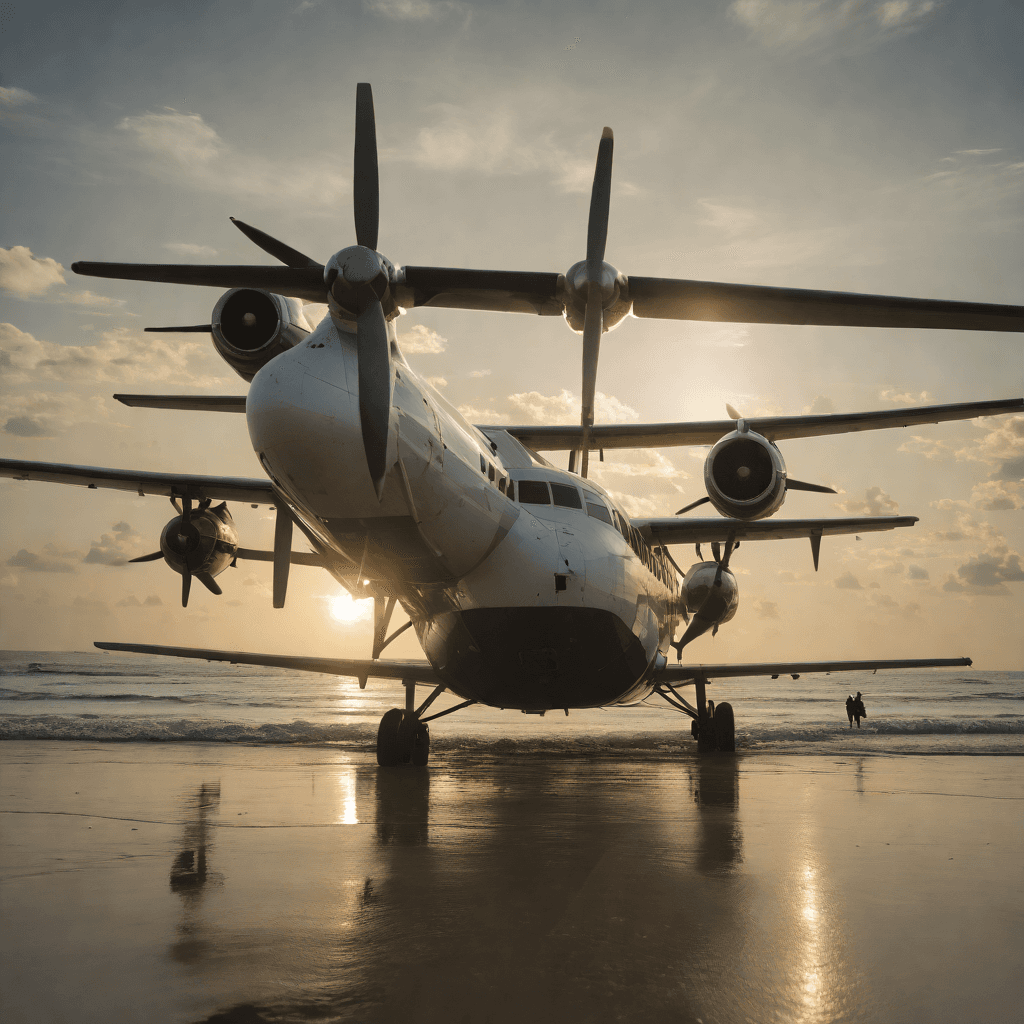
The visual aftermath of Flight 6O-YAS would typically suggest a tragedy of international proportions: a Fokker 50 aircraft resting in the surf of the Indian Ocean, its fuselage battered by the shoreline. Yet, as the Somali Civil Aviation Authority (SCAA) confirmed on February 10, 2026, the scene at the Mogadishu coast was not a graveyard, but a testament to successful crisis management. Every one of the 55 souls on board—50 passengers and five crew members—emerged from the wreckage alive, defying the standard statistical outcomes for runway overruns into water.
The survival rate of 100% serves as a jarring contrast to the mechanical failure that precipitated the event, grounding the narrative in the immediate reality of human resilience. While modern aviation often obsesses over automated fail-safes, the Mogadishu "Miracle" underscores that the most critical safety component remains the human being at the controls. This successful evacuation, facilitated by African Union and UN responders, transitions the conversation from a story of failure to one of profound professional success.
Minutes of Uncertainty over Aden Adde
The crisis began just 15 minutes after Flight 6O-YAS departed from Mogadishu, a window of time where pilots transition from the high-intensity workload of takeoff to cruise altitude. According to SCAA Director General Ahmed Moalim Hassan, the aircraft experienced sudden technical difficulties that forced an immediate decision to attempt an emergency return to Aden Adde International Airport. The timeline of those few minutes represents the peak of cognitive load for any flight crew, as they must diagnose a mechanical failure while navigating the complex approach back to a high-traffic corridor.
Witnessing the descent, it became clear that the technical malfunction was catastrophic enough to impede standard landing procedures. Director Hassan noted that while the pilot managed to bring the plane to the ground, control was lost upon contact, sending the Fokker 50 careening past the runway’s threshold. This sequence of events illustrates the thin margin between a controlled emergency and a total loss of airframe, setting the stage for the pilot's final, desperate maneuvers.
The Unseen Shield of Pilot Intuition
While mechanical failures are a persistent reality of flight, the Mogadishu crash-landing proves that professional intuition and calm under pressure remain the most critical components of modern aviation safety systems. Gulf News reported that the pilot was hailed as a hero, a sentiment echoed by survivors who witnessed the crew's struggle to maintain level flight as the aircraft overshot the tarmac. The decision to guide the aircraft toward the shoreline rather than allowing an uncontrolled tumble into more populated areas or deeper water was a split-second calculation that likely prevented a mass-casualty event.
This reliance on "stick-and-rudder" skill is what safety experts call the "redundant human system." In an era where 2026 aviation trends under the Trump administration’s deregulation push favor lean operations, the Mogadishu event serves as a reminder that cutting-edge AI cannot yet replicate the gut instinct required when every primary system fails. The survival of all 55 people is the only metric that matters, validating the investment in high-intensity pilot training over purely algorithmic solutions.
Starsky Aviation and the Resilience of Regional Carriers
Starsky Aviation, an airline established in 2013, has been a key player in the regional logistics of East Africa, having added the Fokker 50 to its fleet as recently as May 2023. In an official operations update, the company praised the professionalism of the flight crew, emphasizing their role in managing the descent into Mogadishu under extreme duress. For regional carriers, maintaining safety standards often means operating in environments with less support than major international hubs, requiring a higher baseline of crew self-reliance.
The carrier’s history suggests a commitment to fleet expansion, yet the malfunction of Flight 6O-YAS raises questions about the maintenance cycles of mid-tier regional aircraft. David Chen, an aviation safety consultant for international logistics, observes that regional airlines often bridge the gap between rural necessity and urban infrastructure, making their safety record a vital indicator of a region's economic health. The airline’s praise for its crew acknowledges that when the hardware fails, the human brand is the last line of defense.
The Infrastructure Gap in High-Pressure Corridors
The systemic risks associated with aging fleets and limited ground support in developing aviation markets cannot be ignored, even in the wake of a miracle. The Fokker 50 is a workhorse of regional aviation, but technical malfunctions 15 minutes after takeoff suggest a breakdown in either the mechanical integrity of the airframe or the pre-flight diagnostic process. The SCAA’s report highlights a loss of control on the ground, pointing toward potential issues with braking systems or steering during the high-speed emergency landing.
This data reflects a perfect survival rate, yet it masks the underlying "technical debt" that plagues high-pressure aviation corridors. As the US moves toward more isolationist and deregulated trade policies in 2026, the oversight of international safety standards for regional partners becomes even more fragmented. The infrastructure gap in Mogadishu—where an overrun leads directly to the sea—illustrates the physical limits of safety when technology and terrain collide.
Redefining Safety in the Age of Technical Debt
The Mogadishu event should be synthesized not just as a lucky escape, but as a lesson for the global aviation industry in the age of technical debt. As US markets celebrate the deregulation and technological acceleration of the second Trump term, there is a growing temptation to view human pilots as an unnecessary expense in a world of 6G-connected AGI flight systems. However, Flight 6O-YAS proves that when the "booming digital economy" of 2026 meets the "failing physical environment" of aging hardware, the human pilot is the only system that doesn't crash.
The SCAA’s official confirmation of the events serves as a call to action for regulators to prioritize the maintenance of human expertise alongside mechanical upgrades. Professionalism is the ultimate redundant system; without it, the 55 people on board would have been another statistic in a list of aviation tragedies. By investing in the person in the cockpit, the industry ensures that miracles remain a repeatable outcome of training rather than a rare stroke of luck.
Sources & References
Official Statement on Starsky Aviation Fokker 50 Runway Overrun
Somali Civil Aviation Authority (SCAA) • Accessed 2026-02-15
The Somali Civil Aviation Authority confirmed that a Starsky Aviation Fokker 50 (registration 6O-YAS) experienced a technical malfunction 15 minutes after takeoff from Mogadishu. The pilot attempted an emergency return, but the aircraft overshot the runway and came to rest on the Indian Ocean shoreline.
View OriginalStarsky Aviation Operations Update: Fokker 50 Emergency Landing
Starsky Aviation • Accessed 2026-02-15
Starsky Aviation confirmed the safety of all 50 passengers and 5 crew members following a technical emergency during Flight 6O-YAS. The airline praised the flight crew's professionalism in managing the descent into Mogadishu.
View OriginalSurvival Rate: 100%
Somali Civil Aviation Authority • Accessed 2026-02-15
Survival Rate recorded at 100% (2026)
View OriginalTotal Passengers and Crew: 55
SCAA Director Ahmed Moalim Hassan • Accessed 2026-02-15
Total Passengers and Crew recorded at 55 (2026)
View OriginalAhmed Moalim Hassan, Director General
Somali Civil Aviation Authority (SCAA) • Accessed 2026-02-15
The aircraft experienced technical difficulties shortly after takeoff. The pilot managed to land the plane, but upon touching the ground, he lost control and the aircraft left the runway, ending up in the sea. Fortunately, there are no victims.
View OriginalPilot hailed as hero after Somali airline's miraculous crash landing in Mogadishu
Gulf News • Accessed 2026-02-10
Provides a narrative account of the pilot's emergency maneuvers and the subsequent praise from local authorities and passengers.
View OriginalMiracle survival as plane with 55 on board overshoots runway into sea in Somalia
The Independent • Accessed 2026-02-11
Focuses on the visual aftermath and the evacuation process involving UN and African Union emergency responders.
View OriginalAeronave com 55 pessoas a bordo sai da pista e vai parar no mar na Somália
CNN Brasil • Accessed 2026-02-10
International coverage highlighting the technical failure 15 minutes post-takeoff and the survival of all occupants.
View OriginalWhat do you think of this article?