The Architecture of Silence: South Korea’s Judicial Stand Against Infrastructure Sabotage
Weaponizing the Grid Against the Free Press
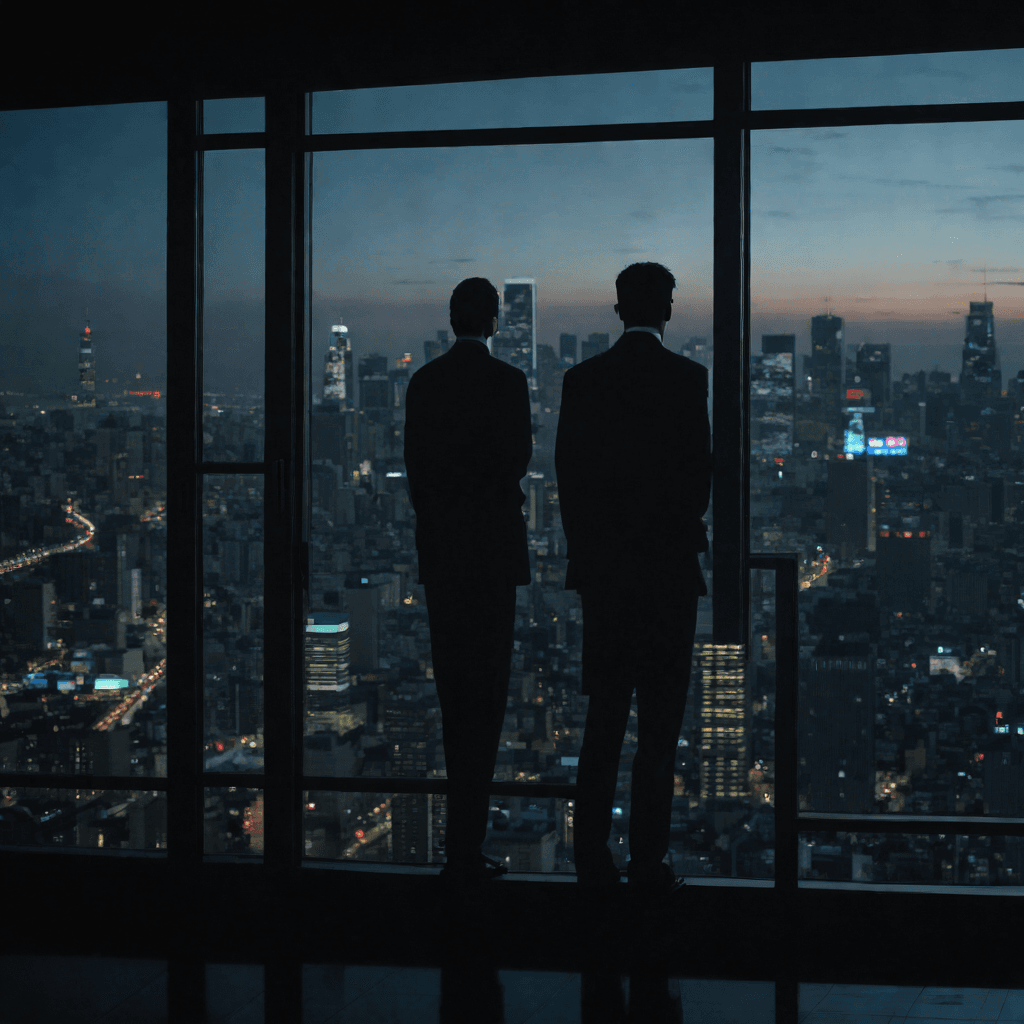
The darkness that descended upon Seoul’s newsrooms in the early hours of December 3, 2024, was not the result of a technical failure or a cyberattack. It was a deliberate act of state-sponsored sabotage. According to the February 12, 2026, ruling by the Seoul Central District Court’s Criminal Division 32, former Minister Lee Sang-min orchestrated a logistical blockade designed to paralyze the nation’s information architecture. By ordering the immediate termination of electricity and water services to five major news organizations, Lee transformed basic municipal infrastructure into a tactical weapon of the state.
This move represented a chilling evolution in media suppression, moving beyond traditional censorship toward the literal de-platforming of the press by severing its physical lifelines. For Lee Jun-ho (pseudonym), a night-shift editor at one of the targeted agencies, the sudden silence of the servers and the cut in communications felt like a siege. This tactical weaponization of the grid sets a dangerous precedent for how modern democracies can be dismantled from the inside out, beginning with the infrastructure of truth.
Defining the Insurrectionist Role
The South Korean judiciary’s decision to sentence Lee Sang-min to seven years in prison rests on a precise and severe legal classification: "engaging in critical duties of insurrection." While the verdict has triggered a "lenient sentencing" controversy—given the significant discrepancy between the 7-year term and the 15-year sentence originally demanded by prosecutors—the court determined that Lee’s actions were a core component of a broader attempt to subvert the constitutional order. Under the Supreme Court of Korea’s standards, insurrection involves a concerted effort to destroy the state's functional capacity, and silencing the press is viewed as a primary step in that destruction.
This judicial stance aligns with international human rights standards. As noted by legal analysis from the International Commission of Jurists, freedom of the press is explicitly protected by Article 19 of the ICCPR, and its suppression during martial law is a hallmark of military regimes prioritizing control over information. By labeling utility cut-offs as an act of insurrection, the court signaled that the free flow of information is as vital to the state’s survival as its military or territory. This definition creates a high legal wall against future executive attempts to use "emergency" justifications to bypass the fundamental protections enshrined in democratic frameworks.
The Yoon Connection and the Blueprint for Control
The sentencing of Lee Sang-min does not occur in a political vacuum. The court found it was the execution of a pre-meditated "blueprint for control" established by former President Yoon Suk-yeol. The February 12 ruling explicitly stated that the plan to suppress the media and cut utilities was a coordinated effort originating from the highest office.
This finding carries significant weight in the current global climate, particularly as the Trump administration pursues a more transactional and deregulation-focused foreign policy. It highlights how even established allies can face internal democratic erosion when executive power remains unchecked by the rule of law. The court's evidence suggests that Lee was not a rogue actor but a loyal executor of a strategy aimed at stabilizing the regime through the manufactured silence of its critics. This top-down coordination mirrors concerns raised in the 2024 U.S. State Department’s Country Report on Human Rights Practices for South Korea, which had already identified reports of government pressure on media outlets. The existence of this blueprint suggests that the threat to democratic health in the 2020s is rarely spontaneous, but rather a calculated withdrawal of institutional liberties.
The Paradox of Acquittal on Abuse of Power
In a move that has drawn scrutiny from international legal observers, the court acquitted Lee on charges of "Abuse of Power" even as it handed down a heavy sentence for insurrection. This legal paradox stems from a technical but crucial distinction: "Abuse of Power" typically applies to an official performing a legitimate duty in an illegitimate way, whereas insurrection is viewed as an act that exists entirely outside the scope of legitimate official authority.
The court reasoned that since the order to cut utilities during a failed martial law attempt was fundamentally anti-constitutional, it could not be classified as a mere "abuse" of a minister's standard administrative powers. The act was so egregious it transcended the bounds of normal criminal misconduct to become a crime against the state itself. While this legal nuance might seem like a technical victory for Lee on one front, it reinforces the severity of the primary conviction, emphasizing that some orders are so illegal they cannot even be categorized as a perversion of one’s official role. For global policy makers, this distinction serves as a reminder that the most dangerous threats to liberty are those that attempt to operate under the thin veil of "emergency" legitimacy.
The Civil Servant’s Dilemma and the Nuremberg Defense
The Lee Sang-min case has sent shockwaves through the South Korean bureaucracy, forcing a re-evaluation of the duty to refuse illegal orders. For decades, the "Nuremberg Defense"—the claim of "just following orders"—has been a common shield for public officials. The seven-year sentence for Lee suggests that this shield is no longer impenetrable.
The court’s ruling implies that civil servants have an affirmative duty to uphold the constitution over the commands of their superiors, especially when those commands involve the suppression of fundamental rights. Kim Seo-yeon (pseudonym), a mid-level manager in a government agency, reflects a growing sentiment among the administrative class that the cost of compliance has now surpassed the cost of defiance. This shift is critical for institutional resilience, as it places the burden of constitutional defense on the individuals who manage the state's levers of power. The trial serves as a stark warning: the "architecture of silence" can only be built if the architects themselves are willing to lay the bricks.
A High Court Battle for Democratic Resilience
As the case moves to the High Court, the proceedings face skepticism regarding a potential "bulletproof appeal" (방탄 항소) intended to stall the judicial process and shield superior officers from legal fallout. The stakes extend far beyond the personal fate of one former minister; they encompass the very standing of South Korea as a global democracy. The 2025 World Press Freedom Index by Reporters Without Borders currently ranks South Korea 61st globally, categorizing its environment as "problematic" due to legal harassment of journalists and political polarization.
The outcome of the appeal will determine whether the judiciary will remain the final bulwark against the erosion of these freedoms or if the "Architecture of Silence" will find a permanent place in the legal landscape. The data from international watchdogs suggests a downward trend that only a rigorous and consistent application of constitutional law can reverse. If the sentence holds, it will be a historic victory for the principle that accountability is the only true vaccine against the virus of authoritarianism.
Sources & References
2024 Country Reports on Human Rights Practices: South Korea
U.S. Department of State • Accessed 2026-02-14
The report highlights concerns regarding restrictions on freedom of expression and the targeting of journalists critical of the government. It notes the use of defamation laws and the Korea Communications Standards Commission (KCSC) as tools that can potentially limit press independence.
View OriginalSeoul Central District Court Criminal Division 32 Ruling (2026-02-12)
Supreme Court of Korea / Seoul Central District Court • Accessed 2026-02-14
Former Minister Lee Sang-min was sentenced to 7 years in prison for his role in the '12.3 Martial Law' incident. The court found him guilty of 'engaging in critical duties of insurrection' (내란 중요임무 종사), specifically for ordering the cutting of electricity and water to five major news organizations.
View Original2025 World Press Freedom Index: South Korea
Reporters Without Borders (RSF) • Accessed 2026-02-14
South Korea ranked 61st globally in the 2025 Index, categorized as 'problematic.' The report cites a decline in press freedom due to legal harassment of journalists and political polarization in media oversight.
View OriginalPress Freedom Rank (South Korea): 61
Reporters Without Borders • Accessed 2026-02-14
Press Freedom Rank (South Korea) recorded at 61 (2025)
View OriginalInternational Law Analysis, Legal Framework on Martial Law
International Commission of Jurists (Contextual Analysis) • Accessed 2026-02-14
The imposition of martial law frequently leads to severe press suppression, as military regimes prioritize control over information. Freedom of the press is explicitly protected by Article 19 of the ICCPR.
View OriginalWhat do you think of this article?