The Munich Ultimatum: How Japan’s New Doctrine Reshapes the Pacific Alliance
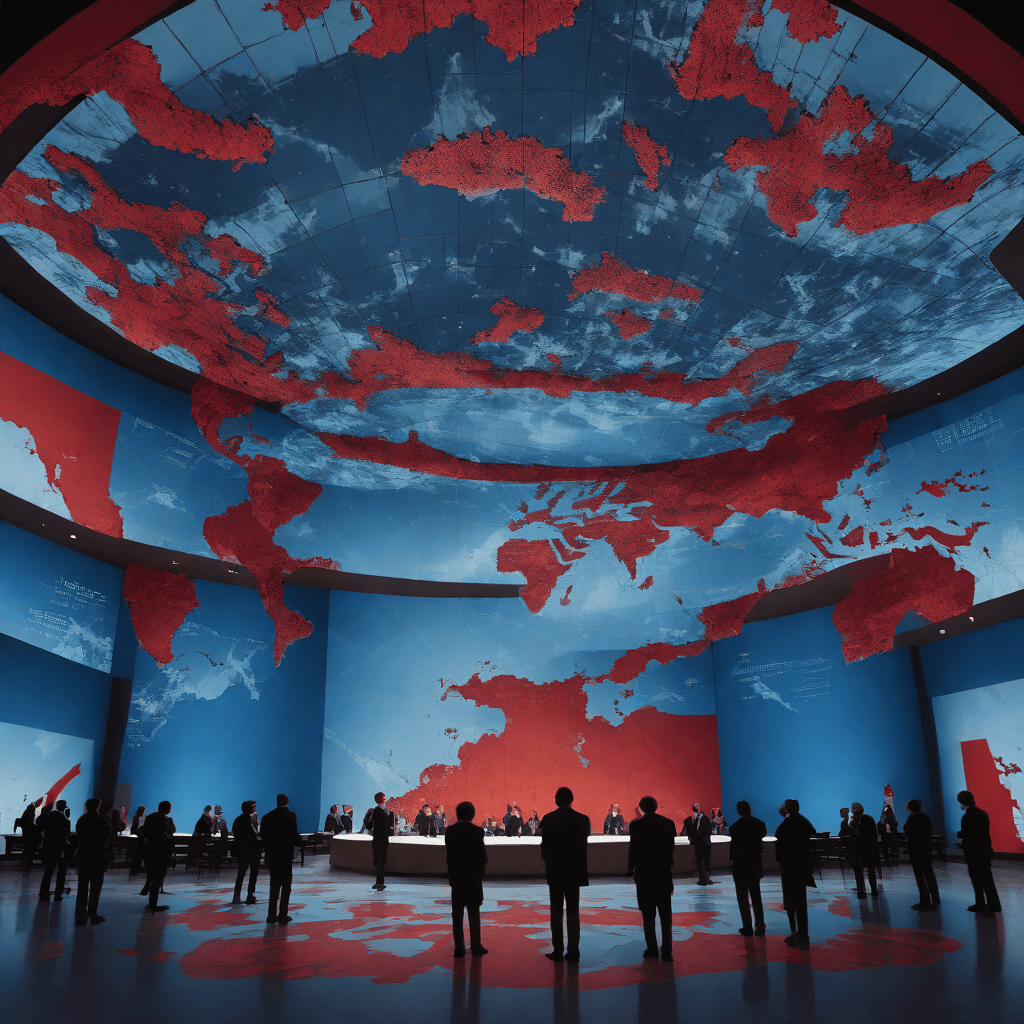
The Munich Flashpoint: A War of Words in the Bavarian Winter
The annual Munich Security Conference, traditionally a venue for diplomatic posturing and carefully calibrated "red lines," transformed in early 2026 into a theater of direct, escalatory confrontation. Chinese Foreign Minister Wang Yi delivered what many analysts consider a "Munich Ultimatum," specifically targeting Tokyo with warnings of "destruction" should it continue its deepening involvement in the Taiwan contingency. This rhetoric marks a departure from the veiled threats of the early 2020s, reflecting a Beijing that feels emboldened by the shifting tides of American isolationism. As reported by Arab News on February 14, Wang’s language was uncharacteristically blunt, framing Japan’s defense alignment as a suicidal provocation rather than a regional stabilizer.
The response from Taipei was immediate and equally unyielding, signaling that the era of strategic ambiguity is being replaced by a period of strategic clarity. Taiwan’s Foreign Minister Lin Chia-lung, speaking in direct rebuttal at the conference, rejected Beijing’s "peace and stability" narrative as a thin veil for coercion. According to a February 16 report from the Taipei Times, Lin characterized China as the "genuine threat to regional security," calling out the hypocrisy of invoking United Nations principles while simultaneously conducting aggressive military maneuvers in the Strait. This verbal exchange is not merely a diplomatic spat; it is the opening salvo of a new, more volatile chapter in Pacific relations.
For James Carter (pseudonym), a Washington-based security consultant who has attended Munich for a decade, the atmosphere is noticeably more brittle than in years past. He observes that while previous sessions focused on "managing" the China-US rivalry, the 2026 discourse is centered on the failure of management. This breakdown in diplomatic etiquette suggests that the guardrails established over the last forty years are eroding. The "Adjustment Crisis" in global governance, as described by Ryan Hass, Senior Fellow at the Brookings Institution, is meeting the rigid physical reality of the Taiwan Strait, creating a friction point that traditional diplomacy seems ill-equipped to handle.
The Takaichi Doctrine: Japan’s Pivot Toward Proactive Deterrence
The volatility in Munich is a direct reaction to the "Takaichi Doctrine," the assertive defense posture adopted by the administration of Prime Minister Sanae Takaichi. Departing from the post-war "Shield" role, where Japan relied almost exclusively on American offensive capabilities, Tokyo has begun to forge its own "Sword." This shift includes record-breaking defense budgets and the acquisition of counter-strike capabilities, a move that Beijing views as a fundamental violation of the regional status quo. The Takaichi administration argues that in an era of "America First" deregulation and isolationism, Japan can no longer afford to be a passive observer of its own security environment.
This proactive deterrence is not just a policy shift but a cultural one within the Japanese security establishment. The focus has moved toward creating an independent defense network that can function even if the American security umbrella becomes intermittent. Beijing's sharp warning to Japan is a recognition that Tokyo is no longer just a junior partner in a US-led alliance, but an autonomous regional power with its own strategic interests. By signaling "destruction," Wang Yi is attempting to test the domestic resolve of the Takaichi government, wagering that the Japanese public may still be wary of a direct military confrontation with a nuclear-armed neighbor.
However, the structural reality of 2026 suggests that the Takaichi Doctrine is a response to necessity rather than choice. As the U.S. pivots toward a more transactional foreign policy under the second Trump administration, regional allies are being forced to shoulder a greater burden of their own defense. For Sato Kenta (pseudonym), a researcher at a Tokyo think tank, the new strategy represents a "coming of age" for Japanese sovereignty. He notes that the transition is painful and carries immense risk, but the alternative—complete dependence on an unpredictable Washington—is increasingly seen as the greater vulnerability in a multi-polar world.
Testing the Shield: Beijing’s Gamble on American Fragility
Beijing’s escalatory rhetoric is a calculated probe designed to measure the depth of the current U.S. commitment to its Pacific allies. The "America First" agenda, while focusing on domestic deregulation and economic decoupling, has created a perceived void in global leadership that China is eager to exploit. By threatening Japan in such a public forum, Beijing is asking a fundamental question: Would the Trump administration risk a direct conflict with China to protect a "more autonomous" Japan? The gamble is that Washington's internal distractions and isolationist tendencies might lead to a delayed or diluted response in the event of a localized skirmish.
Data suggests that experts are increasingly pessimistic about the stability of this regional balance. A 2026 survey by the Center for Strategic and International Studies (CSIS) reveals a significant uptick in the perceived risk of military conflict. The consensus among foreign policy analysts is that the probability of an incident in the Taiwan Strait or the South China Sea has reached its highest point in recent history, driven by a combination of regional rearmament and a lack of clear communication channels between the major powers.
As noted in the CSIS China Power Project, 41% of experts believe the risk of military conflict is higher than in the previous year. This data point underscores the "Adjustment Crisis" where the old rules of engagement are no longer being followed, but new ones have yet to be established. Wang Yi’s remarks in Munich are a direct manifestation of this data—a strategic test of a shield that Beijing suspects may be more brittle than it appears. The rhetoric is a tool of psychological warfare, intended to create a sense of inevitability about China's regional dominance while the U.S. is preoccupied with its own domestic realignment.
The Absent Protector: US Utility Crises and the Isolationist Void
The timing of Beijing’s aggression coincides with a period of significant domestic strain in the United States. In February 2026, a series of utility grid failures and infrastructure collapses across several states have forced the Trump administration to prioritize internal stability over overseas commitments. This "perfect storm" of domestic crisis and isolationist policy has significantly hampered Washington's ability to project a unified front in the Pacific. The "America First" ethos, which prioritizes the domestic free market over global policing, has inadvertently sent a signal of retreat to both allies and adversaries alike.
The deregulation agenda, while intended to stimulate technological acceleration and economic growth, has also exposed the fragility of the nation's physical infrastructure. As the administration pushes for unchecked industrial expansion, the "Adjustment Crisis" has manifested in a utility collapse that has left millions without reliable power. For Sarah Miller (pseudonym), a small business owner in the Midwest, the "Pacific Pivot" feels like a distant abstraction when the local grid is failing. This domestic sentiment provides the political cover for a more isolationist foreign policy, as voters demand that resources be redirected from "forever alliances" to American soil.
This isolationist void is the primary driver of the current Pacific tension. Without the traditional American safety net, regional powers like Japan are forced to accelerate their own military capabilities, which in turn triggers an escalatory response from Beijing. The lack of a clear, consistent American presence in Munich allowed the Wang-Lin exchange to dominate the headlines, highlighting the absence of a moderating force. The "Sovereign Pacific" is not a peaceful evolution; it is a chaotic reorganization born out of the vacuum left by a superpower that is increasingly looking inward to solve its own structural decay.
Taipei’s Defiance: Asserting Sovereignty in a Multi-Polar Era
Taiwan has refused to be a passive pawn in the game between Beijing and Tokyo. Foreign Minister Lin Chia-lung’s performance in Munich was a masterclass in assertive diplomacy, leveraging the regional friction to secure Taiwan’s own standing as a sovereign actor. By explicitly stating that the Republic of China (Taiwan) is "never subordinate to the PRC," Lin has moved the needle beyond "status quo" rhetoric into a more direct assertion of independence. This defiance is backed by the demographic reality of 23 million stakeholders who, according to Taiwan's Ministry of Foreign Affairs, have the "sole right to determine their future."
Taipei is increasingly looking to Japan as its primary security partner, recognizing that the U.S. commitment may be more transactional than in the past. The deepening ties between the Takaichi administration and the Taiwanese government are seen by Beijing as a "conspiracy" to split Chinese territory. Lin Chia-lung’s response to Wang Yi was not just a defense of Taiwan, but a call for a new regional coalition that can withstand Chinese pressure without constant American oversight. This "Sovereign Pacific" strategy aims to create a network of middle powers that can maintain a balance of power through collective deterrence.
Toward a Sovereign Pacific: The End of the Post-War Order
The Munich Ultimatum and Taipei’s subsequent defiance signal the definitive end of the post-war security order in the Pacific. We are witnessing the birth of a "Sovereign Pacific," where regional powers like Japan and Taiwan are leading their own defense strategies, often in spite of, rather than because of, American policy. This new era is defined by a multi-polar reality where the U.S. is one of many players, rather than the undisputed hegemon. The Takaichi Doctrine and the Lin Rebuttal are the blueprints for a future where regional security is a localized responsibility.
Ultimately, the 2026 "Adjustment Crisis" is forcing a fundamental rethink of what security looks like in the 21st century. The isolationism of "America First" has forced the rest of the world to grow up, and the Pacific is growing up faster than most. While the risk of conflict is undeniably higher, the emergence of a Sovereign Pacific suggests that the region is no longer willing to be a mere theater for superpower competition. It is becoming an active, autonomous zone of governance and defense, carving out a new path between the competing visions of the global giants.
Sources & References
Foreign Minister Lin Chia-lung's Response to Wang Yi at Munich Security Conference
Ministry of Foreign Affairs, Republic of China (Taiwan) • Accessed 2026-02-15
Reiterated that the ROC (Taiwan) is a sovereign nation and never subordinate to the PRC. Accused Beijing of being the genuine threat to regional security and called its appeal to UN principles hypocritical given its military provocations.
View OriginalSurveying the Experts: The State of U.S.-China Relations Entering 2026
Center for Strategic and International Studies (CSIS) • Accessed 2026-02-15
Expert consensus shows a perceived increase in the risk of military conflict over Taiwan compared to the previous year. Identifies the Taiwan Strait and South China Sea as primary flashpoints for 2026.
View OriginalExpert Perception of Military Conflict Risk: 41% (Increase)
CSIS China Power Project • Accessed 2026-02-15
Expert Perception of Military Conflict Risk recorded at 41% (Increase) (2026)
View OriginalTaiwan Population Stakeholders: 23,000,000
Ministry of Foreign Affairs (Taiwan) • Accessed 2026-02-15
Taiwan Population Stakeholders recorded at 23,000,000 (2026)
View OriginalLin Chia-lung, Minister of Foreign Affairs
Republic of China (Taiwan) • Accessed 2026-02-15
China is the true threat to regional security. It is hypocritical to claim adherence to UN principles while conducting provocative military maneuvers in the Strait.
View OriginalRyan Hass, Senior Fellow
Brookings Institution • Accessed 2026-02-15
2026 represents a critical juncture where the 'Adjustment Crisis' in global governance meets the rigid physical borders of the Taiwan Strait.
View OriginalLin Chia-lung rebukes Wang Yi’s ‘peace’ claims at Munich
Taipei Times • Accessed 2026-02-16
Provides the most detailed local context of Taiwan's diplomatic pushback against China's narrative at the Munich Security Conference.
View OriginalWang Yi warns Japan of 'destruction' over Taiwan contingency remarks
Arab News • Accessed 2026-02-14
Covers the escalatory language used against Japanese leadership, framing Japan's stance as a threat to China's sovereignty.
View OriginalWhat do you think of this article?