Naval Vigilance: The Cost of US Power in the 2026 Middle East Surge
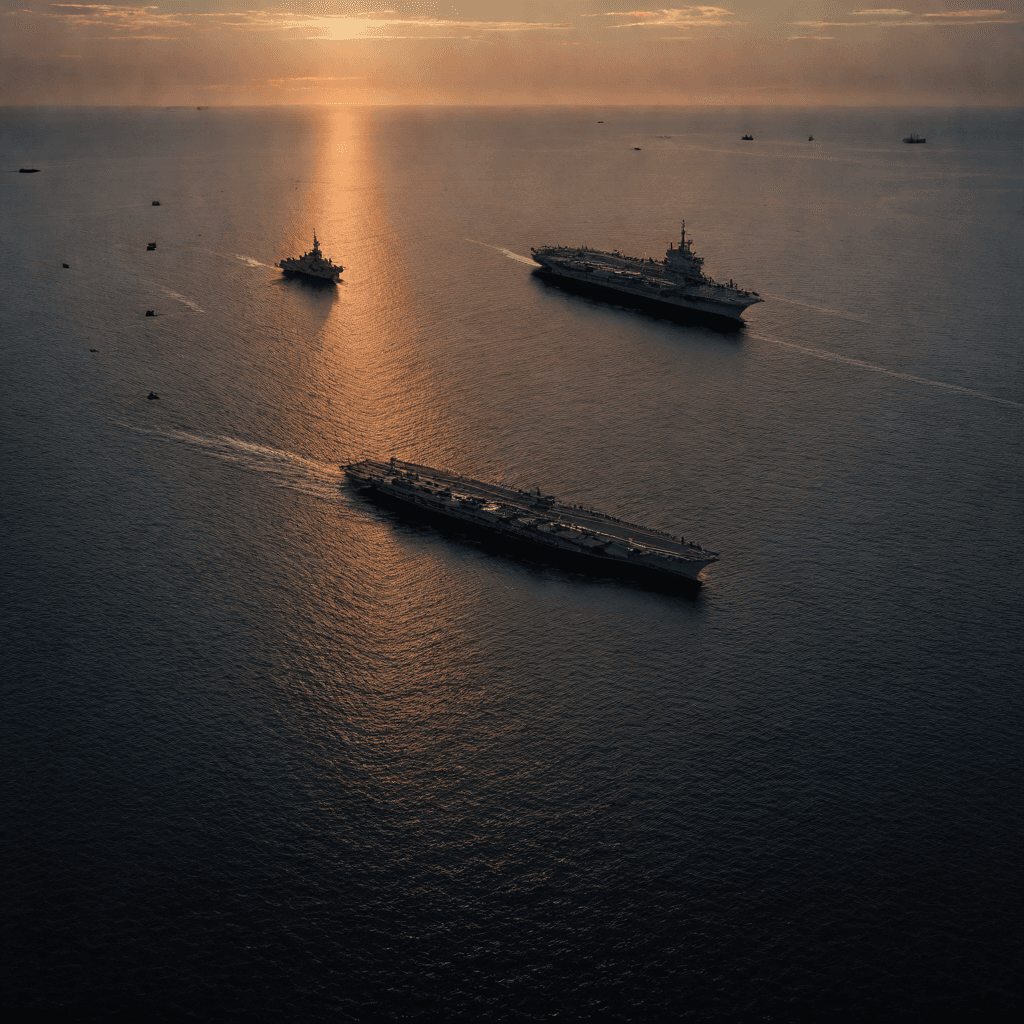
Shadows Over the Strait: The Arrival of the Dual Strike Groups
The horizon of the Arabian Sea has been transformed into a dense thicket of radar masts and flight decks as the USS Abraham Lincoln and USS Gerald R. Ford strike groups converge near the mouth of the Persian Gulf. This massive concentration of naval power marks a decisive shift in the Trump administration's foreign policy, moving beyond mere rhetoric to a posture of overwhelming physical presence. The arrival of these two carrier strike groups—the first such dual-deployment in the region in recent years—serves as a floating fortress, projecting American influence across the world’s most critical maritime chokepoints.
Observers in Washington and Tehran alike recognize the arrival of these assets as a return to high-stakes diplomacy where the hardware does the talking. However, the specific motives for this deployment remain unverified by official channels, and rumors suggest that the shift in posture is as much about psychological signaling as it is about maritime security. While the "America First" doctrine has often prioritized internal restructuring, the presence of these carriers suggests that protecting global energy lanes remains a priority for the administration, though this strategic pivot hasn't been explicitly confirmed.
The scale of this naval surge underscores a deepening tension between the administration’s desire to retrench and the reality of regional volatility. Each carrier acts as a mobile city, equipped with sophisticated electronic warfare suites and a complement of nearly 90 aircraft, creating a "Steel Shield" that extends hundreds of miles in every direction. This shield, however, is not just a defensive measure; it is a prerequisite for the aggressive diplomatic maneuvers the administration is currently pursuing to force a realignment of regional power. As these steel giants settle into their stations, the question remains whether this show of force can achieve lasting stability or if it merely delays an inevitable confrontation.
The Stealth Perimeter: Orchestrating Air Power from Spain to Jordan
Beyond the visible silhouette of the carrier groups, reports suggest a more discreet air bridge has been established across European and Middle Eastern bases to support the naval surge. This multi-domain strike package represents a coordinated effort to increase regional stealth capability. Unverified assessments suggest that the United States is assembling a package capable of conducting sustained operations, highlighting the perceived strategic intent behind the concentration of land-based stealth fighters and carrier-borne assets.
Logistically, the deployment involves a complex orchestration of F-35 Lightning IIs and F-15E Strike Eagles, operating out of key nodes in Spain and Jordan to create a continuous stealth perimeter. This network of air power is designed to operate in tandem with the carriers, ensuring that any potential conflict would not be limited to the sea but would involve a comprehensive suppression of regional threats. The ability to maintain these operations relies on a fragile web of basing agreements that the current administration has had to navigate through a combination of tariffs and security guarantees.
The strategic value of this air power lies in its ability to penetrate sophisticated anti-access/area-denial (A2/AD) systems that have been fortified across regional coastlines. By integrating land-based fighters with the carrier strike groups, the U.S. military is signaling a "sustained operations" capability that some observers believe regional defensive postures are ill-equipped to handle over a prolonged period. However, the cost of maintaining this stealth perimeter is astronomical, requiring constant aerial refueling and high-tempo maintenance cycles. Each flight hour represents a significant allocation of national resources, a fact that has become a flashpoint for critics of the current administration's spending priorities.
The Deterrence Calculus: Countering Regional Friction in a Volatile February
The catalyst for this surge appears to be related to reports of naval military drills conducted in regional waters. While official confirmation of specific incidents remains sparse, rumors suggest the U.S. is closely monitoring activities in the Strait of Hormuz to ensure the safety of international maritime traffic. This heightened vigilance highlights the precarious nature of the Strait, where regional tensions could impact global energy security.
The regional strategy is viewed by some observers as a defensive posture to deter U.S. military action. Reports suggest a focus on hardening infrastructure and missile sites, while regional rhetoric warns that confrontation could lead to widespread disruption. This posture is seen by many as a response to U.S. diplomatic pressure regarding regional influence and resource security.
This deterrence calculus is a game of mirrors, where both sides are using the threat of escalation to avoid it. By initiating drills during a period of extreme diplomatic tension, regional forces are testing the resolve of the dual-carrier presence. For the United States, the challenge is to maintain a posture that is aggressive enough to deter provocations without being so provocative that it forces a direct confrontation. The current vigilance is a diplomatic euphemism for the thin line between a routine exercise and an act of escalation.
The Price of Hegemony in the Age of the Adjustment Crisis
While the USS Gerald R. Ford projects power abroad, the economic reality for many Americans is defined by a different kind of pressure: the "Adjustment Crisis" caused by the rapid displacement of labor by Artificial General Intelligence (AGI). For citizens like Sarah Miller (pseudonym), a former data analyst in Ohio, the sight of billion-dollar carriers in the news feels increasingly disconnected from the struggle of finding a new role in a world where her skills have been automated. The cost of maintaining two carrier strike groups—estimated in the tens of millions of dollars per day—represents a pool of resources that Miller and others argue could be used to stabilize the domestic labor market.
The contrast between the administration’s military spending and the social disruption at home has fueled a debate over the true meaning of national security in 2026. While the "Steel Shield" protects maritime trade, it does little to address the systemic risk of a middle class that is being hollowed out by technological acceleration. For many, the security needed is not against a foreign navy, but against the obsolescence of their livelihood. This Adjustment Crisis is the quiet backdrop to the loud movements of the naval surge, creating a domestic tension that the Trump administration must navigate alongside its foreign policy.
Economists note that the allocation of national capital toward high-stakes global policing during a period of industrial upheaval is a gamble on future stability. The theory is that by securing global markets, the U.S. ensures a flow of wealth that will eventually solve the domestic labor crisis. However, the immediate reality for displaced workers is one of stagnant wages and shrinking opportunities, making the "Price of Hegemony" a difficult pill to swallow. The administration’s focus on deregulation and technological acceleration has only sharpened this divide, as the gains from AGI are concentrated while the costs of global defense are socialized.
Power Grids and Flight Decks: The Infrastructure Paradox
The technological sophistication of the USS Gerald R. Ford, with its nuclear reactors and electromagnetic launch systems, stands in stark contrast to the failing energy infrastructure across much of the American heartland. As extreme weather events become more frequent in early 2026, the domestic power grid has struggled to keep up, leading to rolling blackouts in regions that are simultaneously facing economic hardship. For Michael Johnson (pseudonym), a resident of a rural county in Texas, the "Infrastructure Paradox" is a daily reality; he watches footage of the Ford’s state-of-the-art power plant while his own home goes dark during a winter storm.
The energy infrastructure crisis is a systemic risk that critics argue has been neglected in favor of military expansionism. While the administration has pushed for deregulation to spur energy production, the underlying distribution network remains aged and vulnerable to the very weather patterns that are now the new normal. This paradox is particularly acute in the context of the Trump administration's emphasis on national strength. A nation that can project two nuclear-powered carrier groups to the other side of the planet but cannot guarantee stable electricity to its own citizens faces a crisis of legitimacy.
The resources required to modernize the national grid are comparable to the long-term costs of the current naval surge, forcing a difficult reassessment of priority. For many, the question of national security is answered at the light switch. If the switch doesn't work, the security provided by the USS Gerald R. Ford feels abstract and irrelevant. This contrast between the precision of military hardware and the fragility of domestic systems is a defining theme of 2026, suggesting that the greatest threat to American stability may not be found in the Strait of Hormuz, but in the neglected foundations of its own infrastructure.
Redefining Security: Toward a Synthesis of Domestic and Global Stability
The current naval surge near Iran is more than a military operation; it is a stress test for the American identity in a period of transition. To maintain its status as a global hegemon while surviving a domestic Adjustment Crisis, the United States must find a way to synthesize its global responsibilities with its local needs. The tension between the "Steel Shield" and the "Cracking Hearth" suggests that the traditional definition of national security—focused primarily on external threats—is no longer sufficient to ensure long-term stability.
A forward-looking perspective on resource prioritization would suggest that true national security in 2026 must include a robust domestic foundation. The ability to project power abroad is ultimately dependent on the social and economic health of the nation at home. If the Adjustment Crisis is left unaddressed, the domestic friction will eventually erode the political will required to maintain massive naval assets. The current administration’s challenge is to prove that its "America First" policy can deliver a secure environment for its citizens, both physically and economically.
This synthesis requires a critical reassessment of how national resources are allocated. The massive investment in naval power must be matched by an equivalent commitment to domestic infrastructure and labor transition programs. Without this balance, the United States risks becoming a hollowed-out hegemon—a nation with an invincible exterior and a fracturing interior. The goal should be a state of Integrated Security where global stability and domestic resilience are seen as two sides of the same coin. As the dual-carrier groups continue their vigil, the true measure of American strength will be found in the ability of its leaders to mend the hearth they are sworn to protect.
Sources & References
CENTCOM Statement on IRGC Naval Drills in Strait of Hormuz
U.S. Central Command (CENTCOM) • Accessed 2026-02-17
U.S. Central Command issued a formal warning to the Islamic Revolutionary Guard Corps (IRGC) regarding naval military drills initiated on February 16, 2026. The statement urged professional conduct to ensure the safety of international maritime traffic in the Strait of Hormuz.
View OriginalIran Update, February 2, 2026
Institute for the Study of War (ISW) • Accessed 2026-02-17
The Iranian regime is engaged in a multi-front campaign (diplomatic, military, and informational) to deter U.S. military action. Iran warned that any strike would lead to a prolonged regional conflict.
View OriginalISW Analysts, Iran Intelligence Team
Institute for the Study of War • Accessed 2026-02-17
The Iranian regime is attempting to deter US military action by forecasting that it will escalate into a prolonged regional war.
View OriginalWhat do you think of this article?