Sierra Nevada Disaster: The Fatal Gap Between Data and Defiance
A Mountain Shattered
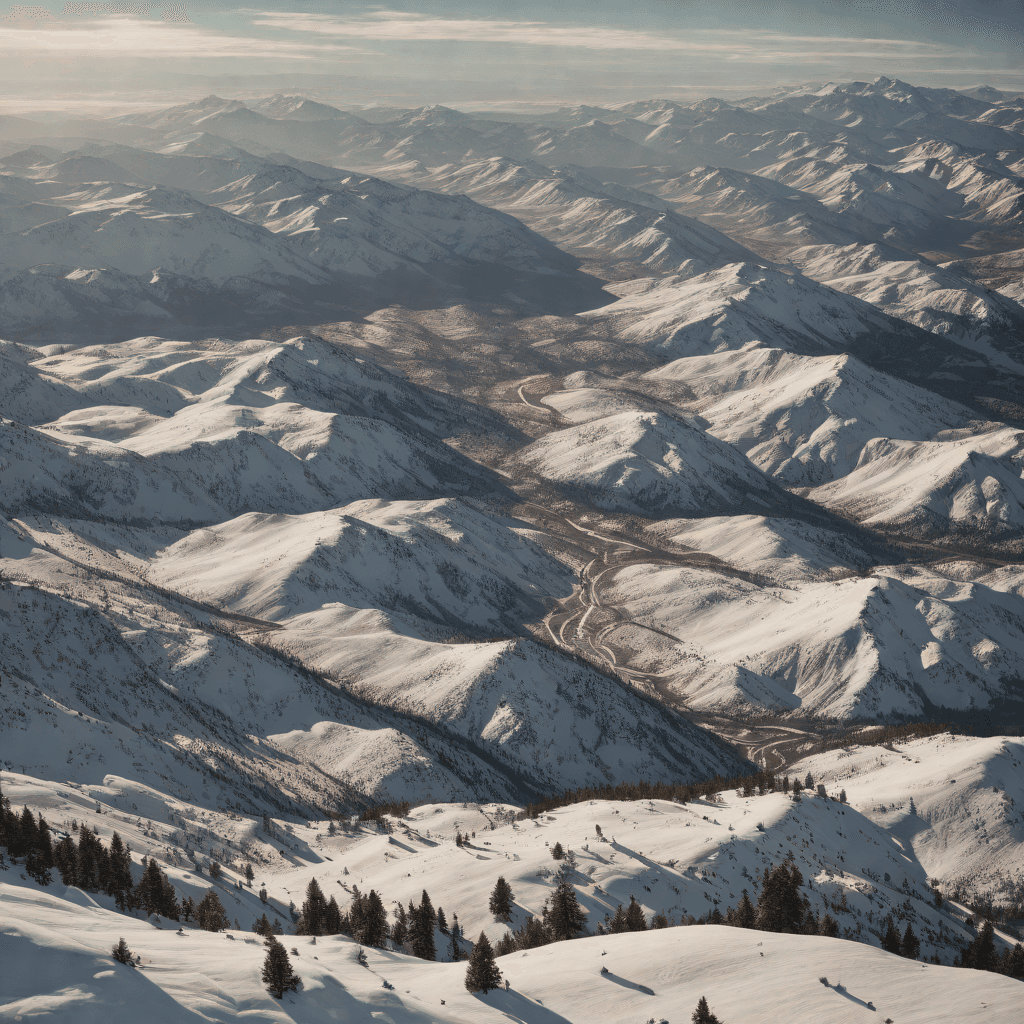
The silence of the Sierra Nevada was not merely broken on February 19, 2026; it was annihilated by the weight of cascading snow. At Castle Peak, a destination for backcountry enthusiasts, a group of fifteen individuals found themselves at the epicenter of what is now recorded as the deadliest avalanche incident in California’s history. According to data verified by the Sierra Avalanche Center (SAC), the slide claimed eight confirmed lives, with one individual still missing and presumed dead. This surpasses the fatalities of the 1982 Alpine Meadows disaster, marking a grim milestone for the region.
For survivors like David Chen, the event began with a hollow "whumpf"—the technical sound of a snowpack collapsing under its own instability. Within seconds, a massive slab accelerated down the slope, burying the group under debris with the density of wet concrete. While six individuals were rescued by the efforts of companions and arriving teams, the scale of the tragedy has sent a shockwave through the mountain communities of the West.
This incident serves as a marker of the 2026 winter season, where the allure of the "America First" landscape—defined by a push for untamed exploration and reduced federal oversight—meets the unforgiving reality of a changing climate. The disaster has forced a reckoning for an outdoor industry that markets the backcountry as a playground for personal liberty while often downplaying the consequences of a single misstep on a fragile ridge.
The Precision of the Forecast
The catastrophe at Castle Peak did not occur in a vacuum of information. It happened despite a barrage of warnings that grew increasingly dire in the forty-eight hours leading up to the slide. The National Weather Service (NWS) office in Reno had issued high-danger avalanche warnings for the Sierra Nevada as early as February 17, 2026. These reports cited a lethal combination of heavy new snowfall and gale-force winds that created "High Danger" conditions across nearly all elevations.
Meteorological data confirms that wind speeds stripped snow from windward slopes and deposited it into unstable "pillows" on the leeward side of Castle Peak. This process, known as wind-loading, significantly increases stress on the underlying snowpack. For Michael Johnson, a local resident with three decades of experience, the data was a clear signal to avoid the terrain. However, he observed dozens of vehicles still heading toward the trailheads on the morning of the disaster.
The disconnect between the precision of modern forecasting and the behavior of recreationists highlights a crisis in risk communication. While the NWS provided the data necessary to predict a high-probability event, the human element—the liberty to choose—remains the most volatile variable. This tension between government-provided warnings and individual defiance is a central theme in the deregulated atmosphere of 2026, where the responsibility for safety has shifted decisively from the state to the citizen.
Winter 2026: The New Unpredictable
The technical cause of the Castle Peak failure lies in a phenomenon becoming the hallmark of the 2026 winter: the "storm slab" resting on a persistent weak layer. Dr. Sarah Jenkins, an avalanche forecaster at the SAC, explains that a prolonged snow drought earlier in the season created a faceted, sugar-like layer of snow at the base of the pack. When an atmospheric river arrived in mid-February, it dumped massive amounts of heavy snow on top of this fragile foundation.
This pattern of extreme swings—from bone-dry droughts to sudden, overwhelming moisture—has rendered traditional mountain wisdom essentially obsolete. The "persistent weak layer" acts like a trap door; it can remain dormant for days before a single person’s weight triggers a collapse that propagates across an entire mountainside. In 2026, the old rule of thumb that "it hasn't slid yet, so it won't" has become a fallacy in the face of structural instability.
The transition from a stable winter cycle to one defined by "shock events" mirrors the broader economic and social shifts of the Trump 2.0 era. Just as the administration pushes for rapid technological acceleration and deregulation, the physical world is responding with its own forms of unpredictable acceleration, leaving those who ignore the data to face the consequences on a personal scale.
In the Shadow of the Slide
The rescue operation at Castle Peak was a study in controlled chaos. Search and rescue teams, many of them volunteers, arrived to find a debris field several hundred yards wide. The recovery of eight bodies was a grueling process that has left deep psychological scars on the local emergency personnel. Operating under the constant threat of secondary slides, rescuers utilized autonomous drones to scan for heat signatures, yet the density of the snow often rendered these tools ineffective.
Sarah Miller, an emergency medical technician at the scene, noted that the physical toll of digging through avalanche debris is comparable to breaking through pavement. The bravery displayed by these teams is a testament to community resilience, but it raises questions about the ethics of putting public servants at risk for those who knowingly disregarded official warnings.
In an era where the Trump administration emphasizes local autonomy and reduced federal oversight, the weight of disaster response falls squarely on regional agencies that are often underfunded. The recovery of the final missing person remains the priority, but once the snow settles, the debate over the limits of first responder sacrifice will undoubtedly intensify.
The Backcountry Paradox
The disaster at Castle Peak exposes the "Backcountry Paradox": as gear becomes more advanced and social media makes extreme terrain appear more accessible, the perceived risk decreases even as the actual risk increases. The group at Castle Peak was reportedly equipped with the latest airbags and beacons—tools that provide a sense of security which, in 2026, may be more illusory than real. This risk-normalization is fueled by a digital culture that rewards high-risk footage over the sober assessment of a forecast.
Within the outdoor community, a debate is brewing between those who champion the absolute liberty of the mountains and those calling for stricter regulation. Some advocates suggest mandatory avalanche education certifications for high-risk corridors. Critics argue that such mandates infringe upon the core American value of self-reliance and would be impossible to enforce in the wilderness.
For James Carter, a shop owner in Truckee, the issue is one of market responsibility. He notes that while the industry profits from selling the "dream" of the backcountry, the "nightmare" is paid for by the taxpayer and grieving families. The current administration’s preference for market-driven solutions suggests that any change will likely come through insurance premiums or trailhead fees rather than federal mandates, but the cost of inaction is now measured in human life.
Respecting the Ridge
As the 2026 winter progresses, the Castle Peak disaster must serve as a catalyst for a cultural shift in how we approach the mountains. Traditional wisdom is no longer a sufficient shield against a climate that has become erratic. Respecting the ridge in 2026 means acknowledging that data is only as valuable as the willingness to act upon it. The "High Danger" warning is not a suggestion; it is a boundary that, when crossed, carries a high probability of a terminal outcome.
Education remains a potent tool for reform, but it must emphasize humility over hardware. The push for new policy will face hurdles in a political climate that favors deregulation. However, the Sierra Nevada corridor cannot afford to ignore the lessons of February 19. The burden of avoidable tragedy has become too heavy for first responders and local communities to carry alone. Ultimately, the future of mountain safety in the Trump 2.0 era will be defined by how we balance the pursuit of personal liberty with our collective responsibility to the truth.
Sources & References
California Avalanche Fatality Statistics
Sierra Avalanche Center • Accessed 2026-02-19
The February 2026 Castle Peak incident is recorded as the deadliest avalanche in California history, surpassing the 1982 Alpine Meadows event.
View OriginalSevere Weather and Avalanche Warning - Sierra Nevada
National Weather Service (NWS) • Accessed 2026-02-19
High danger avalanche warnings were in effect for the Sierra Nevada mountains on February 17, 2026, due to heavy new snowfall and high winds.
View OriginalWhat do you think of this article?