The Permanent Partition: Pyongyang’s New Doctrine and the End of Unification
Cementing the Irreversible: Pyongyang’s New Strategic Baseline
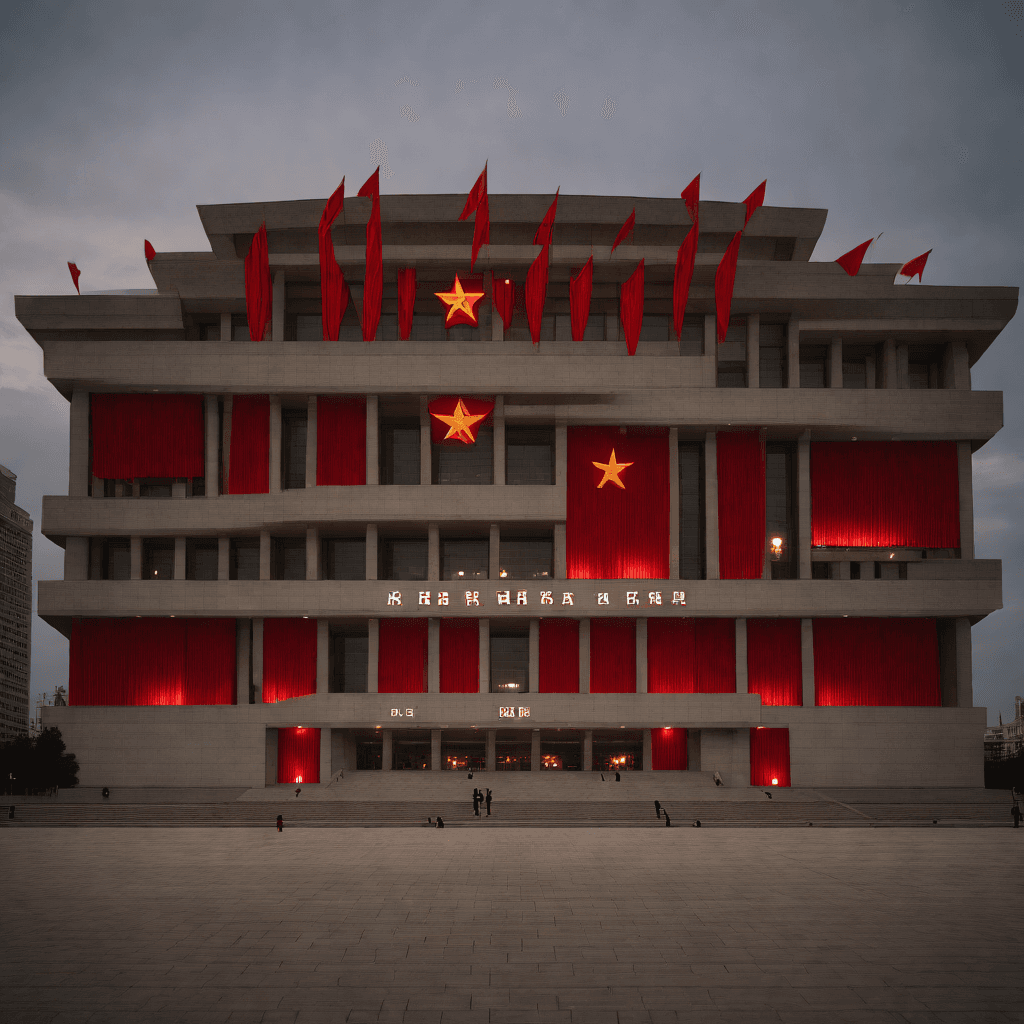
The red banners draped across Pyongyang’s April 25 House of Culture this week signal more than just another cycle of authoritarian pageantry; they mark a definitive pivot in the geopolitical architecture of East Asia. As the 9th Party Congress of the Workers' Party of Korea (WPK) opened on February 19, 2026, the rhetoric emanating from the podium suggests a regime that has finally shed its decades-long skin of revolutionary "unification" in favor of a cold, pragmatic status as a permanent nuclear power.
For David Chen, a Washington-based defense analyst who has monitored the peninsula for two decades, the atmosphere in Pyongyang confirms that the era of treating North Korea as a "problem to be solved" through denuclearization is effectively over. The opening sessions, as reported by The Straits Times, have pointedly highlighted the nation's "nuclear-armed" status as an immutable fact of life, rather than a bargaining chip for future relief. This institutionalization of nuclear identity serves as the bedrock for Kim Jong Un’s new strategic baseline.
Patrick Cronin, the Asia-Pacific Security Chair at the Hudson Institute, noted during a recent CSIS Impossible State podcast that the 9th Congress is being used to solidify this position while pivoting diplomacy almost exclusively toward a Moscow-Beijing axis. By framing its nuclear capabilities as a "permanent" fixture of the state, Pyongyang is signaling to the current Trump administration that the terms of engagement have shifted from "if" they have weapons to "how" the world will live with them. This transition from a revolutionary state to a normalized nuclear power necessitates a complete overhaul of Western containment strategies.
The 20x10 Mandate: Economic Survival as a Sovereignty Tool
In the face of an increasingly isolationist global market, the 9th Congress has unveiled an aggressive domestic agenda designed to insulate the regime from the volatility of Western sanctions. The focus on economic achievements during the opening remarks underscores a shift toward what analysts call "sovereign survival." For Sarah Miller, a logistics consultant specializing in East Asian supply chains, the regime's pivot toward internal economic self-sufficiency represents a direct challenge to the effectiveness of traditional trade barriers.
The emphasis is no longer on waiting for the lifting of sanctions, but on building an internal architecture that can withstand a 90-day sanctions reporting cycle, as monitored by the United Nations Security Council. The UN Security Council’s February 2026 forecast indicates that while members continue to monitor sanctions compliance and recent ballistic missile tests from January, the regime’s internal policy is moving toward long-term consolidation.
By prioritizing local stability and economic regionalism, Pyongyang aims to minimize the "Adjustment Crisis" that many developing nations face in 2026. This economic hardening is not merely about prosperity; it is a sovereignty tool intended to ensure that the WPK maintains absolute domestic control even as digital and physical borders across the globe become more rigid under the "America First" doctrine. The goal is to create a North Korean market that is decoupled from the dollar-centric system, leveraging its ties with the Moscow-Beijing axis to secure the resources it can no longer acquire through global trade.
The Death of Unification: Institutionalizing the Two-State Paradigm
The most profound shift emerging from the 9th Congress is the formal, constitutional death of the "One Nation" dream. The "two hostile states" framework, which began as a rhetorical flourish in previous years, is now being institutionalized into the very fabric of the North Korean state. Rachel Minyoung Lee, a Senior Fellow at the Stimson Center, argues that this framework is likely to be constitutionalized during this congress, effectively ending any pretense of peaceful reunification dialogue for the foreseeable future.
This is not a temporary cooling of relations, but a permanent severance intended to shield the North Korean population from the perceived "cultural pollution" and political instability of the South. By defining South Korea as a primary, permanent enemy rather than a "misguided sibling," Kim Jong Un is removing the ideological ambiguity that has haunted the regime since the 1940s.
This paradigm shift provides a cleaner, more direct narrative for domestic discipline: the South is no longer a territory to be liberated, but a foreign threat to be deterred. This institutionalized hostility serves as a stabilizing force for the WPK, allowing it to justify continued military expenditures and social restrictions without the burden of maintaining a "unification" bureaucracy that has consistently failed to deliver results. The 9th Congress is effectively drawing a hard digital and physical line across the 38th parallel, one that is intended to last for generations.
The Moscow-Beijing Tightrope: Strategic Autonomy in a Multi-Polar World
As Pyongyang retreats from its southern neighbor, it is leaning deeper into the shadow of the "New Cold War." The 9th Congress has made it clear that North Korea views its survival as inextricably linked to the success of the Moscow-Beijing axis. As Patrick Cronin observed at CSIS, this pivot is a calculated move to secure strategic autonomy by playing two superpowers against each other while maintaining a "nuclear-armed" shield.
For the Trump administration, which has championed a policy of strategic deregulation and transactional diplomacy, this presents a unique challenge. North Korea is no longer seeking a "deal" with Washington to enter the global community; it is seeking a "partnership" with Russia and China to bypass it. This strategic autonomy is being leveraged to secure economic concessions—energy from Russia and consumer goods from China—in exchange for North Korea's role as a frontline state against Western influence in the Pacific.
By aligning itself with the "New Cold War" strategy, Pyongyang is positioning itself as a crucial node in a multi-polar world. The regime is betting that as the US focuses on its "America First" domestic priorities and technological acceleration, the international community's appetite for enforcing DPRK sanctions will continue to wane, especially among members of the Moscow-Beijing axis who view North Korea as a useful, if volatile, buffer state.
The Brinkmanship Paradox: Domestic Stability vs. External Enemy Narrative
However, the transition to a "normalized" nuclear state carries an inherent risk: the brinkmanship paradox. Can Kim Jong Un maintain the same level of domestic mobilization if the existential threat of "unification war" is replaced by the sterile reality of a permanent partition? According to James Carter, a retired defense attache now advising private equity firms on geopolitical risk, the sudden removal of the "unification" carrot necessitates a much sharper stick to maintain internal cohesion.
If the regime is no longer "revolutionary," it must prove it is "functional," a much harder task under the weight of global isolation. The shift toward economic consolidation is a gamble that the WPK can replace ideological fervor with material stability. But without the active, urgent threat of a "liberation war," the regime may find it difficult to justify the extreme sacrifices demanded of its citizenry.
This creates a dangerous incentive for "controlled tension"—periodic missile tests or localized skirmishes intended to remind the population of the "hostile" nature of the two-state reality without triggering a full-scale conflict that would destroy the regime's newly built economic foundations. The challenge for 2026 will be managing this delicate balance between domestic discipline and external provocation.
Washington’s Recalibration: Engaging a Regime That No Longer Seeks a Deal
For the Trump administration, the 9th Party Congress represents a final closing of the door on the diplomacy of the last decade. The CSIS assessment of US-ROK response options suggests that traditional denuclearization talks are not just stalled; they are obsolete. Washington is now faced with a regime that has no interest in trading its nuclear arsenal for economic "carrots" because it has already secured those carrots through its alignment with Russia and China.
The policy of "maximum pressure" has reached a point of diminishing returns in a world where digital borders and alternative financial systems allow pariah states to breathe. The recalibration in Washington must move toward a policy of "Nuclear Management" rather than "Denuclearization." This means focusing on arms control, proliferation prevention, and the hardening of regional alliances—particularly with a South Korea that is also coming to terms with the permanent loss of its northern half.
The "America First" approach, with its emphasis on burden-sharing and transactional security, may find itself ironically aligned with North Korea's "Two-State" paradigm. If both sides accept the permanent partition, the risk of a miscalculated "unification war" decreases, even as the risk of a permanent, high-tech Cold War increases.
Sources & References
The Impossible State Live Podcast: North Korea in 2026: Intentions, Realities, and Response
Center for Strategic and International Studies (CSIS) • Accessed 2026-02-20
Analysis of North Korea's strategic direction ahead of the 9th Party Congress, focusing on WMD development, conventional weapons programs, and diplomatic maneuvers with Russia and China.
View OriginalMonthly Forecast: February 2026 - DPRK (North Korea)
Security Council Report • Accessed 2026-02-20
UN Security Council members scheduled to discuss the 90-day report of the 1718 DPRK Sanctions Committee and monitor recent ballistic missile tests conducted in early 2026.
View OriginalSanctions Committee Reporting Cycle: 90 Days
United Nations Security Council • Accessed 2026-02-20
Sanctions Committee Reporting Cycle recorded at 90 Days (2026)
View OriginalNorth Korea's Kim Jong Un opens major party congress to set policy for next 5 years
The Straits Times • Accessed 2026-02-19
Coverage of the opening of the 9th Party Congress in Pyongyang, highlighting the focus on economic achievements and the 'nuclear-armed' status of the nation.
View OriginalNorth Korea’s 9th Party Congress: Predictions and Global Implications
Modern Diplomacy • Accessed 2026-02-15
Expert analysis predicting a shift toward more assertive foreign policy and the potential for a 'new Cold War' framework involving Russia and China.
View OriginalWhat do you think of this article?