The Six-Hour Shield: How South Korean Institutions Neutralized a Midnight Coup
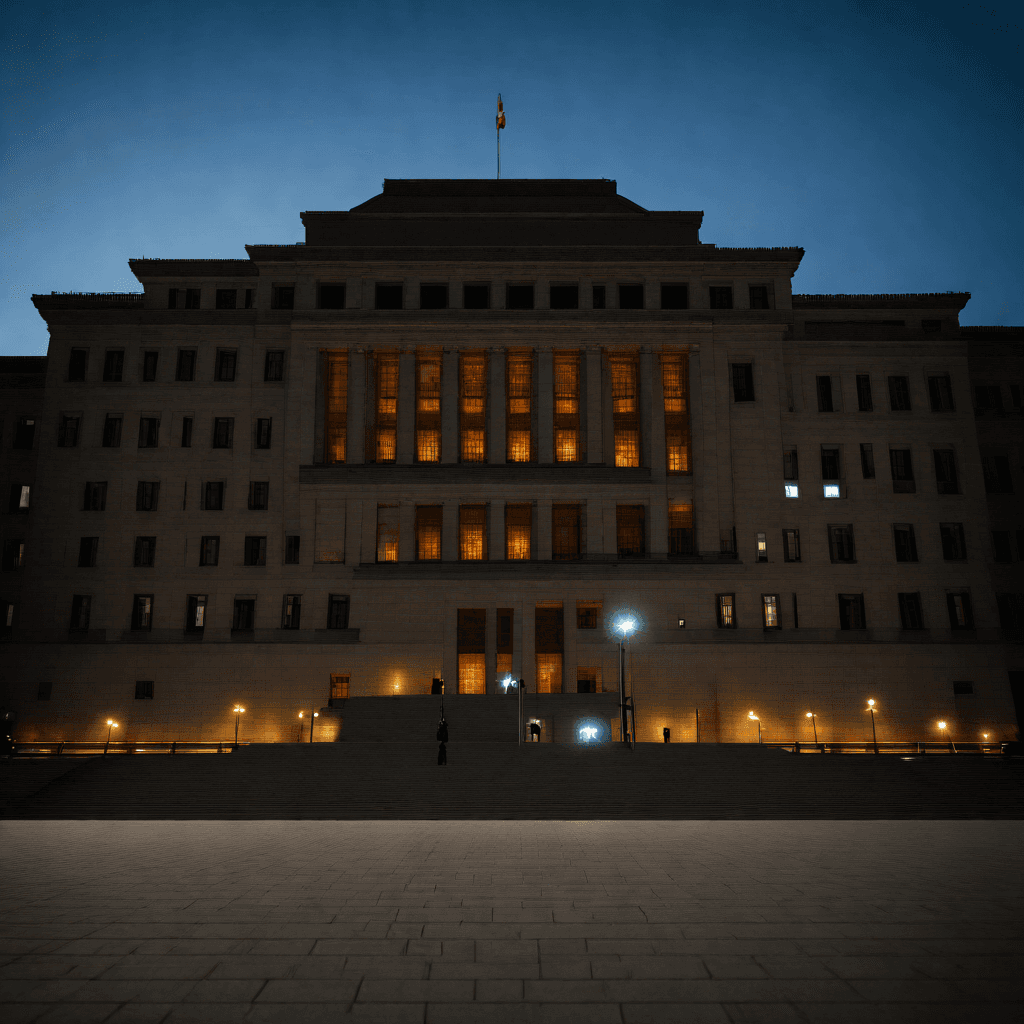
Midnight in Seoul: The Night Democracy Stood Still
The suddenness of the December 3, 2024, martial law declaration in South Korea remains one of the most jarring political shocks of the mid-2020s. It was a moment that paralyzed global markets and tested the very foundations of East Asian stability. When President Yoon Suk Yeol appeared on national television to cite "antistate forces" as justification for suspending constitutional norms, the move was widely viewed as a desperate attempt to bypass a deadlocked legislature. For the United States, then transitioning into the current Trump 2.0 administration, the move signaled a potential collapse of a key democratic anchor in the Pacific.
The immediate reaction across Seoul was not one of submission, but of profound systemic friction as the state’s executive will collided with its democratic architecture. According to analysis from the Center for Strategic and International Studies (CSIS), the declaration triggered an immediate mobilization of security forces, yet the sheer speed of the digital age ensured that the secrecy required for a successful coup was non-existent. Within minutes, the "shock doctrine" intended to freeze the nation instead catalyzed a synchronized response across every layer of the South Korean government.
This intersection of executive overreach and institutional resistance serves as a definitive case study in democratic maturity. It proves that when the legislature, civil society, and military command prioritize constitutional law over individual commands, even the most sudden threats to democracy can be neutralized. The events of that night demonstrated that in a modern, networked society, the "midnight decree" is an obsolete tool of the past. As we look back from February 2026, the resilience shown in those six hours continues to inform the Trump administration’s approach to alliance management and regional security.
The Wall of the People: Rapid Mobilization at the National Assembly
Civil society’s response to the decree was characterized by a lack of hesitation that effectively stripped the martial law of its psychological power before the first troops could secure their perimeters. As news of the declaration spread via social media and emergency alerts, thousands of citizens descended upon the National Assembly in Yeouido, creating a physical human buffer between the military and the lawmakers. This rapid mobilization was not a spontaneous riot but a coordinated expression of constitutional defense, where the presence of the public served as a moral deterrent against the use of force.
Michael Johnson, a regional security analyst based in Seoul at the time, observes that the collective memory of South Korea’s previous democratic struggles provided a ready-made script for resistance. The sheer volume of people on the ground made it impossible for security forces to execute their orders without resorting to a level of violence that would have permanently delegitimized the government. By surrounding the halls of power, the citizens transformed the National Assembly into a fortress of legitimacy, ensuring that the legislative process could continue even under the shadow of military intervention.
This mobilization also signaled to the international community that any attempt to uphold the decree would meet with sustained domestic resistance. The image of the "Wall of the People" became the defining visual of the crisis, illustrating that the power of the state is ultimately contingent on the consent of the governed. As the crowd grew, the focus shifted from the streets to the legislative floor, where the formal reversal of the decree would take place.
Legislative Shield: The 190-0 Unanimous Vote for Order
Inside the National Assembly, the procedural victory against the martial law decree was won through an extraordinary display of bipartisan unity that effectively neutralized the executive branch’s legal standing. Data from CSIS confirms that it took only 155 minutes from the initial declaration for the legislature to mobilize and pass a resolution demanding the lift of the decree. In a rare moment of total consensus, 190 lawmakers—representing the entirety of those who could reach the floor—voted unanimously to uphold the constitution, leaving the President with no legal path forward.
The speed of this legislative response was a critical factor in preventing the normalization of the decree. By acting within hours, the National Assembly ensured that the legal record reflected a clear rejection of the act before the sun rose on the following day. This legislative shield provided the military and the bureaucracy with the legal justification they needed to ignore the President’s subsequent orders, effectively stripping the executive of his command.
For U.S. observers, this highlighted the importance of legislative autonomy in maintaining a stable free market environment. Any prolonged instability would have decimated regional trade and disrupted the semiconductor supply chain. The resolution acted as a formal anchor, pulling the nation back from the brink of authoritarianism and re-establishing the primacy of the law.
The Silence of the Tanks: Why the Military Chose the Constitution
The failure of the martial law attempt was ultimately cemented by the restraint shown by the military, which opted for constitutional adherence over the execution of unconstitutional executive orders. While initial reports indicated the movement of special forces and armored units toward key government installations, the expected crackdown never materialized. Analysis suggests that middle-management officers and the military command were acutely aware of the National Assembly's vote and the lack of a legal mandate for their deployment.
This refusal to fire upon civilians or arrest lawmakers was a deliberate choice to prioritize the military's role as a defender of the state rather than a tool of a single administration. In a mature democracy like South Korea, the military is integrated into the social and legal fabric of the nation. The "silence of the tanks" indicated that the chain of command was ultimately tied to the constitution, a realization that left the President isolated within the Blue House.
Had the military chosen to follow the initial decree, the resulting conflict would have likely triggered protracted civil unrest and a collapse of the U.S.-ROK security alliance. Instead, the military’s inaction served as a powerful affirmation of democratic stability, reinforcing the idea that the armed forces serve the people, not the person in office. This institutional pushback remains a subject of intense study for political scientists exploring the limits of executive power in the 2020s.
Global Implications: Reassessing Resilience in the Trump 2.0 Era
The international community, particularly the United States under the current Trump administration, has had to reassess its understanding of democratic resilience. The swift reversal of the decree sent a powerful signal to global allies that institutional stability is the ultimate guarantor of economic prosperity. At the time, U.S. officials reflected the government's frustration with the lack of consultation and the illegitimacy of the act, leading to a recalibration of how the U.S. views its partners in the Indo-Pacific.
In an era where technological acceleration and an "America First" focus are driving global shifts, South Korea’s ability to self-correct within six hours serves as a benchmark for what constitutes a reliable ally. The resilience of the Seoul market following the crisis proved that institutional strength can survive executive volatility. This has led to a renewed debate within the U.S. about the balance between executive efficiency and legislative oversight, with the Korean example often cited as a success story for the latter.
The Legacy of the Six-Hour Victory
The aftermath of the failed declaration has been defined by a rigorous application of the law, culminating in the historic sentencing of Yoon Suk Yeol for insurrection on February 19, 2026. This legal resolution followed the 2025 Constitutional Court ruling that upheld the impeachment proceedings. These milestones mark the formal closure of a chapter that nearly derailed the nation’s democratic trajectory.
Beyond the legalities, the crisis has sparked a profound cultural shift in South Korea. The "Wall of the People" is now celebrated as a modern founding myth of the republic. The events of December 2024 have reinforced the public's sense of ownership over the democratic process, leading to higher levels of civic engagement. By confronting the threat head-on, South Korea has emerged with a more resilient system and a more committed citizenry, proving that a crisis can indeed be a catalyst for institutional growth.
Sources & References
Yoon Declares Martial Law in South Korea
Center for Strategic and International Studies (CSIS) • Accessed 2026-02-23
Analysis of the December 3rd declaration citing 'antistate forces' and the rapid mobilization of the National Assembly to block the decree within 155 minutes.
View OriginalWill South Korean democracy pass its next test?
Brookings Institution • Accessed 2026-02-23
Examination of the institutional resilience of South Korea's democracy, the role of the Constitutional Court in upholding the impeachment, and the sentencing of Yoon Suk Yeol for insurrection.
View OriginalWhat do you think of this article?