The Iron Shell: How Russia’s Cold War Armor Redefined Attrition Warfare
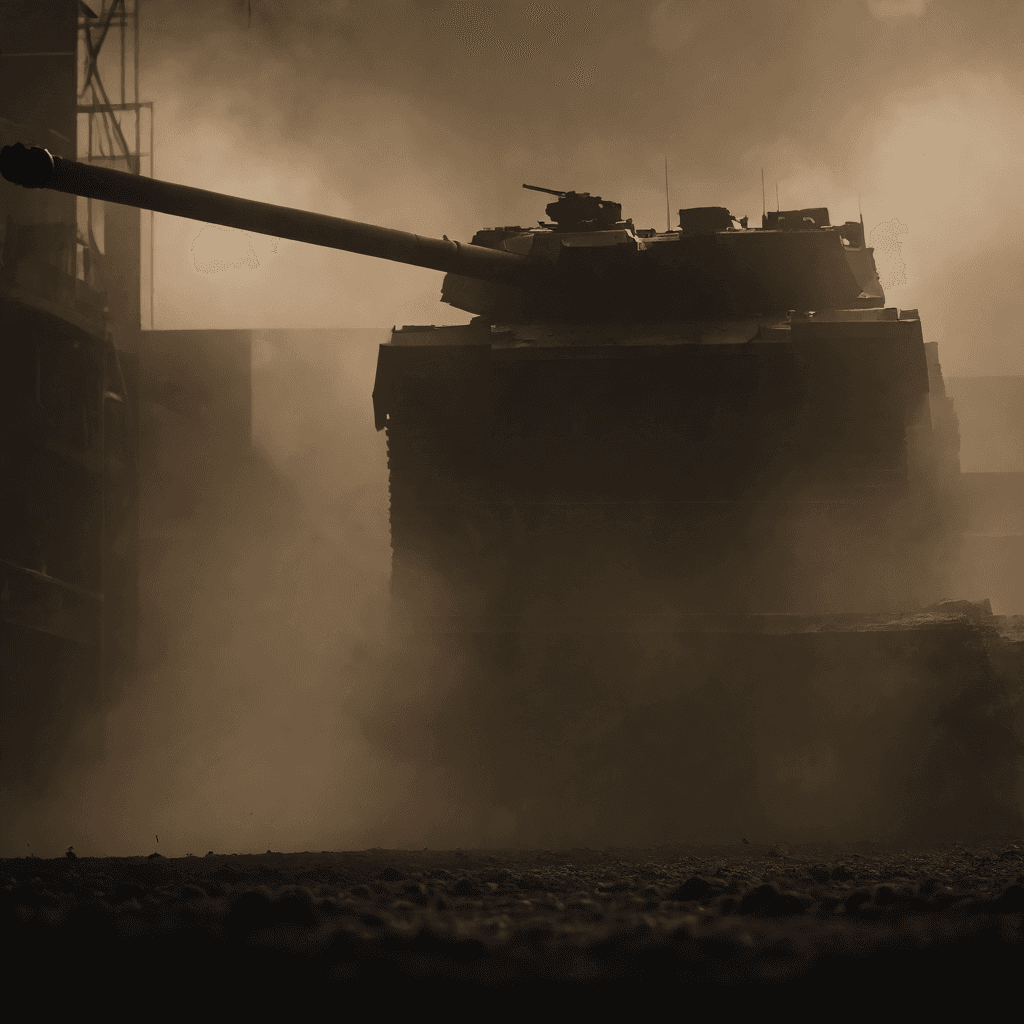
The Spring of 2023: When History Rolled onto the Battlefield
In March 2023, the digital eyes of Western intelligence captured a sight that many military historians believed was relegated to the archives of the mid-20th century. Satellite imagery, confirmed by the Institute for the Study of War (ISW) on March 22, 2023, revealed a steady stream of T-54 and T-55 tanks—platforms originally designed in the late 1940s—being reactivated from the 1295th Central Tank Repair and Storage Base in Primorsky Krai.
This movement signaled more than just a logistical desperation; it was the first concrete evidence of a tectonic shift in the Kremlin’s industrial strategy. For observers like David Chen, a defense analyst monitoring satellite feeds from Arlington, the images represented a temporal glitch where the hardware of the Cold War was being summoned to fight a 21st-century war of attrition. This reactivation of museum-grade armor was the opening salvo in an endurance race that Western analysts, initially dismissive, would eventually have to reconcile with the gritty demands of a 2026 frontline where quantity often overrules technical sophistication.
The Attrition Curve: Why the T-54 Became a Necessity
The decision to field 70-year-old tanks was born from a mathematical crisis within the Russian armored corps that modern precision warfare could not immediately solve. By 2024, open-source intelligence and ISW data indicated that Russia had depleted between 41% and 52% of its pre-war tank reserves, losing its most modernized T-72 and T-80 platforms at a rate that far outpaced new production.
This vacuum in the order of battle required a stop-gap measure that favored sheer volume over the qualitative parity sought by NATO doctrines. As James Hackett, Senior Fellow for Defence and Military Analysis at IISS, noted, Moscow managed to trade quality for quantity by pulling thousands of old tanks out of storage at a rate that reached 90 tanks a month. This "iron shell" strategy ensured that even as elite units were decimated, the front lines remained occupied by functional, albeit obsolete, steel. In the context of the current 2026 "America First" defense posture, this pivot underscores a harsh reality: in a protracted conflict, the most effective weapon is often the one that can be mass-produced or refurbished the fastest.
From Precision to Proximity: The Tactical Rebirth of the T-55
While Western commentators initially mocked the T-55 as "mobile coffins," the tactical reality on the ground evolved into a more pragmatic utilization of vintage hardware. Rather than engaging in direct tank-on-tank duels against superior Western optics, these vehicles were repurposed as indirect fire artillery and, in more extreme cases, as "suicide" VBIEDs (Vehicle-Borne Improvised Explosive Devices).
By using the 100mm main gun as a crude substitute for traditional howitzers, Russian forces maintained a high volume of fire even as dedicated artillery barrels wore out. Sarah Miller, a former logistics officer now consulting for US defense firms, observes that the T-55’s simplicity became its greatest asset in a high-attrition environment where complex electronics often fail under constant electronic warfare pressure. This "backward" move allowed the Russian military to sustain a proximity-based war of attrition that neutralized the range advantages of more sophisticated, but fewer, Western platforms.
The Intelligence Gap: Misjudging 'Backward' for 'Broken'
The 2023 Western consensus that Russia was "running out" of equipment proved to be a failure of imagination that miscalculated the Kremlin's tolerance for obsolescence. Analysts at the time frequently equated the appearance of T-54s with an imminent collapse of the Russian defense industry, ignoring the possibility that a pivot to a mass-mobilized, low-tech industrial base could stabilize a crumbling front.
This intelligence gap was widened by a Western focus on "boutique" precision warfare, which did not account for the effectiveness of "good enough" weapons when deployed in overwhelming numbers. As we look back from 2026, the current Trump administration’s push for radical deregulation in the US defense sector mirrors some of the hard-learned lessons of this period—specifically, that the ability to rapidly scale production is a prerequisite for national security. The 2023 pivot was not a sign of a broken system, but rather a transition to a "total war" footing that the West is still struggling to match in terms of raw industrial output.
The 2025 Industrial Resurgence: Bridging the Cold War Gap
By the middle of 2025, the initial "museum" deployments had transitioned into a more sustainable, hybridized industrial model. UK Ministry of Defence intelligence updates highlighted that despite staggering personnel losses reaching approximately 415,000 killed and wounded by 2025, the Russian military successfully stabilized its vehicle losses through a massive refurbishment program.
The majority of "new" tanks entering the theater were not cutting-edge T-14 Armatas, but rather refurbished Cold War hulls upgraded with modern reactive armor and basic night vision. This bridging strategy allowed Russia to maintain its armored presence while its domestic factories slowly ramped up production of newer T-90M models. The reliance on existing stocks, while depleting the strategic reserve, provided the necessary time for the Russian economy to fully integrate its military-industrial complex, a move that ensured the conflict would grind on well into the current year.
Sustaining the Long Grind: Modern Lessons from Vintage Steel
From the perspective of 2026, the "Legacy of the Iron Shell" has forced a fundamental re-evaluation of NATO’s military doctrine, which for decades prioritized qualitative superiority over quantitative mass. The success of Russia’s 2023 pivot to T-54/55s proved that in a war of attrition, high-tech "boutique" weapons can be overwhelmed by "disposable" mass if the rate of destruction exceeds the rate of replacement.
For the US, currently navigating a geopolitical landscape defined by isolationist trade policies and a focus on domestic industrial dominance, the Russian experience serves as a cautionary tale about the fragility of advanced supply chains. If the US cannot produce its most advanced platforms at the same scale that an adversary can refurbish its oldest ones, the technological edge becomes a moot point in a multi-year conflict. The 2023 pivot was the precursor to a 2026 reality where the ability to sustain a "long grind" is the ultimate measure of a superpower's strength.
Sources & References
Russian Offensive Campaign Assessment, March 22, 2023
Institute for the Study of War (ISW) • Accessed 2026-02-26
Satellite imagery and transportation data confirmed Russia began deploying T-54/55 tanks from long-term storage in Primorsky Krai. This indicates a severe depletion of modern armored vehicles and a shift toward using obsolete Soviet-era hardware.
View OriginalIntelligence Update: Russian Personnel and Equipment Losses
UK Ministry of Defence • Accessed 2026-02-26
Russian personnel losses in 2025 reached approximately 415,000 killed and wounded. The majority of 'new' tanks entering service are refurbished older models rather than new production units, reflecting a reliance on existing stocks.
View OriginalPre-war tank reserve depletion: 41-52%
Open-source intelligence (OSINT) / ISW • Accessed 2026-02-26
Pre-war tank reserve depletion recorded at 41-52% (2024)
View OriginalWhat do you think of this article?