The Price of Protocol: Westminster’s Security Breach and Tehran’s Trillion-Dollar Gambit
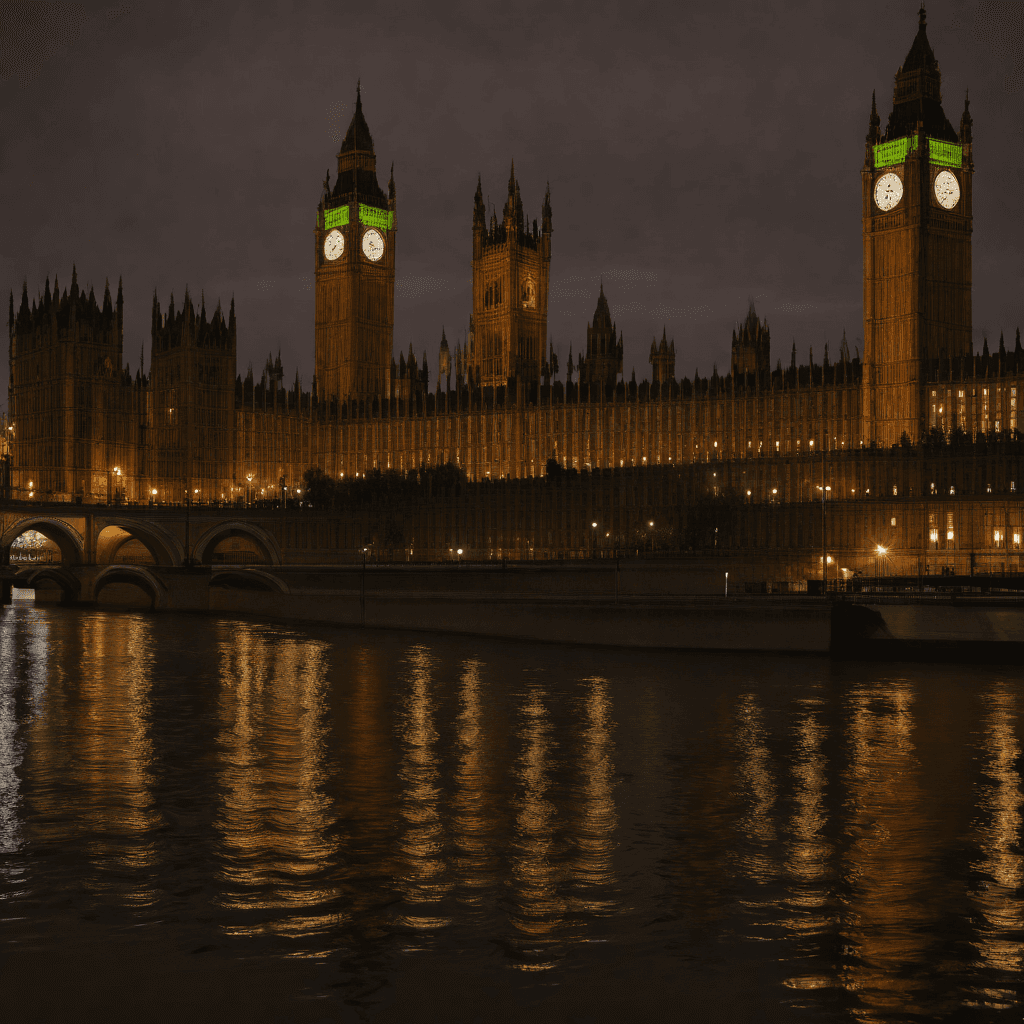
The Breach of Silence in Westminster
The tradition of British parliamentary neutrality suffered a seismic fracture this week as Scotland Yard issued a formal apology to the Speaker of the House of Commons, Sir Lindsay Hoyle. On February 25, 2026, the Metropolitan Police Service acknowledged an "inadvertent" identification of the Speaker as the confidential source who originally flagged Lord Peter Mandelson as a potential flight risk.
This procedural failure occurred during the mandatory legal disclosures to Mandelson’s defense team. It effectively stripped the highest officer of the House of his anonymity in a high-stakes criminal investigation, marking a radical departure from the institutional distance typically maintained by the Speaker’s Office. Critics and legal analysts, however, have raised the possibility of a "tactical leak" theory, suggesting that unmasking the Speaker may have been a strategic move within the broader legal maneuvering surrounding the Mandelson case.
According to an official statement from the Metropolitan Police Service, the breach has forced the Speaker into an uncomfortable spotlight. While the Speaker’s Office has not issued a formal quote confirming the specifics of the interaction, the disclosure has sparked intense debate in the House over the erosion of parliamentary confidentiality and the collapse of traditional distance between Westminster and law enforcement.
This incident underscores a growing volatility in London’s political infrastructure. The line between legislative oversight and law enforcement has become increasingly blurred in a year defined by high-level accountability.
For David Chen (pseudonym), a veteran clerk within the Palace of Westminster, the revelation feels like the end of an era of professional discretion. He observes that the Speaker is traditionally seen as the "referee" of British democracy, someone whose authority rests on a perceived distance from the gears of police work.
The fact that a procedural error by Scotland Yard—or a potential tactical disclosure—could unmask such a sensitive interaction suggests that even the most guarded protocols of the British state are failing to withstand the pressures of 2026’s hyper-politicized environment. The institutional firewall is no longer impenetrable.
Mandelson and the Ghost of Epstein
The arrest of Lord Peter Mandelson on February 23, 2026, sent shockwaves through the global elite, but it was the justification for his detention that has now become the focal point of a constitutional crisis. Documents revealed in the wake of the Met’s apology suggest that Mandelson was flagged as a flight risk specifically because of his deep international ties and the looming shadow of the renewed "Epstein Files" investigations.
As the US Department of Justice continues to push for retroactive ethics disclosures involving European power brokers, the stakes for Mandelson—a man once known as the "Prince of Darkness" for his backroom influence—have never been higher.
The flight risk designation, allegedly corroborated by the Speaker’s tip, highlights the aggressive posture law enforcement is taking toward figures once considered untouchable by the establishment. The investigation into Mandelson is not merely a local British matter. It is increasingly seen as a vital node in a broader transatlantic effort to map the financial and political networks that sustained Jeffrey Epstein’s influence long after his death.
This "Janus-faced" reality—where current political figures are pursued for past associations—has created an atmosphere of paranoia within the halls of Westminster and Washington alike. The collapse of protocol in the Mandelson case serves as a warning for the global donor class.
As Sarah Miller (pseudonym), a risk consultant for private equity firms in New York, notes, the "Mandelson Precedent" suggests that confidential cooperation with the state is no longer a guarantee of safety. If the Speaker of the House of Commons can be outed as an informant, the institutional firewall that once protected the global elite from public litigation has effectively dissolved.
Tehran’s Trillion-Dollar Gambit
While Westminster grapples with the fallout of exposed secrets, the Iranian government has launched an economic offensive that threatens to redefine Middle Eastern diplomacy. In a proposal directed at the second Trump administration, the Iranian Ministry of Foreign Affairs has reportedly floated a $1,000,000,000,000 energy and mineral deal. While this staggering figure is viewed by many market analysts as highly speculative and currently unverified by independent audits, the intent behind the overture has become a central focus for geopolitical analysts.
The reported offer would grant American firms exclusive access to Iran’s vast natural resources. In exchange, Tehran seeks a permanent end to "Maximum Pressure" sanctions and a new framework for nuclear peace.
This "Trillion-Dollar Opportunity" is a calculated attempt to speak the language of the current US administration. By framing regional security as a massive business venture, Tehran is bypassing traditional diplomatic channels that have been stalled for years.
A Strategic Analyst and Middle East Policy Fellow at the Quincy Institute for Responsible Statecraft noted that the proposal is "surgically designed to appeal to Trump's transactional worldview." The analyst argues that Tehran is no longer seeking a grand bargain based on human rights or regional stability, but rather a "grand closing" based on the bottom line.
The scale of the Iranian offer matches the $1 trillion defense budget approved by the US for the 2026 fiscal year. This symmetry is not lost on market observers.
For James Carter (pseudonym), an energy sector investor in Houston, the prospect of US companies operating in Iranian fields is no longer a fever dream. It is a plausible scenario in a world where economic leverage outweighs ideological purity. The question now is whether the Trump administration will prioritize the "America First" isolationist streak or the "Transactional Diplomacy" that has come to define his second term.
The Trumpian Paradigm: Governance as a Deal
In his 2026 State of the Union Address, President Donald Trump signaled a clear preference for the kind of diplomacy Tehran is now offering. Addressing the nation from the White House, the President emphasized a business-first approach to foreign policy. He signaled a willingness to engage with Iran provided the terms aligned with American interests, moving away from the rigid frameworks of previous administrations to prioritize transactional leverage.
The President’s rhetoric suggests that the era of sunset clauses and ideological red lines is being replaced by a model of permanent negotiation. In this environment, the price of peace is always up for debate. This transactional philosophy is not limited to foreign policy; it has permeated the very structure of the US government.
The $1 trillion defense budget is framed not just as a security measure, but as an investment in American technological hegemony, particularly in the race for 6G and AGI. In this environment, the "Price of Protocol" is often deemed too high.
If a deal with Iran can secure American energy independence for a generation, the Trump administration appears increasingly willing to bypass traditional State Department channels. They favor direct, executive-led negotiations that treat international relations like a commercial real estate transaction.
This pivot toward a "pay-to-play" reality has fundamentally altered the expectations of US allies. For Maria Rodriguez (pseudonym), a policy analyst in Washington D.C., the shift is palpable. She notes that the administration’s focus on diplomatic resolution without sunset clauses means that every agreement is essentially a living document.
The Erosion of the Institutional Firewall
The convergence of the Westminster breach and the Tehran overture reveals a significant trend: the collapse of the neutral institutional firewall. In London, the exposure of the Speaker’s role as an informant destroys the illusion of the House of Commons as a sanctuary from the executive’s police power. In Washington, the normalization of unverified trillion-dollar offers threatens to turn the White House into a global clearinghouse for regional hegemony.
Both events suggest that the traditional guardrails of democratic governance are being dismantled in favor of raw leverage. The risk of this model is the total loss of public trust in impartial roles. When the Speaker of the House is no longer seen as a neutral arbiter, the legislative process itself becomes a theater of war.
Similarly, when foreign policy is linked to the highest bidder or a speculative mineral deal, the concept of national interest becomes indistinguishable from corporate profit. The Price of Protocol in 2026 is the integrity of the institutions designed to prevent transactional chaos.
For Michael Johnson (pseudonym), a history teacher in Virginia, the current trajectory feels like a return to a pre-modern era where personal relationships and financial tributes governed the world. He argues that the institutional firewall was a hard-won achievement of the 20th century. As these firewalls fail—whether through inadvertent leaks in London or business-first addresses in DC—the global community is entering an era where the only law that matters is the law of the deal.
Sovereignty in the Age of Radical Transaction
The events of February 2026 mark a turning point where sovereignty itself has become a liquid asset. The UK’s inability to protect the confidentiality of its highest parliamentary officer and the US’s willingness to entertain a trillion-dollar buyout of a nuclear threat are two sides of the same coin. We are witnessing the end of diplomatic decorum and the birth of a world where transparency is either weaponized or commercialized.
This new era of Radical Transaction favors actors who can move quickly and without the baggage of ethical protocol. The Metropolitan Police’s apology to Hoyle will not restore the Speaker’s anonymity, nor will it undo the damage to Westminster’s reputation. Likewise, the fact that the Iranian deal was proposed has already shifted the goalposts of what is possible.
The pay-to-play reality is no longer a conspiracy theory; it is the operating system of 2026 global governance. Institutional integrity is becoming a luxury that few can afford. In the race for hegemony, protocol is often the first casualty. As the Mandelson and Tehran cases show, the cost of being right is often less important than the cost of being in the room.
Sources & References
Official Statement on Protocol Breach and Apology to the Speaker of the House
Metropolitan Police Service • Accessed 2026-02-26
The Metropolitan Police issued a formal apology to Sir Lindsay Hoyle for inadvertently identifying him as the confidential source who flagged Lord Peter Mandelson as a potential flight risk prior to his arrest. The breach occurred during legal disclosures to Mandelson's defense team.
View Original2026 State of the Union Address: National Security and Foreign Policy Priorities
The White House • Accessed 2026-02-26
President Donald Trump addressed ongoing nuclear negotiations, emphasizing a business-first approach to diplomacy. He acknowledged Iran's desire for a deal while reaffirming the U.S. commitment to preventing nuclear proliferation and leveraging economic pressure.
View OriginalEstimated Value of Proposed Iran-US Energy Deal: $1,000,000,000,000
Iranian Ministry of Foreign Affairs (via CNBC/Reuters) • Accessed 2026-02-26
Estimated Value of Proposed Iran-US Energy Deal recorded at $1,000,000,000,000 (2026)
View OriginalSir Lindsay Hoyle, Speaker of the House of Commons
UK Parliament • Accessed 2026-02-26
It was my duty and responsibility to pass on information that I believed to be in the public interest. I did so in good faith.
View OriginalStrategic Analyst, Middle East Policy Fellow
Quincy Institute for Responsible Statecraft • Accessed 2026-02-26
The Iranian proposal is surgically designed to appeal to Trump's transactional worldview, framing regional security as a trillion-dollar business opportunity rather than a traditional diplomatic hurdle.
View OriginalMet apologises to Lindsay Hoyle over Mandelson arrest source leak
The Guardian • Accessed 2026-02-25
Details the procedural failure within Scotland Yard that led to the exposure of the Commons Speaker as a police informant.
View OriginalIran offers 'Trillion-Dollar Opportunity' to Trump in exchange for Nuclear Peace
CNBC • Accessed 2026-02-24
Reports on the Iranian proposal to open its energy and mineral sectors to American firms as a strategic enticement for the Trump administration.
View OriginalWhat do you think of this article?