The Abundance Paradox: Musk, Trump, and the End of the American Wage
The Silicon Horizon and the End of Scarcity
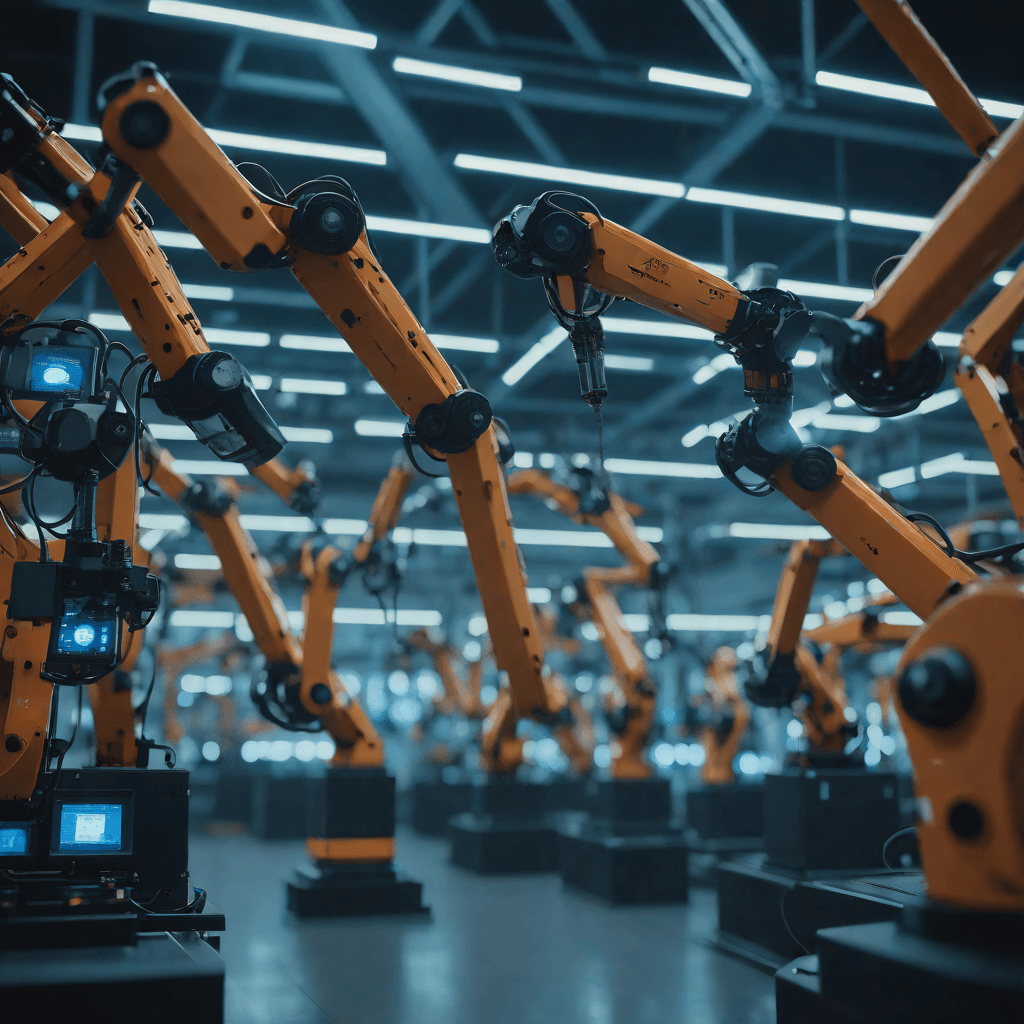
The age-old economic struggle against scarcity is facing a terminal challenge from the factory floors of Texas and the server farms of Silicon Valley. As we move through 2026, the convergence of Tesla’s Optimus robotic workforce and advanced AGI models has shifted the conversation from incremental automation to a total decoupling of productivity from human effort. This transition marks a departure from traditional industrial cycles, suggesting a future where the marginal cost of essential goods begins a steady march toward zero.
For decades, the global economy has functioned on the assumption that labor is a finite, paid resource necessary to transform raw materials into value. However, the current trajectory of autonomous systems suggests that labor itself is becoming a digital commodity, as reproducible as software code. According to Elon Musk, CEO of Tesla and xAI, this shift heralds a world of "Sustainable Abundance" where the very concept of poverty is engineered out of existence through the sheer volume of automated output.
While the promise of abundance offers a utopian glow, it presents a fundamental paradox for the American free market. If the cost of labor-intensive goods drops toward the cost of their constituent raw materials, the traditional mechanisms of income—wages earned through time and effort—lose their utility. This necessitates a radical rethink of how value is assigned and distributed in a society where "work" may soon become an optional hobby rather than a survival mandate.
The reality of this shift is already being felt in domestic manufacturing hubs. Michael Johnson, a former assembly line supervisor, observes the change first-hand, noting that while productivity in his sector has reached record highs, the human headcount required to maintain those levels has plummeted. This tension between soaring output and shrinking payrolls serves as the opening chapter of the Great Abundance, a period that will test the resilience of the American social contract like no era before it.
Silicon Muscle and the Physics of Zero-Cost Labor
Achieving a state of sustainable abundance is not merely a software challenge; it is a massive engineering undertaking that requires a complete overhaul of the global energy and material infrastructure. Tesla’s Master Plan Part 3 outlines the staggering scale of this transition, projecting a requirement for $10 trillion in global investment to move toward a fully electrified economy. This plan posits that a sustainable economy, powered by 30 TW of renewable generation and 240 TWh of energy storage, would actually consume 50% less energy than our current fossil fuel-dependent framework.
The physics of this transition are centered on efficiency and the removal of "waste" labor. By replacing human-driven logistics and manual manufacturing with Optimus units and AGI-coordinated supply chains, the friction of the global economy is drastically reduced. The data suggests that the investment required for this "Great Reset" is significantly less than the continued maintenance of the legacy carbon economy, yet the upfront capital requirements remain a significant hurdle for the Trump administration, which remains focused on immediate domestic gains through deregulation.
This infrastructure serves as the "Silicon Muscle" that will drive the costs of production down. When the energy to power a factory is nearly free from solar and wind, and the robots building the products require no salary, the price of a toaster, a car, or a home begins to reflect only the cost of the iron, lithium, and silicon used to make them. This technical trajectory is clear, but the transition period remains fraught with the risk of stranded assets and localized economic collapses in regions still tethered to 20th-century industrial models.
The current administration's push for technological acceleration under "America First" policies provides a fertile ground for this expansion, but it also creates a vacuum in global standards. As the U.S. races to secure the first fully autonomous supply chain, the lack of international coordination on energy grids and robotic safety protocols could lead to a fragmented "abundance" that benefits early adopters while leaving others in a state of technological stagnation.
Universal High Income and the Redistribution Dilemma
As the cost of living potentially collapses, the traditional safety net of Universal Basic Income (UBI) is being overshadowed by a more ambitious, albeit controversial, concept: Universal High Income (UHI). Musk has argued at the World Governments Summit that AI and robotics will make goods and services so abundant that poverty will be eradicated, leading to a world where everyone can have whatever they want. This vision of UHI suggests that instead of a subsistence check, the dividends of automation should provide a lifestyle of luxury for all citizens.
However, the logistical nightmare of funding such a transition remains the primary point of friction in Washington. In a Trump 2.0 era defined by aggressive tax cuts and the dismantling of federal oversight, the idea of a massive redistribution program like UHI faces significant ideological opposition. Critics argue that while the cost of goods may drop, the ownership of the "means of abundance"—the AGI models and the robot fleets—remains concentrated in the hands of a few trillion-dollar entities.
The dilemma lies in the source of the "income" if corporate taxes are slashed and labor income vanishes. If the government cannot or will not tax the automated output, the abundance may remain locked behind corporate paywalls. Maria Rodriguez, a policy analyst for a non-partisan think tank, notes that without a mechanism to cycle the wealth generated by "silicon labor" back to the displaced human population, UHI remains a theoretical dream rather than a viable economic policy.
This redistribution challenge is not just about money, but about the transition of the "Free Market" into something entirely new. If the market is no longer driven by the exchange of labor for capital, the very definition of a "consumer" changes. In a world of sustainable abundance, the primary economic activity may shift from production to the management of reputation, influence, and digital assets, leaving those without "Universal High Income" in a permanent underclass, regardless of how cheap a loaf of bread becomes.
The Mirage of Plenty: Why Labor Economists are Skeptical
Despite the optimistic projections from tech leaders, labor economists warn that the "Great Abundance" could easily turn into a "Great Exclusion." Professor Erik Brynjolfsson, Director of the Digital Economy Lab at Stanford University, acknowledges that the productivity paradox is ending, but emphasizes that the distribution of this abundance is the primary political challenge of the late 2020s. The fear is that we are building a "winner-takes-all" AI economy where the gains from automation are captured entirely by the owners of the technology.
The skepticism is rooted in historical precedent: productivity gains have rarely been shared equally without significant labor movement or government intervention. In the current climate of deregulation, there are few guardrails to ensure that the "Silicon Muscle" benefits the many. For David Chen, a software engineer who recently saw his department replaced by an autonomous coding agent, the "abundance" feels more like a mirage. While the products he once helped build are now cheaper, his own purchasing power has vanished along with his salary.
Furthermore, economists point to the "scarcity of the unique." Even if mass-produced goods become nearly free, resources like prime real estate, personalized healthcare from top-tier human experts, and entry into elite social circles will become even more expensive as they become the new markers of status. This could create a bifurcated society where the masses live in "automated comfort" while a small elite maintains control over the remaining scarce resources, effectively recreating a neo-feudal structure under the guise of technological progress.
The Psychological Void of a Post-Work Society
Beyond the spreadsheets of economists lies a deeper, more existential crisis: the erosion of human purpose in a world where labor is no longer required. For centuries, the American identity has been inextricably linked to the "Protestant work ethic," where professional labor provides not just an income, but a sense of dignity, structure, and social standing. As the necessity of work evaporates, society faces a "Psychological Void" that current social structures are unprepared to fill.
Sarah Miller, a former paralegal now living on a pilot transition stipend, describes a sense of "algorithmic drift." Without the daily requirement of her desk job, she finds the abundance of free time to be more of a burden than a blessing. Her experience is becoming common across the Rust Belt and tech hubs alike, as the "Adjustment Crisis" of 2026 takes hold. This void is already being exploited by new forms of digital distraction and "synthetic meaning."
From hyper-personalized VR environments to AGI-driven social movements, the vacuum left by traditional labor is being filled by increasingly sophisticated "engagement engines." While Musk suggests work will become a "hobby," the reality for many is a descent into a state of permanent adolescence, where the lack of struggle leads to a lack of satisfaction. The challenge for the 2026 social contract is to redefine "value" outside of the workplace.
Governing the Impossible Transition
Managing the transition to a zero-cost labor economy requires a regulatory agility that is currently absent from the global stage. While the Trump administration has prioritized "unleashing" American innovation through deregulation, the sheer speed of the AGI and robotics revolution necessitates new frameworks for safety, liability, and economic stability. The current "wait and see" approach risks allowing the technology to outpace the law, creating a Wild West of automated industry.
A sustainable abundance requires more than just robots; it requires international standards for data sovereignty and the ethical deployment of autonomous systems. As the U.S. pivots toward isolationism, the divergence from EU-style digital privacy walls and safety mandates creates a fractured global market. This fragmentation makes it harder to achieve the scale needed to drive costs down to their theoretical minimum.
Policy experts suggest that a "National Abundance Strategy" is needed—one that focuses on bridging the gap between the current debt-driven fossil fuel economy and the future capital-heavy automated one. The goal must be to ensure that the "Great Abundance" does not lead to a "Great Collapse" of the consumer base that the entire system relies upon. Can a system built on rugged individualism adapt to an era where individual labor is obsolete? The answer will determine whether the United States leads the world into a new era of prosperity or becomes a cautionary tale of a society that mastered the machine but forgot the man.
Sources & References
Master Plan Part 3: Sustainable Energy for All of Earth
Tesla, Inc. • Accessed 2026-02-27
Outlines the path to a fully sustainable global energy economy through end-use electrification and sustainable generation. It posits that a sustainable economy requires less investment and material extraction than the current fossil fuel economy.
View OriginalDiscussion on AI and the Future of Governance
World Governments Summit • Accessed 2026-02-27
Musk details the transition from Universal Basic Income (UBI) to 'Universal High Income' (UHI), predicting that AI and robotics (Optimus) will make goods and services so abundant that poverty is eradicated and work becomes a hobby.
View OriginalWhat do you think of this article?