The Zombie Assembly Line: Why Russia’s 'Ghost' BMWs Threaten Global Trade Enforcement
Shadows in the Kaliningrad Factory
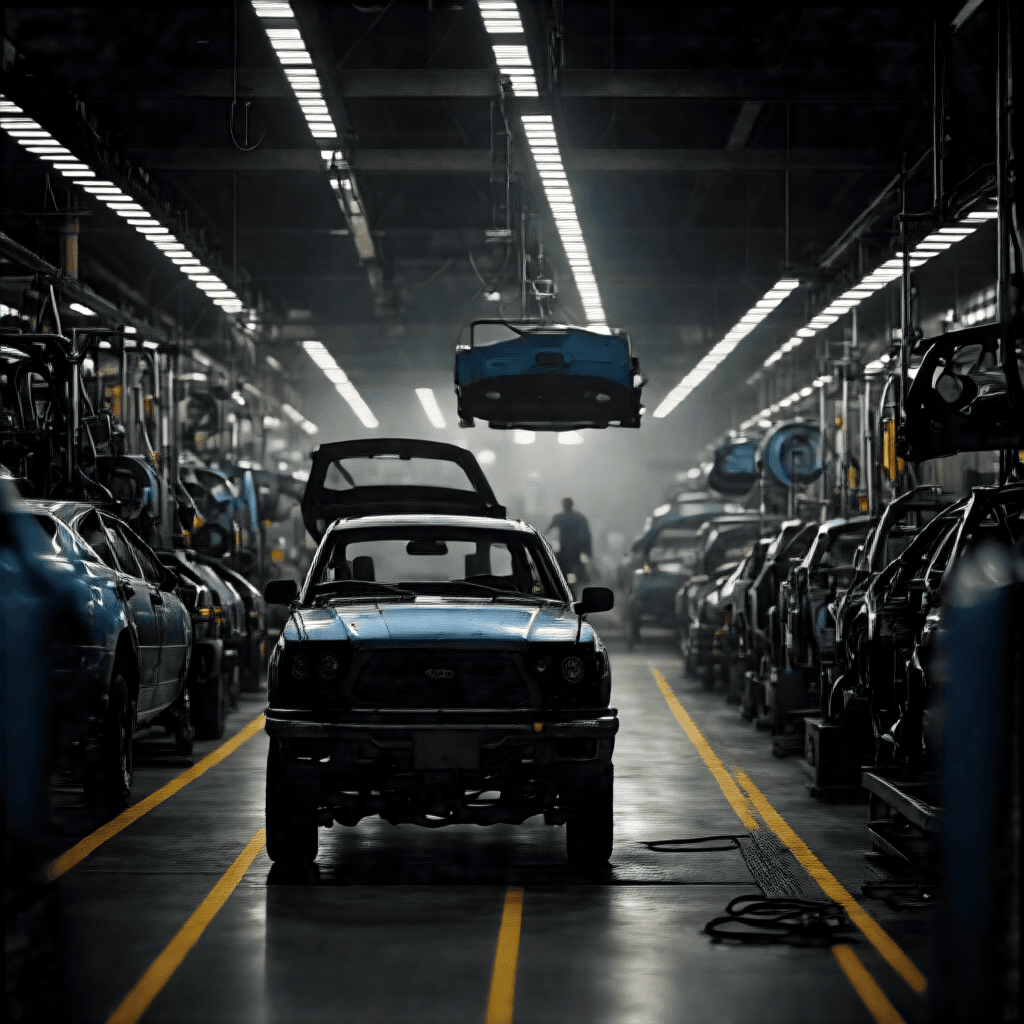
The Kaliningrad facility, once the center of Russian-German industrial synergy, has devolved into a tableau of unauthorized assembly that challenges the fundamental concepts of corporate withdrawal. Following BMW’s decisive "Grade A" withdrawal in March 2022, as categorized by the Yale Chief Executive Leadership Institute (CELI), the official flow of components, technical support, and quality oversight ceased. Yet, the assembly lines have not gone silent. Instead, they have transitioned into a "zombie" state, producing vehicles that carry the Bavarian badge but lack the manufacturer's technical integrity. This shift marks a descent from legitimate manufacturing into a gray-market operation that prioritizes the optics of luxury over the integrity of engineering, effectively turning a world-class factory into a site of state-sanctioned industrial scavengery.
The Anatomy of a Sanctions-Era Loophole
The mechanics of this industrial operation rely on "ghost" inventory—Complete Knock-Down (CKD) kits that have remained in Russian warehouses since the initial 2022 exodus. Despite official halts on deliveries, the Russian automotive market agency Autostat reports that non-regular production has surfaced, with 2022-vintage parts being assembled to meet 2026 demand. The Moscow Times notes that parallel imports of premium vehicles continue at a rate of approximately 1,740 units per month, creating a hybrid market where "new" cars are actually four-year-old mechanical relics. This bypass of trade enforcement creates a precedent where abandoned intellectual property is seized and monetized by the entities the sanctions were designed to isolate, revealing the porous nature of global trade barriers in an era of local economic desperation.
The Degradation of the Ultimate Driving Machine
For automotive safety experts such as James Carter, the technical reality of these "zombie" BMWs presents a significant liability. Precision components like engine gaskets, brake fluid lines, and electronic sensors are not designed to sit in non-factory-monitored Kaliningrad warehouses for four years. Carter observes that the lack of factory calibration makes these vehicles a rolling risk for any owner. This sentiment is echoed by a BMW Group spokesperson who warned in a Reuters report that these vehicles lack any factory warranty and involve severe safety risks due to non-standard parts and outdated software. The "Ultimate Driving Machine" brand becomes a dark irony when the vehicle’s operating system cannot receive critical security patches, leaving owners with high-performance hardware that is digitally obsolete and mechanically suspect.
A Brand Beyond Control
The unauthorized production at Avtotor represents an existential threat to brand value that transcends immediate financial loss. By assembling vehicles without the quality control or oversight cited by BMW AG, the Kaliningrad operation is committing a form of industrial piracy that erodes the prestige of the BMW mark. Jeffrey Sonnenfeld, a professor at the Yale School of Management, characterizes this as a desperate cannibalization of remaining parts that forces Western multinationals into a defensive posture regarding their global supply chains. If a company cannot guarantee the safety or authenticity of a product bearing its logo, the foundation of global intellectual property rights faces significant pressure under the weight of geopolitical friction and rogue manufacturing.
The Grey Market as a National Strategy
This shift to ghost assembly is framed against a Russian automotive market that Autostat projects will see 0% growth in 2026, stagnating at roughly 1.33 million units. As Western brands officially exit, the vacuum is being filled by Chinese manufacturers like Haval and Chery, leaving Russian facilities like Avtotor to seek relevance through "import substitution" schemes. Interfax reports that Avtotor is officially restructuring to assemble Chinese brands like BAIC and Kaiyi, yet the shadow production of BMWs continues as a lucrative sideline to cater to an elite class that refuses to settle for the "Amberavto" electric vehicle alternatives. This dual-track strategy attempts to project a facade of normalcy while the underlying economic indicators point toward a forced transition into a subservient trade relationship with eastern partners.
The Global Precedent of Industrial Piracy
The Avtotor situation serves as a significant case study for the Trump administration's trade monitors as they look to tighten global trade enforcement under the current "America First" doctrine. Recent US Department of the Treasury (OFAC) updates from February 19, 2026, have intensified the focus on closing gray-market loopholes and targeting the intermediaries in third countries that facilitate the flow of high-end industrial components. This aggressive regulatory pivot underscores a new reality: in an era of isolationism and centralized power, the enforcement of sanctions must evolve from blocking direct exports to policing the "afterlife" of abandoned corporate assets. The global precedent set in Kaliningrad suggests that for multinational corporations, a clean exit is a myth if their machinery and intellectual property remain behind as tools for state-sanctioned piracy.
Sources & References
Over 1,000 Companies Have Curtailed Operations in Russia
Yale Chief Executive Leadership Institute (CELI) • Accessed 2026-02-28
BMW is categorized as 'Grade A - Withdrawal', having completely halted deliveries and suspended production in Russia. However, its financial services subsidiary (BMW Bank) maintains a residual presence to manage existing obligations.
View OriginalRussian Passenger Car Market Forecast 2025-2026
Autostat (Automotive Market Research Agency) • Accessed 2026-02-28
The Russian car market is expected to stagnate in 2026 with 0% growth. Sales are heavily shifting towards Chinese brands (Haval, Geely, Chery) which now dominate the market previously held by European and Japanese manufacturers.
View OriginalRussia-related Designation Update (February 19, 2026)
U.S. Department of the Treasury (OFAC) • Accessed 2026-02-28
Ongoing expansion of sanctions targeting Russia's industrial base and luxury goods imports. While the automotive sector has been restricted since 2022, recent updates focus on closing 'gray market' loopholes and targeting intermediaries in third countries.
View OriginalMonthly Sales of BMW via Parallel Imports: 1,740 units
The Moscow Times / Autostat • Accessed 2026-02-28
Monthly Sales of BMW via Parallel Imports recorded at 1,740 units (2025)
View OriginalRussian Car Market Growth Forecast (2026): 0%
Autostat Agency • Accessed 2026-02-28
Russian Car Market Growth Forecast (2026) recorded at 0% (2026)
View OriginalJeffrey Sonnenfeld, Lester Crown Professor in the Practice of Management
Yale School of Management • Accessed 2026-02-28
The 'cannibalization' of remaining parts to build unauthorized vehicles is a sign of desperation in the Russian manufacturing sector, but it doesn't change the fact that global leaders like BMW have successfully severed their official value chains.
View OriginalAvtotor pivots to Chinese brands and EV production in Kaliningrad
Interfax • Accessed 2026-02-10
Details Avtotor's restructuring to assemble BAIC, Kaiyi, and SWM vehicles, and its investment in the 'Amberavto' electric vehicle brand scheduled for 2025-2026 serial production.
View OriginalWhat do you think of this article?