The Hub Crisis: How Gulf Airport Strikes Redefine Global Risk
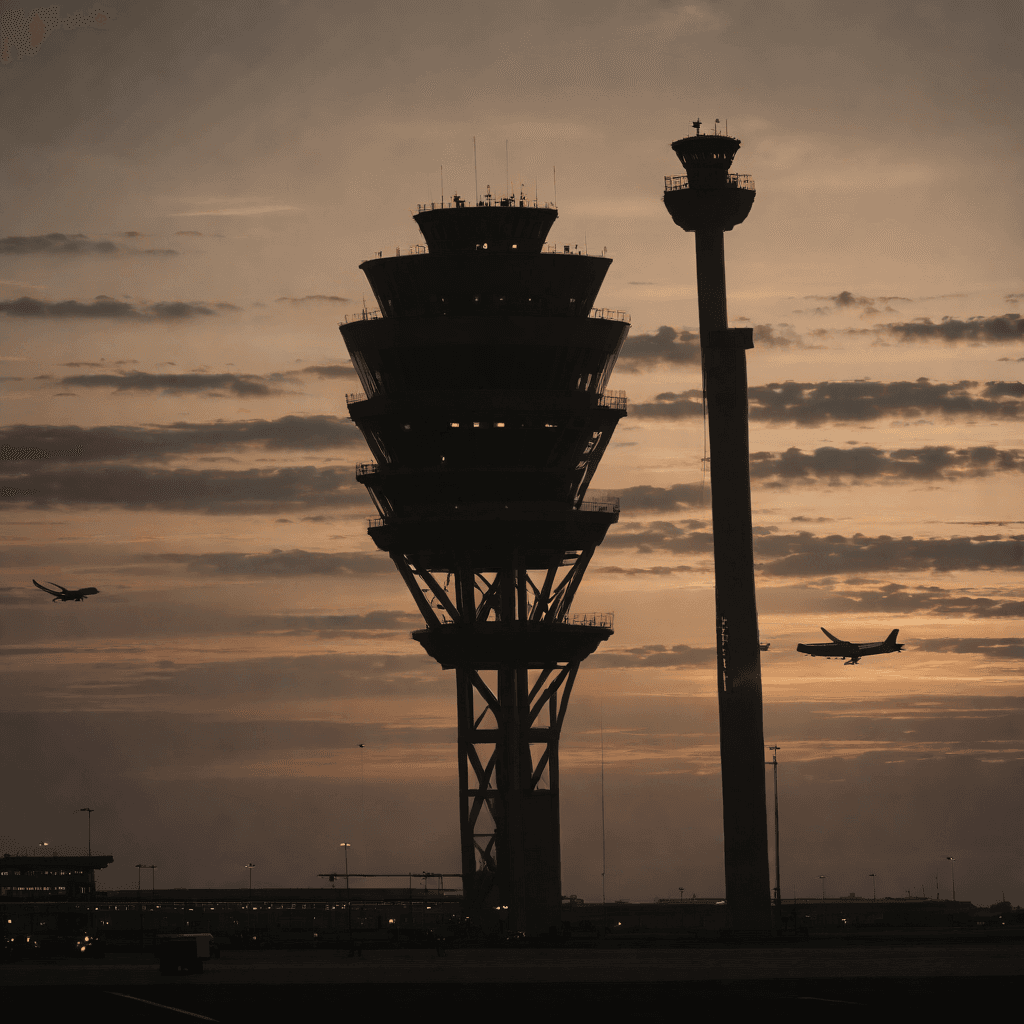
The Sudden Silence of Connectivity
At 3:24 AM on Sunday, March 1, 2026, silence fell over Dubai International Airport, marking what some observers describe as a collapse in regional stability. For decades, aviation hubs pumped the pulse of global transit; that rhythm stopped as smoke billowed from Terminal 3. CNN reports that thousands of passengers fled smoke-filled concourses after Iranian missiles and drones reportedly struck primary UAE aviation infrastructure. Officials confirmed one fatality and 11 injuries at the Dubai and Abu Dhabi airports—the first kinetic breach of these civilian sanctuaries in a regional conflict.
For travelers, the transition from a routine layover to a combat zone was instantaneous. Sarah Miller, a tech consultant in transit (a composite profile based on traveler reports), saw luxury duty-free shops shatter under a blast's pressure. The systemic shock followed quickly: the UAE suspended all commercial flights indefinitely. This cessation of movement has stranded hundreds of thousands, severing a primary artery between Western markets and Eastern manufacturing centers.
The paralysis of Gulf aviation is a global logistical crisis, not a local emergency. As the sun rose over silent runways at Zayed International Airport in Abu Dhabi, many analysts observed that the region's perceived neutrality had effectively dissolved. The strike follows an escalation sparked by US-Israeli strikes on Tehran. While the Israeli Defense Forces (IDF) claim they target military leadership, the retaliation against civilian hubs suggests a strategy where global connectivity itself is the target.
The Strategy of Node Warfare
The strikes represent a shift toward what analysts call "node warfare"—a strategy prioritizing network disruption over territorial gain. By targeting Dubai and Abu Dhabi, these strikes—reportedly attributed to Iran—bypassed conventional front lines to strike the functional joints of the global economy. Security analysts note these airports are "super-nodes" facilitating the flow of capital, labor, and high-value freight. The BBC highlights that while travel warnings followed initial strikes on Iran, few predicted retaliation aimed so precisely at the infrastructure underpinning the UAE's economic model.
Under the second Trump administration, targeting global hubs strains "America First" isolationism. Deregulation and reduced overseas commitments leave regional partners without the shield of a US security umbrella. Node warfare exploits this vacuum, recognizing that disrupting a single Gulf terminal triggers a "butterfly effect" of delays from London to Tokyo. The apparent intent is clear: if regional powers cannot guarantee security, they cannot profit from connectivity.
This weaponization of civilian nodes is seen by observers as breaking previous regional norms. Following recent escalations and Vladimir Putin’s condemnation of boundary violations, those norms appear to have effectively vanished, according to regional experts. The strikes suggest that in 2026, economic utility cannot protect a state from direct confrontation between major powers.
The Erosion of the Safe Haven Myth
For twenty years, the UAE marketed itself as a stable oasis—a brand now punctured by drones that have been reportedly attributed to Iran. This status attracted billions in foreign investment and millions of visitors who viewed the country as immune to regional strife. As The Sun reports blasts hitting Dubai's infrastructure, that perception is under scrutiny. Panic among the expatriate community, which makes up 90% of the population, threatens a capital flight that sovereign wealth funds may struggle to arrest.
James Carter, a private equity investor in Abu Dhabi (a pseudonym used for an expatriate profile), exemplifies the shifting sentiment. Carter moved for security; the hum of air defenses over residential blocks has changed his outlook. The "Safe Haven" relied on neutrality, but the UAE's proximity to the US-Israel-Iran triangle has made its position untenable. If these hubs are no longer safe, the nation-state's business model faces an existential challenge.
Eroding trust in UAE stability has immediate implications for real estate and financial markets. If the Gulf is no longer a guaranteed stable port, investors will pivot to Southeast Asia or the Americas. The Sunday Guardian notes that safety advisories now eclipse economic forecasts. Emirati leadership must now prove this was a manageable breach rather than the start of a campaign that renders 2030 development goals obsolete.
Economic Fallout: A Logistics Blackout
Closing Dubai International (DXB) and Zayed International (AUH) sent a shockwave through global supply chains. These hubs transship high-value goods like semiconductors and pharmaceuticals. According to The New Arab, land-based disruption is matched at sea, with cargo ships clustering near the Strait of Hormuz. The synchronicity of air and sea disruptions suggests a comprehensive attempt to throttle regional economic activity.
The data shows a staggering loss: over 260,000 passengers and thousands of tons of cargo daily. The shutdown creates a backlog that will take weeks to clear. For the US market, this means delayed imports of critical electronics and surging freight costs as carriers reroute through Europe or Africa. The "Adjustment Crisis" of 2026, already strained by automation and severe weather, now faces inflationary pressure as the "just-in-time" model fails.
Beyond cargo delays, the Hub Crisis exposes the risks of centralized logistics. Funneling a massive percentage of global traffic through a few mega-airports created single points of failure. David Chen, a logistics manager for a US retailer (a composite profile representing industry sentiment), observes that systems built for efficiency lack resilience. As Gulf hubs remain closed, the cost of this efficiency-first approach is measured in billions of lost trade and disrupted manufacturing schedules.
The Limits of Shielding the Sky
The strikes expose the limits of missile defenses in protecting sprawling civilian infrastructure. Despite US-made Patriot batteries, News18 reports that missiles and drones reached their targets. The scale of modern airports makes them vulnerable to swarm tactics and low-altitude drone strikes.
Technically, the challenge lies in the saturation limit of radar systems. While grids stop standard barrages, low-cost autonomous swarms slip through to hit soft targets like fuel depots. In 2026, with AI-guided drones coordinating flight paths in real-time, the defender’s task is exponentially harder. The Israeli military’s air supremacy over Tehran, noted by The Jerusalem Post, appears not to have provided a shield for its regional partners.
This technological gap forces a reassessment of infrastructure design and defense. If traditional defenses cannot guarantee safety, the industry may move toward decentralized terminals or hardened structures—measures that would spike global infrastructure costs. The strikes suggest that offensive capabilities are outstripping defense, leaving vital transit points exposed to inexpensive, high-tech ordnance.
The Multi-Polar Pivot
The Gulf escalation appears to have upended regional diplomacy, presenting the Trump administration with a critical foreign policy test. The "America First" doctrine faces the reality of a globalized conflict. While the State Department remains cautiously neutral, the crisis tests the balance between isolationism and the need to stabilize regions critical to US growth.
The fallout extends beyond Washington and Tehran. The New Arab reports that European powers, while favoring the removal of Iranian leadership, fear the economic contagion of the Gulf's closure. This fragments the diplomatic front, with allies pursuing conflicting goals—regime change versus immediate ceasefires. This lack of unity may embolden further retaliatory actions.
A new regional balance will likely require a multi-polar arrangement involving Russia, China, and local powers. Putin’s condemnation suggests Moscow may seek to mediate. As the smoke clears, the primary question for global leaders is how to manage a peace that has become fragile in a world defined by technological warfare and shifting alliances—a reality where the very nodes of connection have become the primary theaters of confrontation.
In the long term, the "Hub Crisis" appears likely to usher in an era of "fragmented globalization." Analysts suggest that the reliance on centralized mega-airports will be replaced by a more resilient, albeit more expensive, network of decentralized transit points. This transition, while necessary for security, signifies the end of the frictionless travel era, as nations prioritize physical sovereignty and infrastructure hardening over the economic optimizations that defined the previous decade.
Sources & References
Flights cancelled as travel warnings issued after US-Israeli strikes on Iran
BBC • Accessed 2026-03-01
Flights cancelled as travel warnings issued after US-Israeli strikes on Iran
View OriginalIs Zayed International Airport (AUH) in Abu Dhabi Open or Closed? Flight Cancellations, Delays & Safety Advisories Amid Iran–Israel–US Conflict
The Sunday Guardian • Accessed 2026-03-01
Weather Today [01 March, 2026]: Check IMD Forecast, Snow, Heat Across States & Rain Predictions for Delhi NCR, Mumbai, Chennai, Karnataka, Rajasthan, Jammu & Ahmedabad
View OriginalIran launches retaliatory strikes at targets across Middle East
BBC • Accessed 2026-03-01
Iran launches retaliatory strikes at targets across Middle East
View OriginalOne killed and 11 injured at Dubai and Abu Dhabi airports as Iran strikes region
BBC • Accessed Sun, 01 Mar 2026 10:01:37 GMT
One killed and 11 injured at Dubai and Abu Dhabi airports as Iran strikes region
View Original*Summary: Authorities in the UAE have halted all commercial flights indefinitely as a safety precaution following retaliatory aerial attacks across the region.
co • Accessed 2026-02-28
Outlander: Season 7 part 2 teaser for STARZ drama Lionsgate+ UK is no more, leaving questions as to what will happen to its biggest shows like Outlander and the Power franchise. It was announced last year that the streamer, a rebranded version of Starzplay, would be shut down, while the American version Starz remains up and running.
View OriginalDubai rocked by ANOTHER blast as Iran unleashes blitz on airports & hotels with one killed & 7 injured in Abu Dhabi
The Sun • Accessed Sat, 28 Feb 2026 22:06:00 GMT
IRAN'S REVENGE Dubai rocked by ANOTHER blast as Iran blitzes airports hotels in tourist hotspot after one killed 7 injured in Abu Dhabi World News Share Breaking WIPED OUT Moment Iran’s terror HQ is blown to smithereens as Tehran hit by fresh strikes World News Comments IRAN ONSLAUGHT Brit troops down Iranian drone as missiles land 200 yards from UK forces World News Comments TEARS FOR TYRANT Pathetic moment Iran TV presenter SOBS as he announces Ayatollah's death World News Comments H
View OriginalPassengers flee smoke-filled Dubai airport as Iran attacks major Gulf travel hubs
CNN • Accessed Sun, 01 Mar 2026 03:24:00 GMT
Video player was slow to load content Video content never loaded Ad froze or did not finish loading Video content did not start after ad Audio on ad was too loud Other issues
View OriginalFour injured after incident at Dubai International Airport, Dubai media office says
The Jerusalem Post • Accessed Sat, 28 Feb 2026 12:08:19 GMT
Controlling the skies: IDF, US close to air supremacy over Iran after dropping 1,200 bombs Once air supremacy is established, it will increase both Israel's and the US's ability to target a wider range of targets and to help anti-regime protesters.
View OriginalDrone Attacks at Dubai and Abu Dhabi Airports Leave One Dead
Oz Arab Media • Accessed Sun, 01 Mar 2026 10:30:34 GMT
Nancy Ajram, Coined Queen of Lebanon, to Make Long-Awaited Return to Australia (May 29-30) Read More » Press Release December 11, 2025
View OriginalOne Dead, 11 Injured After Iranian Missiles Hit Abu Dhabi, Dubai International Airports | Video
News18 • Accessed Sun, 01 Mar 2026 02:42:16 GMT
Top News World | Massive Explosion In Tehran As Israeli Military Says Targeting 'Heart' Of City The Israeli Defence Forces (IDF) said it was targeting what it described as the Iranian “terror regime” in the heart of Tehran. live Iran-Israel War News Live Updates: Putin Calls Khamenei’s Killing 'Cynical Violation' Of Law And Morality World | Senior Cleric Alireza Arafi Named Iran’s Interim Supreme Leader After Khamenei’s Death World | 'Help Has Arrived': Netanyahu Sa
View OriginalIran Strikes UAE and Gulf States After US-Israel Offensive, One Dead, Flights Disrupted - businesstimes-bd.com
Google News • Accessed Sun, 01 Mar 2026 09:48:32 GMT
Latest National Bangladesh Business International Sports Entertainment Politics Technology Life Style --> --> National Bangladesh Business International Asia Africa North America South America Middle East Europe Australia Others Sports Cricket Footbal Others Entertainment Dhallywood Bollywood Hollywood Tollywood Music Others Politics BNP Jamaat-e-Islami NCP Others Awami League Technology Life Style Religion Opinion Photo gallery Video Gallery Sunday, 01 March 2026 --> --> --> --> Breaking Israel
View OriginalIran's Khamenei is confirmed killed, as attacks continue
The New Arab • Accessed Sat, 28 Feb 2026 11:46:41 GMT
Home Page US-Israel war on Iran Israel strikes Tehran after killing of Supreme Leader Khamenei 11:23 am France 'satisfied' with death of 'bloodthirsty' Khamenei 11:19 am Dozens of cargo ships clustered near Strait of Hormuz 11:16 am Attack hits Crown Plaza Hotel in Manama, no casualties 10:57 am US air defences intercept drones over Iraq's Erbil The Israeli military began bombing targets deep inside Tehran on Sunday as Iran continued retaliating with strikes on Israel an
View OriginalWhat do you think of this article?