The Persian Succession: Why the Islamic Republic’s Theocracy Ends with Khamenei
The Tehran Silence: Speculation Amidst a Potential Transition
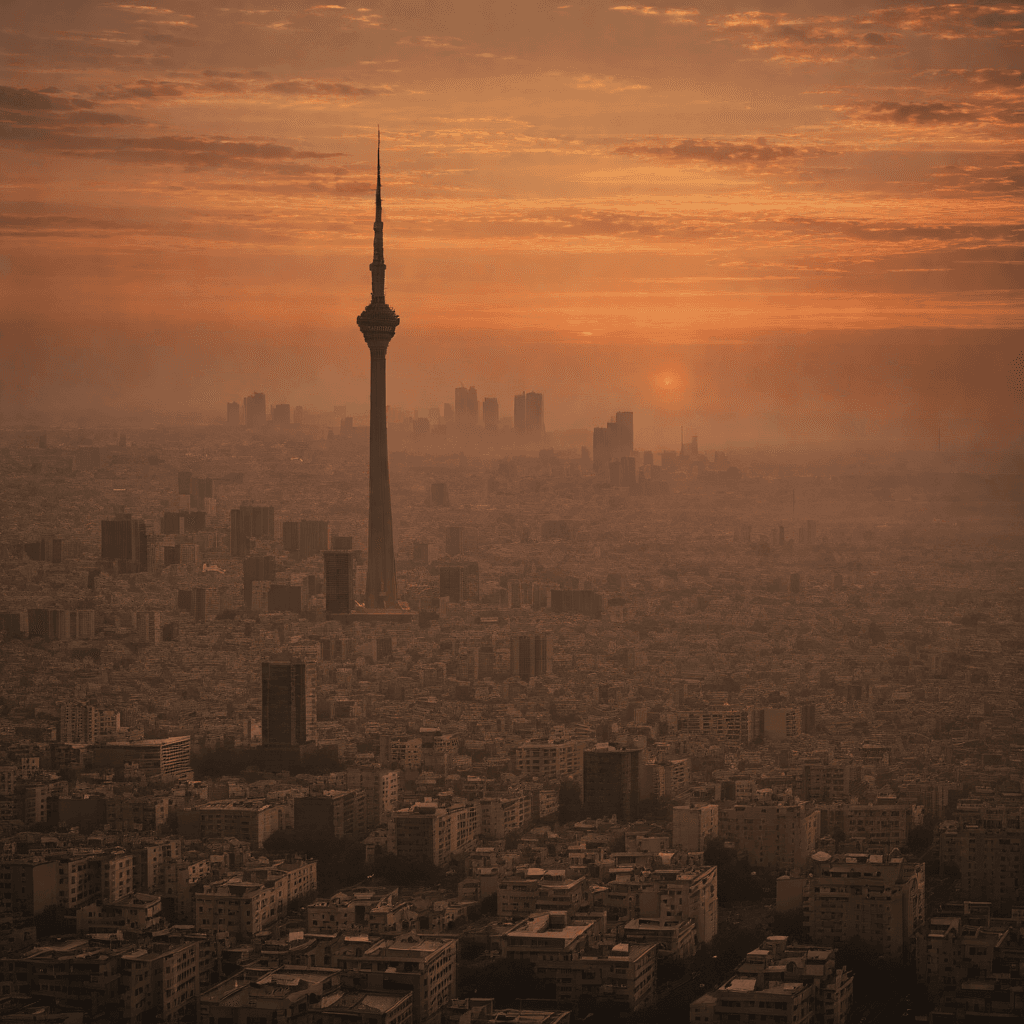
The dawn of March 1, 2026, broke over a Tehran shrouded in an unnerving quiet following unverified reports of the Supreme Leader's health status that circulated the previous night. While global news wires remain cautious in the absence of official confirmation from the state, the speculative atmosphere is already impacting Middle Eastern policy discussions. For James Carter (Pseudonym), an independent geopolitical analyst citing regional intelligence trends, the potential cessation of Khamenei’s centralizing authority represents more than a leadership change; it suggests the possible shifting of the architectural pillar that has held the Islamic Republic’s various factions together.
The Trump administration, navigating its second term amidst a global 'Adjustment Crisis' and a pivot toward technological isolationism, now monitors a potential vacuum that could either validate its maximum pressure strategy or ignite regional instability. This period of uncertainty marks a critical juncture for the 1979 revolutionary era, as observers weigh whether Iran will prioritize raw military survival over its long-standing clerical ideologies. The quiet in the streets of the capital suggests a nation waiting for clarity on which faction may eventually claim the mantle of the Supreme Leader.
The Vacuum of the Velayat: A Constitutional Crisis Unfolds
The legal mechanism for succession in Iran is a rigid yet untested framework that currently faces significant scrutiny. According to Articles 107 through 111 of the Constitution, the responsibility for selecting a new Supreme Leader falls to the 88-member Assembly of Experts, a body of high-ranking clerics tasked with evaluating the religious and political qualifications of potential candidates.
Should the Assembly convene under emergency protocols, the Constitution mandates that a temporary leadership council—comprising the President, the Head of the Judiciary, and one member of the Guardian Council—must assume executive duties in the interim. This three-person council is designed to prevent a total collapse of governance, yet it also creates a temporary focal point for political maneuvering. The challenge for this council lies in maintaining the appearance of clerical legitimacy while power dynamics shift. As the Assembly of Experts begins its deliberations, the question remains whether a consensus candidate can emerge before internal rivalries become public. The constitutional process, while clearly defined on paper, offers little guidance for a scenario where the religious establishment is increasingly viewed as secondary to the nation's security apparatus.
The Shadow Prince: Mojtaba Khamenei and the Battle for Succession
At the heart of succession speculation lies the figure of Mojtaba Khamenei, the second son of the Supreme Leader, whose proximity to power has long fueled discussion regarding a dynastic transition. Mojtaba’s potential candidacy remains controversial, as the 1979 Revolution was built on the rejection of hereditary monarchy, making a "father-to-son" handover a challenge to the Republic’s founding principles.
However, Mojtaba’s influence is frequently linked to his ties within the security and intelligence wings of the state. Analysis from the Foundation for Defense of Democracies (FDD) has previously highlighted that the eventual end of the Khamenei era creates a vacuum that the Revolutionary Guard has spent years preparing to fill, with Mojtaba often viewed as a preferred conduit for their interests. For David Chen (Pseudonym), a strategic risk consultant tracking energy market volatility, the prospect of a Mojtaba-led transition suggests a shift toward a more predictable, if more repressive, security-focused regime. Yet, internal opposition remains among elder clerics who fear that a dynastic shift will permanently erode the religious "Velayat-e Faqih" system. The transition period is a test for the regime's identity: will it remain a theocratic republic, or formalize its transformation into a military-led autocracy?
The Praetorian Shift: How the IRGC May Supersede the Clergy
The most profound potential shift in the post-Khamenei landscape is the consolidation of power by the Islamic Revolutionary Guard Corps (IRGC), an organization that has evolved from a defensive militia into a massive military-industrial conglomerate. Data from the Council on Foreign Relations (CFR) indicates that the IRGC now controls a significant portion of the nation's economic output, spanning sectors from telecommunications and construction to petroleum sales.
This economic influence provides the IRGC with the resources to bypass traditional government oversight and influence the terms of any political transition. Ray Takeyh, a Senior Fellow for Middle East Studies at the CFR, has argued that such a transition will likely be a militarized consolidation of power rather than a purely clerical selection. As the clergy navigates questions of religious legitimacy, the Guard possesses the organizational structure to maintain order. The prospect of a de facto military junta, where the Supreme Leader serves as a figurehead for the IRGC's high command, is viewed by many analysts as a probable outcome.
The Shattered Crescent: Proxy Networks and Strategic Drift
A change in the Supreme Leadership would create an immediate question of command for the 'Axis of Resistance,' the network of groups including Hezbollah, the Houthis, and various Iraqi militias. Without the established authority of the "Velayat-e Faqih" to resolve disputes and allocate resources, these groups may face a period of strategic drift.
This vulnerability is coupled with actions from the U.S. Treasury Department's Office of Foreign Assets Control (OFAC), which on February 25, 2026, sanctioned over 30 individuals and entities linked to the IRGC’s 'shadow fleet' and ballistic missile procurement networks. These sanctions target the financial lifelines that sustain operations across the region. The disruption of these channels, combined with a potential leadership transition in Tehran, leaves the proxy network in a state of high alert. While the IRGC will attempt to maintain control over these assets, the potential loss of a central religious authority may lead local commanders to seek greater autonomy. For the global security community, the risk of uncoordinated actions by proxy networks is a primary concern as the transition unfolds.
Beyond the Theocracy: Forecasting the Resilience of the Islamic Republic
The survival of the Islamic Republic in its current form is under pressure as the tension between clerical legitimacy and military power increases. For Maria Rodriguez (Pseudonym), a regional security researcher, the coming months will reveal whether the regime can undergo a controlled transition or if it will face competition between different power centers.
The internal logic of the Republic is being challenged by a rising military-industrial complex that may view traditional clerical oversight as an obstacle to modernized authoritarianism. While a transition may be volatile, the IRGC’s deep integration into the economy suggests a level of resilience against immediate collapse. However, a regime that prioritizes military force over its original ideological foundation may find itself susceptible to the long-term pressures of international isolation and economic decay. The shift toward a more overt security state may result in a regime more willing to negotiate based on pragmatism while remaining fundamentally aligned against Western interests.
Sources & References
Treasury Sanctions Shadow Fleet and Weapons Procurement Networks
U.S. Department of the Treasury (OFAC) • Accessed 2026-03-01
OFAC sanctioned over 30 individuals and entities on February 25, 2026, targeting the IRGC's 'shadow fleet' used for illicit petroleum sales and ballistic missile procurement.
View OriginalConstitution of the Islamic Republic of Iran: Articles 107-111 (Succession)
Government of Iran / Assembly of Experts • Accessed 2026-03-01
The constitution mandates that the 88-member Assembly of Experts must select a new Supreme Leader upon the death of the incumbent. A temporary council (President, Head of Judiciary, and one Guardian Council member) assumes power during the interim.
View OriginalIRGC Share of Iran's GDP: 25% - 50%
Council on Foreign Relations (CFR) • Accessed 2026-03-01
IRGC Share of Iran's GDP recorded at 25% - 50% (2026)
View OriginalRay Takeyh, Senior Fellow for Middle East Studies
Council on Foreign Relations • Accessed 2026-03-01
The transition will not just be a clerical selection but a militarized consolidation of power by the IRGC.
View OriginalWhat do you think of this article?