The Unilateral Presidency: Why Executive War Power Risks Global Fragmentation
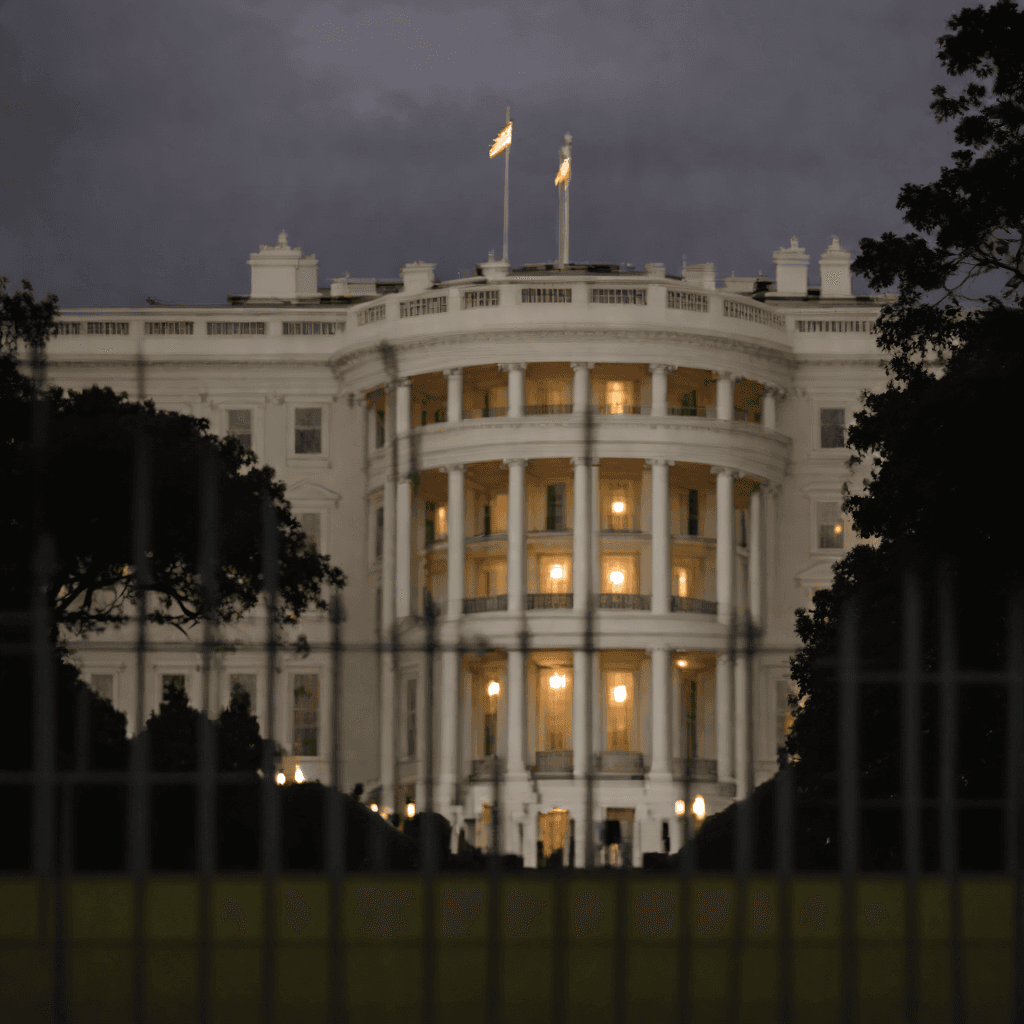
The Midnight Order: A New Era of Executive Warfare
The Tomahawk missiles launched into the Iranian night earlier today did more than just strike tactical targets; they shattered the remaining guardrails of American war-making authority. Without a single briefing to the Senate Foreign Relations Committee, the Trump administration initiated a kinetic engagement that bypasses the core deliberative processes of the U.S. government. This unilateral move signals a definitive shift toward an imperial presidency where the "America First" doctrine is interpreted as the right to execute global military strikes without legislative consent. As David French recently argued in The New York Times, the concentration of such profound power in the hands of the executive branch is a fundamental risk, noting that "War and peace cannot be left to one man."
This moment marks a dangerous precedent where the speed of technological warfare is used as a pretext to abandon the slow, necessary friction of democracy. For observers like James Carter (pseudonym), a veteran legislative aide on Capitol Hill, the lack of notification felt like a deliberate dismantling of historical norms. Carter notes that while previous administrations often pushed the boundaries of executive action, the current lack of even a symbolic "Gang of Eight" briefing suggests a complete decoupling of the White House from the halls of Congress. This absence of oversight creates a vacuum where the rationale for war is determined by a closed circle of advisors rather than the representatives of the American people.
The Vacuum of Power: Why Tehran’s Transition Triggered Washington’s Reflex
The death of Ayatollah Khamenei has left Tehran in a state of unprecedented internal volatility, a transition that Washington has chosen to meet with maximum force rather than diplomatic maneuvering. In the power vacuum following the Supreme Leader’s passing, the Trump administration appears to have calculated that a "shock and awe" approach would preemptively neutralize the Iranian Revolutionary Guard’s (IRGC) influence. However, this aggressive reflex ignores the complex internal factions currently vying for control within Iran, potentially uniting disparate hardline elements against a common foreign aggressor. By choosing escalation over containment, the U.S. has effectively gambled that military pressure can dictate the outcome of a foreign succession crisis.
This strategy reflects a broader 2026 trend toward "automated governance," where complex diplomatic problems are solved with the blunt instrument of kinetic force. The decision to strike during this sensitive transition period stems from a worldview that views any pause in aggression as a sign of terminal weakness. Within the White House, the prevailing logic is that the "Adjustment Crisis" facing the American economy—characterized by massive labor displacement and energy insecurity—requires a show of absolute global hegemony. By asserting dominance over the Persian Gulf at the exact moment of Iran's greatest vulnerability, the administration hopes to secure a "Pax Americana" that can weather the storms of 2026. Yet, the reflex to strike first has transformed a local succession event into a global security trigger.
Beyond the Red Line: The Erosion of the War Powers Resolution
The legal justification for today's strikes rests on a highly expansive interpretation of the Commander-in-Chief's powers, one that renders the War Powers Resolution of 1973 almost entirely moot. While Article I, Section 8, Clause 11 of the U.S. Constitution explicitly grants Congress the sole power to "declare War," the administration has leveraged Article II authority to claim that these strikes were a "necessary and proportionate" response to an imminent threat. This maneuver effectively bypasses the 60-day clock for withdrawal and the consultation requirements mandated by federal law. By framing the death of a foreign leader as a direct threat to U.S. national security, the executive branch has claimed the right to initiate hostilities anywhere in the world without a formal declaration.
This legal erosion creates a dangerous imbalance where the legislative branch is reduced to a reactive body rather than a co-equal branch of government. According to records from the U.S. Government Publishing Office, the War Powers Resolution was intended specifically to check the president's power to commit the United States to armed conflict without consent. Today, that check has been bypassed by a White House that views constitutional friction as an obstacle to national efficiency. Maria Rodriguez (pseudonym), a constitutional law researcher, suggests that if Congress does not immediately assert its power of the purse to defund unauthorized operations, the very concept of "Congressional War Power" will become a historical curiosity.
The Hormuz Paradox: When Strategic Strength Becomes Economic Fragility
The immediate consequence of Washington's unilateral strikes has been the IRGC's announcement of a "total blockade" of the Strait of Hormuz, a move that exposes the profound fragility of the global energy market. The Strait is the world's most critical energy artery, and any disruption there has an immediate, cascading effect on global inflation and industrial stability. As the 2026 Adjustment Crisis already strains the social fabric of developed nations, a sustained energy shock could trigger a collapse in consumer confidence. The strength projected by military strikes is thus negated by the economic vulnerability created by a closed waterway.
Shipping industry analysts at Lloyd's List have already warned of a massive spike in insurance rates for vessels transiting the Gulf, with many major lines suspending all operations in the region. This "Insurance Spike" is a signal of a systemic market failure where the risk of transit exceeds the value of the cargo. For David Chen (pseudonym), a logistics manager at a major U.S. manufacturing firm, the blockade means that essential components for high-tech production are now trapped behind a wall of geopolitical risk. The 25% of global LNG trade that passes through Hormuz is essential for the energy-intensive data centers driving the AGI transition. By triggering this blockade, the administration has inadvertently placed a stranglehold on the very technological acceleration it seeks to lead.
The Ally Divide: A Lonely Superpower in a Fragmenting World
While Washington pursues a path of unilateral intervention, its traditional allies in Europe and Asia are increasingly entrenching themselves behind walls of "digital sovereignty" and strategic autonomy. The lack of consultation regarding the Iran strikes has exacerbated the friction between the U.S. and the EU, where leaders are already wary of the administration's deregulatory and isolationist agenda. In Brussels, the sentiment is shifting from reluctant cooperation to active decoupling, as the EU prioritizes its own safety and privacy frameworks over American-led military ventures. This "Ally Divide" leaves the United States increasingly isolated, fighting a regional conflict without the diplomatic or logistical support of a global coalition.
This fragmentation is most evident in the varying responses to the Hormuz blockade. While the U.S. prepares for a "freedom of navigation" operation, many Asian nations—which receive 84% of the crude flowing through the Strait—are reportedly opening direct negotiations with Tehran to secure their own energy supplies. This suggests that the "America First" strategy is being met with a "Self-Preservation First" response from the rest of the world. Sarah Miller (pseudonym), a former diplomat based in London, observes that the exclusion of allies from major strategic decisions has turned the U.S. into a "lonely superpower." Instead of leading a unified front against instability, Washington is increasingly seen as the primary source of it.
Future Proofing the Republic: Toward a New Balance of Power
To prevent the current crisis from devolving into a permanent state of executive warfare, the United States must urgently restore the constitutional balance between the branches of government. National security cannot be used as an eternal excuse for bypassing the legislative branch. A path forward requires a revitalized War Powers Act that includes automatic triggers for funding cuts if Congressional approval is not secured within a strict timeframe. Furthermore, the reliance on unilateral military force must be replaced with a multi-layered strategy that integrates economic statecraft, diplomatic containment, and regional alliances.
True strategic strength in 2026 lies not in the ability to strike without warning, but in the ability to build a consensus that can withstand global shocks. The restoration of checks and balances is a requirement for national survival in an era of rapid escalation. When a single branch of government can commit the nation to a global energy war, the entire Republic is placed at risk of a single point of failure. Michael Johnson (pseudonym), a historian of American governance, argues that the most resilient periods of U.S. history were those where the executive and legislative branches worked in a state of productive tension. Reclaiming this balance is the only way to future-proof the country against the whims of any single leader.
Sources & References
Article I, Section 8, Clause 11 of the U.S. Constitution
U.S. National Archives • Accessed 2026-03-01
Explicitly grants Congress the sole power to 'declare War' and 'grant Letters of Marque and Reprisal'.
View OriginalWar Powers Resolution of 1973 (50 U.S.C. 1541–1548)
GovInfo / U.S. Government Publishing Office • Accessed 2026-03-01
Federal law intended to check the U.S. president's power to commit the United States to an armed conflict without the consent of the U.S. Congress.
View OriginalGlobal LNG Trade via Hormuz: 25%
Nation Thailand • Accessed 2026-03-01
Global LNG Trade via Hormuz recorded at 25% (2026)
View OriginalGlobal Energy Shock: 20% of World Oil Trapped in Hormuz
The Nation Thailand • Accessed March 2, 2026
Report on the suspension of shipping transits and the impact on Asian markets which receive 84% of Hormuz crude.
View OriginalWhat do you think of this article?