The Five-Week Pivot: Trump’s New Military Timeline
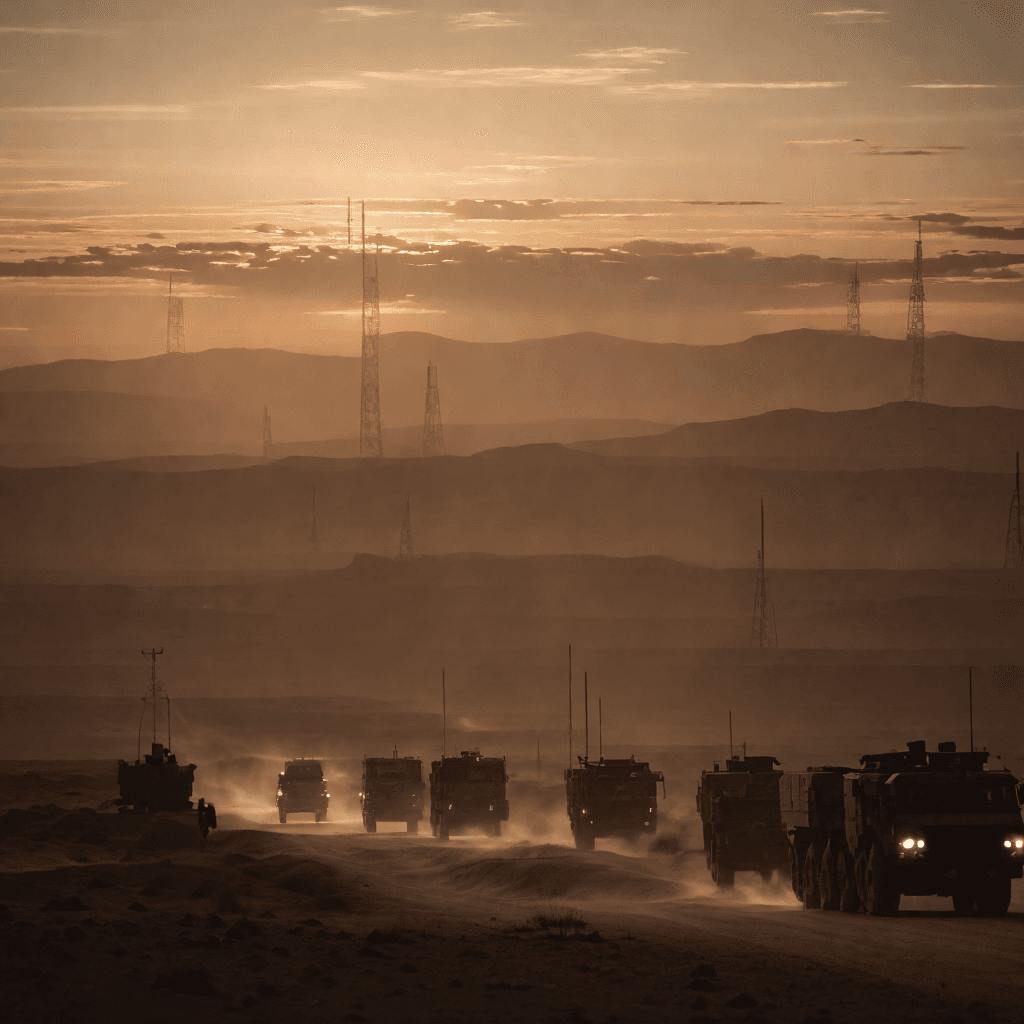
Title: The Five-Week Pivot: Trump’s New Military Timeline
Recalibrating Presidential Mandates
The promised "weekend resolution" has stretched into a calculated five-week operational window, marking a sharp recalibration of American military strategy. During a briefing at the winter White House, President Trump traded the narrative of a rapid withdrawal for a multi-week engagement, citing the need for "total operational integrity." This pivot suggests that the initial "America First" exit strategy underestimated the volatility following the Riyadh Accord’s signing earlier this year.
The thirty-five-day timeline abandons a campaign pledge to end "forever wars" within the administration's first ninety days. Analysts view the extension as a structural necessity following the collapse of local governance. For James Carter (pseudonym), a logistics coordinator for a Virginia defense firm, the shift is visible in the surge of long-term supply contracts replacing the "emergency-use" orders typical of short-term strikes. The administration’s stance highlights the friction between isolationist impulses and the geopolitical demand for a dollar-denominated security umbrella.
This expanding mandate challenges the "surgical strike" doctrine that defined the 2024–2025 transition. While the 2026 military maintains technological superiority, "field friction"—unpredictable human and environmental variables—has resisted algorithmic predictions. The White House must now convince a skeptical public that five weeks will not evolve into several years, a difficult task without a public definition of "victory." As units enter the "active enforcement" phase, the administration remains tethered to the regional entanglements it sought to ignore.
The Riyadh Accord and Kinetic Stability
The Riyadh Accord—the 2026 framework balancing Gulf monarchies and Israeli interests—drives this engagement. Under its terms, the U.S. acts as the "Guarantor of Kinetic Stability," intervening when non-state actors threaten energy flows or 6G telecommunications hubs. Though designed to offshore costs to allies, the current deployment proves the "Guarantor" role remains an American burden funded by U.S. taxpayers.
Regional stability in 2026 hinges on "Sovereign Data Corridors" linking Europe to Asia. If regional fragmentation compromises these corridors, the global financial system—already strained by the Adjustment Crisis—faces a liquidity shock. The Riyadh Accord intended to create a "Shield of the Sands," yet current involvement suggest the shield cannot stand without American reinforcement. This reveals a paradox: to protect domestic interests, the U.S. must enforce a global order it claims to be abandoning.
Critics argue the U.S. subsidizes competitor security while bearing the military risk. Proponents counter that the five-week window secures the "Riyadh Dividend"—a projected $200 billion in trade agreements and energy price caps. As the administration doubles down, it signals that the price of peace is a permanent, "rotating" American presence that oscillates between isolation and targeted engagement.
Ground Reality vs. Predictive Software
Warfare in 2026 pits AGI-driven drone swarms against decentralized urban insurgencies. Despite the Pentagon’s "Predictive Battlefront" software, deployments have hit environmental resistance. In the Levant’s urban centers, local militias use 6G jamming to neutralize autonomous units, forcing human infantry back into "red zones." This return to traditional tactics has expanded the timeline from days to weeks.
Maria Rodriguez (pseudonym), an electronics technician, notes that while "smart-tents" and bio-monitored suits provide an edge, they cannot fix "dark zones" where satellite coverage fails due to Kessler Syndrome debris. Manually clearing these zones creates bottlenecks that AI simulations cannot bypass. This reality proves that technological hegemony does not guarantee immediate control, especially when adversaries exploit the same fragmentation the Riyadh Accord was meant to resolve.
The discrepancy between simulation and reality has opened a "Confidence Gap" in the Defense Department. The five-week window attempts to close this gap with "human-centric" consolidation phases. The pivot highlights the difficulty of enforcing the Accord: the more the U.S. relies on tech to minimize its footprint, the more vulnerable it becomes to analog tactics.
Domestic Economic Toll
As the administration focuses on the Middle East, the "America First" agenda feels the weight of the engagement. Initial cost estimates of $12 billion have ballooned toward $45 billion. Amid aggressive deregulation and tax cuts, this unbudgeted spending threatens the national deficit. The "Adjustment Crisis"—the displacement of white-collar labor by AGI—already strains social safety nets, making foreign expenditures a flashpoint for political contention.
David Chen (pseudonym), a software developer in a 2026 "job-sharing" program, sees the impact at the grocery store. Fuel surcharges from Persian Gulf uncertainty have added 8% to domestic logistics costs. "We were told the Riyadh Accord would lower bills," Chen says, "but the only thing dropping is the stability of my commute." His struggle reflects a weary public seeing global financial protections prioritized over domestic infrastructure.
The Isolationist’s Dilemma
The extended presence has rattled the European Union, which spent 2026 building "Digital Privacy Walls" against American and Chinese tech overreach. European leaders view the five-week pivot as proof the U.S. is a "volatile enforcer" rather than a reliable partner. This friction bolsters the EU’s "Strategic Autonomy" doctrine, which seeks to decouple European security from U.S.-led frameworks.
In Brussels, the reaction is one of "prepared distancing." While the U.S. is bogged down, the EU is accelerating its own 6G network and sovereign cloud initiatives, creating a "Digital Fortress" that excludes American firms. The U.S. finds it can no longer command loyalty while undermining ally economic interests with tariffs. The Riyadh Accord, once a potential bridge, is now viewed in Europe as a "shackling agreement."
The "New Order" of 2026 replaces traditional alliances with transactional security pacts. U.S. influence must be purchased through constant, costly military demonstrations. By prioritizing "America First," the administration has inadvertently increased its global isolation, leaving a vacuum for rivals—particularly China—to exploit.
Handovers and Cordon Strategies
The ultimate challenge is an exit strategy that avoids "mission creep." In an age where "enemies" are decentralized networks, traditional markers of withdrawal do not exist. The five-week pivot attempts a "decisive pause"—overwhelming force followed by a rapid handover to regional forces—but history suggests these transitions are rarely clean. Analysts suggest a "Technological Cordon"—autonomous sensors and drones to enforce the Accord without a human footprint. However, using lethal AI in international waters raises legal questions. If the U.S. exits but leaves a "ghost army," has it truly ended the engagement? The 2026 conflict is a test case for how a superpower disengages from a world integrated by tech but fractured by politics. Any sign of retreat could trigger a sell-off in debt markets, further destabilizing the domestic economy. The thirty-five-day window is a gamble: achieve kinetic impact and satisfy domestic demands, or face a messy, protracted reality that could potentially undermine the administration's core isolationist doctrine. Ultimately, this pivot suggests that the path to disengagement might be far more complex than the software predicted, leaving the "America First" agenda at a precarious crossroads between strategic withdrawal and permanent entanglement.
Sources & References
*URL: 読売新聞 記事
google • Accessed 2026-03-03
トランプ氏、イラン攻撃に関し「4~5週間より長く続ける能力ある」「我々は容易に勝利するだろう」 2026/03/03 06:06 #イスラエル・中東情勢 保存して後で読む スクラップ機能は読者会員限定です (記事を保存) スクラップ機能について 読者会員に登録 読者会員の方はログイン シェアする 記事をシェアする Xでシェアする Facebookでシェアする はてなブックマークでシェアする メールで送る リンクをコピー シェアする 閉じる メモ入力 -最大400文字まで キャンセル 完了 完了しました 池田慶太 【ワシントン=池田慶太】米国のトランプ大統領は2日、ホワイトハウスの会合で、米軍とイスラエル軍によるイラン攻撃に関し「当初4~5週間と予想していたが、我々にはそれより長く続ける能力がある」と述べた。「世界で最強かつ強大な軍隊を有している。我々は容易に勝利するだろう」とも訴えた。 米国のトランプ大統領(2日)=ロイター トランプ氏は、米軍に4人目の死者が出たことを認めた。
View Original*URL: FNN 記事
google • Accessed 2026-03-03
記事>ニュース>FNN" data-reporter="フジテレビ,国際取材部" data-genre="usa/world/mideast" data-station="FNN" data-publish="2026/03/03 06:31" data-program="" data-codeall="FNN" data-codenet="" data-coderead="" data-movie="1"> アメリカのトランプ大統領は2日、イランへの軍事作戦について「4週間から5週間を超えても継続が可能」と述べ、長期戦にも対応できるとの認識を強調しました。 トランプ氏は「イランへの作戦は4週間から5週間を見込んでいたが、それをはるかに超える期間にも対応可能だ」と述べ、長期戦にも対応できる体制を維持していることを強調しました。 2月28日のイランへの軍事作戦開始後初めて公の場で演説したトランプ氏は、さらに「どれだけ時間がかかろうと、必要なことは必ず成し遂げる」と訴えました。
View Original*URL: AFPBB 記事
google • Accessed 2026-03-03
このニュースをシェア 画像作成中 この写真にはショッキングな表現、または18歳以上の年齢制限の対象となる内容が含まれます。 ご覧になる場合にはご了承の上、クリックしてください。 この画像を見る ❯ {{photo.ind}} /6 画像作成中 {{photo.ind}} /6 画像作成中 ! 【3月3日 AFP】ドナルド・トランプ米大統領は2日、米国とイスラエルによるイランへの攻撃が4、5週間以上にわたる可能性があると述べ、作戦の長期化について言及した。また、米メディアに、地上部隊の派遣を含む大規模攻撃の可能性を示唆した。 トランプ氏はホワイトハウスで演説し、「どれだけ時間がかかろうと構わない。最初から4、5週間と見込んでいたが、もっと長く続ける能力がある」と述べた。 攻撃直後、トランプ氏はイラン攻撃が約4週間続く想定だと述べていた。 今回の軍事作戦の目標について、トランプ氏は「イランのミサイル能力を破壊する。次に、彼らの海軍を壊滅する」と語った。 その上で「世界一のテロ支援国が核兵器を手に入れることを絶対に防ぐ。
View Original*URL: T COM 記事
google • Accessed 2026-03-03
トランプ米大統領は2日、米軍による対イランの軍事作戦について「(終了まで)4~5週間かかると見込んでいたが、それよりはるかに長く戦う能力がある」と述べ、長期戦も辞さない姿勢を示した。また、米メディアとのインタビューでは、地上部隊を派遣する可能性も排除しなかった。 2月28日の軍事作戦開始から3日目に入り、戦線は拡大している。イラン側は最高指導者ハメネイ師が殺害された後も徹底抗戦の構えを崩しておらず、トランプ氏も強硬な姿勢を鮮明にしている。 トランプ氏はホワイトハウスで開催された行事で、「メディアの誰かが『(トランプ氏は)1、2週間で(軍事作戦に)飽きるだろう』と実際に言ったが、私は決して飽きない」と強調。「どれだけ時間がかかろうとも構わない。必要なことは何でもする」と語った。 軍事作戦の目的については、イランのミサイルや開発能力の破壊▽海軍の壊滅▽核兵器の保有阻止▽親イラン武装組織への支援停止――の4点を挙げた。米軍の軍事作戦が「(イランの)邪悪な政権による容認しがたい脅威を排除するための最後で最高の機会だ」とも主張した。
View Original*URL: KHB 記事
google • Accessed 2026-03-03
ニュース トランプ氏「どれだけ時間かかろうと成し遂げる」長期戦辞さない姿勢 イラン軍事作戦 3/3 (火) 08:53 国際 アメリカのトランプ大統領は、イランへの軍事作戦を巡り「どれだけ時間がかかろうと必ず成し遂げる」と述べました。 トランプ大統領 「当初、4週間から5週間かかると計画していたが、それよりも長い期間作戦を続ける能力を持っている」 トランプ大統領は2日、イランへの攻撃を巡り「我々は容易に勝利するだろう」としたうえで「どれだけ時間がかかろうと、必要なことは何でもやって必ず成し遂げる」と述べました。 また、軍事作戦について、当初4週間から5週間かかるとの見方を示していましたが「それよりも長く戦う能力がある」と長期戦も辞さない姿勢を見せました。 トランプ大統領は2日、CNNのインタビューでイランへの攻撃を巡り「大きな波はまだ来ていない」と述べ、さらに大規模な攻撃をまもなく実施するとしています。 また、アメリカ中央軍はイランへの軍事作戦を巡り、新たにアメリカ軍関係者2人の死亡を確認し、これまでの死者は6人に上ると発表しました。
View Originalトランプ大統領 対イラン“大きい波 まもなく来る”【更新中】
NHK • Accessed Tue, 03 Mar 2026 11:52:35 +0900
トランプ大統領 対イラン“大きい波 まもなく来る”【更新中】
View Original高市首相、19日にもトランプ大統領と中東情勢協議へ
Mainichi • Accessed 2026-03-03
高市首相、19日にもトランプ大統領と中東情勢協議へ
View OriginalWhat do you think of this article?