The Kinetic Negotiator: Trump’s Dual-Track Iran Doctrine
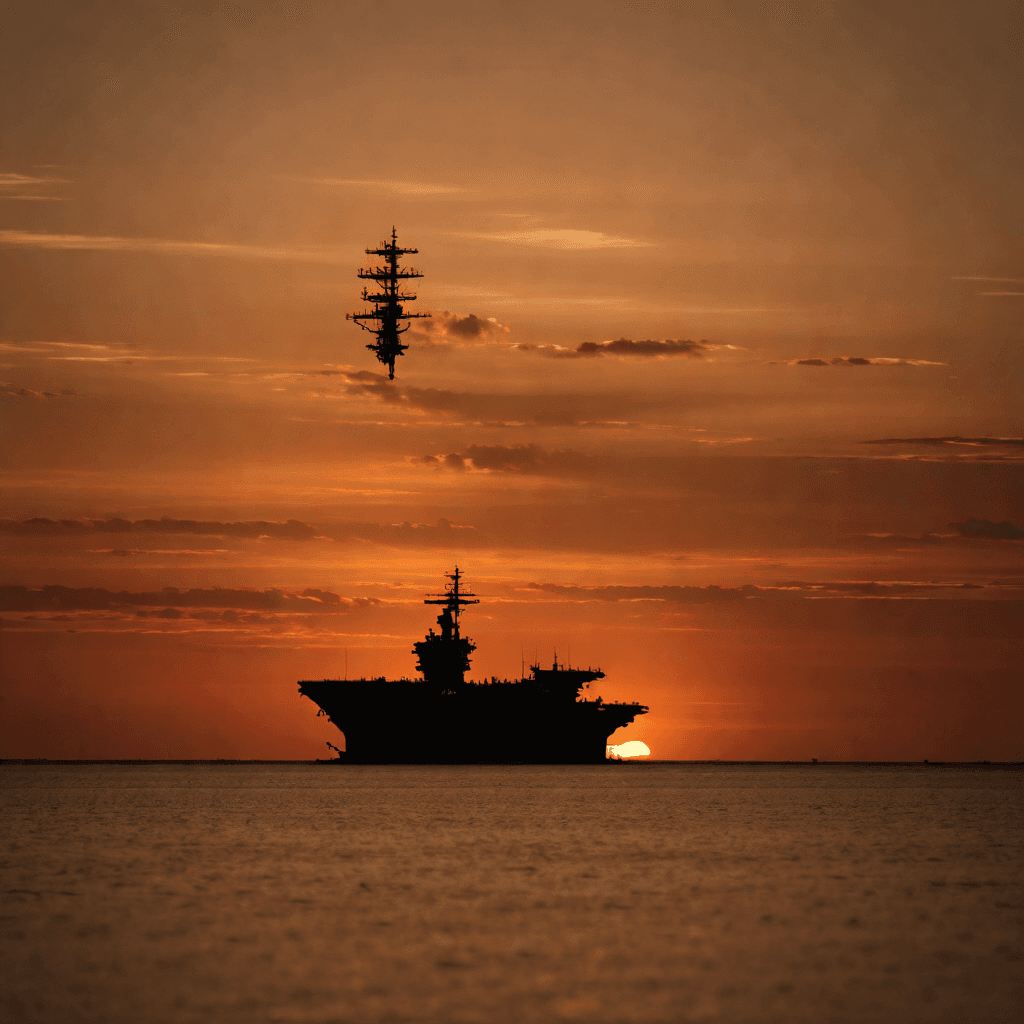
The Kinetic Signal: Chaos as a Prelude to Conversation
The night sky over the Middle East had barely cleared of smoke when Washington’s messaging shifted from the thunder of ordnance to the nuances of diplomacy. On March 2, 2026, President Donald J. Trump authorized targeted air strikes against Iranian assets. Yet, the operation's timeline suggests a calculated psychological maneuver: reports from Hankyoreh indicate the President issued the execution order nearly ten hours before the first missile launched, even as he publicly hinted at a diplomatic breakthrough. This deliberate lag fostered a vacuum of uncertainty—a signature of the administration's "Strategic Duality."
For David Chen (Pseudonym), a Washington-based defense consultant, the evening mirrored a choreographed exercise in controlled escalation. He observed how the administration used the pre-strike silence not to ensure secrecy, but to amplify the weight of the action through public ambiguity. While the military positioned its assets, the political arm prepared the ground for the aftermath. These strikes were not merely an end; they served as kinetic punctuation in a broader negotiation.
This approach reflects a White House conviction that military force is most effective when coupled with a visible exit ramp. By striking hard while signaling a "Big Deal," as reported by Chosun Ilbo, the administration is attempting to force Tehran into a defensive posture where the costs of aggression are clear, but the benefits of settlement remain reachable. It is a high-stakes gamble assuming the adversary will prioritize survival over retaliation.
Beyond the Smoke: The Pivot to a ‘Grand Bargain’
Post-strike rhetoric has been bifurcated, pairing military dominance with diplomatic overtures. Defense Secretary Pete Hegseth summarized this during an NPR interview, stating that while the United States did not start the conflict, under President Trump, it intends to finish it. Yet, behind the scenes, the President was reportedly outlining a "Big Deal." This duality suggests the administration views air strikes as a necessary clearing of the brush before constructing a new diplomatic architecture.
Analysis of recent communications, highlighted by Chosun Ilbo, reveals a theme of "unpredictable leverage." By refusing to commit to a single path, the White House maintains a strategic flexibility that previous administrations often sacrificed for clarity. The teased "Grand Bargain" is not a return to previous accords but a total reset of the regional order, demanding Iranian compliance in exchange for lifting the "Maximum Pressure" that has defined Trump’s second term.
This pivot treats military action as high-intensity communication. James Carter (Pseudonym), a veteran regional analyst, describes the strategy as an evolution of the "Art of the Deal" applied to a volatile theater. The goal is to make the status quo so painful that previously unthinkable concessions look like a reprieve. The smoke from the strikes provides the backdrop for a proposal Tehran is told it cannot afford to ignore.
The Mechanics of Psychological Warfare: Maximum Pressure 2.0
The strategy hinges on systematic deception to unbalance the adversary’s decision-making. As Hankyoreh reported, signaling negotiation while executing a massive strike was designed to induce paralysis within the Iranian high command. This is "Maximum Pressure 2.0," where pressure is psychological as much as it is economic or kinetic. The intent is to ensure the Iranian leadership is never certain if the next message from Washington is an olive branch or a target coordinate.
The effectiveness of this warfare depends on the threat's credibility, which the President reinforced by warning of a "giant wave" of future attacks. NPR reports the administration is signaling that these strikes are merely the "opening act" if Tehran refuses the negotiating table. This creates a ticking clock, forcing the regime to weigh immediate damage against an existential threat.
By toggling between modes of engagement, the administration controls the crisis tempo. Maria Rodriguez (Pseudonym), a specialist in cognitive bias, notes that such inconsistency can be a powerful tool for a dominant power. It forces the weaker party to exhaust resources decoding intent, often sparking internal divisions. In this framework, ambiguity is the policy.
Allies and Adversaries: The Global Confusion Factor
The ripple effects of this strategy have left both allies and adversaries scrambling. The most dramatic evidence of regional anxiety was the reported evacuation of the Israeli government’s official aircraft to Germany during the strikes. According to Yonhap News, this move underscores the fear that a miscalculation could trigger uncontrolled escalation. Even the closest U.S. ally felt the need to secure its most sensitive assets abroad.
For regional actors, the "Strategic Duality" creates a difficult choice: prepare for a war that may not happen, or invest in a peace process that could be abandoned instantly. European allies, already wary of Washington’s isolationist pivot, find themselves sidelined as the U.S. pursues a bilateral deal. This has fragmented the diplomatic front, with nations like Germany and France attempting to create independent "de-escalation corridors."
Meanwhile, China and Russia observe the chaos with mixed opportunism and concern. While a Middle East conflict may serve their interests elsewhere, the unpredictability of the Trump doctrine complicates the management of their regional proxies. Global confusion further isolates Iran, as traditional supporters hesitate to defend a regime that might either collapse or suddenly realign with the West.
The Domestic Calculation: Peace Through Strength or Chaos?
Domestically, the administration frames the Iran crisis as a validation of "America First." The narrative pushed to voters is one of "Peace Through Strength," where the President’s willingness to use force is what keeps troops out of a "forever war." By pairing strikes with talk of a "Big Deal," the White House satisfies both the hawkish wing and the isolationist base.
For Sarah Miller (Pseudonym), a small business owner in Ohio, the image of a President who is "getting things done" without a ground war is paramount. She views the strikes as a correction to past American weakness and is heartened by the talk of a deal. To voters like Miller, the duality looks less like chaos and more like a sophisticated leader using every tool to protect national interests.
However, domestic support is contingent on the crisis remaining "controlled." The administration has managed expectations regarding duration; Yonhap News reports that while the President initially estimated a 4-5 week window for operations, he quickly asserted the U.S. could sustain pressure indefinitely. This "capability-flex" projects total control, ensuring the spectacle enhances the President’s image without the baggage of a quagmire.
The Risk of Fatal Misinterpretation: The Dangers of Ambiguity
Critics warn that heavy reliance on ambiguity carries the risk of fatal misinterpretation. The danger is that Tehran, faced with conflicting signals, may conclude that a "Big Deal" is a ruse and that total war is inevitable. In this scenario, the Iranian leadership might launch a preventative strike or mobilize proxies, forcing the ground intervention the Trump administration claims it wants to avoid.
The tension between the President’s 4-5 week timeline and the military’s long-term capability, as noted by Yonhap News, creates a gap where miscalculations thrive. If Tehran believes the U.S. is bluffing, they may hunker down. If they believe the "giant wave" is coming regardless of their actions, they have no incentive to negotiate. Diplomacy requires a counterparty that believes a deal is possible; if trust is eroded, the diplomatic track becomes a dead end. When unpredictability is the primary weapon, the user risks losing control of the blast radius.
Strategic Synthesis: The Future of the Unpredictable Doctrine
As the dust settles from the latest strikes, the question remains whether this doctrine can lead to a sustainable resolution. The administration bets that by breaking traditional diplomatic rules, they can achieve a historic realignment. Yet, the volatility of "Strategic Duality" suggests that the margin for error is razor-thin; if signals are misread, the kinetic pressure intended to force a deal may instead ignite the very conflict the administration sought to avoid.
In summary, the Trump administration’s 2026 Iran policy is an unprecedented experiment in psychological and military leverage. While the "Kinetic Signal" has successfully re-established a credible threat, the success of the "Grand Bargain" hinges on whether Tehran perceives a viable path to de-escalation. Looking forward, the ultimate test of this doctrine will be whether chaos can be effectively harnessed for peace, or if the lack of clarity will lead to a catastrophic regional miscalculation.
Sources & References
요약: 트럼프 대통령이 이란에 대한 대규모 공습을 승인하면서도 막후에서는 '빅 딜'을 언급하며 상대의 혼란을 유도하는 이중적 전술을 구사하고 있다는 분석입니다.
조선일보 • Accessed 2026-03-02
**전체 제목:** 트럼프 “끝까지 간다” “대화” 양면전략…이란 장기전 피할 수 있을까
View Original요약: 현재의 공습은 서막에 불과하며 훨씬 더 강력한 '거대한 파도'와 같은 공격이 준비되어 있다는 트럼프 대통령의 경고를 전했습니다.
NPR • Accessed 2026-03-02
**전체 제목:** Hegseth: 'We didn't start this war but under President Trump we're finishing it'
View Original트럼프 ‘기만 전술’ 논란…이란 공습 명령 뒤에도 ‘협상’ 뉘앙스
한겨레 • Accessed Mon, 02 Mar 2026 15:35:00 GMT
트럼프 ‘기만 전술’ 논란…이란 공습 명령 뒤에도 ‘협상’ 뉘앙스 도널드 트럼프 미국 대통령이 이란에 대한 대규모 공습 작전 최종 실행 명령을 내린 시점이 실제 공격 시작 10시간 전이었던 것으로 확인됐다. 트럼프 대통령은 명령하달 직후에도 대외적으로는 이란과의 협상 가능성을 시사하는 듯한 발언을 하며 기만전술을 펼친 것으로 드러났다. 이란 최고지도자 아야톨라 세예드 알리 하메네이가 이스라엘의 공습으로 숨진 점도 확인됐다 트럼프 “끝까지 간다” “대화” 양면전략…이란 장기전 피할 수 있을까 쿠웨이트서 미 전투기 3대 ‘오인 사격’ 추락…“승무원 전원 탈출”
View Original요약: 군사적 타격의 수위는 높이되 대화의 문은 열어두는 트럼프 특유의 '거래의 기술'이 중동 안보 위기에서 다시 한번 재현되고 있습니다.
KBS • Accessed 2026-03-02
요청하신 페이지를 찾을 수 없습니다. 홈으로 이전 페이지 고객센터 전화번호 : 02-781-1000 (오전 08:00~오후 06:00) 고객센터 이메일 : news@kbs.co.kr
View Original*CNN (KVIA)
kvia • Accessed 2026-03-02
Play Button Stop Button chevron-right chevron-left chevron-up search warning chevron-left-skinny chevron-right-skinny x clock calendar play-button cancel-circle user twitter facebook youtube instagram email linkedin Home News El Paso New Mexico Texas On the Border Xtra US/World ABC-7 Alert Center Education Military Health Weather ABC-7 StormTrack Doppler ABC-7 First Alert Traffic Gas Prices Sports UTEP NMSU El Paso Chihuahuas Be Mindful International Women’s Month Play Share ABC-7 Listens
View Original*CNN (KEYT)
keyt • Accessed 2026-03-02
Statistics cookies collect information anonymously. This information helps us understand how visitors use our website. Toggle Google Analytics Google Analytics
View Original[美 이란 공습] 트럼프 “이란전 ‘큰 파도’는 아직 시작도 안 해”
조선일보 • Accessed Mon, 02 Mar 2026 16:30:49 +0000
[美 이란 공습] 트럼프 “이란전 ‘큰 파도’는 아직 시작도 안 해”
View Original트럼프, 이란 전쟁 "4~5주 예상했지만 더 오래 할 능력 있다"
연합뉴스 • Accessed Tue, 3 Mar 2026 02:11:32 +0900
트럼프, 이란 전쟁 "4~5주 예상했지만 더 오래 할 능력 있다"
View Original[속보] 트럼프, 이란 전쟁 "4~5주 예상했지만 더 오래 할 능력 있다"
연합뉴스 • Accessed Tue, 3 Mar 2026 01:56:44 +0900
[속보] 트럼프, 이란 전쟁 "4~5주 예상했지만 더 오래 할 능력 있다"
View Original이스라엘 정부 전용기, 이란 공습 첫날 독일로 대피
연합뉴스 • Accessed Mon, 2 Mar 2026 22:26:25 +0900
이스라엘 정부 전용기, 이란 공습 첫날 독일로 대피
View OriginalWhat do you think of this article?