Fortress China: How the 15th Five-Year Plan Formalizes the Global Divorce
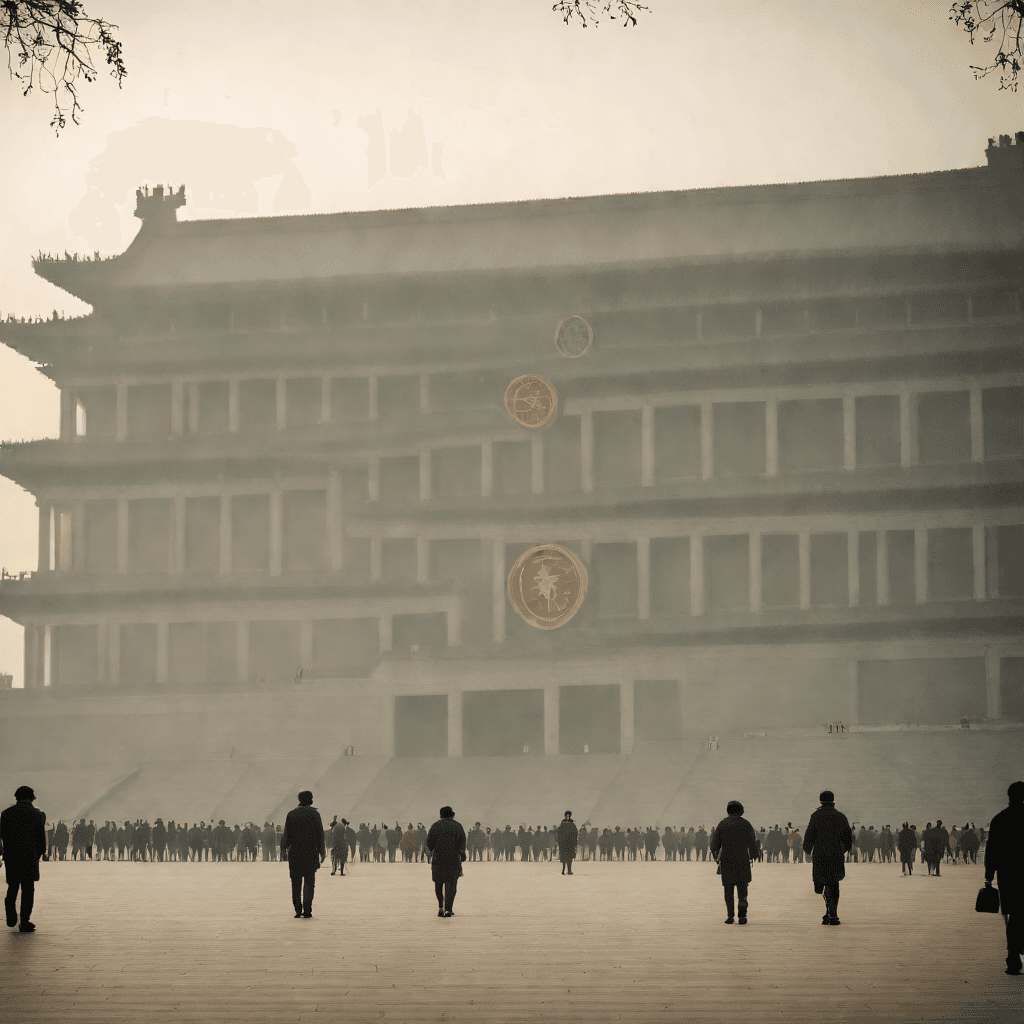
Beijing’s Silent Pivot: The Ritual of 2026
The air in Beijing on this March 4, 2026, is heavy with the weight of a defining geopolitical transition. As delegates gather for the opening of the Fourth Session of the 14th National People's Congress, the traditional pageantry of the Great Hall of the People serves as a backdrop for a fundamental restructuring of the global order. While the Trump administration in Washington aggressively pursues its second-term agenda of deregulation and "America First" isolationism, Beijing is preparing to unveil the 15th Five-Year Plan (2026-2030).
This document signals a decisive retreat from the era of global integration. China is no longer chasing the ghost of double-digit growth; instead, the leadership is signaling a permanent pivot toward a "security-first" architecture designed to survive a world of hardening digital and economic borders. The ritual of the "Two Sessions" has evolved into a strategic fortification, where economic data is treated as secondary to national resilience. As global cooperation reaches a new low following the collapse of international talks in early 2026, China is positioning itself not as a participant in the global market, but as a self-contained fortress.
Blueprint 15: Engineering the Five-Year Fortress
The 15th Five-Year Plan represents a sophisticated engineering project aimed at achieving total technological sovereignty. According to official reports from the State Council of the People's Republic of China, the central government initiated an extensive public consultation process in late 2025 to ensure the 2026 Government Work Report prioritizes economic stability and technological innovation above all else. This blueprint is not merely a list of industrial targets; it is a manifesto for a tech-driven fortress.
Scott Kennedy, Senior Adviser and Trustee Chair in Chinese Business and Economics at CSIS, observes that China is prioritizing "new quality productive forces" like quantum computing and artificial intelligence to ensure resilience against sustained U.S. pressure. The shift is tactical and absolute. By embedding security into the DNA of the five-year cycle, Beijing aims to insulate its critical supply chains from the volatility of the Trump 2.0 era. This focus on "high-quality growth" suggests the leadership is willing to trade rapid expansion for strategic certainty, creating a domestic ecosystem that functions independently of Western semiconductor pipelines.
The End of the Growth Obsession
For decades, the legitimacy of the Chinese Communist Party was tied to breakneck GDP expansion, but the 2026 agenda confirms this obsession has concluded. Statistics from the National Bureau of Statistics (NBS) indicate that the actual GDP growth for 2025 stood at 5.0%, a figure that would have been considered a crisis a decade ago but is now framed as a benchmark for stability. In the context of the 15th Five-Year Plan, growth is being recalibrated to serve national security rather than the other way around.
This managed deceleration is a direct response to the transaction-heavy policies in Washington, which have made global trade increasingly unpredictable. By accepting a growth rate in the 4.5% to 5.0% range, Beijing is signaling to institutional investors that it is prioritizing the health of its internal systems over the demands of global capital. The focus has shifted from the quantity of expansion to the resilience of the foundation, ensuring the economy can absorb the costs of isolationism without triggering domestic unrest.
Technological Autarky and the Race for AGI
In the corridors of power in Beijing, artificial intelligence and quantum computing are no longer viewed as commercial opportunities but as existential tools for national power. The 15th Five-Year Plan treats technological autarky as the ultimate guarantor of sovereignty in a 2026 landscape defined by nascent 6G networks and breakthrough AGI models. This push for autarky is a direct attempt to build a tech-driven fortress that can withstand U.S. pressure.
This is not just about competing with Silicon Valley; it is about ensuring that China’s governance structures and military capabilities are not dependent on foreign-controlled intellectual property. The strategic investment in these technologies is intended to dissolve the traditional vulnerabilities of globalized supply chains. By localizing the entire stack—from silicon to algorithmic logic—Beijing hopes to create a "synthetic sovereignty" immune to external sanctions. This race for AGI is being conducted with a wartime urgency, reflecting the belief that the nation mastering autonomous systems first will dictate the terms of the fragmented global order.
The Demographic Drag on National Security
Despite the rhetoric of a "tech-driven fortress," the plan faces a profound internal challenge: the friction created by an aging population and a shifting labor market. The State Council reported that over 12 million new urban jobs were created in 2025, but this masks a deeper "Adjustment Crisis" as automation begins to displace labor at scale. For individuals like David Chen (a pseudonym), a 26-year-old technology professional in Shenzhen, the promise of "high-quality growth" feels distant.
David, who recently lost his position at a major telecommunications firm as AI-driven coding agents replaced his junior development team, represents a generation facing the paradox of a high-tech superpower with narrowing paths for individual advancement. This demographic drag is a direct threat to the "security" narrative. High youth unemployment and an eroding social welfare net create internal pressures that cannot be solved by quantum computing alone. If the transition to an automated, security-first economy leaves millions behind, the internal friction may eventually compromise the very stability the 15th Five-Year Plan seeks to protect.
A Decade of Managed Deceleration
As we look toward 2030, the 15th Five-Year Plan sets the stage for a decade of strategic insulation. Jonathan Czin, Michael H. Armacost Chair at the Brookings Institution, argues that Beijing's message is one of "continuity" despite significant international headwinds. This continuity is a defensive crouch; the plan is a direct preparation for a "Trump 2.0" environment defined by aggressive tariffs and the withdrawal of the U.S. from international governance.
For institutional investors, the "China play" has fundamentally changed from a bet on consumer growth to an analysis of state-directed resilience. By the end of this decade, China will likely have successfully constructed a parallel economic system, largely immune to the fluctuations of the USD. However, this quest for security comes at the cost of the dynamism that once defined the Chinese miracle. By 2030, the global economy will likely be defined by two massive, divergent blocks, each pursuing its own version of security at the expense of collective prosperity.
Sources & References
Opening of the Fourth Session of the 14th National People's Congress
National People's Congress of the People's Republic of China • Accessed 2026-03-04
Scheduled to open on March 5, 2026. Key agenda includes the review of the 15th Five-Year Plan (2026-2030) and the 2026 Government Work Report.
View OriginalPublic Opinions Solicited for 2026 Government Work Report
The State Council of the People's Republic of China • Accessed 2026-03-04
The central government initiated a public consultation process in December 2025 to gather input on economic stability, employment, and technological innovation for the upcoming 2026 report.
View OriginalGDP Growth Rate (2025 Actual): 5.0%
National Bureau of Statistics of China • Accessed 2026-03-04
GDP Growth Rate (2025 Actual) recorded at 5.0% (2025)
View OriginalNew Urban Jobs Created: 12 million+
State Council PRC • Accessed 2026-03-04
New Urban Jobs Created recorded at 12 million+ (2025)
View OriginalWhat do you think of this article?