The Precision Paradox: Why Japan’s Kairos Rocket Still Stalls
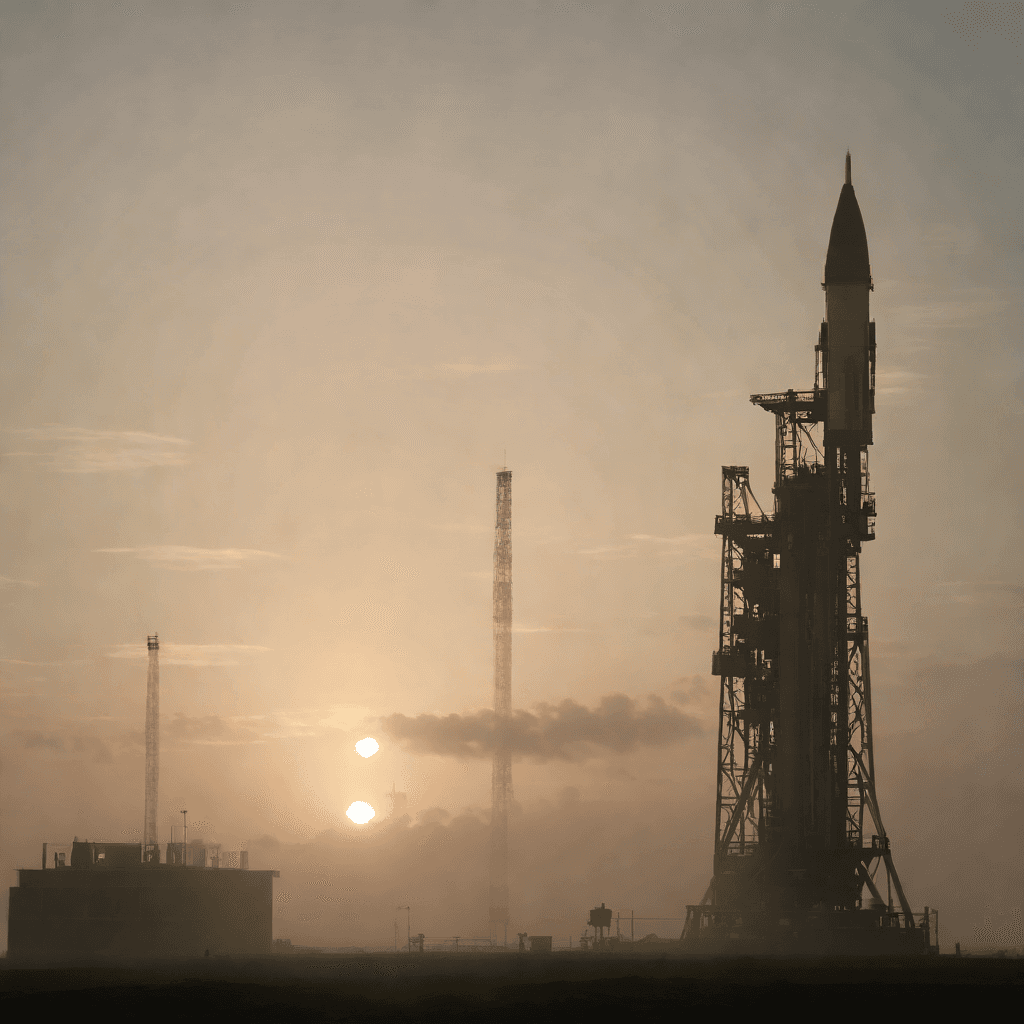
Silence at Space Port Kii
The morning air at Space Port Kii remained still this Wednesday—a costly silence for Japan’s emerging private space sector. As the March 4, 2026, launch window opened, the Kairos-3 rocket sat motionless on its seaside pad, marking its third consecutive postponement in three weeks. This stasis is more than a logistical hiccup; it signals a stall in Tokyo’s ambition to build a commercial orbital gateway independent of foreign heavy-lifters.
For David Chen, an aerospace analyst at the Kushimoto site, the delay strains the regional economy. Local infrastructure, built for high-cadence launches, now serves as an expensive viewing gallery for a mission that won't leave the ground. While countdown clocks have reset for late March, the persistent "no-go" status suggests technical hurdles deeper than coastal weather.
This tension stems from a "Precision Paradox" gripping Japanese engineering. The drive for absolute reliability—a hallmark of the nation’s industrial identity—clashes with the "fail fast" philosophy that allows American competitors to dominate low-earth orbit (LEO). At Space Port Kii, caution is measured in lost time. Each day Kairos-3 remains grounded, Japan’s window to claim its share of the $500 billion space economy narrows.
The Shadow of the Five-Second Failure
The caution paralyzing the Kairos program is rooted in the telemetry of March 2024. During its inaugural flight, the first Kairos vehicle suffered a "flight termination" just five seconds after clearing the tower, turning years of private investment into a fireball over the Pacific. That failure embedded a culture of risk-aversion into the company’s DNA.
Analysis of the Kairos-1 debris suggests the autonomous flight safety system remains a point of internal debate. Designed to destroy the rocket if it deviates from its path—a necessity near inhabited coasts—the system proved that the margin between ascent and self-destruction is razor-thin. Consequently, hyper-calibrated sensors now trigger postponements at the slightest data anomaly.
This legacy has created a psychological barrier for Space One engineers. When a startup’s first attempt ends in total loss, pressure on subsequent missions becomes exponential. The 2024 explosion effectively raised the "cost of failure" to a level the company’s balance sheet may not sustain a second time, dictating the current, agonizingly slow pace.
The Solid Fuel Conundrum
The technical struggle lies in propulsion: solid fuel. Unlike the liquid-fueled rockets used by SpaceX or Blue Origin, which can be throttled or restarted, a solid-fuel rocket is essentially a controlled explosion. Once the "grain"—the fuel and oxidizer mixture—ignites, it cannot be extinguished. This "all-or-nothing" reality makes pre-launch validation high-stakes.
Solid propulsion offers simplicity and rapid response. Because the fuel is stable and pre-loaded, these rockets avoid the complex cryogenic plumbing of liquid systems. However, this simplicity sacrifices control; every calculation must be perfect before ignition, as mid-flight combustion adjustments are impossible.
Capital vs. Orbital Mechanics
Space One is a unique experiment, backed by Canon Electronics, IHI Aerospace, and the Development Bank of Japan. This private-sector pedigree was intended to bring "Toyota-style" efficiency to aerospace, but it has instead exposed the friction between quarterly reporting and the glacial pace of rocket development. Investors are learning that orbital mechanics do not follow Moore’s Law.
James Carter, a Tokyo-based consultant, notes the financial pressure is mounting. "In tech, a two-year delay is common," Carter says. "In space, it means paying for a launch pad, specialized labor, and insurance without revenue." This "burn rate" creates a "Valley of Death" where capital vanishes just as technology matures.
Strategic Stakes in the Indo-Pacific
The delays at Space Port Kii reverberate beyond Tokyo. Under the second Trump administration, "America First" policies prioritize U.S. launch providers for critical missions, creating a bottleneck for partners seeking sovereign hardware deployment. Japan’s drive for domestic capability is a direct response to this "Launch Gap."
Japan’s "Space Policy Roadmap" identifies autonomous access as a national security priority. As regional tensions escalate, the ability to rapidly replace satellites or deploy sensors is a critical deterrent. Every day Kairos-3 sits idle, Japan remains dependent on foreign entities—a vulnerability Tokyo is desperate to close.
The Perils of Excessive Caution
Critics argue Space One’s obsession with "zero-risk" is its greatest liability. In a market where competitors launch weekly—often failing publicly only to fix and return days later—the Japanese approach of waiting months for minor sensor tweaks risks obsolescence. This "Peril of Caution" suggests that by avoiding a second explosion, Space One may be ensuring a quiet, terminal corporate death.
The "New Space" era, led by firms like Rocket Lab, is defined by iterative development: "Fail Fast, Learn Faster." In contrast, the "Old Space" mentality at Space One views failure as a disgrace. This cultural divide creates a speed disparity Kairos may never overcome. The technology it "perfects" today may be irrelevant by the time it reaches the stars.
Sources & References
「カイロス3号機」きょうの打ち上げ直前で中止 和歌山
NHK • Accessed Wed, 04 Mar 2026 12:17:45 +0900
「カイロス3号機」きょうの打ち上げ直前で中止 和歌山
View Original【ライブ動画】「カイロス」3号機の打ち上げ中止を受け記者会見
Asahi • Accessed 2026-03-04
【ライブ動画】「カイロス」3号機の打ち上げ中止を受け記者会見
View Original民間ロケット「カイロス」打ち上げ中止 30秒前に安全システム作動
Asahi • Accessed 2026-03-04
民間ロケット「カイロス」打ち上げ中止 30秒前に安全システム作動
View Original安全システム作動、発射30秒前に緊急停止 カイロス3号機
Mainichi • Accessed 2026-03-04
安全システム作動、発射30秒前に緊急停止 カイロス3号機
View OriginalWhat do you think of this article?