The Digital Fortress: Trump’s Strategic Divorce from Traditional Media
The Echo in the Briefing Room
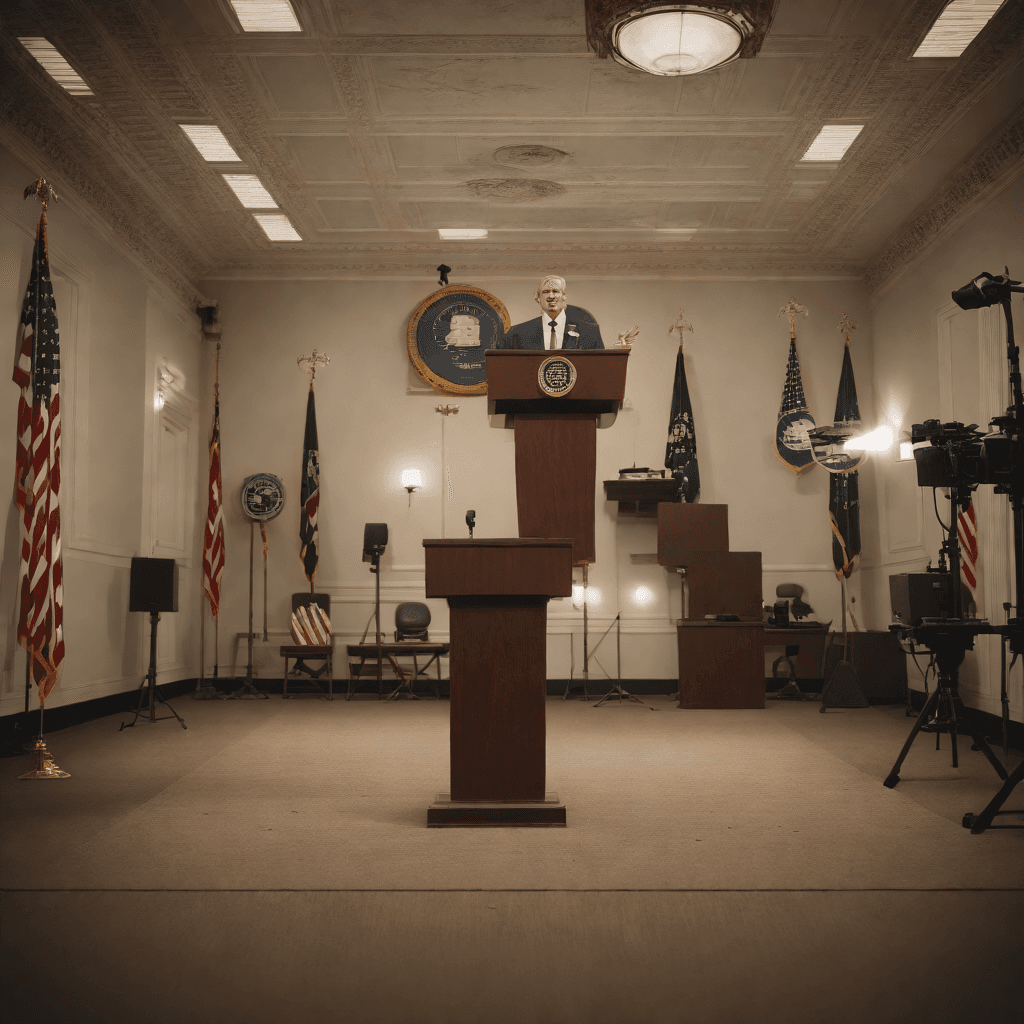
The James S. Brady Press Briefing Room, once the theater of American transparency, sat in heavy silence on March 1, 2026. Following reports of escalating regional tensions, the world expected the familiar ritual: a presidential address followed by sharp questioning from the White House press corps. Instead, the podium remained empty—a physical marker of the Trump administration’s second-term doctrine: the obsolescence of traditional media gatekeepers.
This void was a strategic pivot toward a controlled, direct-to-consumer model of statecraft. Political analyst James Carter observed, "The administration is treating the presidency as a sovereign media entity." In this framework, the "friction" of a reporter’s follow-up is viewed as an unnecessary barrier to the executive’s narrative. By removing the live Q&A from the aftermath of military action, the White House has decoupled governing from public accounting, ushering in a post-institutional communication age.
Sovereign Streams Over Shared Reality
The shift from the podium to the digital stream was formalized on March 1, 2026, when President Trump released a high-definition video via social media, bypassing the press corps. This "silent treatment" allowed the President to frame the administration’s response to recent geopolitical escalations on his own terms, avoiding questions regarding strategic risks or potential outcomes. This method prioritizes "narrative purity," ensuring the administration writes the first draft of history without negotiation through adversarial reporters.
Market observers note this "sovereign stream" reflects the deregulation of the Trump 2.0 era, where institutional oversight is replaced by direct engagement. Citizens like Sarah Miller, who received the video via an AGI-curated feed, found the message authoritative, yet it lacked the context professional journalism provides. The result is a fragmented reality where the President's word is the only one allowed in the primary digital ecosystem. This disintermediation is now the cornerstone of the administration’s strategy to maintain domestic leverage during international crises.
The Tactical Value of Fragmented Messaging
The administration prefers "friendly" fragmentation: replacing the press "gauntlet" with selective solo interviews and curated dispatches. This strategy prioritizes image over raw information, ensuring the President never appears hesitant. By choosing interviewers who align with deregulatory goals, the White House simulates transparency while maintaining absolute control over the conversation's boundaries.
The data shows a clear trajectory: the unscripted press conference is becoming a relic. For the administration, fragmentation prevents a unified media narrative from challenging the "America First" interpretation of global events. By keeping the press at a distance, the White House ensures that the "Adjustment Crisis"—the economic volatility shaking global markets—is framed as national strength rather than systemic instability.
The Accountability Vacuum in a Nuclear Age
The lack of real-time questioning creates an accountability gap, especially regarding nuclear-armed adversaries. After the March 1st strikes, the absence of a forum for questioning left critical legal justifications unaddressed for days. Critics argue that without the "pressure valve" of the press conference, the administration risks a feedback loop that could lead to strategic overreach.
Proponents argue that in an era of AGI-driven misinformation, the White House must move faster than the news cycle to prevent foreign adversaries from hijacking the narrative. This creates a tension between speed and verification. For software engineer David Chen, "narrative purity" masks "informational opacity." In a world where 6G networks spread video instantly, the lack of an immediate check on power increases the fragility of the international order.
Geopolitical Signaling Through Silence
Bypassing traditional media is central to the isolationist agenda, signaling that the United States is withdrawing from the "global consensus" model of governance. By communicating through independent nuclear-powered tech networks and bypassing international news syndicates, the administration asserts a "technological hegemony" that mirrors its trade policies.
This style tells the world the U.S. will no longer explain its actions in the "global town square" but will issue edicts from its digital fortress. The "America First" doctrine applies to the medium of speech: US-owned platforms, US-produced content, and US-centric narratives. This strategy reduces domestic friction and maximizes the psychological impact of actions abroad, as adversaries must decipher intent from curated clips. The divorce from traditional gatekeepers indicates that the era of the U.S. as a predictable global partner has ended.
Sources & References
*[연합뉴스] 트럼프, 이란 공격 후 '침묵'… 대국민 연설 대신 SNS 영상 메시지
연합뉴스 • Accessed 2026-03-05
조준형 기자 구독 구독중 이전 다음 이미지 확대 연합뉴스 속보(CG) 제보는 카카오톡 okjebo 저작권자(c) 연합뉴스, 무단 전재-재배포, AI 학습 및 활용 금지 2026/03/01 05:27 송고 2026년03월01일 05시27분 송고 #이란 댓글 좋아요 슬퍼요 화나요 후속요청 북마크 공유 공유하기 카카오톡 페이스북 X 페이스북 메신저 네이버 밴드 URL 복사 닫기 URL이 복사되었습니다. 댓글 글자크기 본문 글자 크기 조정 폰트 1단계 13px 폰트 2단계 16px 폰트 3단계 18px 폰트 4단계 20px 폰트 5단계 22px 닫기 프린트 제보
View Original*[SBS 뉴스] [취재파일] 트럼프가 기자회견을 지운 이유… '이란 공격'보다 '이미지'가 우선?
SBS • Accessed 2026-03-05
당신의 지적 탐험과 발견, 성장, 나눔의 세계로 이끌어줄 프리미엄 콘텐츠 매너봇이 작동중입니다. AI가 불쾌감을 줄 수 있는 댓글을 자동으로 감지해 숨김 처리합니다. 작성자 본인에게는 보이지만, 다른 이용자에게는 표시되지 않을 수 있습니다. Copyright Ⓒ SBS. All rights reserved. 무단 전재, 재배포 및 AI학습 이용 금지
View OriginalWhat do you think of this article?