The Hormuz Bottleneck: Why Stuttering Maritime Traffic Signals a New Global Order
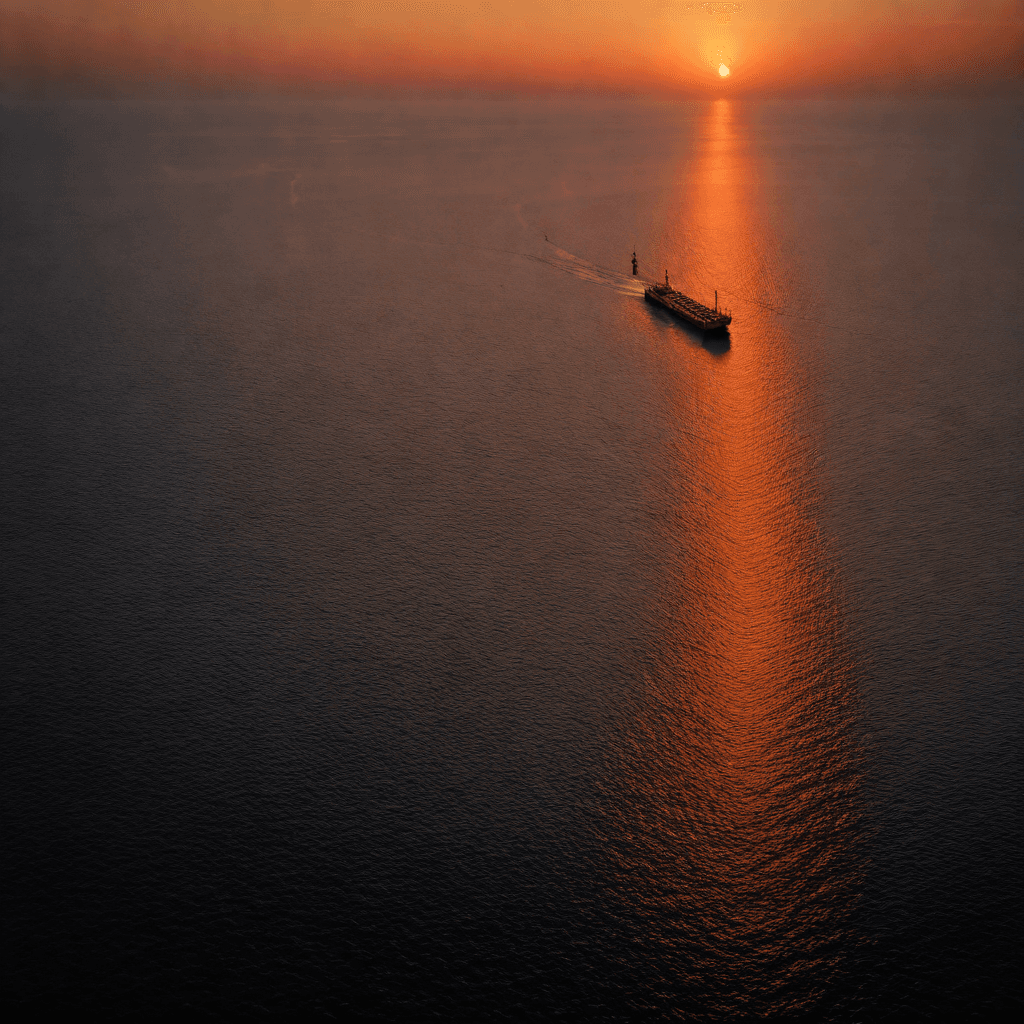
The Visual Heartbeat of Global Energy
Global trade relies on the narrow transit lanes of the Middle East. A recent BBC timelapse captures a jarring shift in energy shipments, diverging from historical norms. For decades, the flow of tankers through this region followed a predictable industrial cadence. Today, visual data shows erratic clusters of stationary vessels and sharp diversions—a breakdown in the traditional maritime order.
James Carter (a pseudonym), a Houston-based logistics coordinator, uses these patterns to predict domestic fuel costs. He views the timelapse as proof of eroding market stability. "The just-in-time delivery model for global energy is failing under the weight of regional conflict," Carter says. As the Trump administration prioritizes energy independence and deregulation, these logjams remind American consumers that distant chokepoints dictate local prices.
Mapping the 21-Mile Gateway
The Strait of Hormuz is the world's most critical oil chokepoint. Security is deteriorating in this 21-mile gateway as the Islamic Revolutionary Guard Corps (IRGC) asserts control. Reports from the Hindustan Times, backed by verified maritime footage of miles-long queues of stranded tankers, confirm this physical gridlock. This challenge to the principle of "freedom of navigation" strikes at the heart of global trade.
The strategic importance of this passage is magnified by Washington’s current focus on domestic manufacturing and isolationist trade. While Newsweek reports that US and Israeli actions have pressured regional leadership, Tehran retains a "nuclear option": the ability to paralyze traffic through the Strait. In an era of asymmetrical naval tactics, every mile of transit is now a calculated risk.
The Erosion of Predictability
Historical predictability has been replaced by volatility. Sky News reports that millions of barrels of oil are currently stuck in the Gulf as shipping companies divert vessels away from escalating danger. These delays ripple through global supply chains, undermining the US administration's promise to lower costs for citizens.
Sarah Miller (a pseudonym), a small business owner in Pennsylvania, sees the impact at the pump. Even minor disruptions in the Strait lead to sudden spikes in local diesel prices. These maritime "shadow zones" are real-time indicators of a shifting geopolitical landscape where past logistical certainties no longer apply.
Navigating the Shadow Zone
Many vessels now operate within a "shadow zone," intentionally disabling tracking systems to avoid detection. Sky News’ Data and Forensics team notes that these diversions add significant time and cost to journeys. While intended to prevent seizure or attack, "going dark" also facilitates the movement of sanctioned goods, complicating international maritime law.
This shift toward opacity marks a world where digital borders and physical safety walls are hardening. Kpler reports that container vessels are either trapped waiting or undergoing expensive rerouting to avoid the conflict zone. In this environment, transparency is increasingly sacrificed for survival.
The Insurance of Instability
The backups in the Gulf have immediate economic consequences: the "insurance of instability." Newsweek describes the threat of a closed oil route as President Trump’s "Achilles’ heel," as high gas prices historically drive economic slowdowns.
The cost of insuring a tanker through the Strait has skyrocketed, and these premiums function as an invisible tax passed directly to consumers. When the market prices in the worst-case scenario, it creates the inflationary pressure defining the early 2026 economy. For the American consumer, Middle East instability is a daily financial reality.
Redefining Maritime Sovereignty
The crisis is forcing a redefinition of maritime sovereignty. The US-led security umbrella is fracturing, and as Washington leans into isolationist rhetoric, regional actors are filling the vacuum. The era of uncontested American naval hegemony is yielding to a multipolar struggle for control over vital chokepoints.
Ultimately, the Strait of Hormuz serves as a laboratory for the 21st century’s geopolitical shift. Energy flow now depends on local powers and the resilience of private shipping firms. The "miles-long queue" is a monument to an era where the old rules of the sea are being rewritten by those who control the narrowest points of the map.
Sources & References
Timelapse shows change in the flow of ships in the Strait of Hormuz
BBC • Accessed Thu, 05 Mar 2026 12:38:53 GMT
Timelapse shows change in the flow of ships in the Strait of Hormuz
View Original*URL: bbc.com/.../AUZIYQGt5uwi...
google • Accessed 2026-03-05
用中文浏览国外社交媒体里的热门讨论,母语快速导读, 感兴趣再进原文深度阅读 该页面支持的版本: 有图模式 无图模式 该页面支持的语言: 简体中文 繁体中文 English 日本語 订阅地址: Atom/RSS Feed JSON Feed 社交媒体: Twitter @BuzzingCC Telegram @buzzingcc Twitter @Hacker News 中文精选 Twitter @国外新闻 Bot Twitter @问Reddit 加入 Telegram 讨论群 最后更新于: 2026-03-06T11:47:38.222+08:00 查看统计
View Original*URL: newsweek.com/.../AUZIYQEVG8d...
google • Accessed 2026-03-03
... By Matthew Tostevin Share Newsweek is a Trust Project member While U.S and Israeli attacks on Iran have decimated its leadership and degraded its arsenal, Tehran still retains a never-before-used nuclear option that could hurt American consumers and hit Donald Trump’s Achilles’ heel. It could close the Strait of Hormuz or otherwise disrupt traffic through the narrow waterway, driving up global oil prices and forcing Americans disgruntled over affordability to pay more for gas.
View Original*URL: sky.com/.../AUZIYQFk8Q5...
google • Accessed 2026-02-28
Analysis Analysis Ship tracking reveals tankers and millions of barrels of oil stuck in the Gulf The Iran conflict is disrupting a major maritime route as global shipping companies divert vessels away from danger in the Strait of Hormuz. By Laura Bundock, correspondent, and Kaitlin Tosh, digital investigations journalist Tuesday 3 March 2026 00:08, UK You need javascript enabled to view this content 2:53 Enable javascript to share Share Sky's Data and Forensics team has been monitoring shipping
View Original*URL: hindustantimes.com/.../AUZIYQHorN...
google • Accessed 2026-03-02
Strait of Hormuz: Viral video claims to show miles-long queue of stranded oil tankers, cargo ships Iran’s Islamic Revolutionary Guard Corps has claimed that they control the Strait of Hormuz. It is a vital shipping route for oil and gas. Published on: Mar 04, 2026 12:37 PM IST By Trisha Sengupta Share via Copy link A video has gone viral on social media purportedly showing oil tankers and cargo caught in the Strait of Hormuz backup in a miles-long queue.
View Original*URL: kpler.com/.../AUZIYQFq_oy...
google • Accessed 2026-03-03
Commodities Cargo Inventories Supply Demand Freight Insight Risk Compliance Refineries Chartering Power Kpler AI Arbitrage Financial Flows Maritime Ship Tracking Kpler AIS Data Services MarineTraffic Inbox Container Tracking March 5, 2026 Market Update Middle East conflict - gas market implications: a continuing assessment Read more Solutions Company About Learn how we're reimagining business-to-consumer relationships Lorem ipsum dolor sit amet, consectetur adipiscing elit.
View OriginalWhat do you think of this article?