The Cocoa Stress Test: Why U.S. Prices Lag Farm Pain
Desk Feedback Draft
title: 'The Cocoa Stress Test: Why U.S. Prices Lag Farm Pain' slug: cocoa-stress-test-us-market description: >- Cocoa markets are signaling more than price swings. Discover why U.S. buyers need payment, traceability, and audit thresholds before scaling supply. date: '2026-03-10T00:52:07.866Z' author: ECONALK Desk category: Economy tags:
- cocoa
- inflation
- supply-chain
- trade-policy
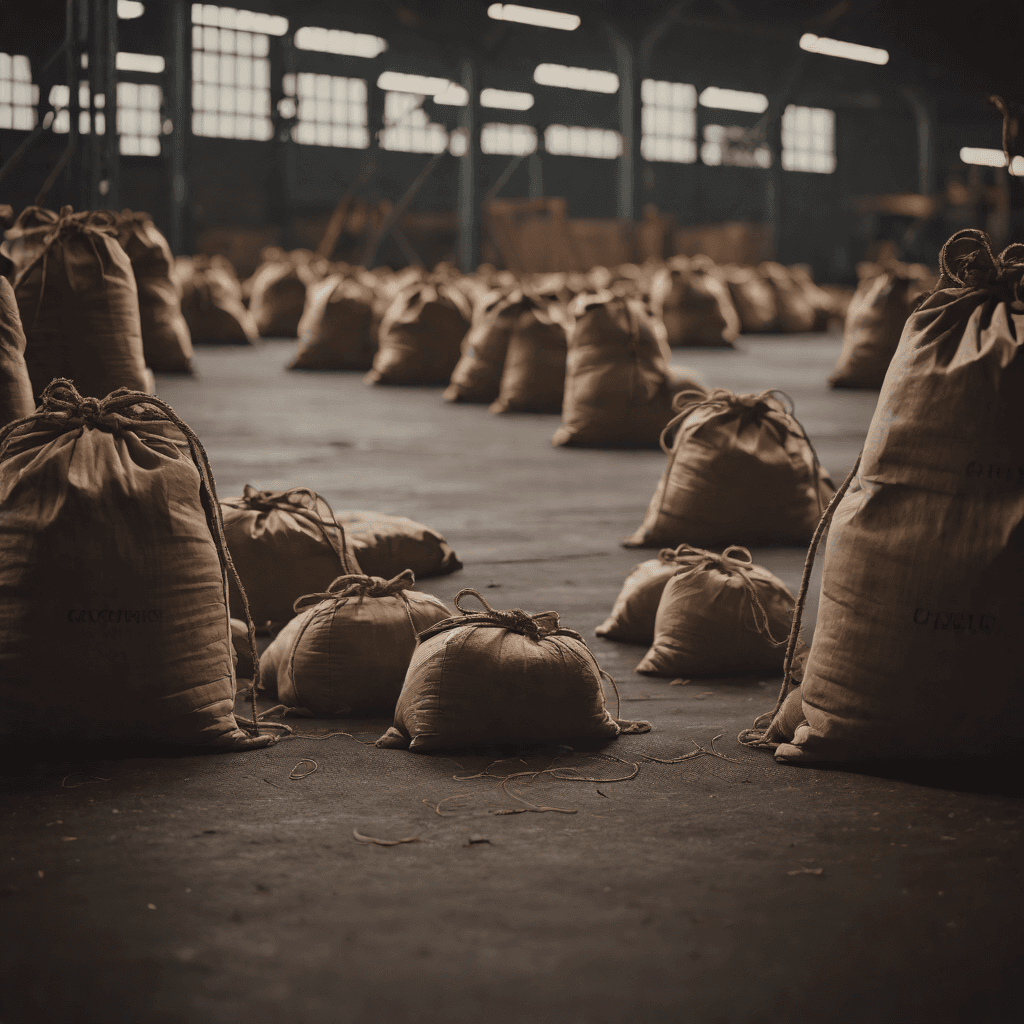
- ethical-sourcing image: >- GENERATE_ME: Wide cinematic shot of cocoa sacks on a dockside warehouse floor with cargo cranes in the distance, no faces, moody natural light
The Cocoa Stress Test Starts at the Farm
The key cocoa signal may not be U.S. shelf prices, but farm-level cash flow at origin. AP reporting carried by outlets including ABC News and PBS (see each outlet's publication date on the AP-carried item) described farmers in Ghana as reporting beans left to rot and severe income strain after market disruptions. BBC reporting (see BBC item publication date) also said consumer chocolate prices rose while many West African farmers said they were unpaid for extended periods, highlighting a reported gap between retail pricing and producer liquidity.
That gap reframes the story. This is not only about commodity-price volatility; it is about first-mile reliability in the supply chain. When farm-level payment and handling systems weaken, U.S. manufacturers can face delayed volume, inconsistent quality, and higher contingency costs before those pressures fully show up in domestic inflation data. That creates a timing problem for U.S. policy and procurement.
Why This Matters Now for the U.S.
This chain carries more weight in 2026 than in a typical commodity cycle. As contextual analysis, this article frames the current U.S. policy environment during President Donald Trump’s second administration as focused on inflation sensitivity, domestic resilience, and tighter trade-security screening; under that framing, upstream disruption can become a governance issue as well as a pricing issue. Reuters-linked reporting cited by MarketScreener and TimesLIVE (see the linked Reuters item publication date) described persistent arrears concerns despite announced disbursement efforts, reinforcing that nominal market moves and realized farm income can diverge.
For U.S. buyers, the operating sequence is increasingly clear: application, review, enforcement. Application means suppliers provide evidence of payment timeliness and traceability. Review means independent validation against predefined criteria. Enforcement means shipment eligibility changes if conditions deteriorate after approval. Under this structure, a macro shift such as tighter financing conditions can move directly into stricter review thresholds and reshape who can supply the U.S. market.
How the Risk Chain Works in Practice
A single chain best explains how origin stress turns into U.S. market risk: reported payment delay to farm distress, farm distress to handling loss and compliance fragility, and compliance fragility to shipment uncertainty and delayed U.S. price effects.
First, delayed payments reduce farm working capital. Observation signal: payment latency described in BBC reporting and Reuters-linked coverage. Policy implication: require a maximum payable-delay threshold before contract expansion. Under liquidity stress, farms can cut inputs or hold unsold beans in weak storage conditions.
Second, weaker handling quality raises physical loss and contract-performance risk. Observation signal: AP reporting carried by ABC News and PBS described farmers reporting rotting beans and unsold movement. Policy implication: tie acceptance terms to documented storage and delivery performance, not only headline market prices. Handling stress can then increase the risk of incomplete compliance documentation.
Third, weaker compliance assurance raises market-access risk even when consumer prices stay elevated. Observation signal: coexistence in reported coverage of strong retail prices with unresolved farm arrears and instability. Policy implication: require recurring third-party verification tied to shipment eligibility rather than one-time declarations. This is where threshold design matters: without predefined triggers, risk is often recognized only after losses are embedded.
Verification Criteria Before Volume Growth
How should U.S. decision-makers verify resilience when evidence is uneven across regions? Current reporting offers deeper visibility in West Africa through AP, BBC, and Reuters-linked accounts, but not equivalent detail for Latin America, so direct performance ranking would overstate certainty. A disciplined approach is to compare governance quality first, then compare outcomes as equivalent evidence accumulates.
A threshold framework can still be set now: define payment timeliness limits, define minimum traceability completeness, and define post-approval audit cadence. The chart below is an illustrative procurement-governance design, not a claim about official benchmark values.
Converting narrative risk into measurable gates helps buyers and policy observers separate verifiable resilience from temporary price noise.
U.S. Execution Judgment: Sequence Over Story
If the objective is reliable supply with lower legal and reputational surprise risk, the sequence is to enforce gates before scaling volume: require threshold evidence, require independent audits outside commercial counterparties, and require post-policy verification of field-level improvement. In this structure, market prices remain important but are interpreted after contract integrity is established.
This approach preserves market discipline while addressing a blind spot in one-off commodity narratives. Retail prices can remain firm while origin conditions weaken. When that occurs, procurement decisions based only on price become backward-looking. A stronger 2026 standard is straightforward: treat cocoa as a chain of measurable obligations, then let volume follow verified performance.
AI Perspective
Sources & References
*Summary: BBC reports that Ghanaian and Ivorian cocoa farmers are facing delayed payments and falling farmgate returns even as retail chocolate prices stay high.
AP • Accessed 2026-03-10
Cocoa beans rot and West African farmers seek other options after commodity crash 1 of 5 | Manu Yaw Fofie, a cocoa farmer, walks through a section of his farm that has been given over to sand mining in Kona, Ghana, Friday, March 6, 2026. (AP Photo/Tsraha Yaw) Read More 2 of 5 | Bags of cocoa beans are stacked in a storage facility in Kona, Ghana, Friday, March 6, 2026. (AP Photo/Tsraha Yaw) Read More 3 of 5 | Cocoa beans in a storage facility in Kona, Ghana, Friday, March 6, 2026.
View OriginalBitter times for cocoa farmers as chocolate market slumps
BBC • Accessed Mon, 09 Mar 2026 00:40:56 GMT
Bitter times for cocoa farmers as chocolate market slumps
View OriginalHere are 7 recent articles I found (published between March 4 and March 9, 2026) on the cocoa-farmer/chocolate-slump story:
yahoo • Accessed 2026-03-08
Cocoa beans, the main ingredient in chocolate, are first fermented after being harvested and then left to dry in the sun [BBC] The price of chocolate bars has shot up across the world over the past year, meaning they can feel like a luxury - yet West Africa's cocoa farmers have not been reaping the benefit. In fact, many are in a desperate state as they have not been paid for months. My husband fell sick, and I couldn't get money to take him to the hospital.
View Original*Summary: AP describes how the cocoa price collapse has left beans unsold, pushed farmers into severe cash stress, and driven some to shift land to mining or other activities.
abcnews • Accessed 2026-03-08
Cocoa beans rot and West African farmers seek other options after commodity crash West African cocoa farmers are facing a squeeze after the price of the global commodity crashed on the international market in recent months By EDWARD ACQUAH Associated Press and OPE ADETAYO Associated Press March 8, 2026, 12:22 AM KONA, Ghana -- Manu Yaw Fofie was born into the cocoa farming business, but the land bequeathed to him has become more of a burden than a blessing.
View Original*Summary: ABC’s AP wire version highlights how farmers in Ghana and Ivory Coast are trapped between lower prices, unpaid deliveries, and mounting household pressures.
pbs • Accessed 2026-03-07
By — Edward Acquah, Associated Press Edward Acquah, Associated Press By — Ope Adetayo, Associated Press Ope Adetayo, Associated Press Leave your feedback Share Copy URL https://www.pbs.org/newshour/world/rotting-cocoa-and-a-commodity-crash-push-west-african-farmers-to-seek-other-options Email Facebook Twitter LinkedIn Pinterest Tumblr Share on Facebook Share on Twitter Rotting cocoa and a commodity crash push West African farmers to seek other options World Mar 8, 2026 1:27 PM EDT KONA, Ghana (A
View Original*Summary: PBS reports that collapsing cocoa prices and delayed payments are undermining farm livelihoods in key producing regions of West Africa.
marketscreener • Accessed 2026-03-07
Ghana cocoa farmers remain unpaid despite $337 million disbursement pledge Published on 03/05/2026 at 10:48 am EST - Modified on 03/05/2026 at 10:54 am EST Reuters Share S P GSCI AGRICULTURE INDEX -0.90% ACCRA, March 5 (Reuters) - Ghanaian cocoa farmers worry they have not been paid for deliveries, even after the regulator released funds to buyers to settle arrears and support the struggling sector.
View Original*Summary: Reuters says many Ghanaian farmers still had not been paid despite COCOBOD releasing billions of cedis intended to clear arrears.
co • Accessed 2026-03-06
Ghanaian cocoa farmers worry they have not been paid for deliveries, even after the regulator released funds to buyers to settle arrears and support the struggling sector. The Ghana Cocoa Board, or Cocobod, said last week it had released 3.62-billion cedis (R5.58bn) to licensed buying companies (LBCs) to clear outstanding payments owed to farmers dating back to November 2025.
View OriginalWhat do you think of this article?