The Nuclear Governance Test: Why the Kashiwazaki-Kariwa Restart Matters Beyond Japan
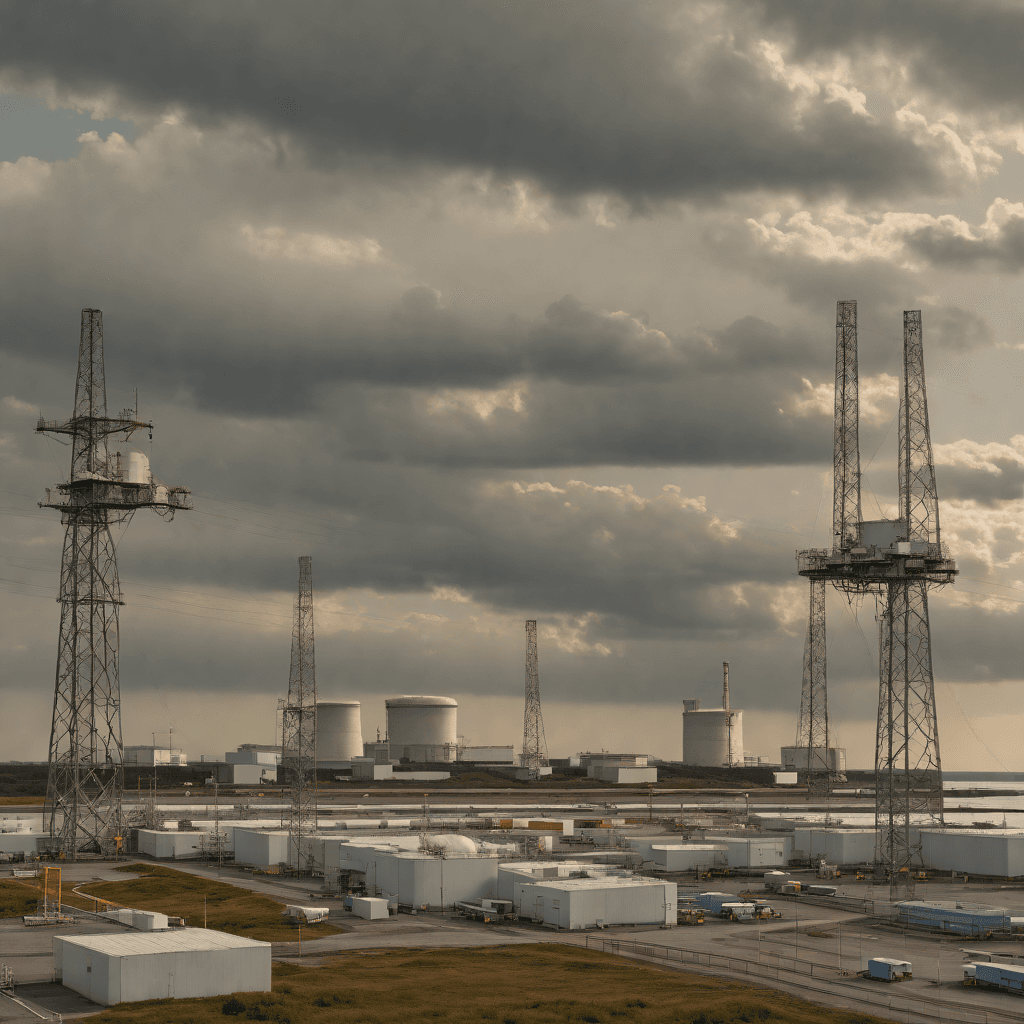
A Restart Decision in Fukushima’s Long Aftermath
Fifteen years after the March 2011 Fukushima disaster, the Kashiwazaki-Kariwa restart debate is now as much a governance test as a technology test. The core policy question is no longer only whether reactors can operate, but whether safety authority, operator conduct, and public legitimacy can advance in step.
In Yonhap’s March 2026 anniversary reporting, many respondents in Japan were described as skeptical that Fukushima’s decommissioning plan will be completed as announced. Yonhap also reported that many respondents questioned whether the government and Tokyo Electric Power Company can deliver on long-horizon commitments. As a result, each restart decision is judged not only on engineering readiness but also on institutional credibility.
Why This Is Also a Global Energy-Security Story
Because unresolved domestic trust now shapes national energy choices, the restart debate connects directly to a broader security challenge: how to stabilize power systems during external shocks without creating new internal legitimacy risks. Japan’s need for reliable electricity and its exposure to global fuel volatility are moving on the same timeline, and policy must address both.
That linkage matters for US readers. If planners cannot publicly align generation targets with fuel-price exposure and emergency confidence, political resistance itself becomes a grid-reliability variable. In that sense, capacity expansion and security gains are not automatic equivalents; they converge only when governance is demonstrably credible.
Inside the Safety Gate: Compliance and Confidence
As the debate moves from national strategy to implementation, the practical bottleneck is whether formal compliance can convert into social trust under stress. Post-Fukushima safety frameworks are designed to raise technical thresholds, but Yonhap’s March 2026 reporting suggests public doubt is often directed at stewardship quality as much as hardware standards.
International scrutiny adds another layer. Newssis, citing Xinhua coverage of discussion at the International Atomic Energy Agency board, reported criticism from China’s representative calling for tighter long-term oversight of Japan’s nuclear safety management. Governments interpret that intervention differently, but the policy effect is concrete: external criticism can widen domestic confidence gaps unless emergency readiness and accountability are visibly auditable. That diplomatic criticism is presented here as a geopolitical position, not as independent proof of safety-rule noncompliance.
Measuring the Trade-Off Without Precision Theater
Because trust deficits now influence operational outcomes, risk assessment needs to move beyond single-output targets toward a multi-metric framework that includes reliability, emergency readiness, and political durability. Available reporting supports one clear baseline: confidence in long-term institutional follow-through remains fragile.
The source set here does not provide a complete restart-versus-alternatives cost series, so a defensible approach is to state uncertainty early rather than mask it with false precision. That is especially important when fuel-price pass-through to households is a live policy concern, because weak measurement can distort price signals and erode support for necessary reforms.
The dashboard below is an illustrative analytic device for scenario discussion. Its index values are non-empirical placeholders created for this framework and should not be read as official or source-measured statistics.
The Niigata Constraint: Local Consent as Hard Infrastructure
Once analysis expands beyond megawatts, the next causal step is clear: local consent becomes a system constraint, not a communications issue. A reactor can be technically ready and still remain politically non-operational if evacuation credibility, municipal trust, and prefectural legitimacy are not sustained.
That is why the Niigata question carries national consequences. If communities interpret new safety claims through unresolved Fukushima experience, national planning timelines can be delayed or reshaped at the local level, much like delays from permitting or transmission bottlenecks.
The Real Tail Risk: Confidence Shock
When policy shifts from routine operations to extreme scenarios, governance risk and system risk converge. A low-probability event, a legal challenge, or a contested oversight decision can trigger a confidence shock that erases years of gradual trust-building.
In this source set, Yonhap’s reported trust signal around Fukushima and Newssis’s account of intensified international scrutiny are presented as indicators of potential legitimacy volatility. They are not, on their own, verification of new safety-rule breaches or institutional misconduct. In practical terms, investors and planners should treat reputational volatility as an operating risk, not a public-relations side issue.
What US Decision-Makers Can Use
As this analysis moves from Japan-specific dynamics to US policy design, the causal bridge is straightforward: global energy volatility increases pressure for domestic generation expansion, and that pressure remains durable only if price impacts are buffered and institutional signals stay credible. In Washington, where President Donald Trump’s second-term administration has emphasized energy dominance and deregulation, that sequencing challenge becomes sharper, not smaller.
The transferable lesson is sequencing discipline. Expansion targets should be tied to independently auditable safety readiness, locally credible emergency governance, and transparent accountability for operators and regulators. Binary framing also fails in practice: communities may accept energy-security goals while still disputing institutional delivery capacity. Durable policy depends on closing that gap with evidence the public can verify.
Sources & References
요약: 후쿠시마 사고 15주년을 앞두고 일본의 ‘원전 최대 활용’ 기조와 가시와자키·가리와 6호기 상업운전 준비를 시민사회 반발, 안전 논란, 정책 전환 맥락에서 짚은 기사입니다.
연합뉴스 • Accessed 2026-03-09
박상현 기자 日정부·도쿄전력 대응 부정 평가는 56%…동일본 대지진 지역 노동력 감소 심각 이미지 확대 일본 후쿠시마 제1원자력발전소 [로이터 연합뉴스 자료사진. 재판매 및 DB 금지] (도쿄=연합뉴스) 박상현 특파원 = 동일본 대지진과 후쿠시마 제1원자력발전소 사고가 15년을 맞이한 가운데 일본인 10명 중 6명꼴로 사고 원전의 2051년 폐기 목표 달성이 어려울 것이라고 판단한다는 조사 결과가 나왔다. 도쿄신문은 일본여론조사회가 올해 1∼3월 1천902명을 대상으로 실시한 우편 설문조사에서 일본 정부와 도쿄전력의 2051년 이전 사고 원전 폐기 계획에 대해 60%가 '계획대로 할 수 있다고 생각하지 않는다'고 답했다고 8일 전했다. 정부와 도쿄전력이 공언한 대로 2051년 전에 사고 원전이 폐기될 것이라고 생각한다는 견해는 7%에 불과했다. 나머지 응답자는 '모르겠다' 등의 의견을 나타냈다.
View Original요약: 후쿠시마 사고 15년 시점 여론조사에서 일본인 다수가 폐로 목표 달성 가능성에 회의적이라는 결과를 전하며, 사고 후속 처리의 장기 난제를 부각했습니다.
연합뉴스 • Accessed 2026-03-09
쌀·피망, 공급부족에 가격 회복…복숭아·와규 등 고급품은 찬밥 (서울=연합뉴스) 최이락 기자 = 오는 11일로 동일본대지진 및 후쿠시마 원전 사고 15년이 되지만 후쿠시마현산 농산물은 여전히 가격 차별을 받는 것으로 나타났다. 5일 니혼게이자이신문에 따르면 최근 일본 내 전반적인 공급 부족으로 후쿠시마산 쌀과 채소 가격은 표면적으로 상승세를 보이고 있다. 그러나 복숭아와 와규(쇠고기) 등 고급 농산물은 여전히 전국 평균보다 낮은 가격에 머물러 있다. 이미지 확대 후쿠시마 제1원전 3호기 폭발 [연합뉴스 자료사진. 재판매 및 DB 금지] 농림수산성에 따르면 2025년산 후쿠시마 고시히카리 쌀의 평균 거래 가격은 60㎏당 3만7천49엔(약 34만5천원)으로 전국 평균보다 2% 높게 형성됐다. 원전 사고 직후인 2014년 전국 평균 대비 18%나 저렴했던 것과 비교하면 수치상으로는 크게 개선됐지만 이는 소비자의 인식 개선보다는 전국적인 쌀 부족 사태로 인한 것으로 받아들여진다.
View Originalnate
nate • Accessed 2026-03-09
�������� ���� ���� ���� ������ι�, ���� ��... ������ �� �˾ҳ� ����... ��� �� �Ʒá�'���� 20��... ���� 1 /1 ����
View Original요약: 후쿠시마 사고 15주년을 계기로 IAEA 회의에서 제기된 일본 원전 안전관리 비판을 전하며, 사고 평가와 국제감독 이슈를 다뤘습니다.
뉴시스 • Accessed 2026-03-04
중국 대표, IAEA에 日 엄격 감독 촉구 [빈=신화/뉴시스] 중국 정부가 후쿠시마 원전 사고 15주년을 맞아 일본의 원전 안전 관리 체계를 강하게 비판하며 국제원자력기구(IAEA)의 장기적 감독 강화를 촉구했다. IAEA 상주대표인 리쑹 대사의 자료사진. 2026.03.04 [서울=뉴시스] 문예성 기자 = 중국 정부가 후쿠시마 원전 사고 15주년을 맞아 일본의 원전 안전 관리 체계를 강하게 비판하며 국제원자력기구(IAEA)의 장기적 감독 강화를 촉구했다. 4일 중국 신화통신 등에 따르면 중국의 IAEA 상주대표인 리쑹 대사는 최근 열린 IAEA 3월 이사회에서 "2011년 후쿠시마 제1원전 사고는 겉으로는 자연재해로 보이지만 실제로는 인재(人災)"라고 주장했다.
View OriginalWhat do you think of this article?