The Maritime Readiness Gap: Why HMS Dragon’s Deployment Matters
A Destroyer Move That Exposes a System Test
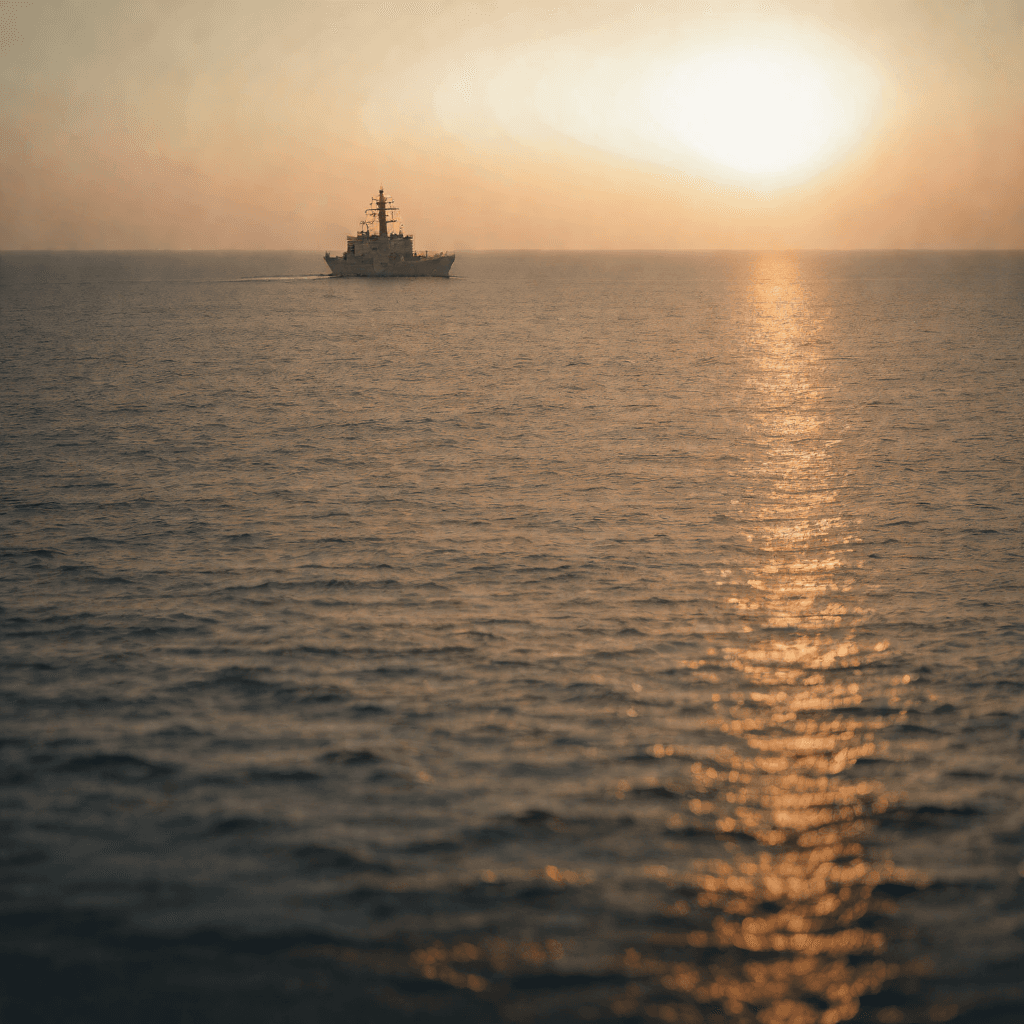
HMS Dragon’s deployment to the eastern Mediterranean is more than a single-ship movement; it is a stress test of allied maritime risk management. BBC and The Guardian reported that the UK sent the destroyer to reinforce protection around Cyprus after drones targeted RAF Akrotiri, while Sky reported that London paired the mission with anti-drone helicopter support.
The core issue is mission density under time pressure. One platform is carrying force protection, deterrence signaling, and alliance reassurance at once, and The Guardian reported that maintenance, re-arming, and crew mobilization affected the timeline. Sky’s reporting on public scrutiny over speed indicates that deployment timing is now a security variable, not just a logistics detail.
This leads to the next decision frame: if delays appear before a ship sails, allies and markets reassess whether declared commitments can be converted into positioned capability at crisis speed.
1) What Caused This Deployment Now?
This section shifts from event description to causation: why this move, in this sequence, at this moment. The Guardian reported that the immediate trigger was force protection around RAF Akrotiri after the drone incident, and Sky reported public confirmation of both the destroyer and the anti-drone aviation element.
The structure is operational rather than rhetorical. London appears to be sequencing defense under constrained conditions: secure a vulnerable node first, then expand maritime coverage. As summarized in the source set, Financial Times and Independent reporting tied Dragon’s timeline to wider fleet-readiness pressure, suggesting this eastward rebalance is being executed from limited available capacity.
The economic implication follows from that structure. When constrained readiness sets the pace, delays in domestic preparation can push out allied operating timelines and alter market expectations for route security and crisis response. Event: a drone-triggered reinforcement cycle begins. Mechanism: readiness frictions delay asset positioning. Verification item: whether later rotations shorten deployment lead time.
2) Why Could The Pressure Persist?
This section tests persistence: whether today’s strain is temporary noise or a durable operating condition. From Washington’s perspective, Dragon is both a burden-sharing signal and a command-and-control test, because deterrence depends on shaping adversary choices before attack windows close.
The debate in US policy circles has two defensible views. One is that the UK accepted maritime risk and moved a high-end platform toward an active threat environment, as reflected in BBC and Sky reporting. The other is that delay narratives reported by The Guardian, Sky, FT, and Independent raise concerns about alliance slack if multiple theaters require reinforcement at once.
This is where domestic process and international expectations connect most clearly. If mobilization delays persist in one allied navy, implementation timelines for joint patrol coverage, defense-industrial replenishment, and insurance risk modeling can all shift on similar clocks. In the current US context under President Donald Trump’s second administration, pressure for visible allied burden-sharing can intensify that timeline sensitivity rather than reduce it.
That persistence question leads to the next framework: once operational stress lasts long enough, legal responsibility and market pricing move from background assumptions to primary risk variables.
3) What Would Signal A Reversal?
In contrast to the persistence lens, the focus here is reversal signals: what evidence would show that risk is stabilizing rather than compounding. The first signal is operational: faster, repeatable deployment cycles that reduce the gap between political decision and on-station capability. The second is legal-procedural: clearer authority mapping for interception, identification, and post-incident accountability in coalition operations.
Sky’s reporting on anti-drone and missile-defense posture highlights how quickly tactical decisions can escalate legal stakes. The Guardian and FT reporting on readiness strain, as summarized in the source set, suggests that when capacity is tight, authority lines between national command, coalition coordination, and platform-level execution can become contested after incidents.
The market channel is the final reversal test. Naval risk affects freight and insurance behavior first, then can filter into energy and goods pricing expectations. This is not a claim of automatic US inflation transmission, but it is a credible pathway by which regional maritime stress can influence US household costs over time if disruption risk remains elevated.
A Single Public-Interest Standard
The larger story is not whether one deployment occurred, but whether allied coordination and accountability structures are keeping pace with operational reality. Across reporting by The Guardian, BBC, Sky, Financial Times, and Independent, the UK model appears to be action first under visible constraint: deploy, reinforce, then explain timing under scrutiny.
For US readers, the public-interest benchmark is practical and measurable: who validates targeting inputs, who audits contested outcomes, and who communicates legal responsibility when allies share tactical pictures but not identical legal frameworks. If those answers become clearer while deployment timelines shorten, deterrence credibility rises; if not, maritime risk remains both a security and economic multiplier.
AI Perspective
Sources & References
Summary: ITV reports HMS Dragon has now left Portsmouth for the eastern Mediterranean to help protect RAF Akrotiri after the drone strike in Cyprus.
The Guardian • Accessed 2026-03-10
Headline: **The HMS Dragon row: why has it taken so long to get a UK destroyer to Cyprus?**
View OriginalSummary: The Guardian examines why Dragon’s sailing was delayed, detailing maintenance, re-arming, crew mobilization, and political criticism over readiness.
The Guardian • Accessed 2026-03-10
Equipment is loaded on to HMS Dragon, a Royal Navy destroyer on Monday, in preparation for it sailing to the eastern Mediterranean. Photograph: Neil Hall/EPA View image in fullscreen Equipment is loaded on to HMS Dragon, a Royal Navy destroyer on Monday, in preparation for it sailing to the eastern Mediterranean.
View OriginalSummary: The FT reports the UK decision to send HMS Dragon and Wildcat helicopters as part of emergency force protection around Cyprus.
The Guardian • Accessed 2026-03-10
HMS Dragon pictured on a previous patrol of the Middle East. Photograph: Dave Jenkins/MoD View image in fullscreen HMS Dragon pictured on a previous patrol of the Middle East. Photograph: Dave Jenkins/MoD UK sends Royal Navy destroyer HMS Dragon to Cyprus Keir Starmer says vessel, which will arrive in about a week, will help defend bases on island after RAF Akrotiri was targeted by drones A Royal Navy destroyer is expected in Cyprus next week after Keir Starmer announced it would be sent to defe
View OriginalUK warship HMS Dragon departs for eastern Mediterranean
BBC • Accessed Tue, 10 Mar 2026 17:37:29 GMT
UK warship HMS Dragon departs for eastern Mediterranean
View OriginalSummary: Defence Secretary John Healey said Dragon would sail imminently as pressure grew over the UK’s pace in reinforcing Cyprus defenses.
sky • Accessed 2026-03-10
UK will deploy HMS Dragon in Cyprus, Sir Keir Starmer confirms It comes after RAF Akrotiri in Cyprus was hit by a drone. The Type 45 destroyer, which can shoot down ballistic missiles, will take between five and seven days to get to the region. Wednesday 4 March 2026 03:10, UK You need javascript enabled to view this content 0:51 Enable javascript to share Share The warship is a Type 45 destroyer - the only piece of equipment in the British arsenal with the ability to shoot down ballistic missil
View OriginalSummary: Sky News says Starmer confirmed deployment of HMS Dragon and anti-drone helicopters after the attack on RAF Akrotiri.
sky • Accessed 2026-03-10
Podcast Podcast Why is HMS Dragon taking so long to get to Cyprus? Friday 6 March 2026 16:37, UK --> Spotify This content is provided by Spotify , which may be using cookies and other technologies. To show you this content, we need your permission to use cookies. You can use the buttons below to amend your preferences to enable Spotify cookies or to allow those cookies just once. You can change your settings at any time via the Privacy Options .
View OriginalSummary: Sky’s analysis/podcast explores why a capable Type 45 took longer than expected to deploy, focusing on navy readiness and operational constraints.
co • Accessed 2026-03-10
‘We should have seen this coming’: Why a Royal Navy ship still hasn’t reached Cyprus after Iran strike
View OriginalSummary: The Independent reports on delays to Dragon’s departure and links them to logistics, contracting issues, and wider Royal Navy strain.
Financial Times • Accessed 2026-03-10
Iran crisis shines spotlight on ‘threadbare’ Royal Navy Subscribe to unlock this article Try unlimited access Only $1 for 4 weeks Then $75 per month. Complete digital access to quality FT journalism on any device. Cancel anytime during your trial. Keep reading for $1 What’s included Global news analysis Expert opinion FT App on Android iOS First FT: the day’s biggest stories 20+ curated newsletters Follow topics set alerts with myFT FT Videos Podcasts 10 additional monthly gift articles to share
View OriginalSummary: The FT argues Dragon’s delayed movement exposed deeper concerns about fleet availability and long-term UK naval underinvestment.
Financial Times • Accessed 2026-03-10
UK to deploy a warship and counter-drone helicopters to Cyprus Subscribe to unlock this article Try unlimited access Only ₩1000 for 4 weeks Then ₩79999 per month. Complete digital access to quality FT journalism on any device. Cancel anytime during your trial.
View OriginalWhat do you think of this article?