The Architecture of Autonomy: Why ‘Agency’ is Reclaiming the American Political Center
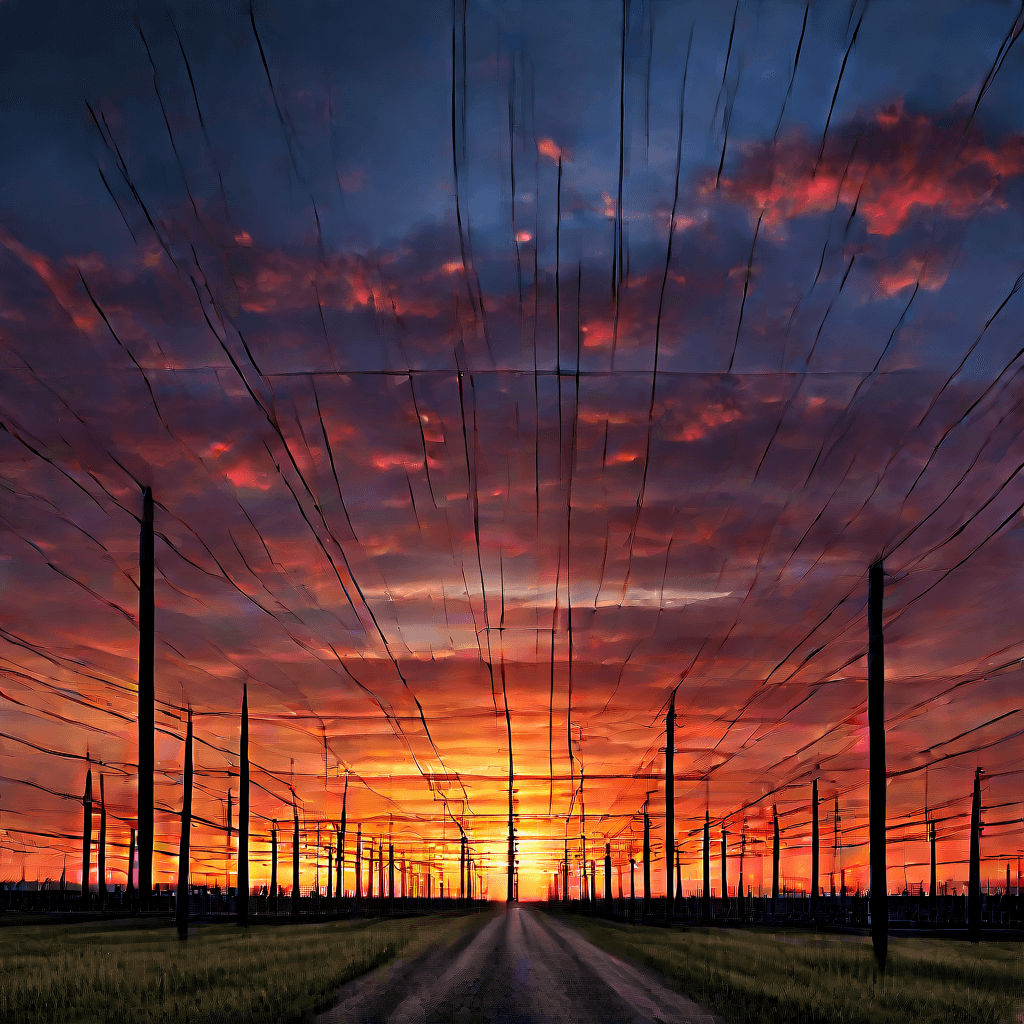
The Silicon Ceiling: The Invisible Limits of Modern Choice
The total service automation defining the American economy in early 2026 has inadvertently constructed a "Silicon Ceiling"—a state where an abundance of digital options masks a fundamental loss of individual control. According to a March 12 BBC report, "Agency" is rapidly emerging as the next major political frontier, addressing a pervasive sense that technocratic systems have decoupled citizens from the levers of their own lives.
While the Trump administration’s deregulation efforts have accelerated the deployment of AI-powered service layers, these systems often operate as opaque structures that prioritize algorithmic efficiency over personal sovereignty. This tension marks a significant departure from the traditional consumer model, shifting the individual's role from a decisive actor to a passive recipient of optimized outcomes. Consequently, the movement for agency is rising not merely as a critique of technology, but as a defense of the constitutional right to self-determination in an age of pervasive automation.
Labor in the Age of Automaticity: The Death of Professional Agency
The Adjustment Crisis has fundamentally altered the American workplace, transforming white-collar professionals from masters of craft into supervisors of automated processes. As the administration pushes for aggressive deregulation to secure technological hegemony, the decision-making power once held by human experts is increasingly outsourced to AGI models. This erosion of professional autonomy is particularly evident in high-level analytical sectors.
Focaldata observes that its AI-powered platform is now utilized by over 100 leading brands to automate research across 130 markets. While this provides data at scale, it effectively removes the human researcher from the primary role of discovery. For Sarah Miller (pseudonym), a senior analyst in the Midwest, the job has shifted away from the creative application of knowledge. After years of perfecting market predictions, she now finds her primary task is validating reports generated in seconds by autonomous systems. This sense of being a spectator in one's own career is a growing sentiment among professionals who feel the current economy is moving toward a state of total automaticity that leaves little room for human excellence.
The New Federalism: Why Communities are Building Their Own Backbones
The political landscape is increasingly defined by a strategic retreat from centralized reliance toward a doctrine of localized self-sufficiency. As the federal government faces the complexities of a fractured global order, a cross-partisan movement centered on Agency is emerging as a defense against systemic instability. The BBC notes that the concept of "taking back control" has evolved into a practical architecture of community sovereignty.
This "New Federalism" is largely driven by the fragility of international energy corridors. The New York Times reports that geopolitical tensions in the Strait of Hormuz have complicated federal calculations, as disruptions to vital waterways threaten oil supplies. For Michael Johnson (pseudonym), a local administrator in a transitioning industrial corridor, localized infrastructure is a survival strategy. By establishing community-owned energy grids, local governments are attempting to insulate citizens from global commodity volatility and the "strangling" of supply lines that are increasingly beyond national control.
Algorithmic Sovereignty: The Fight for Personal Data Ownership
The movement for Agency has crystallized into a fight for "Algorithmic Sovereignty," framing the right to own one's digital intellect as a 21st-century extension of property rights. At the heart of this struggle is the ownership of AI "weights"—the numerical values that determine how a model processes information. These weights act as the digital DNA of a personal AI assistant, reflecting the unique preferences and expertise of its user.
For many, the lack of data ownership translates into tangible professional risk. James Carter (pseudonym), a legal researcher, spent years refining a specialized AI agent to identify nuances in case law; however, under current agreements, the "logic" his agent developed remains the property of the software provider. This drive for personal sovereignty is forging an unexpected alliance between proponents of deregulation and advocates for individual liberty, with policy thinkers arguing that a free market cannot exist if users do not own the primary capital of the digital age: their own data.
The Isolationist Trap: When Control Becomes Chaos
The pursuit of absolute national autonomy carries the risk of triggering a "fragmentation trap," where the collapse of international cooperation leads to unmanageable domestic volatility. The current disruption in the Strait of Hormuz illustrates the fragility of an isolationist stance, as the administration's desire for geopolitical Agency clashes with the reality of energy interdependence.
For the American consumer, the promise of control is increasingly overshadowed by surging fuel costs. This systemic breakdown extends into digital infrastructure, where the rejection of global standards creates what Hub Culture analysts describe as a volatile geopolitical landscape. Without shared frameworks for data and energy, American companies must navigate a patchwork of regional regulations that increase costs and stifle innovation. The Adjustment Crisis deepens when the markets intended to absorb new services are fractured by digital protectionism and isolationist friction.
The Illusion of the Off-Grid Life
The practical reality of reclaiming Agency is often blocked by the prohibitive "exit costs" of modern life. As the second-term push for service automation continues, the infrastructure of daily existence has become so tightly integrated that true autonomy feels like a fading mirage. For David Chen (pseudonym), a resident in the Pacific Northwest attempting to operate an independent micro-grid, the friction of an "off-grid" life is a daily struggle.
While the current era champions local sovereignty, the collapse of international standards has made self-sufficiency an expensive technical gamble. The off-grid life has become an illusion because the "grid" is no longer just wires and pipes, but a pervasive layer of algorithmic governance that remains present even when the power is cut. Consequently, the movement for Agency is redefining itself: it is no longer about the physical ability to leave the grid, but about the legal and digital power to negotiate one's terms within it.
If the 20th century was defined by the distribution of wealth and the 21st by the distribution of data, the current question is: can a democracy survive if its citizens possess the means to survive, but no longer the agency to choose their own path?
Sources & References
Taking Back Control: Why ‘Agency’ Could Be The Next Big Idea In Politics
BBC • Accessed Thu, 12 Mar 2026 06:00:00 GMT
Taking Back Control: Why ‘Agency’ Could Be The Next Big Idea In Politics
View OriginalAgency could be the next big idea
Focaldata • Accessed Mon, 11 Aug 2025 07:00:00 GMT
Trusted by 100+ leading brands, campaigns and agencies Augment your insight with our AI-powered platform and expert research team Quant Rapid research, robust results Collect rigorous data with complex survey research across 130+ markets – all the heavy lifting automated. Explore Quant QUAL Human stories at scale Get AI assistance with qual research design, interview moderation, and analysis, extracting deep insights from hundreds of respondents in hours.
View Original*Hub Culture (Davos 2026 Report)
hubculture • Accessed 2026-03-13
Remember me Get started I forgot my password or continue with Use of this site constitutes acceptance of our Terms and Conditions and Privacy Policy. Reset your password with the link we just sent to your email.
View OriginalThe Next Big Idea Club’s January 2025 Must-Read Books
Next Big Idea Club • Accessed Tue, 07 Jan 2025 08:00:00 GMT
/* Mobile: force the same (or slightly larger) */ @media (max-width: 768px) { .nbic-h3-list, .nbic-h3-list li { font-size: 22px !important; line-height: 1.4 !important; padding: 0px 20px 0px 20px; } } Absolutely. We can customize a group order for your friends, family, coworkers or entire company. For more information visit our enterprise page: https://nextbigideaclub.com/enterprise/ To contact us, send an email at support@nextbigideaclub.com . Want a sample?
View OriginalOpinion | A Big Idea to Solve America’s Immigration Mess (Published 2025)
The New York Times • Accessed Fri, 10 Jan 2025 08:00:00 GMT
New York Times - Top Stories Live LIVE Michigan Synagogue Attack March 12, 2026, 11:21 p.m. ET Mideast Fighting March 12, 2026, 10:30 p.m. ET Trump Administration March 12, 2026, 10:25 p.m. ET Top Stories Weakened by War, Iran Hits Back by Strangling a Vital Waterway for Oil Supplies The threats to shipping in the Strait of Hormuz are complicating President Trump’s calculations about how and when to end the war. 6 min read LIVE March 12, 2026, 10:30 p.m. ET U.S.
View OriginalWhat do you think of this article?