Alpine Collapse: How Austrian Glacial Decay Destabilizes the 2026 Order
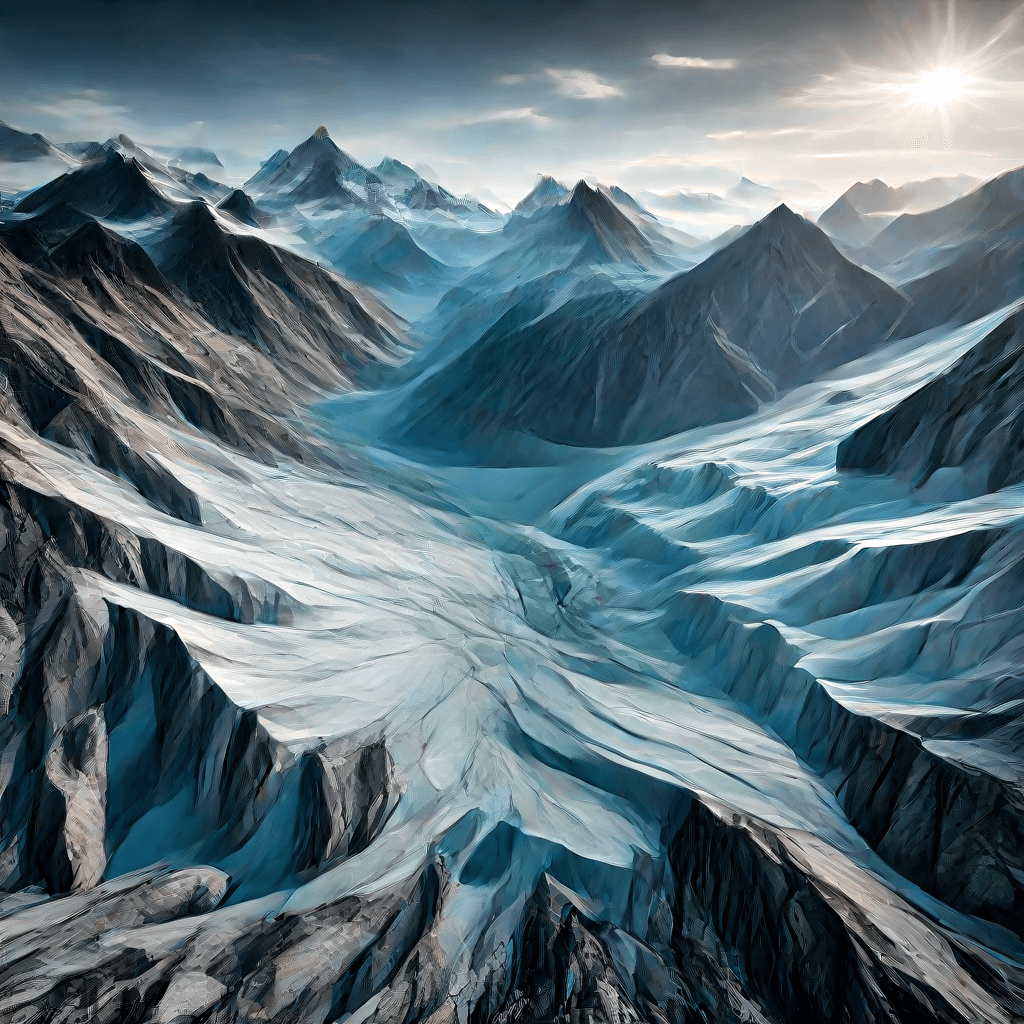
Title: Alpine Collapse: How Austrian Glacial Decay Destabilizes the 2026 Order
Beyond the Postcard: The Accelerating Collapse of the Pasterze
The Alpine landscape of 2026 has moved beyond simple retreat into a phase of structural disintegration that threatens the foundations of European water security. Data from the Austrian Alpine Club, released in mid-March 2026, marks a somber milestone: of the 96 glaciers monitored across the Austrian Alps, a staggering 94 have shown significant shrinkage, according to reports from the Independent. This transition from steady decline to what researchers now describe as "structural decay" suggests the high Alpine environment is losing its physical integrity.
The average retreat in the most recent monitoring cycle reached 20.3 meters, as detailed in an official press release cited by Snowbrains. For field observers and mountain guides who have navigated these peaks for over a decade, the statistics are visible to the naked eye. They report that the ice is no longer merely thinning at the edges but is physically collapsing from within, exposing unstable rock ledges and creating hazardous conditions for both recreation and research.
This "structural disintegration"—a term highlighted by Asharq Al-Awsat—is characterized by glaciologists as a critical threshold where glaciers lack the resilience to maintain their own weight against the rising thermal gradients of early 2026. The collapse of these frozen reservoirs represents the loss of a natural buffer that has stabilized regional climate and hydrology for millennia.
The 2026 Temperature Gradient and the Shift in Climate Policy
The rapid collapse of these ice masses is a physical manifestation of a fragmenting global order. In 2026, the Trump administration's focus on deregulation and industrial acceleration has shifted the international landscape, prioritizing immediate economic output and technological hegemony. While proponents of this "America First" pivot argue it secures national energy independence and industrial growth, critics point to a resulting "climate isolationism" that leaves downstream nations and global infrastructure investors vulnerable to the permanent loss of natural capital.
The BBC reports that climate research bodies now view the disintegration of Austrian glaciers as a significant indicator that local efforts are insufficient against a global retreat from environmental cooperation. Within this deregulated landscape, the mandate for economic growth often clashes with high-altitude habitat preservation. The current divergence in collective action has transformed the Alps into a laboratory for the "Adjustment Crisis," where society must physically adapt to a planet losing its thermal stabilizers.
According to Snowbrains, the Austrian Alpine Club has issued urgent calls for policy changes to shield sensitive ecosystems from industrial expansion. However, in an era defined by aggressive resource competition and the dissolution of cross-border safety walls, these pleas face significant political resistance. Environmental protection is increasingly framed as a secondary concern relative to the immediate industrial and economic priorities of major powers.
Water Towers in Peril: The Hydraulic Foundation of European Energy
Glacial decay strikes at the heart of European energy security. Glaciers act as the continent's "water towers," regulating the rivers that power massive hydroelectric networks. As these ice masses disintegrate, seasonal water discharge becomes erratic. Analysis from the Swiss news outlet Alpenverein notes that even the two glaciers that remained stationary did so only because of heavy avalanche snow, rather than a lack of melting.
This hydraulic instability directly impacts industrial energy rates already pressured by the 2026 global energy crisis. With Brent crude reaching 101.05 dollars a barrel on March 13 and the Strait of Hormuz facing ongoing volatility, the reliability of domestic hydropower has never been more critical. The transition to structural collapse means the hydraulic "buffer" is vanishing exactly as global fuel prices peak.
For industrial sectors accustomed to energy favors driven by solar and hydro integration, the loss of consistent Alpine water flow threatens to drive up operational costs and destabilize the grid during peak periods. Unpredictable river levels also complicate power plant cooling systems and inland waterway navigation, creating economic disruptions that propagate through the European supply chain.
The Deregulation Paradox: When Economic Growth Outpaces Resilience
A profound paradox sits at the center of the 2026 economic zeitgeist: the push for unchecked technological acceleration is eroding the environmental stability required for long-term growth. As nations pivot toward isolationism to secure technological lead, the "Blue Gold" of the Alps is being treated as a secondary concern. Asharq Al-Awsat reports that the physical collapse of glaciers is exposing rock ledges hidden for millennia, symbolizing the "hollowing out" of natural infrastructure.
Infrastructure investment analysts describe the disintegration of Austrian glaciers as a "hidden liability" for European utilities. They argue that while deregulation offers short-term relief from compliance costs, it may fail to account for the catastrophic loss of resilience. The lack of a unified regulatory framework makes it difficult for investors to price the long-term risks associated with a drying Alpine watershed.
The Austrian Alpine Club’s data suggests that without massive reinvestment in Alpine protection, the region faces dangerous conditions and unpredictable water supplies—challenges that AI-driven automation cannot fully mitigate. The physical reality of a melting mountain range provides a hard limit to the digital and economic expansionism of the current era.
Blue Gold and Border Friction: The Shift Toward Alpine Resource Nationalism
As international cooperation frameworks dissolve in early 2026, water rights are emerging as a new frontier for geopolitical friction. The "resource nationalism" that defined oil and semiconductor markets is trickling down to Alpine watersheds. With glaciers in a state of "structural decay," as described by the Independent, nations downstream from the Austrian Alps—Germany, Hungary, and the Balkan states—are viewing neighbors' water policies with increasing suspicion.
This shift toward defensive alliances is a direct consequence of isolationist trends. When the global order no longer guarantees equitable resource distribution, nations retreat into a "fortress" mentality. The Austrian findings act as a catalyst for this friction, as the hardening of borders over natural resources becomes the physical counterpart to the dissolution of digital safety walls.
If the water supply is finite and diminishing, the diplomatic cost of every gallon increases. This turns the Alps from a symbol of European unity into a high-altitude flashpoint for resource-driven conflict. The vacuum created by a lack of shared standards allows power, rather than policy, to dictate access to the continent's most vital liquid asset.
Adapting to a Post-Glacial Continent: Infrastructure as the New Diplomacy
Nations must transition from a strategy of preservation to one of radical adaptation. Infrastructure is becoming the new diplomacy of 2026. As natural glaciers fail, the construction of massive artificial reservoirs and advanced water-recycling systems is no longer optional. This shift requires the same technological intensity applied to 6G networks and AGI, yet fragmented international standards complicate deployment.
The disintegration of the glaciers is a physical deadline. The 20.3-meter retreat cited by Snowbrains is a measure of the shrinking window for European nations to secure their hydraulic futures. Adaptation in 2026 means building resilience into the continent's fabric, ensuring civilizations downstream can survive the transition to a post-glacial reality.
The deregulation model may provide the speed needed for this technological pivot, but without regional cooperation, the cost may prove prohibitively high for individual nations. The future of the European economy depends on whether it can replace the natural regulatory function of its glaciers with a man-made system of equal scale and stability. In a world of fragmenting borders, the shared flow of a river remains one of the few ties that bind the continent together, serving as a persistent reminder of a shared ecological destiny that transcends the immediate pressures of political friction.
Ultimately, the structural disintegration of the Alpine glaciers acts as a physical deadline for the European continent. As these natural buffers vanish, it appears that the 2026 order must decide if its technological prowess is a tool for genuine adaptation or merely a temporary shield against an inevitable reckoning. The future is likely to depend on whether nations can look past the immediate gains of deregulation to secure the long-term stability of the watersheds that have anchored their civilizations for millennia.
Sources & References
Austrian glaciers disintegrating due to climate change, say scientists
BBC • Accessed Fri, 13 Mar 2026 19:09:48 GMT
Austrian glaciers disintegrating due to climate change, say scientists
View OriginalSummary: The annual glacier report reveals that 94 out of 96 monitored glaciers have shrunk significantly, leading experts to describe the current state as a transition from decline to structural decay.
co • Accessed 2026-03-12
North Korean leader Kim Jong Un joined his troops in training to operate newly developed battle tanks as he called for bigger efforts to prepare for war, state media reported Thursday. The North’s tank training was seen as a response to the annual 11-day South Korean-U.S. military drills that are to end later Thursday. The North views its rivals’ exercises a rehearsal for invasion.
View OriginalSummary: The report highlights a "structural disintegration" where glaciers are not just shortening but physically collapsing, leading to exposed rock ledges and dangerous Alpine conditions.
aawsat • Accessed 2026-03-13
Latest World News Latest News Syria, Lebanon Test Ties Amid Regional Escalation Iraq PM Vows to Prevent Attacks After French Soldier Killed Report: Lebanon’s Offer for Direct Talks with Israel Falls on Deaf Ears Home Gulf Arab World World Opinion Interviews Varieties Business Culture Sports Entertainment Fashion Features Technology Arab World Arab World Israel Threatens ‘Increasing Price’ for Lebanon as UN Urges Ceasefire The Israeli defense minister vowed on Friday that Lebanon would pay an inc
View OriginalSummary: The official press release from the Austrian Alpine Club details the 20.3-meter average retreat and calls for urgent policy changes to protect high Alpine habitats from further industrial expansion.
snowbrains • Accessed 2026-03-12
Share this article --> Used and recommended by professional athletes. Credit: Amp Human Amp Human has announced details around a Next Generation formula of their signature product, PR Lotion, currently available for pre-order on Kickstarter . PR Lotion buffers lactic acid as it’s created, enabling athletes to work harder and recover faster. Professional and recreational athletes are already using the lotion, including teams from the most recent Super Bowl and Stanley Cup.
View OriginalSummary: The Swiss news outlet reports on the Austrian findings, noting that only two glaciers remained stationary and that those exceptions were due to heavy avalanche snow rather than a lack of melting.
alpenverein • Accessed 2026-03-12
**Headline:** Gletscherbericht 2024/25: Dramatische Schmelze setzt sich fort
View OriginalWhat do you think of this article?