Guarded Isolation: The Economic Logic of the 2026 U.S. Troop Surge
Title: Guarded Isolation: The Economic Logic of the 2026 U.S. Troop Surge
Securing the Chokepoints of 2026
On March 13, 2026, the global energy market underwent a sharp correction as the physical closure of the Strait of Hormuz sent Brent crude prices surging to $101.05 per barrel. The blockade of this vital maritime artery, which carries nearly one-fifth of global oil consumption, has converted theoretical geopolitical risk into an immediate domestic economic threat for the United States. With maritime traffic at a standstill, U.S. naval assets are rapidly recalibrating to prevent a total decoupling of the global energy supply from Western markets.
This volatility represents a systemic failure of the previous decade’s reliance on soft-power deterrence. As the Strait remains closed, the Trump administration has abandoned "strategic patience" for "active presence," signaling that American energy security is now inextricably linked to the sovereignty of Middle Eastern waters. The spike in crude prices serves as the primary catalyst for a deployment strategy that prioritizes economic chokepoints over long-term nation-building projects.
The Logistics of Transactional Hegemony
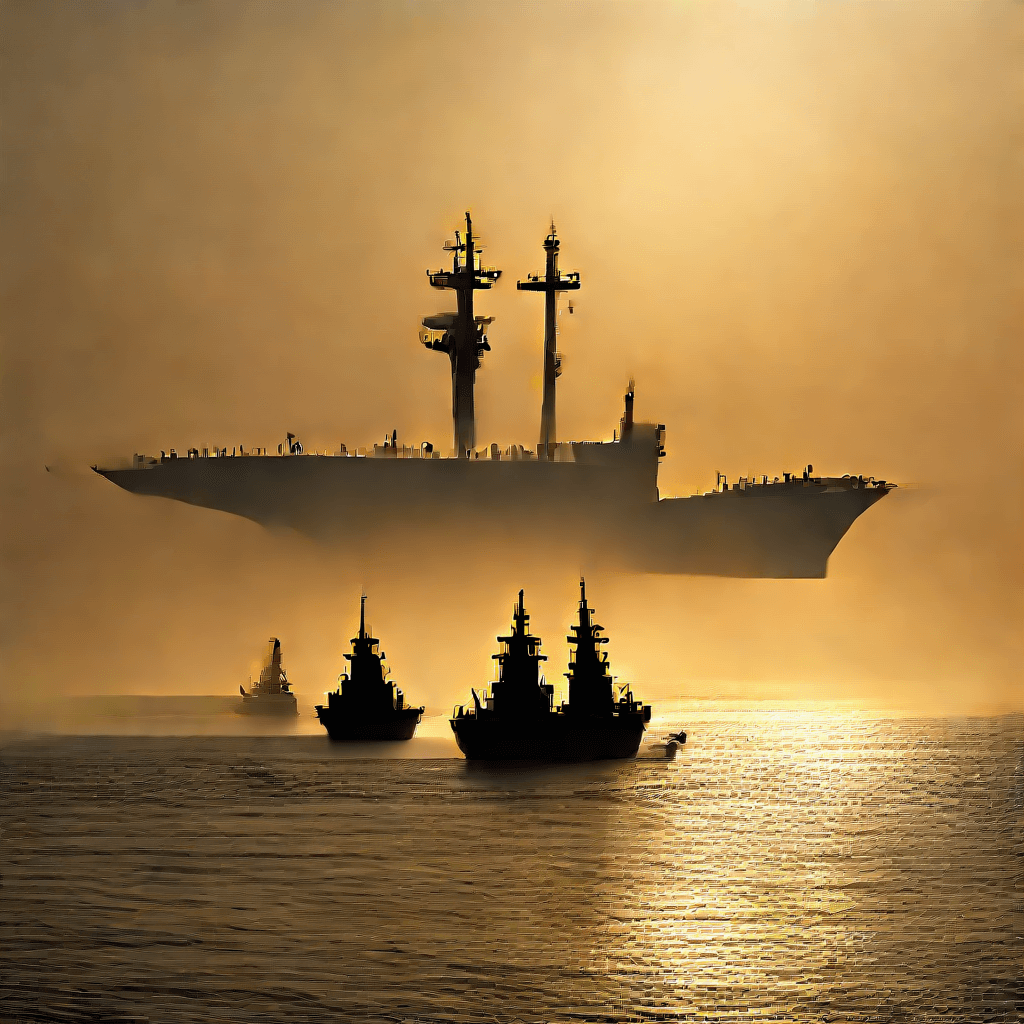
The deployment of additional Marines and warships represents the practical application of the administration's "transactional hegemony" model. Under this framework, military power is wielded specifically to safeguard U.S. economic interests, diverging from the ideological goals of the early 21st century. In a recent classified briefing, Pentagon officials revealed that the first six days of "Operation Epic Fury" cost approximately $11.3 billion, according to details reported by Military Times on March 12.
This expenditure highlights a willingness to invest heavily in kinetic readiness to ensure trade stability. By framing the deployment as a protective measure for American commerce rather than a commitment to regional democracy, the administration attempts to reconcile its "America First" mandate with global interdependence. The massive price tag—which officials admit excludes several war-related expenses—underscores a shift toward a "pay-for-protection" logic where intervention is measured by its return on investment for the domestic economy.
Boots on the Ground in an Automated Age
Despite the proliferation of autonomous defense systems in 2026, the current crisis has exposed the persistent necessity of human presence in contested zones. On March 12, the U.S. military confirmed the loss of a Stratotanker and its six-person crew during a mission supporting the active air campaign. This tragedy serves as a reminder that even in an era of service automation and remote operations, the "last mile" of security still demands physical vulnerability.
The deployment of 2,500 additional troops provides a human buffer in maritime and urban zones where sensors alone cannot enforce order. While the administration pushes for technological acceleration, the Stratotanker loss illustrates that human oversight remains the cornerstone of kinetic deterrence. This tension between high-tech aspirations and low-tech casualties defines the 2026 battlefield, where the cost of security is still measured in lives, not just algorithms.
The Burden-Sharing Ultimatum
The U.S. is leveraging its expanded military presence as a diplomatic lever, demanding increased defense contributions from allies benefiting from stabilized energy flows. Parallel to the surge, the U.S. launched formal trade probes into 16 partners on March 13, signaling that security guarantees are no longer unconditional. As outlined in the 2026 trade strategy, the administration now treats trade barriers and military deployments as integrated policy components, effectively ending the era of the "free security shield."
This integrated approach forces regional partners like Japan and the EU to choose between increased defense spending and punitive tariffs. The message is clear: the U.S. will secure the global commons, but costs must be distributed proportionally. By linking the deployment to these 16 trade probes, the administration is restructuring the international order into a subscription-based security model.
Domestic Dissent and the Isolationist Paradox
The billion-dollar daily cost of Operation Epic Fury has ignited friction among an American electorate already strained by the "Adjustment Crisis" of 2026. For David Chen, a software engineer whose department was recently replaced by automated agents, the $11.3 billion expenditure feels like a betrayal of domestic priorities. Chen noted that while there is seemingly no budget for transitional support for displaced workers, billions are spent in less than a week on a conflict half a world away.
This isolationist paradox—where voters demand cheaper energy but reject the military costs required to secure it—poses a severe political risk. As citizens navigate the displacement caused by scale-level automation, the sight of taxpayer funds flowing into the Middle East creates fertile ground for domestic unrest. The administration's challenge is to prove that the "America First" agenda is served by these overseas deployments, a task that grows more difficult with every billion-dollar briefing.
The Thin Line of Deterrence
Increased U.S. presence has heightened the risk of escalation with regional adversaries. Following a precision strike at Dubai’s International Financial Centre (DIFC) near a Shinhan Bank branch on March 13, international staff transitioned to remote operations, highlighting the fragility of regional financial hubs. President Trump’s rhetoric has intensified alongside the deployments, with the President labeling Iranian leaders as "deranged scumbags" as regional violence continues to spiral.
The suspension of high-profile events, including Middle Eastern F1 races, underscores the "zombie" state of regional stability. The strike near the DIFC, targeting a building adjacent to a major South Korean financial gateway, demonstrates that even precision strikes have wide-reaching economic consequences. Rather than deterring aggression, the massive influx of Marines and warships may be creating a "target-rich" environment that invites further kinetic probes from local actors.
Defining the 2026 Security Architecture
The 2026 surge does not appear to be a return to the "forever wars" of the past, but rather the birth of a "Guarded Isolation" doctrine. This architecture acknowledges that while the U.S. seeks to retreat from global policing, it cannot yet decouple from the physical infrastructure of global trade. The current deployment is a temporary, high-intensity fix designed to enforce a transactional peace, allowing domestic industrial protectionism to take root without an energy-driven economic collapse.
Whether this surge can achieve its goal without dragging the U.S. into a permanent conflict remains the defining question of the Trump 2.0 foreign policy. The integration of trade probes, massive military spending, and aggressive rhetoric suggests a strategy that is as much about economic leverage as it is about tactical defense. In the coming months, success will be measured not by territory held, but by the stability of Brent crude and the compliance of trade partners.
Sources & References
The U.S. Is Sending More Troops to the Middle East
NYT • Accessed Fri, 13 Mar 2026 22:00:56 +0000
The U.S. Is Sending More Troops to the Middle East
View Original*Military Times
militarytimes • Accessed 2026-03-12
Pentagon officials told senators in a classified briefing this week that the first six days of Operation Epic Fury cost American taxpayers an estimated $11.3 billion, according to a person familiar with the session. The figure, however, omitted a range of war-related expenses, indicating the overall total is likely to rise. Sen.
View OriginalSummary: The U.S. military confirmed the loss of a Stratotanker and its six-person crew during a mission supporting the ongoing air campaign against Iran.
ctvnews • Accessed 2026-03-12
Man who rammed into Michigan synagogue had just lost family in an Israeli strike in Lebanon A man with a rifle who crashed into a large Michigan synagogue in what federal officials say was an attack had lost four family members in an Israeli airstrike in his native Lebanon last week, an official said Friday.
View Original*The Independent
co • Accessed 2026-03-12
Picture this: Lewis Hamilton crosses the line, punching the air as he records his seventh British Grand Prix . Stretching his lead in the world championship battle with Mercedes teammate Valtteri Bottas, Hamilton appears a shoe-in for a seventh Formula One title, which would draw him level with Michael Schumacher’s all-time record. Determined to celebrate in typical Hamilton style, he climbs up onto the pit wall, lifts his head and what does he see staring back at him? Cattle.
View OriginalF1 races in Middle East to be cancelled because of war in Iran
BBC • Accessed Fri, 13 Mar 2026 17:12:12 GMT
F1 races in Middle East to be cancelled because of war in Iran
View OriginalMore Marines and Warships Being Sent to Middle East, U.S. Officials Say
NYT • Accessed Fri, 13 Mar 2026 20:17:53 +0000
More Marines and Warships Being Sent to Middle East, U.S. Officials Say
View OriginalTrump calls Iran leaders ‘deranged scumbags’ as Middle East violence spirals
Guardian • Accessed Fri, 13 Mar 2026 23:28:13 GMT
Trump calls Iran leaders ‘deranged scumbags’ as Middle East violence spirals
View OriginalWhat do you think of this article?