The Hormuz Blockade: Why Japan’s Naval Hesitation Tests the 2026 Alliance
The Century-Mark Surge and the Shadow over Kharg Island
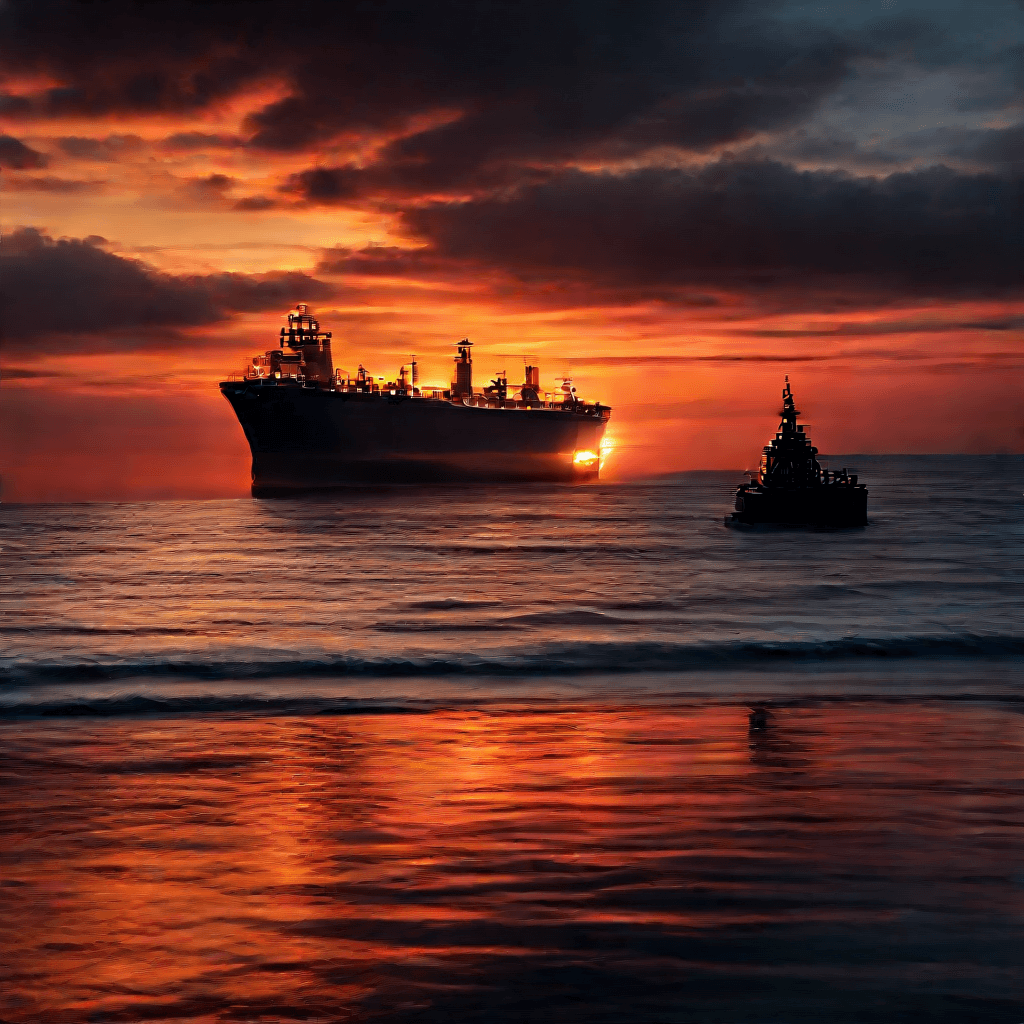
The global energy market fractured as Brent crude breached the $100 psychological barrier, reaching $101.05 per barrel following a decisive military escalation in the Middle East. According to Jiji Press and the Asahi Shimbun, U.S. precision strikes decimated Iran’s primary oil infrastructure on Kharg Island on March 14, 2026. This kinetic intervention by the Trump administration was a direct response to Iranian threats against shipping, but the immediate result is a physical blockade of the Hormuz Strait—a strategic chokepoint handling approximately one-fifth of global petroleum consumption. This maritime disruption translates security from an abstract ideal into the tangible physical cost of maintaining global energy arteries.
For logistics coordinators, the surge past $100 represents a systemic shock to commerce that transcends simple market fluctuations. As fuel surcharges ripple through supply chains, the reality of the 2026 "Adjustment Crisis" becomes manifest: the era of cheap, protected transit has stalled. The blockade, coupled with the destruction of Iranian export capacity, has created a supply vacuum the market is struggling to price. Simultaneously, the threat of retaliatory strikes on port facilities in the United Arab Emirates complicates the risk calculus for international insurers and shipping conglomerates, forcing a fundamental re-evaluation of maritime stability.
The Kobayashi Declaration: Domestic Constraints vs. Global Demands
The refusal of Japan’s ruling Liberal Democratic Party (LDP) to immediately commit naval assets to the Hormuz Strait has exposed a rift between Tokyo’s domestic political reality and Washington’s strategic expectations. Takayuki Kobayashi, LDP Policy Research Council Chair, stated that the "hurdle is very high" for dispatching Self-Defense Force (SDF) vessels into an active conflict zone, as reported by the Asahi Shimbun. This declaration signals a cautious retreat from the proactive security posture often anticipated by the U.S., reflecting a strategic hesitation that prioritizes constitutional stability over the transactional demands of the 2026 America First doctrine.
Domestic opposition has voiced significant concerns regarding the legal basis for such a deployment. Jiji Press noted that while the Trump administration has urged allies to secure their own transit routes, the Japanese government remains constrained by the "Constitutional Labyrinth" of Article 9. Kobayashi’s emphasis on "careful judgment" underscores the difficulty of justifying military involvement in a theater where the risk of direct engagement is high. This hesitation reveals a deepening structural crisis where the commitment of physical assets—specifically naval destroyers—becomes the primary metric of alliance reliability.
Transactional Alliances: The 'America First' Pressure on Tokyo
Under the 2026 "America First" doctrine, the transactional nature of the U.S.-Japan alliance has moved from rhetoric to rigorous policy. President Trump has explicitly expressed expectations that Japan and other major energy consumers take a direct role in securing the Hormuz Strait, as reported by NHK. This shift marks a departure from the post-war security umbrella where the U.S. Navy acted as the sole guarantor of the global commons. The administration's stance is clear: if Tokyo relies on Persian Gulf oil, it must provide the hardware and personnel to protect it, transforming security into a commodity purchased through participation.
This pressure creates a "Security Friction" that forces Tokyo to choose between its pacifist tradition and its alliance obligations. While the United Kingdom is reportedly "consulting options" for vessel deployment according to the Asahi Shimbun, and South Korea’s presidential office is "cautiously considering" similar requests, Japan’s hesitation is distinct. The Trump administration’s willingness to let allies shoulder risk reflects a broader isolationist pivot that views traditional security guarantees as costly liabilities rather than strategic assets, fundamentally altering the geometry of Pacific power.
Energy Fragility: The Strategic Cost of the Hormuz Blockade
Japan’s vulnerability to energy supply chain disruptions remains its primary strategic liability. With the Hormuz Strait effectively closed, the nation faces a shortage that could derail FY2026 economic objectives. The urgency was reflected in the Japanese parliament, where the House of Representatives passed the national budget in a record 59 hours—an unprecedented speed driven by the need to secure emergency funding for energy stabilization. This legislative sprint highlights how external cost pressures can erode traditional domestic deliberative processes.
The economic consequences of $100 oil are severe in 2026 as the world navigates labor displacement due to automation. In Japan, the government has already moved to tighten food security, implementing a maximum fine of 100 million yen ($665,000) for rice hoarding violations to prevent domestic panic. This "Energy-Food Nexus" illustrates how a maritime blockade thousands of miles away triggers regulatory interventions designed to preserve social order. The connection between global supply chain disruptions and local retail sanctions is now explicit, as the state moves to penalize domestic practices arising from international instability.
The Constitutional Labyrinth: Why the 'Hurdles' Remain High
Legal barriers to an SDF deployment are active components of the current Japanese political landscape. The Self-Defense Forces Act requires a specific legal finding that a situation represents a "threat to national survival" to justify deployment into combat-adjacent areas. Kobayashi’s "very high hurdles" comment refers to the difficulty of meeting these criteria when the conflict involves a direct U.S. strike on a sovereign nation like Iran. This legal gridlock bridges global doctrinal shifts in Washington with regional political paralysis in Tokyo.
As noted by the Nikkei, the legal basis for guarding shipping lanes has precedents, yet the 2026 conflict presents a more volatile environment. The potential for the SDF to be drawn into a regional war remains a political "third rail." This internal fracture is exacerbated by a public wary of being pulled into a conflict perceived as a byproduct of Washington’s aggressive Middle East policy, illustrating how international instability triggers defensive instincts in a population already facing rapid cultural and economic shifts.
Fragmented Security: The Erosion of the Post-War Pacific Order
Tokyo's hesitation is intensified by a growing realization of the limits of U.S. military capacity. Reports from the Nikkei indicate a critical shortage of American-made air defense missiles in the Middle East, with Japan’s own production capacity too strained to fill the gap. This "Material Crisis" suggests that the U.S. may no longer possess the surplus hardware to simultaneously protect global shipping and its own interests, forcing a fragmentation of regional security responsibilities into what analysts describe as "Isolated Fortresses."
This erosion of a unified response signals a shift toward a world where nations must secure survival through bilateral deals or unilateral force. The LDP's refusal to immediately align with the Trump administration’s naval request may be the first step toward a more autonomous, albeit more vulnerable, Japanese foreign policy. As the post-war Pacific order dissolves, the "America First" doctrine is forcing Japan to reconstruct its security identity in real-time, amidst the smoke of burning oil facilities and the silence of blocked shipping lanes.
Sources & References
ホルムズ海峡への艦船派遣「非常にハードル高い」自民・小林政調会長
Asahi • Accessed 2026-03-15
ホルムズ海峡への艦船派遣「非常にハードル高い」自民・小林政調会長
View Original自民・小林鷹之氏、ホルムズ海峡へ艦船派遣「紛争下でハードル高い」
日本経済新聞 • Accessed Sun, 15 Mar 2026 02:00:02 GMT
中東でアメリカ製防空ミサイル不足 日本、生産逼迫で輸出の余地乏しく イラン軍事衝突 中東でアメリカ製防空ミサイル不足 日本、生産逼迫で輸出の余地乏しく あわせて読む トランプ氏を悩ます米軍の武器不足 自衛隊はホルムズ海峡に出動可能か 海峡「護衛」参加要請、安倍政権に先例 法的根拠に課題
View Originalトランプ氏 ホルムズ海峡安全確保へ 日本などの艦船派遣に期待
NHK • Accessed Sun, 15 Mar 2026 18:16:49 +0900
トランプ氏 ホルムズ海峡安全確保へ 日本などの艦船派遣に期待
View Original英国は「選択肢を協議」 ホルムズ海峡へ船舶派遣、トランプ氏が要望
Asahi • Accessed 2026-03-15
英国は「選択肢を協議」 ホルムズ海峡へ船舶派遣、トランプ氏が要望
View Original世界を揺るがすホルムズ海峡「封鎖」 イランはどんな方法を使うのか
Mainichi • Accessed 2026-03-15
世界を揺るがすホルムズ海峡「封鎖」 イランはどんな方法を使うのか
View Original自民・小林鷹之氏、艦船派遣「慎重に判断」=野党から懸念相次ぐ
時事通信ニュース • Accessed Sun, 15 Mar 2026 02:27:00 GMT
02.01 月額料金変更のお知らせ 最新ニュース 森井大輝、メダル目指し滑走=攻めの姿勢で難コースへ―アルペン男子〔パラリンピック〕 霧島、元大関対決制す=「元いた所へ」決意胸に―大相撲春場所 菅楓華、難コース攻略しV=光ったパッティング―台湾ホンハイ女子ゴルフ コンサドーレが優勝=カーリング 韓国大統領府「慎重に検討」=ホルムズ海峡への艦艇派遣 TOPICS 2026.03.15 17:40 ホルムズ海峡に軍艦派遣を=「航路の安全確保」日本などに要求―トランプ氏 2026.03.15 17:22 侍ジャパン、初めて4強逃す=ベネズエラに屈す―WBC 2026.03.15 16:44 日本、連覇ならず=ベネズエラに逆転負け―WBC 2026.03.15 12:41 600ミリ多連装砲12発発射=正恩氏「戦術核」で米韓威嚇―北朝鮮 2026.03.14 21:26 米、イラン原油輸出要衝を空爆=ホルムズ妨害で圧力、攻撃強化へ 2026.03.14 20:00 南鳥島の核ごみ処分に賛否=東京・小笠原で住民説明会―経産省・NUMO もっと見る World eye 2026.03.13 17:
View Originalホルムズ海峡「封鎖」宣言 イランの革命防衛隊とは 4つのポイント [アメリカとイスラエル、イランを攻撃 報復も]
朝日新聞 • Accessed Sat, 14 Mar 2026 08:00:00 GMT
速報ニュース 16分前 イラン外相、カーグ島攻撃は「UAE領から」 インフラへの報復示唆 43分前 軍用機で日本人2人がサウジから退避 韓国発表、日韓の二重国籍者も 46分前 英国は「選択肢を協議」 ホルムズ海峡へ船舶派遣、トランプ氏が要望 2時間前 声優・下野紘さんが一日池袋署長 声帯炎の発表後、明かした決意は 6時間前 WBC、日本は準々決勝で敗退 ベネズエラに敗れ、4強入り逃す 7時間前 日本、ベネズエラに5-8で準々決勝敗退 大谷、森下のアーチ実らず 7時間前 74歳女性が自宅で死亡、殺人事件の可能性も 大阪市北区の集合住宅 7時間前 ホルムズ海峡への艦船派遣「非常にハードル高い」自民・小林政調会長 8時間前 あす米アカデミー、「国宝」受賞なるか 米でも芸術性に高い評価 8時間前 エース山本由伸、立て直して4回2失点 これが今大会ラスト登板に 9時間前 鈴木誠也、盗塁を試みた際に右ひざ痛める 代わった森下翔太が3ラン 9時間前 新宿の店に2人組の強盗 店長が手足縛られ、170万円奪われる 9時間前 大谷翔平が「先頭打者本塁打返し」 2023年MVPがWBCで競演 10時間前 山
View OriginalWhat do you think of this article?