The Democratic Buffer: South Korea’s Resilience in the 2026 Crisis
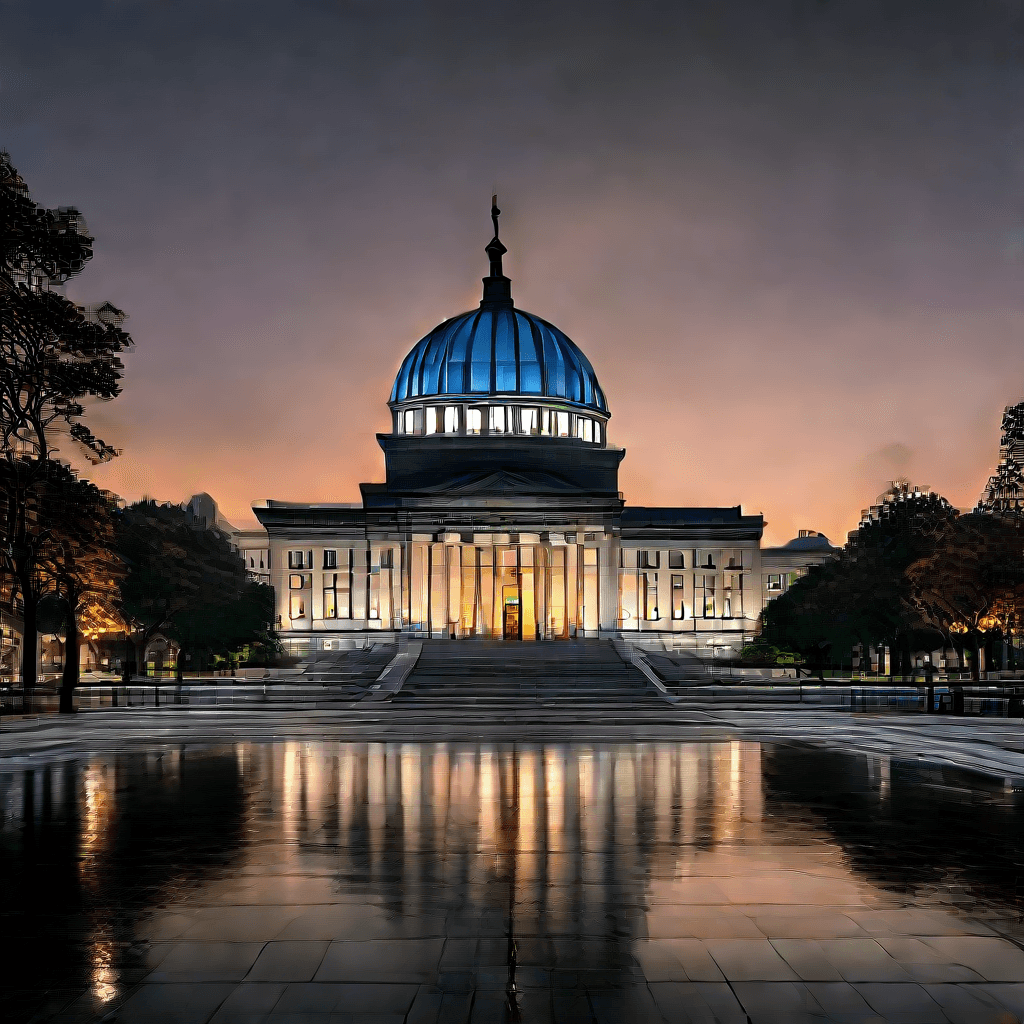
Title: The Democratic Buffer: South Korea’s Resilience in the 2026 Crisis
The Continuity of Resistance: From 1960 to the 2026 Frontier
South Korea’s democratic landscape reached a symbolic inflection point as the nation commemorated the 66th anniversary of the March 15 Uprising, the 1960 event that dismantled authoritarian rule. Speaking in Changwon, Democratic Party (DP) leader Lee Jae-myung called for a "Second Declaration of Democratization," weaving the mid-20th-century legacy with the more recent civilian resistance against the December 3, 2024 martial law attempt. Opposition figures have begun framing the 2024 resistance as a "resurrection of the March 15 spirit," asserting that collective citizen action remains the ultimate check against constitutional overreach.
This rhetorical alignment serves a clear strategic purpose: it reinforces the opposition's narrative that South Korean democracy is defined by "People Power" rather than institutional stability alone. Analysts note that by characterizing the December 2024 events as a "Light Revolution"—as reported by Newsis—the opposition seeks to institutionalize street-level activism as a core component of national identity. This framing is particularly resonant in the current global climate, where democratic backsliding is a persistent concern for international observers tracking Indo-Pacific stability.
Tactical Sovereignty: The 'Bare-Body' Doctrine
The concept of "bare-body" resistance—locally known as man-mom—has emerged as a defining tactical characteristic of South Korean political culture. This phenomenon was strikingly visible during the 2024 martial law declaration, when citizens and lawmakers physically blocked military personnel from entering the National Assembly. As reported by the Hankyoreh, DP leader Lee Jae-myung highlighted this specific mode of resistance, comparing it to the 1960 student-led protests where unarmed civilians faced state security forces to protect the electoral process.
This tradition of non-violent physical obstruction creates unique challenges and opportunities for governance. While it demonstrates a level of civic engagement that prevents the executive branch from bypassing the legislature, it also introduces a layer of political volatility. For geopolitical analysts, this "street-level veto" acts as a robust buffer against autocracy but requires the Yoon Suk-yeol administration and international investors to maintain a high tolerance for domestic political friction.
The Transactional Toll: Security in the 'America First' Pacific
South Korea's democratic identity is currently facing an external stress test under the transactional foreign policy of the Trump 2.0 administration. The "America First" doctrine has evolved into a series of direct demands for security burden-sharing that test the limits of the ROK-US alliance. According to the Hankyoreh, President Donald Trump recently exerted significant pressure on the Yoon Suk-yeol administration, presenting a "bill" for the protection of the Hormuz Strait. This includes a request for South Korea to dispatch warships to the region to secure its own energy supply routes—a demand extended to Japan and other major oil importers.
This transactional approach complicates the calculus for Seoul, which views itself as a value-based ally rooted in shared democratic principles. However, the current Washington administration appears focused on the immediate costs of global security. Reports indicate that President Trump has already begun repositioning US military personnel from Japan toward Iran. This shift underscores a broader pivot toward isolationism, forcing democratic anchors like South Korea to weigh ideological commitments against the realities of a "user-pays" security model.
The Economic Frontier: Automation and the Adjustment Crisis
While the threat of martial law has receded, South Korea now faces the more insidious challenge of the 2026 Adjustment Crisis. Driven by rapid AI-driven automation and the displacement of white-collar labor, this economic shift is testing the social contract. The deregulation favored by the Trump administration has catalyzed similar global trends, pushing technological development at a pace that outstrips social safety nets. For many, the "People Power" that once protected the National Assembly feels distant from the algorithmic pressures of the modern workplace.
The challenge for the Yoon Suk-yeol administration is to address the energy of the "Light Revolution" while establishing a sustainable policy framework for the 2026 era. If democracy is to remain a stabilizer, it must manage the transition toward an AI-integrated economy without sacrificing livelihoods. Public discourse is shifting from physical resistance to "economic martial law," with Democratic Party leader Lee Jae-myung leading calls for universal basic capital and industrial protectionism to maintain social cohesion.
Regional Synthesis: The Trilateral Calculus
From Tokyo's perspective, South Korea's tradition of "People Power" is viewed with a mixture of admiration and strategic apprehension. While Japan maintains high institutional stability, the political volatility of its neighbor is seen as a potential risk factor for the trilateral alliance. According to the Hankyoreh, Japanese officials worry that Middle East tensions and US military repositioning could overstretch the ROK-US-Japan security architecture. Despite these concerns, there is a growing recognition in Tokyo that a robust South Korean democracy is preferable to regional authoritarianism.
Ultimately, Washington remains invested in South Korea’s internal stability as a democratic counter-narrative to regional rivals. However, the 2026 environment requires pragmatic engagement. While the legacy of the March 15 Uprising earns South Korea respect, the "America First" era demands that this democratic fervor also support strategic objectives, including global energy security and the management of the technological adjustment crisis.
Sources & References
*[연합뉴스] 이재명 대통령, 창원서 ‘제2의 민주화 선언’… “12·3 저지는 3·15의 부활”
연합뉴스 • Accessed 2026-03-15
**언론사명**: 연합뉴스 (Yonhap News)
View Original이 대통령 “3·15 의거처럼 12·3 국민이 맨몸으로 계엄군 막았다”
한겨레 • Accessed Sun, 15 Mar 2026 04:29:00 GMT
‘주일미군 5천명 이란행’ 한술 더 뜬 트럼프…다카이치 압박 도널드 트럼프 미국 대통령이 호르무즈해협 관리에 한국, 일본 등에 군함 파견을 사실상 공개 요청한 데 이어 주일 미군 병력을 이란으로 이동시키고 있다. 일본 쪽에서는 중동 긴장이 아시아 안보까지 악영향을 끼칠 수 있다는 우려가 나오고 있다. 트럼프 대통령은 14일(현지시각) 소셜미디어(SNS) 트루스소셜에 “이란의 호르무즈해협 봉쇄 시도로 영향을 받는 한국에 ‘호르무즈 파병’ 청구서 내민 트럼프…석유길 연합군 구상 트럼프 “한국도 군함 보내라”…호르무즈 해협 보호에 파병 요구
View Original*[뉴시스] 이재명 대통령 “국민 이기는 권력 없다… 12·3은 ‘빛의 혁명’”
뉴시스 • Accessed 2026-03-15
배우 황석정이 단 한 달 반이라는 짧은 준비 기간에도 불구하고 피트니스 대회 비키니 부문에서 2위를 차지한 과정을 공개했다. 황석정은 지난 14일 방송된 MBN '속풀이쇼 동치미'의 '나는 왜 거절을 못 하는가' 편에서 거절을 못 해 시작하게 된 운동이 인생의 전환점이 된 사연을 털어놨다. 황석정은 과거 한 프로그램 뒤풀이 자리에서 양치승 관장을 만나 허리 건강을 위해 운동을 시작할 것을 권유받았다. 그는 "집에서 체육관까지 왕복 1시간 40분이 걸리는 먼 거리였지만, 거절을 못 해 인사를 드리러 갔다가 결국 회원가입까 3 튀르키예 외무 "이란도 이면 회담 원해..협상 중재할 것'"--AP단독 4 트럼프 "韓 등 5개국, 호르무즈에 군함 보내라…수입국이 책임져야"(종합) 1 트럼프 "韓 등 5개국, 호르무즈에 군함 보내라…수입국이 책임져야"(종합) 도널드 트럼프 미국 대통령은 14일(현지시간) 호르무즈 해협을 통해 석유를 공급 받는 국가들이 항로를 직접 책임져야 한다고 주장했다.
View OriginalWhat do you think of this article?