Sovereignty Under Strain: Taiwan’s Challenge of Political Infiltration
Title: Sovereignty Under Strain: Taiwan’s Challenge of Political Infiltration
The Paradox of the Public Square
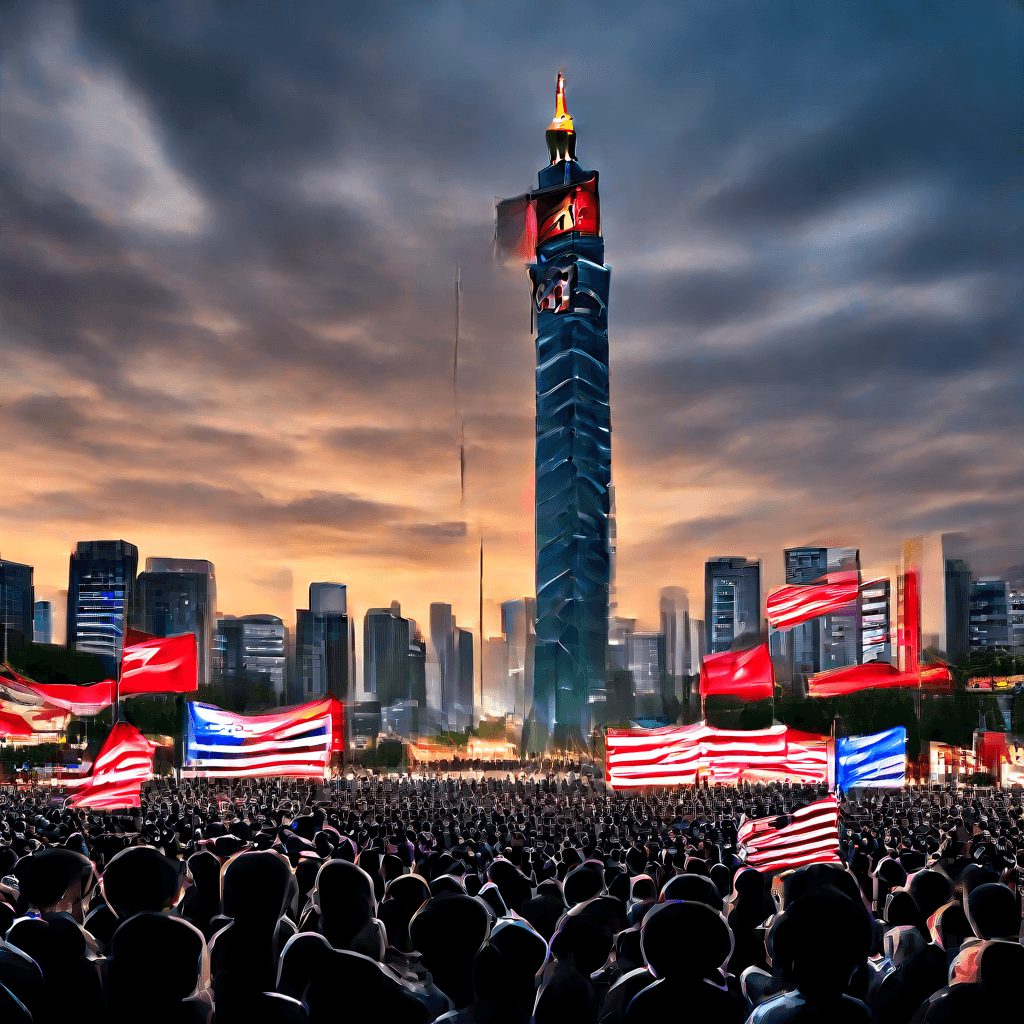
In the shadow of Taipei 101, the sight of the Five-Star Red Flag at local political rallies underscores a stark paradox within Taiwan’s democracy. For residents like David Chen (pseudonym), these demonstrations are more than mere dissent; they serve as a visceral reminder of the geopolitical pressures tightening around the island. While the Taiwanese legal framework protects the right to assemble, the presence of organizations openly aligned with an adversary creates significant friction within the democratic sphere.
This tension has shifted from public squares into formal investigations. According to reporting by the Asahi Shimbun, a Taiwanese political party advocating for unification with China has faced intense scrutiny regarding its internal operations and potential external allegiances. The inquiry focuses on whether such entities are exercising democratic rights or actively facilitating "infiltration work." Recent encounters between investigative reporters and pro-unification party leaders have highlighted deep-seated anxieties regarding foreign influence in domestic politics.
The activities of these factions test the resilience of the "defensive democracy" model—a framework where a state must balance civil liberties against the necessity of institutional integrity. In the 2026 security environment, the Trump administration has urged allies to secure their political systems against asymmetric threats. Consequently, Taiwan’s handling of pro-unification groups is seen as a regional bellwether; if a political entity serves as a conduit for a foreign power's strategic agenda, it challenges the traditional boundaries of protected speech.
The Financial Architecture of Influence
Investigative focus on the financial mechanisms of pro-unification parties reflects growing concern over the integrity of Taiwan's political landscape. Asahi Shimbun reports that journalists have recently confronted party leadership regarding potential cooperation in state-directed infiltration efforts. Authorities are now looking beyond public rhetoric to identify the underlying support structures that allow Beijing-aligned entities to operate within a democratic framework.
For David Chen (pseudonym), a regional security analyst in Taipei, the challenge lies in distinguishing legitimate political activity from foreign-funded operations. Chen notes that commercial ties and non-profit organizations often mask the true source of political funding, complicating transparency enforcement. This ambiguity acts as a strategic asset for influence operations, allowing them to blend into a diverse society while pursuing objectives that may run counter to national security.
Legal battles involving party leadership often hinge on the definition of illegal cooperation with a foreign power. Recent questioning, as noted by Asahi, indicates that authorities are shifting toward stricter monitoring of the financial footprints of those advocating for structural alignment with an adversary to ensure sovereign institutions remain protected.
The Subversion Paradox: Freedom vs. Security
The fundamental tension of modern democracy lies in its inherent openness—a trait increasingly exploited by actors seeking to influence sovereign territories from within. In Taiwan, this struggle is personified by fringe parties explicitly advocating for unification, raising questions about the limits of political pluralism. As reported by Asahi Shimbun, these organizations have faced direct questioning over alleged cooperation in subversive activities designed to undermine local governance.
Sarah Miller (pseudonym), a human rights observer, notes that aggressive oversight risks infringing on the liberties that define a free society. However, the Trump administration’s 2026 foreign policy prioritizes the stability of key technological and democratic hubs, viewing Taiwan's domestic environment as critical to U.S. regional security. This creates a scenario where legal protections for political minorities may be co-opted for activities seeking to replace the constitutional order.
Pragmatism as a Strategy of Normalization
Pro-unification entities in Taiwan are increasingly pivoting their rhetoric from ideological alignment toward pragmatic economic survival. This strategy attempts to redefine the loss of sovereignty as a necessary trade-off for regional stability. Investigative inquiries by the Asahi Shimbun have raised sharp questions about whether these parties are cooperating in influence operations designed to undermine domestic resolve.
James Carter (pseudonym), a supply chain analyst tracking East Asian markets, observes that these narratives gain traction by promising increased market access. By emphasizing prosperity over political identity, these factions aim to bypass the security concerns of the electorate. According to Asahi Shimbun reports, when leaders were questioned about their roles in foreign influence operations, they frequently shifted the discourse toward the commercial necessity of cross-strait relations.
The Washington Perspective: Reliability and the TRA
The second Trump administration is intensifying its scrutiny of Taiwan’s internal political landscape, viewing domestic ideological fractures as a primary threat to Indo-Pacific stability. The Taiwan Relations Act (TRA) assumes a cohesive government capable of effectively utilizing American support. Recent reports highlight that political factions championing unification have sparked inquiries into whether they facilitate foreign infiltration. For Washington policymakers, a compromised Taiwan represents a systemic risk to U.S. regional security objectives.
Ultimately, the implementation of the TRA depends on the perception of Taiwan as a resolute actor. If pro-unification factions successfully infiltrate the island’s structures, it could shift the cost-benefit analysis in Washington regarding the level of risk the U.S. is willing to absorb. Market observers note that political instability often precedes economic volatility; for a global tech hub like Taiwan, internal subversion could have far-reaching consequences for international supply chains.
The Resilience of Identity
The tension between democratic plurality and national security has reached a critical threshold in Taipei. While Taiwan’s legal framework allows for a wide spectrum of expression, investigations are spotlighting parties that may serve as entry points for asymmetric influence. Asahi Shimbun journalists have confronted pro-unification leaders with direct questions regarding alleged cooperation in infiltration work, reflecting deepening skepticism among the populace.
Analysts suggest that the more fringe factions advocate for closer ties with an adversary, the more the broader electorate reinforces a distinct national consciousness. This suggests that influence operations may face a law of diminishing returns; visible efforts to align with a foreign narrative often drive local resistance and a reinforced sense of shared destiny. Under the "America First" policy of 2026, the U.S. has signaled a clear preference for partners who demonstrate internal stability and a vigorous defense of their own institutions.
The Transparency Threshold
Preserving democratic integrity against asymmetric influence is the defining challenge for the "defensive democracy" model in 2026. In Taiwan, the presence of parties advocating for unification has moved to the center of the national security debate. As the Asahi Shimbun’s reporting suggests, the ambiguity of these political actors regarding their external ties forces a re-evaluation of where political freedom ends and state-sponsored subversion begins.
The survival of such defensive models may depend on transparency rather than prohibition. By exposing the financial and logistical links between domestic entities and foreign state organs, a democracy can empower its electorate to make informed decisions without suspending political rights. The central question remains: can a free society survive the active participation of those seeking its dissolution, and does it possess the will to defend its own boundaries in the face of increasingly sophisticated external pressures?
In conclusion, Taiwan’s struggle with political infiltration serves as a critical test for democratic resilience in a high-stakes geopolitical era. By prioritizing transparency in political financing and scrutinizing the synchronization of foreign narratives, the state seeks to protect its sovereign institutions while upholding core civil liberties. As the Trump administration emphasizes regional stability, Taiwan’s ability to distinguish legitimate dissent from state-sponsored subversion will likely determine its long-term security and its standing as a reliable partner in the international community.
Sources & References
中国との統一掲げる台湾政党 浸透工作に協力?記者が総裁に尋ねると
Asahi • Accessed 2026-03-17
中国との統一掲げる台湾政党 浸透工作に協力?記者が総裁に尋ねると
View OriginalWhat do you think of this article?