Red Horizon: The Mars Mission as America’s Sovereign Frontier
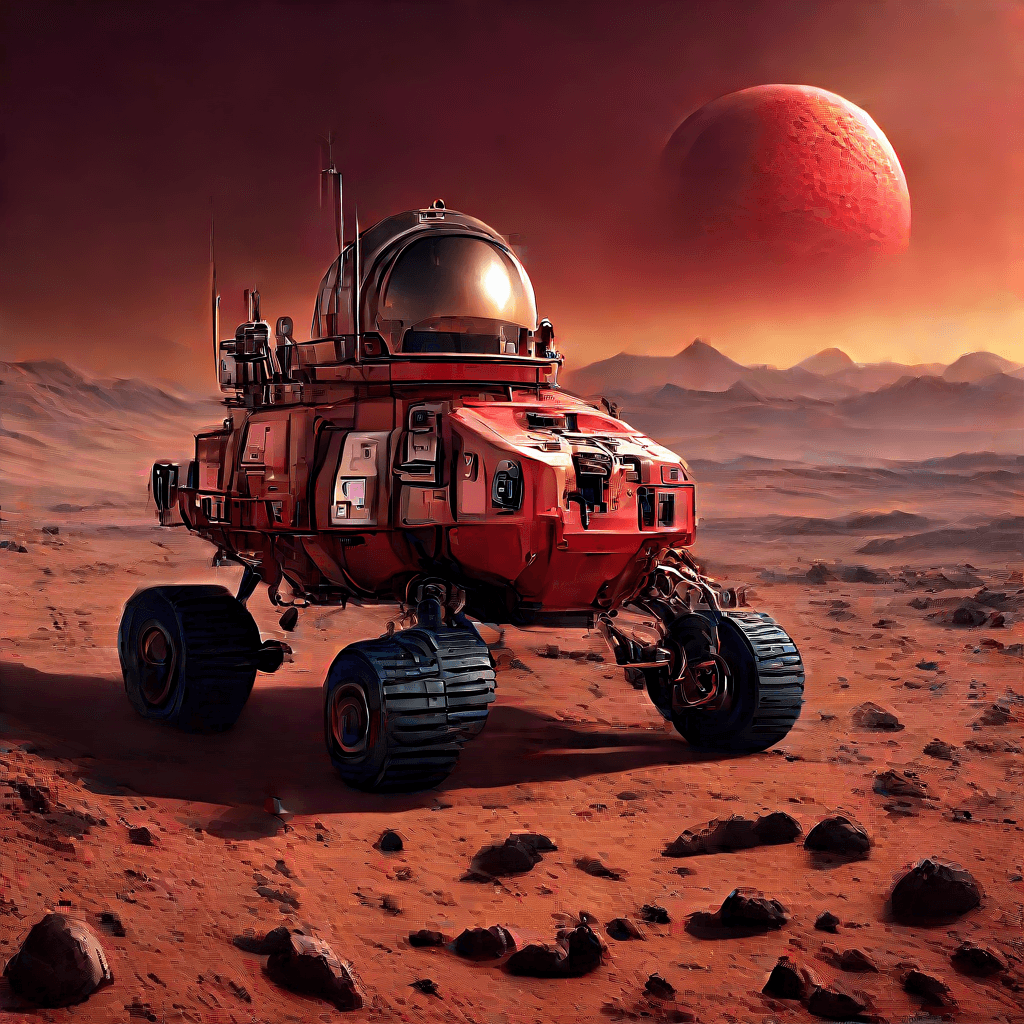
The New Manifest Destiny in an Era of Fractured Alliances
The lunar surface is increasingly viewed not as a shared scientific park, but as the primary industrial frontier for a nation pivoting toward internal resilience. Under the current administration’s "America First" doctrine, the upcoming Artemis missions represent a departure from the collaborative internationalism of the previous century. This shift marks a strategic decoupling where the Moon serves as a sovereign platform for resource extraction and hardware testing, prioritized over the concept of a global commons.
Securing the Earth-Moon system is now categorized by policy analysts as essential for maintaining a competitive edge as terrestrial alliances fracture. The drive toward the lunar south pole is fueled by the requirement to establish infrastructure that operates independently of international treaties that previously prioritized shared discovery. As localized volatility in consumer credit and domestic markets cascades into systemic global instability, the administration has pivoted toward space as a vacuum-sealed economic engine.
This permanent lunar presence is designed to create a self-sustaining technological ecosystem, ensuring that innovation remains uninhibited by volatile geopolitical climates on Earth. The lunar gateway serves as a laboratory for a superpower seeking to redefine dominance as physical borders tighten, bridging macro-geopolitical isolation with the micro-economic necessity of expanding the digital frontier toward Mars.
AGI at the Helm: Why Deep Space Requires Autonomous Intelligence
Technical constraints of the Earth-Mars distance render traditional real-time mission control obsolete. Because radio signals are limited by the speed of light, commands from Earth involve significant latency, dictating that any vehicle or habitat on the Red Planet must possess the capacity for autonomous decision-making. These broad policy shifts toward regulatory nationalism directly alter the development of retail financial conditions as the aerospace sector becomes the primary consumer of advanced AGI hardware.
This necessity has accelerated the deployment of autonomous intelligence systems designed to govern complex, life-sustaining environments. These platforms represent the first large-scale application of "intelligence at the edge," where machines interpret sensor data to prevent catastrophic failure. From life-support regulation to navigating Martian terrain, these systems operate with increasing independence from human oversight.
Industry reports suggest this pivot toward machine-governed environments is a prerequisite for long-term survival in deep space. The Red Planet has become the proving ground for cognitive systems that operate with total sovereignty. This technical evolution mirrors a broader national shift toward self-reliance, where system resilience is measured by its independence from Earth-side administrative cooperation.
The Space Industrial Base as an Antidote to the Adjustment Crisis
As automation reshapes the domestic workforce, the push for Mars provides a targeted outlet for high-skill manufacturing and precision engineering. Economic data indicates the aerospace sector has become a sanctuary for workers displaced by the integration of algorithmic labor in traditional office environments. This resurgence of the American industrial base centers on specialized hardware production, revitalizing regional manufacturing hubs that previously struggled under global economic shifts.
For workers transitioning from logistics or management roles, the complexity of Martian exploration requires a level of physical craftsmanship and on-site problem-solving that terrestrial AI cannot yet replicate. The assembly of radiation-shielding components and sophisticated sensors demands human-machine collaboration that preserves high-value employment. This macro-level supply chain disruption in traditional manufacturing is directly countered by the concentration of resources into residential and industrial infrastructure projects tied to the space sector.
By tethering the national economy to the requirements of the Mars mission, policy frameworks suggest a strategy to hedge against the domestic displacement crisis. The approach seeks to trade white-collar instability for the tangible production of multi-planetary infrastructure, attempting to ensure the American workforce remains relevant as global interest rates exert upward pressure on traditional capital investments.
The Deregulation Gamble: Private Speed vs. Public Safety
Recent regulatory adjustments have allowed the private aerospace sector to operate at a velocity that streamlines traditional safety protocols. Industry observers note that rigorous testing phases and redundant oversight are increasingly viewed by administrative bodies as obstacles to maintaining a lead over global competitors. By thinning these layers, the government has enabled private entities to accelerate the development of heavy-lift rockets and lunar landers.
This strategy prioritizes speed and cost-efficiency, reflecting a departure from the incrementalism of the Apollo era. The current administrative cooperation enables specific judicial outcomes that protect private aerospace initiatives from lengthy environmental and safety litigation. While some analysts warn that bypassing established protocols could increase the risk of failure, the prevailing policy suggests an aggressive posture is preferred to secure deep-space sovereignty.
A Silent Cold War on the Martian Plains
Mars has emerged as a strategic high ground for future energy and communication networks. The ability to navigate and survive in such an extreme environment is a primary measure of technical maturity in the 2026 landscape. Competition has shifted from symbolic achievements toward establishing the foundational infrastructure of the future.
Data gathered by American probes is currently used to develop frameworks for protecting future colonies from solar winds and atmospheric radiation. This mission responds to the efforts of other nations building independent lunar and Martian networks. In this context, the Red Planet is a theater where the standards for deep-space governance and resource rights will likely be set by the first power to maintain a permanent presence.
Sustainability Lessons for a Resource-Strained Planet
The survival requirements on Mars provide a blueprint for resource management on Earth. Living in a closed-loop ecosystem—where water and oxygen are recycled indefinitely—is no longer an academic exercise. Technologies developed for the Martian surface, such as advanced air-scrubbing systems and localized vertical farming, are being adapted for regions facing environmental stress and resource scarcity.
As the nation adopts a more isolationist posture, managing resources within a closed system becomes a strategic necessity. The extreme efficiency required for multi-planetary missions forces innovation that traditional terrestrial industries have often bypassed. By treating the Mars mission as a laboratory for sustainability, the expertise needed to maintain living standards within a bounded national economy is being secured, creating a parallel between physical survival in space and digital resilience on Earth.
Sources & References
When is Nasa's Moon mission launch and what will Artemis do?
bbc.com • Accessed 2026-04-01
When is Nasa's Moon mission launch and what will Artemis do?
View OriginalTrump sees 'America First' opportunity in Nasa mission to Moon
bbc.com • Accessed 2026-04-01
Trump sees 'America First' opportunity in Nasa mission to Moon
View OriginalNext stop, Mars? Why Nasa's mission matters
BBC • Accessed Sun, 29 Mar 2026 23:50:21 GMT
Next stop, Mars? Why Nasa's mission matters
View OriginalNext stop, not Mars: What's ahead for NASA's newly launched ESCAPADE Red Planet probes
Space • Accessed Fri, 14 Nov 2025 08:00:00 GMT
NASA's XRISM X-ray spacecraft has clocked 2 million mph winds ripping out of a distant galaxy bursting with star formation.
View OriginalWhat do you think of this article?