The Fragile Process: Why US-Iran Distrust Is the Real Negotiating Table
Title: The Fragile Process: Why US-Iran Distrust Is the Real Negotiating Table
A Summit Defined by Continuity Risk
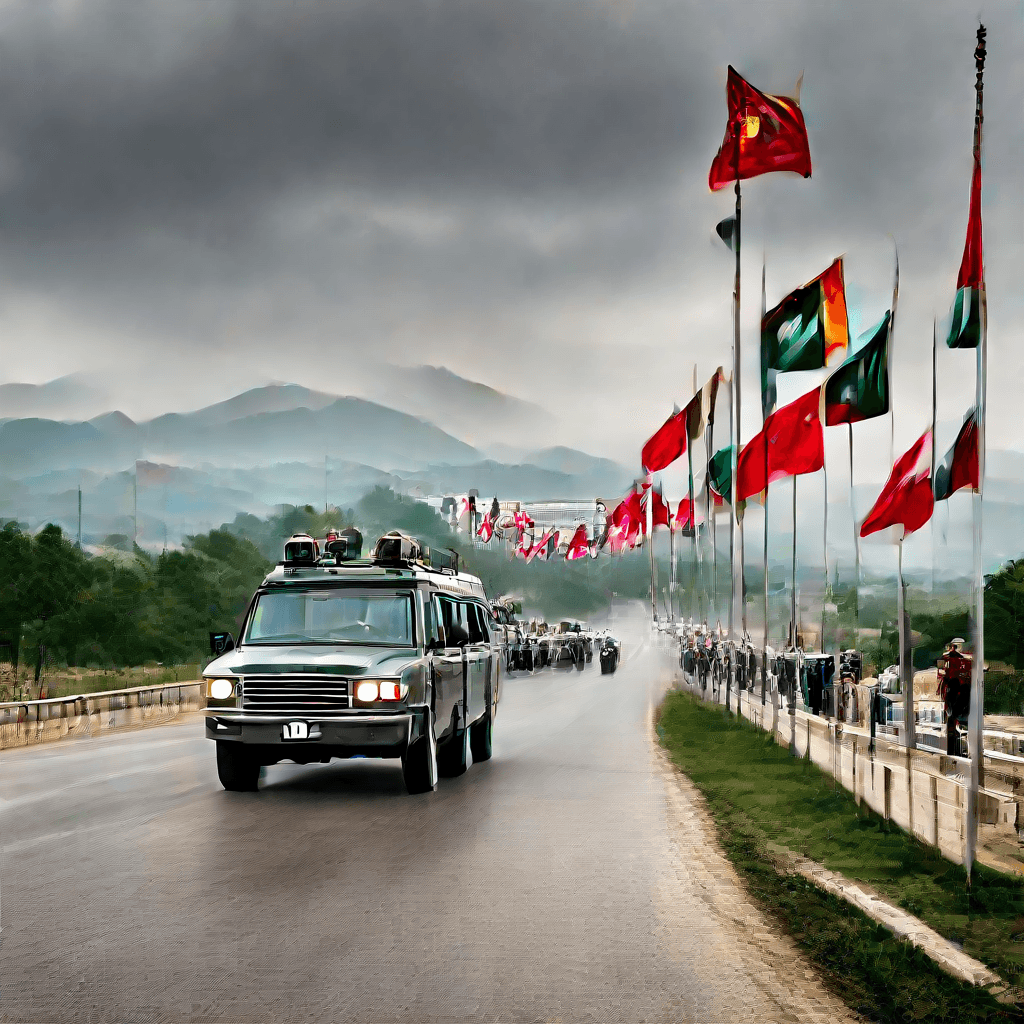
According to Pakistani official statements and multiple international media reports released in early April 2026, US and Iranian delegations met in Islamabad while a ceasefire appeared to be holding but remained politically and militarily fragile. In those same accounts, the talks were framed as a test of process durability, not a final-status peace conference. Both delegations arrived under pressure to prevent a new escalation cycle, but neither side signaled enough trust to treat a single weekend as a settlement window.
For US readers, the central policy question is narrower and harder than any headline breakthrough. Based on public readouts and reporting around the opening round, the issue is not whether negotiators can announce movement in one meeting, but whether they can keep a structured channel alive as domestic politics, security shocks, and alliance pressures tighten at once.
The Trump administration’s decision to elevate this file to the highest political level, as reflected in public messaging around the talks, increases commitment, but it also increases the cost of visible concessions. That same elevation can sustain talks or harden positions, depending on whether bargaining signals are matched by verifiable restraint.
The Four Disputes That Still Block a Deal
Each unresolved file can independently collapse implementation, so broad language alone cannot stabilize the negotiation. The core disputes remain unchanged: the nuclear track, governance and transit rules in the Strait of Hormuz, whether Lebanon is included in the ceasefire scope, and sanctions-linked preconditions that determine entry into any broader framework.
Each file follows a different operational logic. The nuclear track is a verification challenge. Hormuz is a control and navigation governance challenge. Lebanon is a scope-definition challenge. Sanctions are a sequencing challenge.
This creates compounding risk. If one file remains ambiguous, commitments in the others can lose practical value at implementation. That is why a near-term comprehensive deal remains unlikely, even if talks continue without interruption.
Why Islamabad Is Hosting Process, Not Peace
Because end-state disputes remain unresolved, a single-round settlement is unrealistic, and Pakistan’s mediator role is currently centered on continuity architecture. The immediate objective is to preserve contact, maintain agenda discipline, and carry unresolved items forward without resetting the entire track after each shock.
That design does not signal low ambition. It reflects the reality that a fragile process can still reduce escalation risk if each round narrows ambiguity and protects procedural momentum. In this phase, Islamabad functions as a bridge mechanism between crisis management and possible institutional bargaining, not as a terminal venue for final peace terms.
Structural Gap: Motion Without Sequence
The process is active, but the bargaining order is not synchronized, creating a structural gap between diplomatic motion and institutional reliability. Force-restraint demands, sanctions relief conditions, maritime control rules, and regional theater scope are moving on different clocks while being negotiated as if they can clear simultaneously.
When three operational problems appear in sequence, the shared bottleneck is coordination latency: political signals travel faster than implementation capacity. Entry preconditions raise the threshold for engagement, coercive signaling narrows drafting space, and scope ambiguity weakens confidence that partial commitments will survive first enforcement tests.
Because this structural gap is fundamentally a capacity-signal alignment problem, an operational frame is required now. The next section applies two criteria to judge viability: verifiability of commitments and sequencing discipline across files.
Technical Verification
The track is viable only if draft language converts into observable steps under both criteria. First, each commitment must have a testable compliance mechanism with clear timelines and trigger conditions. Second, concession order must be synchronized so that restraint, sanctions movement, maritime rules, and theater scope progress in linked phases rather than in isolated political statements. Without that architecture, the process can continue publicly while institutional trust declines privately.
At that point, verification data must be translated into policy priority in a fixed order. Budget follows first, because monitoring, compliance, and enforcement mechanisms require funded continuity. Cooperation structure follows next, because multi-party channels must lock in who validates, who adjudicates, and who escalates. Industrial participation follows after that, because shipping, energy, and insurance actors adjust behavior only when rules and enforcement pathways become predictable.
What Progress Would Actually Look Like
Because process continuity can mask strategic drift, the key test is whether each round reduces ambiguity across the same four files. Real progress means negotiators move from broad diplomatic language to explicit operational terms that can be monitored over time.
If rounds continue but unresolved items are repeatedly deferred, the process will remain active while the risk profile stays unstable. If rounds continue with cumulative clarification, the same continuity-first model can become a platform for durable bargaining.
For US policy-engaged readers, the practical takeaway is straightforward. Islamabad should be judged less by ceremonial outcomes and more by whether the negotiating channel converts distrust into verifiable sequencing before the next regional shock resets the table.
Sources & References
Summary: The Post outlines major sticking points in the talks, including Iran’s nuclear program, Strait of Hormuz control, and whether Lebanon is covered by ceasefire terms.
The Guardian • Accessed 2026-04-11
JD Vance addresses reporters before flying to Pakistan via Joint Base Andrews near Washington DC on Friday. Photograph: Jacquelyn Martin/Getty Images View image in fullscreen JD Vance addresses reporters before flying to Pakistan via Joint Base Andrews near Washington DC on Friday.
View OriginalSummary: The Guardian says the talks were clouded by preconditions from Tehran, U.S. threats of renewed force, and unresolved disputes over Lebanon and sanctions.
The Guardian • Accessed 2026-04-11
Headline: **JD Vance dispatched to negotiate Iran peace with few cards to play**
View OriginalLyse Doucet: Historic US-Iran talks must bridge deep distrust
BBC • Accessed Fri, 10 Apr 2026 23:46:49 GMT
Lyse Doucet: Historic US-Iran talks must bridge deep distrust
View Originalyahoo
yahoo • Accessed 2026-04-09
Iran's Parliamentary Speaker Mohammad Bagher Ghalibaf is in Islamabad for talks with the US (file image) [EPA] If and when a photograph is taken of US Vice-President JD Vance standing next to Iran's Parliamentary Speaker Mohammad Bagher Ghalibaf in Islamabad this weekend, it will make history.
View OriginalSummary: AP reports that U.S. and Iranian delegations have arrived in Islamabad for high-stakes talks amid a fragile ceasefire, continued regional violence, and deep skepticism on both sides.
Washington Post • Accessed 2026-04-10
By Susannah George Negotiators from the United States and Iran are set to meet in Islamabad this weekend for talks aimed at turning their current ceasefire into a durable peace. The truce, announced Tuesday, has been shaky. Israel launched an aerial barrage against Hezbollah in Lebanon, and shipping traffic in the Strait of Hormuz remains snarled.
View OriginalSummary: This analysis frames Vance’s mission as diplomatically and politically risky, with Iran holding leverage and the ceasefire still vulnerable to collapse.
aljazeera • Accessed 2026-4-10
Listen Listen (11 mins) Save Click here to share on social media share-nodes Share facebook x whatsapp-stroke copylink google Add Al Jazeera on Google info Pakistan Rangers patrol near the presidential palace as Pakistan prepares to host the United States and Iran for peace talks, in Islamabad, on April 10, 2026 [Asim Hafeez/Reuters] By Abid Hussain Published On 10 Apr 2026 10 Apr 2026 Islamabad, Pakistan – With key differences in the Iranian and American positions seemingly intact, Pakistan is
View OriginalSummary: Al Jazeera reports Pakistan is aiming first for process continuity rather than a full deal, given sharp U.S.-Iran divisions and mistrust.
aljazeera • Accessed 2026-4-10
Listen Listen (5 mins) Save Click here to share on social media share-nodes Share facebook x whatsapp-stroke copylink google Add Al Jazeera on Google info Police officers walk towards bus for their deployment in Islamabad, Pakistan before planned US-Iran ceasefire talks [File: Anjum Naveed/The Associated Press] By Al Jazeera Staff Published On 10 Apr 2026 10 Apr 2026 The United States delegation has departed for Saturday’s planned ceasefire negotiations in Islamabad, Pakistan, and Iran’s governm
View OriginalSummary: The report highlights how last-minute disputes over conditions and renewed threats raised doubts about whether negotiations would proceed smoothly.
aljazeera • Accessed 2026-4-9
Listen Listen (12 mins) Save Click here to share on social media share-nodes Share facebook x whatsapp-stroke copylink google Add Al Jazeera on Google info Pakistani security officials drive through the Red Zone where most of the diplomatic missions and government offices are located, as security is intensified ahead of the visit of United States and Iranian delegations in Islamabad, Pakistan [Sohail Shahzad/EPA] By Abid Hussain Published On 9 Apr 2026 9 Apr 2026 Islamabad, Pakistan – Pavements
View OriginalThe five big sticking points in US-Iran talks
BBC • Accessed Fri, 10 Apr 2026 18:13:25 GMT
The five big sticking points in US-Iran talks
View OriginalIran Has Been Consistent in War. Will It Be Consistent in Peace Talks?
NYT • Accessed Sat, 11 Apr 2026 08:55:05 +0000
Iran Has Been Consistent in War. Will It Be Consistent in Peace Talks?
View OriginalIslamabad prepares to host historic negotiations between Iran and the US
Guardian • Accessed Fri, 10 Apr 2026 03:00:07 GMT
Islamabad prepares to host historic negotiations between Iran and the US
View OriginalHormuz, Lebanon Central to US, Iran Peace Talks
Bloomberg • Accessed Fri, 10 Apr 2026 21:22:08 GMT
Hormuz, Lebanon Central to US, Iran Peace Talks [URL unavailable]
What do you think of this article?