Fortress Growth: How China Decoupled from the 2026 Middle East Crisis
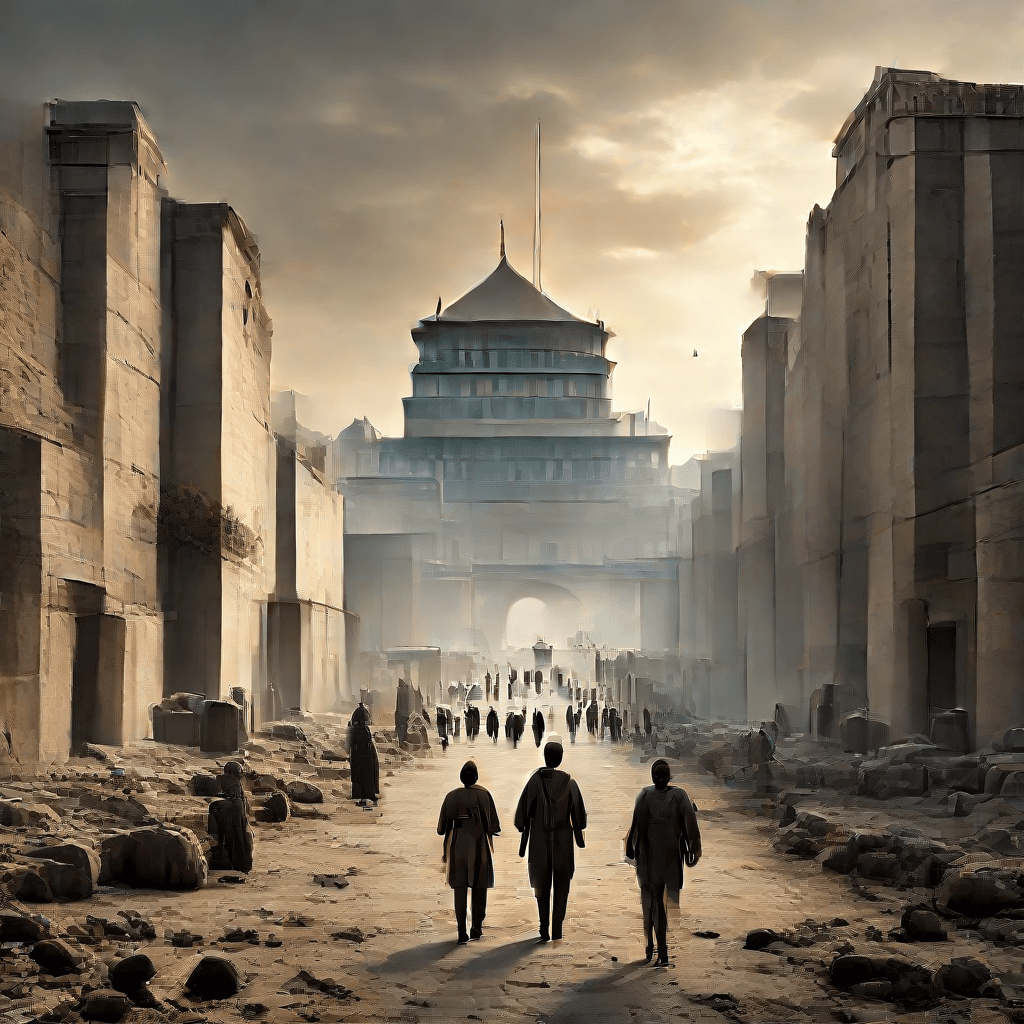
Growth Amidst the Flames
While global markets navigate extreme volatility as the conflict between Washington and Tehran intensifies, the world’s second-largest economy is demonstrating a structural resilience that challenges conventional market logic. In the first quarter of 2026, China's Gross Domestic Product (GDP) expanded by 5.2%, surpassing expectations and signaling a successful pivot toward industrial insulation. This expansion occurred despite the "Hell Doctrine"—a strategic military policy targeting critical energy and logistics infrastructure—resulting in significant strikes on Iranian assets. While such disruptions typically trigger systemic slowdowns, the Chinese industrial engine appears to have decoupled from the immediate shocks of the Middle East conflict through aggressive defensive economic maneuvers.
The Semiconductor Pivot
This industrial stamina is anchored in a critical supply chain shift, moving from consumer reliance to a massive influx of high-performance hardware powering modern automation. Export data from early April indicates a semiconductor surge in South Korea, driven by intense demand from manufacturing hubs across mainland China. These essential components—critical for everything from smartphones to advanced robotics—are being consumed at rates suggesting that manufacturing activity is accelerating rather than retreating. This high-volume acquisition indicates that the domestic supply chain is prioritizing advanced hardware to maintain production cycles, regardless of the geopolitical friction destabilizing global energy corridors.
Engineering Energy Independence
Securing hardware is futile without a guaranteed energy source, forcing a fundamental redesign of the national energy grid to bypass maritime blockades. For one logistics manager in Shenzhen, shifting to an insulated operation is a matter of daily survival. Local firms have pivoted away from imported crude, mirroring a broader national strategy of tapping into massive strategic oil reserves—which reached 85% of capacity by March—to bypass the immediate energy crisis. To mitigate the impact of strikes on foreign infrastructure, the transition toward coal and renewable energy sources has been accelerated. This model ensures that the power grids required for heavy industry remain operational, neutralizing the threat of maritime blockades that have paralyzed other global trade routes.
Architecture of the 15th Five-Year Plan
Individual firm survival is now synchronized with a broader regulatory framework that replaces market spontaneity with the long-term directives of the 15th Five-Year Plan. Launched in early 2026, this policy framework prioritizes industrial self-sufficiency and internal resilience over external integration. By setting clear mandates for state-owned and private enterprises, the plan has allowed industrial output to exceed forecasts even during heightened military tension. This structural shield provides businesses with the regulatory certainty needed to maintain capital investments, ensuring the economic trajectory remains focused on internal development rather than international security crises.
The Diplomatic Deadlock in Islamabad
The necessity of this internal shield is reinforced by the breakdown of external security guarantees as high-level negotiations fail. According to diplomatic reports, recent sessions in Islamabad between Vice President JD Vance and Iranian representatives concluded after 21 hours without an agreement, cementing a global state of permanent risk. This diplomatic deadlock has led to the designation of 2026 as a "year of peril," where the absence of security guarantees creates a permanent threat to global trade. The lack of a breakthrough confirms that the "Hell Doctrine" and the resulting maritime instability are likely to remain fixed features of the global landscape for the foreseeable future.
Limits of the Fortress Strategy
While internal resilience provides temporary cover, the long-term viability of a closed-loop system depends on whether institutional rigidity can withstand a permanent state of emergency. The fortress model faces sustainability questions despite robust short-term indicators. Relying on strategic reserves and domestic energy alternatives can insulate an economy temporarily, but prolonged global instability may eventually erode the competitive advantage of exported goods. The challenge remains whether a strategy built on decoupling can survive a multi-year conflict that drains global liquidity and disrupts traditional market integrations.
Navigating the Year of Peril
Regional self-reliance is now the dominant variable defining global economic gravity. Success in 2026 is no longer measured solely by market expansion, but by the ability to maintain internal resilience. China's ability to maintain growth while the Middle East is in flames suggests that the era of unfettered, just-in-time globalism is being replaced by a defensive economic architecture. Navigating this new reality requires a recognition that economic stability is now inextricably linked to a nation’s capacity to decouple its critical industries from the volatility of a world at war.
Sources & References
Summary: South Korea's early April export data reveals a "semiconductor renaissance" driven by intense demand from Chinese manufacturing hubs, signaling strong underlying economic activity in China despite geopolitical headwinds.
AP • Accessed 2026-04-16
US and Iran end 21-hour ceasefire talks without agreement before Vance departs Pakistan 1 of 9 | An Iranian delegation led by Parliament Speaker Mohammad Bagher Qalibaf has arrived in Islamabad, Pakistan, for talks with the United States, with the U.S. delegation led by Vice President JD Vance. On Saturday, Iranians in Tehran reacted to the talks.
View OriginalSummary: As the U.S. intensifies its "Hell Doctrine" strikes on Iranian infrastructure, market analysts observe that China's strategic oil reserves and shift toward coal and renewables have mitigated the expected slowdown.
중앙일보 • Accessed 2026-04-16
U.S. Vice President JD Vance speaks at This is the Turning Point Tour at the University of Georgia in Athens, Georgia, on April 14, in this photo released by Reuters. [YONHAP] Indo-Pacific, USFK commanders to attend Senate, House hearings amid Iran war concerns Trump wants 'grand bargain' with Iran, not 'small deal': Vance Trump says additional Iran peace talks 'could happen over next 2 days': Report Centcom says no ships passed U.S.
View Original*The New York Times
NYT • Accessed 2026-04-16
**Headline:** China’s Industrial Output Beats Expectations as 15th Five-Year Plan Kicks Off
View OriginalChina's economy grows faster than expected despite Iran war
BBC • Accessed Thu, 16 Apr 2026 02:29:44 GMT
China's economy grows faster than expected despite Iran war
View OriginalWhat the Iran War Means for China
NYT • Accessed Wed, 15 Apr 2026 20:18:12 +0000
What the Iran War Means for China
View Original*Brookings Institution
brookings • Accessed 2026-04-14
Commentary April 2026 update to TIGER: A year of economic healing turns into a year of peril Eswar Prasad , Eswar Prasad Senior Fellow - Global Economy and Development Caroline Smiltneks , and Caroline Smiltneks Student - Cornell University Sahasra Kalwala Sahasra Kalwala Student - Cornell University April 12, 2026 An oil tanker sails into Sultan Qaboos Port in Muscat, Oman, during Iran's de facto blockade of the Strait of Hormuz, March 21, 2026.
View Original*Nikkei Asia
日本経済新聞 • Accessed 2026-04-15
**Headline:** China Q1 GDP grows 5.2% as 'Fortress Economy' strategy pays off
View OriginalUS war on Iran was a 'mistake', says Reeves
BBC • Accessed Wed, 15 Apr 2026 18:58:18 GMT
US war on Iran was a 'mistake', says Reeves
View OriginalFrank Gardner: What is China's role in the Iran war?
BBC • Accessed Wed, 15 Apr 2026 18:54:06 GMT
Frank Gardner: What is China's role in the Iran war?
View OriginalChina economic growth accelerates to 5% in first quarter — but Iran war clouds outlook
CNBC • Accessed Thu, 16 Apr 2026 04:05:41 GMT
China economic growth accelerates to 5% in first quarter — but Iran war clouds outlook [URL unavailable]
Short-term gains for China from US-Iran war may turn to longer-term pain
Guardian • Accessed Wed, 15 Apr 2026 10:45:12 GMT
Short-term gains for China from US-Iran war may turn to longer-term pain
View OriginalChina’s Economy Revs Up Despite War as Growth Tops Forecasts
Bloomberg • Accessed Thu, 16 Apr 2026 02:00:08 GMT
China’s Economy Revs Up Despite War as Growth Tops Forecasts [URL unavailable]
What do you think of this article?