The Metro Access Gap: Why India’s Ridership Lags Capacity
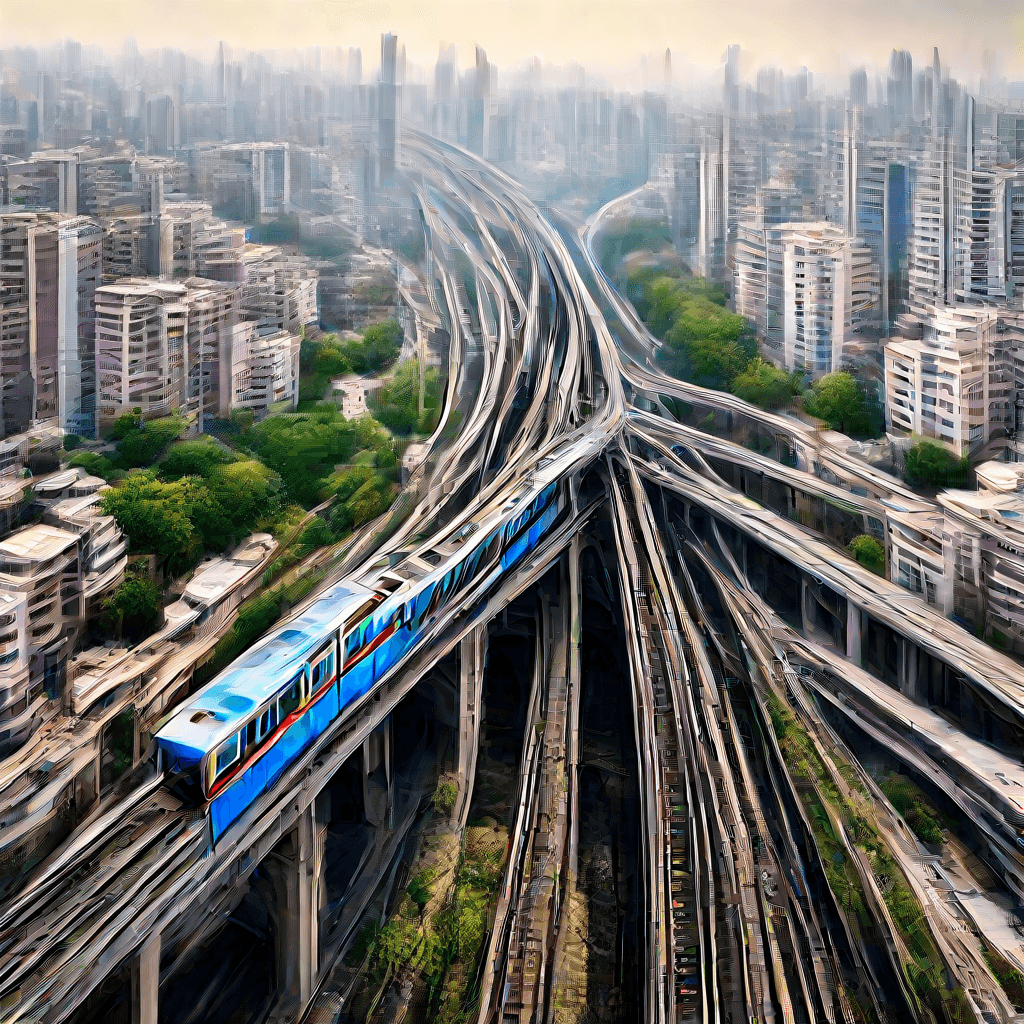
Capacity Expanded Faster Than Usability
India’s metro buildout has advanced quickly, but commuter conversion remains uneven. The central policy question is no longer whether capacity was built. It is whether riders can reliably complete a full trip from origin to platform to destination without added friction.
For US policy readers and infrastructure investors, this distinction matters because asset creation and user capture are separate execution stages. In the current US policy environment under President Donald Trump’s second term, capital discipline and utilization metrics are receiving greater emphasis, making operational performance a key benchmark in international transit comparisons.
Mumbai’s Split Result as a Natural Test
Mumbai’s new Line 9 and Line 2B posted materially different early ridership outcomes despite opening in the same expansion cycle. That divergence weakens a single-cause demand explanation and strengthens an access-and-connectivity explanation: when new corridors launch together, large uptake differences often reflect different end-to-end trip conditions.
This does not prove demand is irrelevant. It reframes demand as conditional. Riders appear willing to use new lines where transfers, feeder links, and station approaches are workable during commuting hours.
The Last-Mile Constraint Is Operational, Not Abstract
Pressure to open a completed Aarey access bridge within a 15-20-day window illustrates the core execution problem. A rail corridor can be technically open while commercially underperforming if approach infrastructure is delayed or unreliable.
This policy-to-operations transition is where governance quality becomes visible. Because launch pressure rewards opening dates, agencies need station-catchment-level control so access links are treated as part of the service product, not as a post-launch add-on.
Greater Noida West Shows Active, Not Missing, Demand
Planned protest activity in Greater Noida West over metro delays and weak last-mile options indicates that unmet demand is active. The policy implication is straightforward: recurring public pressure around access failures is more consistent with blocked utility than with structural disinterest.
That shifts accountability from broad demand debates to delivery sequencing. A promised-versus-delivered milestone map before April 26 would clarify whether delays sit in civil works, interagency approvals, feeder planning, or operating integration.
Recovery Claims Need a Precommitted Test
Seasonal travel effects, including vacation periods, may temporarily suppress ridership. That explanation is plausible, but it should be tested through a precommitted window rather than defended through narrative.
A one-quarter framework can separate temporary dips from structural gaps: define a fixed observation period, publish corridor-level baselines, and disclose whether post-normalization gains appear in lagging segments after access constraints are resolved.
What Should Change Before the Next Launch
The repeated pattern is clear: strong build ambition, uneven commuter conversion, unresolved access bottlenecks, and delayed integration accountability. The trade-off is not build-first versus access-first as ideology. It is whether institutions reward opening announcements or end-to-end trip completion.
A practical reset is to require one common pre-launch gate across corridors: verified user reachability from neighborhood origin to destination transfer chain under real commute conditions. If this gate is passed, build momentum and ridership logic align. If it is not, expansion may continue while utilization risk compounds.
The next decision cycle should therefore treat ridership convergence as a falsifiable outcome: if access fixes are delivered and uptake rises, the execution-gap thesis strengthens; if uptake still stalls, the demand thesis gains weight. That is the cleanest path from argument to evidence.
Sources & References
India has splurged billions on metro trains. But where are the commuters?
BBC • Accessed Sun, 19 Apr 2026 23:12:10 GMT
India has splurged billions on metro trains. But where are the commuters?
View OriginalI searched for the last 7 days and found 5 relevant, recent pieces from major outlets on India metro usage/commuter-demand gaps (the exact Reuters-style headline you quoted was not directly retrievable in this index):
indiatimes • Accessed 2026-04-20
We use cookies and other tracking technologies to provide services while browsing the Website to show personalise content and targeted ads, analyse site traffic and understand where our audience is coming from in order to improve your browsing experience on our Website. By continuing to use our Website, you consent to the use of these cookies and accept our Privacy terms.
View OriginalSummary: Mumbai’s newly opened Metro Lines 9 and 2B reported sharply different first-week usage, underscoring how corridor design and connectivity drive commuter uptake.
indianexpress • Accessed 2026-04-20
Mumbai’s two new metro lines have started with very different passenger numbers, with Line 9 seeing far more commuters than Line 2B in the first week. Data till Tuesday shows that Line 9 (Dahisar East–Mira Road) had an average of 23,096 passengers a day across its four stations. In comparison, Line 2B (Mandale–Diamond Garden), which has five stations, recorded only 3,992 daily passengers. Officials said the lower numbers are partly due to summer vacations, when fewer people travel.
View OriginalSummary: Indian Express reported a major ridership split between two newly launched Mumbai lines, with officials citing vacation effects and expected post-reopening demand recovery.
indiatimes • Accessed 2026-04-20
News City News noida News Demand for Gr Noida West Metro intensifies, protest planned at Jantar Mantar on April 26
View OriginalSummary: Residents in Greater Noida West escalated pressure for metro access through planned protests, highlighting commuter frustration over delays and weak last-mile options.
indiatimes • Accessed 2026-04-20
News City News mumbai News Aarey Metro station access bridge is ready, open it in next 15-20 days: BJP MLA to Mumbai Metropolitan Region Development Authority
View OriginalSummary: The report focuses on delayed station access infrastructure in Mumbai, a key factor affecting actual commuter adoption despite new rail investments.
indiatimes • Accessed 2026-04-20
We use cookies and other tracking technologies to provide services while browsing the Website to show personalise content and targeted ads, analyse site traffic and understand where our audience is coming from in order to improve your browsing experience on our Website. By continuing to use our Website, you consent to the use of these cookies and accept our Privacy terms.
View OriginalWhat do you think of this article?