The Green Dollar: How the Clean Energy Boom is Rewiring the American Economy
The New Gold Rush: Trillions on the Table
In the corridors of Wall Street and the manufacturing hubs of the Midwest, the conversation has shifted irrevocably. It is no longer a debate about if the transition to clean energy will happen, but rather how quickly capital can be deployed to capture the upside of what economists are calling the largest re-industrialization of the American economy since World War II. We are witnessing a fiscal phenomenon that dwarfs the Gold Rush of 1849, not in the retrieval of raw ore, but in the fabrication of a new energy architecture. The "Green Dollar" is now the dominant currency of American growth, driven by a symbiotic engine of federal policy and private equity that has placed trillions of dollars on the table for those agile enough to grab them.
Since the passage of the Inflation Reduction Act (IRA), the landscape of American investment has been radically terraformed. What began as a legislative push for climate resilience has metastasized into an all-out economic boom. The federal tax credits acted not merely as subsidies, but as a signal flare to the global market, effectively de-risking technologies that were once considered speculative. The result? A massive unleashing of private capital sitting on the sidelines. For every dollar of public funding, we are seeing a multiplier effect of nearly three to four dollars in private sector investment. This isn't just about altruism or saving the planet; it is cold, hard capitalism recognizing that the cost curves for renewables and battery storage have inverted against fossil fuels. The smart money has realized that the next trillion-dollar valuation won't come from drilling for oil, but from manufacturing the infrastructure that renders it obsolete.
Nowhere is this transformation more visceral than in the emergence of the so-called "Battery Belt." Stretching from Michigan and Ohio down through Kentucky, Tennessee, and into Georgia, a new industrial spine is forming. This region, once scarred by the rust of shuttered steel mills and outsourced auto jobs, is humming with the frequency of high-voltage ambition. Gigafactories are rising from the cornfields, financed by joint ventures between legacy automakers like Ford and GM and next-generation battery tech firms. These aren't just assembly lines; they are cathedrals of the new economy, representing billions in capital expenditure (CapEx) that locks in economic activity for decades.
However, the "Gold Rush" analogy extends beyond manufacturing. It encompasses the intricate financial plumbing of the United States. Green Bonds and sustainability-linked loans have surged, becoming a staple in corporate treasuries. Institutional investors, managing pension funds and endowments, are increasingly mandating exposure to the energy transition, not out of ideological purity, but fiduciary duty. They recognize that long-term asset value is inextricably linked to climate resilience and energy independence. The volatility of global oil markets, exacerbated by geopolitical tensions, has made the predictable, deflationary nature of renewable energy generation incredibly attractive to risk managers.
Cumulative Clean Energy Investment in US (Public & Private)
Yet, this influx of capital is not without its friction points. The sheer velocity of money has exposed bottlenecks in the American supply chain, from a scarcity of critical minerals like lithium and cobalt to a grid infrastructure that is creaking under the weight of new demand. The "interconnection queue"—the waiting list for new energy projects to connect to the grid—has become the new battleground for developers. Trillions may be on the table, but unlocking them requires navigating a labyrinth of permitting reform and grid modernization that moves far slower than the capital markets. Furthermore, the geopolitical dimension cannot be ignored. Much of this domestic investment is an explicit attempt to decouple from Chinese supply chains, a strategic imperative that adds a layer of national security urgency to the economic incentives.
The scale of this shift suggests that we are in the early innings of a supercycle. Analysts project that by the end of the decade, the clean energy economy could account for a significant double-digit percentage of US GDP growth. We are moving from an extraction-based economy to an innovation-based one, where value is generated not by what we pull out of the ground, but by the intellectual property and manufacturing prowess we apply to it. The green dollar is rewriting the rules of American capitalism, and for the first time in a long time, the industrial heartland is holding the best cards.
From Spindletop to Solar Farms: A Century of Power
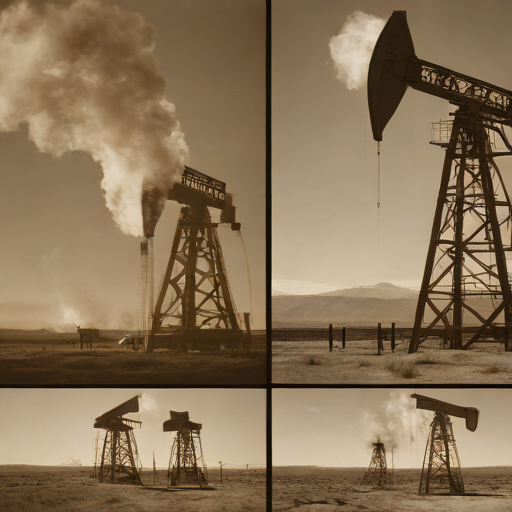
On January 10, 1901, a geyser of crude oil erupted from the Spindletop salt dome in Beaumont, Texas, spewing 100,000 barrels a day and effectively birthing the American century. That black gold fueled our tanks, built our suburbs, and dictated our foreign policy for over a hundred years. It was the undisputed currency of American power. But if you drive through the I-75 corridor today—from the auto plants of Michigan down through the rolling hills of Kentucky and into the manufacturing hubs of Georgia—you will witness a transformation as significant as that gusher in Beaumont. The drilling rig has been replaced by the gigafactory; the pipeline by the transmission line. We are witnessing the end of the Carbon Era and the rapid ascent of the "Green Dollar," a new economic standard where profitability is inextricably linked to decarbonization.
This isn't just about saving the polar bears; it is about securing American economic hegemony for the next century. The Inflation Reduction Act (IRA) of 2022, viewed in hindsight from our vantage point in 2026, was not merely an environmental bill—it was the most aggressive industrial policy since the New Deal. It unlocked a floodgate of private capital that has fundamentally rewired the US economy. Wall Street, once skeptical of the volatility of renewables, has pivoted aggressively. The reasoning is cold, hard math: the Levelized Cost of Energy (LCOE) for utility-scale solar and onshore wind has undercut coal and natural gas in nearly every region of the country. In 2026, building a new solar farm in Arizona is cheaper than continuing to operate an existing coal plant in West Virginia. That cost disparity is the engine driving this revolution, transforming the "Rust Belt" into the "Battery Belt."
Consider the resurrection of American manufacturing. For decades, the narrative was one of decline and offshoring. Today, massive capital injections are revitalizing communities that had been written off. In Lordstown, Ohio, and Savannah, Georgia, joint ventures between legacy automakers and Korean battery giants are employing thousands of workers. These aren't the dirty jobs of the 1970s; they are high-tech, precision manufacturing roles requiring clean rooms and advanced robotics. The supply chain is coming home, driven by tax credits that reward domestic production of critical minerals and battery components. We are seeing lithium processing plants breaking ground in Nevada and the Salton Sea in California, attempting to break the stranglehold of foreign dominance on the raw materials of the 21st century.
However, this transition is not without its friction points. The grid itself—the physical lattice of wires and transformers built for a one-way flow of power from massive generators to passive consumers—is creaking under the strain. Integrating intermittent sources like wind and solar requires a smart, bidirectional grid capable of handling distributed energy resources. The backlog of renewable projects waiting for interconnection approval currently exceeds the total installed generation capacity of the entire country in 2010. This bottleneck represents the single greatest threat to the Green Dollar economy.
US Energy Investment Shift: Fossil vs. Clean (2016-2026)
The chart above illustrates the dramatic crossover event that occurred post-2022. While investment in fossil fuel extraction and generation has continued a slow, steady decline—buoyed only by short-term geopolitical shocks—capital expenditure in clean energy technologies has gone parabolic. This divergence is the financial footprint of the Green Dollar. By 2026, for every dollar spent on fossil fuels in the United States, nearly $2.50 is invested in clean energy technologies, including renewables, grids, and storage.
The Battery Belt Blueprint
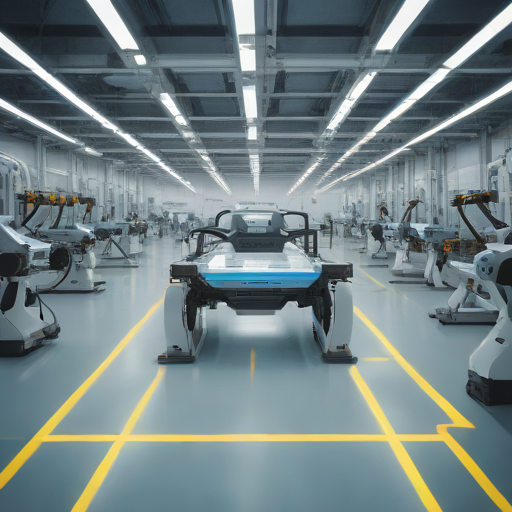
The geography of American manufacturing is being redrawn, not with ink, but with lithium-ion cells and high-voltage cabling. Where the Rust Belt once symbolized a painful contraction of industrial might—a narrative of shuttered steel mills and hollowed-out main streets—a new corridor of economic vitality has emerged, stretching from the Great Lakes to the Deep South. This is the Battery Belt, a reimagined industrial spine where the hum of gigafactories has replaced the roar of blast furnaces, and it represents the most significant reindustrialization effort the United States has seen since the Second World War.
At the heart of this transformation is a aggressive synergy between federal policy and private capital. The Inflation Reduction Act (IRA) of 2022 acted as the starter pistol, but the sprint has been sustained by corporate giants betting the house on an electric future. By early 2026, the promised "manufacturing renaissance" has moved beyond ribbon-cutting ceremonies into tangible production. In states like Georgia, Kentucky, Tennessee, Michigan, and Ohio, the landscape is physically changing. Massive facilities, some spanning over 4 million square feet, now dominate rural horizons, turning sleepy counties into globally strategic nodes in the EV supply chain.
Consider the case of Georgia. Once primarily known for agriculture and logistics, the state has effectively positioned itself as the capital of this new economy. The massive Hyundai Motor Group Metaplant America near Savannah is not just a factory; it is a gravity well for suppliers, pulling in battery component manufacturers, recycling firms, and logistics providers from across the globe. This clustering effect is the "blueprint" in action: a localized ecosystem where raw materials enter and finished electric vehicles exit, minimizing logistical overhead and maximizing regional economic velocity.
Projected EV & Battery Investment by State (2022-2026)
However, this rapid terraforming of the American economy is not merely about erecting steel beams; it is fundamentally about labor. The "Battery Belt" demands a workforce that is distinct from the assembly lines of the 20th century. While the manual dexterity to assemble a chassis remains valuable, the new premium is on electromechanical troubleshooting, robotics maintenance, and chemical process management. Community colleges across Tennessee and Kentucky have overhauled their curriculums, partnering directly with automakers like Ford and SK On to create a pipeline of "mechatronics" specialists. This decoupling of manufacturing from purely low-skilled labor is driving wages up in regions that have historically lagged behind the national average, creating a new, tech-adjacent blue-collar middle class.
The economic ripple effects—the so-called multiplier—are proving to be more potent than initial Congressional Budget Office estimates. For every job created inside a battery cell plant, approximately 2.5 jobs are generated in the surrounding local economy, from housing construction to service industries. Real estate markets in towns like Glendale, Kentucky, and Stanton, Tennessee, are experiencing unprecedented heat, forcing local governments to scramble for infrastructure upgrades.
Yet, the blueprint is not without its smudges. The transition has created friction between the old guard of organized labor and the new paradigm of battery production. The United Auto Workers (UAW) has fought hard—and with significant success in late 2023 and 2024—to ensure that these new battery plant jobs fall under master agreements, fearing a future where the engine of the car is built by union labor while the heart of the EV (the battery) is built by non-union contractors at lower wages. This tension defines the current political economy of the Battery Belt: a struggle to ensure that the "Green Dollar" creates not just jobs, but good jobs that sustain the American standard of living.
US Battery Manufacturing Capacity Growth (GWh)
Ultimately, the Battery Belt Blueprint is a test of American industrial dirigisme. It challenges the free-market orthodoxy that dominated the late 20th century, replacing it with a model where strategic state intervention guides private equity toward national goals. If the Rust Belt was a monument to industrial decline, the Battery Belt is the scaffolding for a high-tech resurrection, proving that with enough capital and political will, even the heaviest aspects of the American economy can be rewired.
Main Street vs. Wall Street: The Societal Cost
While the Inflation Reduction Act (IRA) has acted as a potent steroid for domestic manufacturing, injecting billions into the veins of the American economy, the side effects are beginning to manifest in the checking accounts of everyday citizens. There is a palpable dissonance between the exuberant green charts projected in Manhattan boardrooms and the kitchen-table reality in the very communities designated as the new engines of growth. For Wall Street, the "Green Dollar" represents the next frontier of alpha generation—a predictable, government-backed windfall that has sent clean energy ETFs soaring. For Main Street, particularly in the rapidly transforming "Battery Belt," the transition is proving to be a complex cocktail of opportunity and displacement, characterized by what economists are increasingly calling "Greenflation."
The narrative sold to the American public was one of seamless substitution: fossil fuel jobs would be swapped one-for-one with cleaner, future-proof alternatives. The reality is far more jagged. The capital expenditure boom has indeed created a surge in construction and engineering roles, but these are often specialized, transient, or geographically concentrated. We are witnessing a bifurcation of the labor market where high-skill "green collar" workers—credentialed electricians, chemical engineers, and systems architects—are commanding double-digit wage growth, while traditional manufacturing roles stagnate. In towns like Lordstown, Ohio, and Savannah, Georgia, the influx of high-tech giga-factories has triggered a localized cost-of-living crisis. Housing prices in these new industrial hubs have outpaced the national average by nearly 15% over the last two years, effectively pricing out long-time residents who missed the reskilling boat.
The Green Wage Gap: Average Annual Salary Projection (2021-2026)
Furthermore, the "cost of transition" is being passed down to the consumer in subtle but cumulative ways. Utility bills across the nation have ticked upward as grid operators amortize the massive cost of modernizing transmission lines to accommodate intermittent renewables. While the long-term promise of solar and wind is deflationary—sunlight and wind are, after all, free—the medium-term reality involves paying for two parallel energy systems: the retiring fossil fuel infrastructure and its budding replacement. This "energy transition surcharge" is regressive, hitting lower-income households hardest.
Wall Street investors are largely insulated from these friction costs; in fact, they profit from the volatility. Institutional capital has flooded into commodities futures and infrastructure trusts, hedging against the very inflation that pinches the consumer. The disconnect is perhaps most visible in the automotive sector. As Detroit pivots to EVs, the average transaction price of a new vehicle has remained stubbornly high, hovering near $48,000. For the wealthy eco-conscious buyer, tax credits sweeten the deal. For the working-class family needing a reliable commuter car, the "Green Dollar" economy feels less like a revolution and more like an exclusionary club.
The Transmission Bottleneck: Future Outlook
If the Inflation Reduction Act was the engine starter for America's clean energy vehicle, the nation’s transmission infrastructure is currently a parking brake that refuses to disengage. As billions of "Green Dollars" flow into solar farms in the Mojave and wind projects in the Great Plains, a critical reality has emerged: generating clean electrons is only half the battle; delivering them to the data centers of Northern Virginia and the manufacturing hubs of the Midwest is the other, far more difficult challenge. The "Transmission Bottleneck" is no longer just an engineering footnote; it is arguably the single greatest threat to the economic viability of the energy transition, turning ready-to-build projects into stranded assets and creating a logjam that regulators are scrambling to clear.
The scale of the disconnect is staggering. According to recent data from the Lawrence Berkeley National Laboratory, there is currently more generation capacity waiting in interconnection queues—seeking permission to connect to the grid—than the entire existing installed capacity of the US power sector. We are effectively trying to download a terabyte-sized future through a dial-up connection. For investors, this wait time is capital destruction. A solar project funded in 2024 might not see grid energization until 2029 or 2030. In the PJM Interconnection, the largest grid operator in the US serving 13 states and D.C., the backlog became so severe that they paused new applications to reform their review process.
The Interconnection Gap: Active Queue vs. Built Capacity (GW)
However, the future outlook is shifting from paralysis to frantic modernization. The Department of Energy’s "National Transmission Needs Study" has laid bare the requirement: the US must expand transmission systems by 57% by 2035 to meet clean energy laws. This stark necessity is driving a renaissance in grid technology and policy. We are witnessing the rise of High-Voltage Direct Current (HVDC) lines, which act as superhighways for electricity, moving power over thousands of miles with minimal loss—crucial for transporting Kansas wind power to New York cities. Furthermore, "Grid Enhancing Technologies" (GETs) are entering the mainstream conversation. These software and hardware solutions allow operators to push more power through existing lines by monitoring real-time conditions like wind speed and temperature, potentially unlocking 30-40% more capacity without laying a single new cable.
Read Next
The Great Rewiring: Can America Build a Supply Chain That Never Breaks?
As the 'Just-in-Time' era crumbles, the US is betting trillions on a fortified 'Just-in-Case' economy. A deep dive into the high cost of resilience and the return of American industry.
The Flicker Before the Dark: Why America's Power Grid Is Losing the Battle Against Modern Storms
A deep dive into the crumbling state of the US power grid, the economic devastation of weather-related outages, and the urgent race to rewire the nation for a volatile climate.